Artwork
Double-Sided Painted Banner (Paubha) with God Shiva and Goddess Durga
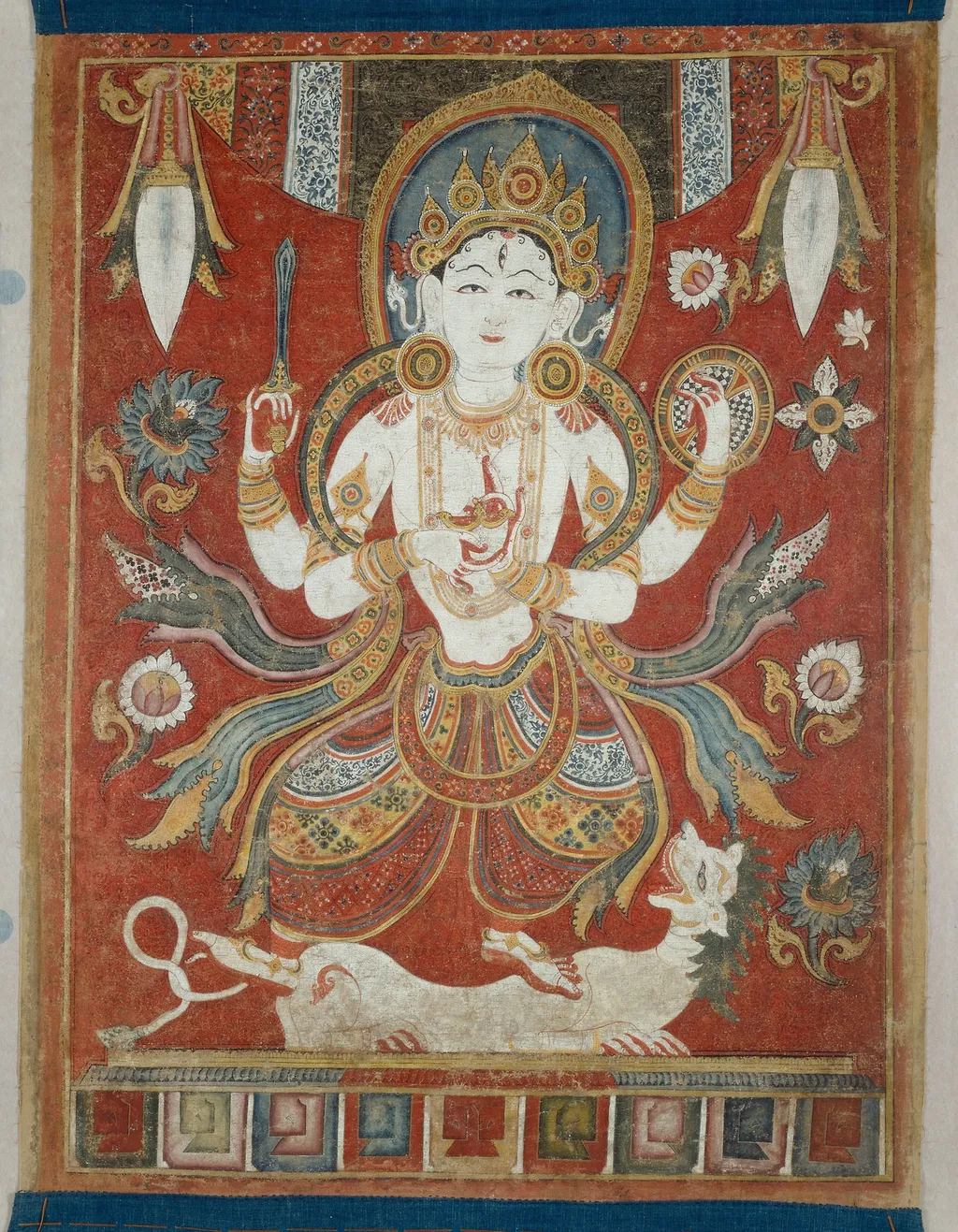
Double-Sided Painted Banner (Paubha) with God Shiva and Goddess Durga is an unspecified painting by Unknown. It dates from 1600 and is held in the collection of the Art Institute of Chicago.
About this work
Overview
The double‑sided painted banner, known in the Nepali tradition as a paubha, presents two deities on opposite faces: Shiva on one side and Durga on the other. Executed on cloth with mineral pigments, the work functions both as a portable devotional object and as a visual focus for ritual practice, allowing worshippers to engage with the divine masculine and feminine within a single piece.
Subject & Meaning
Shiva is depicted in his classic iconography, often with a trident, crescent moon, and matted hair, embodying ascetic power and cosmic destruction. The reverse side shows Durga, typically mounted on a lion or tiger, brandishing weapons that symbolize the triumph of good over evil. Together, the two figures illustrate the complementary forces of creation and dissolution central to Hindu theology.
Technique & Style
The composition follows traditional Newar paubha conventions, emphasizing symmetry, vivid coloration, and intricate detailing of jewelry and ornaments.
The banner is painted with tempera pigments derived from natural minerals and plant extracts, applied to a tightly stretched cotton or silk fabric. Brushwork is precise, with fine lines outlining the deities’ attributes and broader washes for background fields. The composition follows traditional Newar paubha conventions, emphasizing symmetry, vivid coloration, and intricate detailing of jewelry and ornaments.
History & Provenance
Such double‑sided paubhas were commonly produced in the Kathmandu Valley from the 16th to 19th centuries for use in temple festivals and household shrines. The specific banner’s provenance traces to a private collection in Nepal before being acquired by a museum in the early 2000s, where it entered the South Asian art holdings.
Context
In Newar religious practice, portable banners like this serve as focal points during processions, allowing the deity’s presence to accompany devotees outside the temple precinct. The pairing of Shiva and Durga reflects the syncretic worship patterns of the region, where multiple deities are invoked together for protection and blessings.
Legacy
The piece exemplifies the durability of the paubha tradition, influencing contemporary Nepali artists who continue to explore the medium’s ritual functions and aesthetic vocabulary. Its preservation offers insight into historical pigment preparation, textile preparation, and the devotional visual culture of the Himalayan plateau.
Artist & collection

 Domestic Scene
 Giacomo and Cardinal Marco, investing Andrea, Abbot of San Zeno, with his Benefice
 The Nymph of Fontainebleau
 Portrait of a Woman
 Madonna and Child with Saints in the Enclosed Garden
 Venus and Minerva
 Family Group of Four on Sofa
 Wall painting from Room H of the Villa of P. Fannius Synistor at Boscoreale
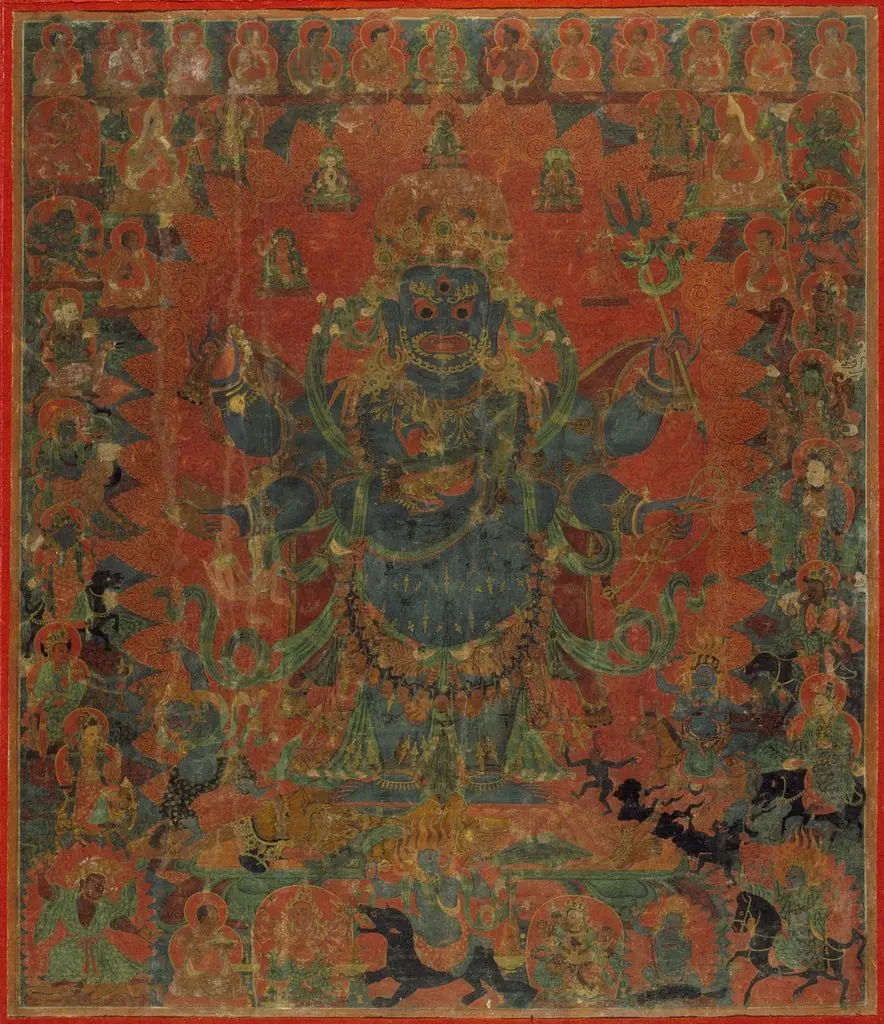 Mahakala and his Entourage
 Untitled
 Untitled
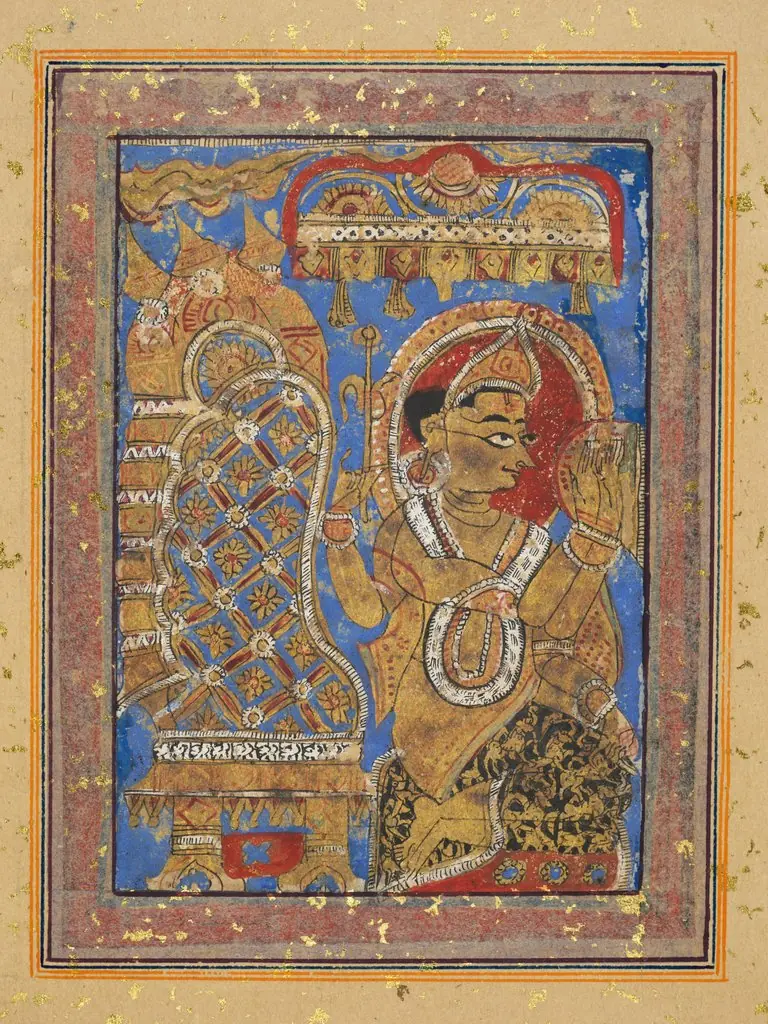 Painting from a Kalpa-sutra: Indra Praises the Embryo of Mahavira in the Womb of the Brahman Woman Devananda
 Untitled
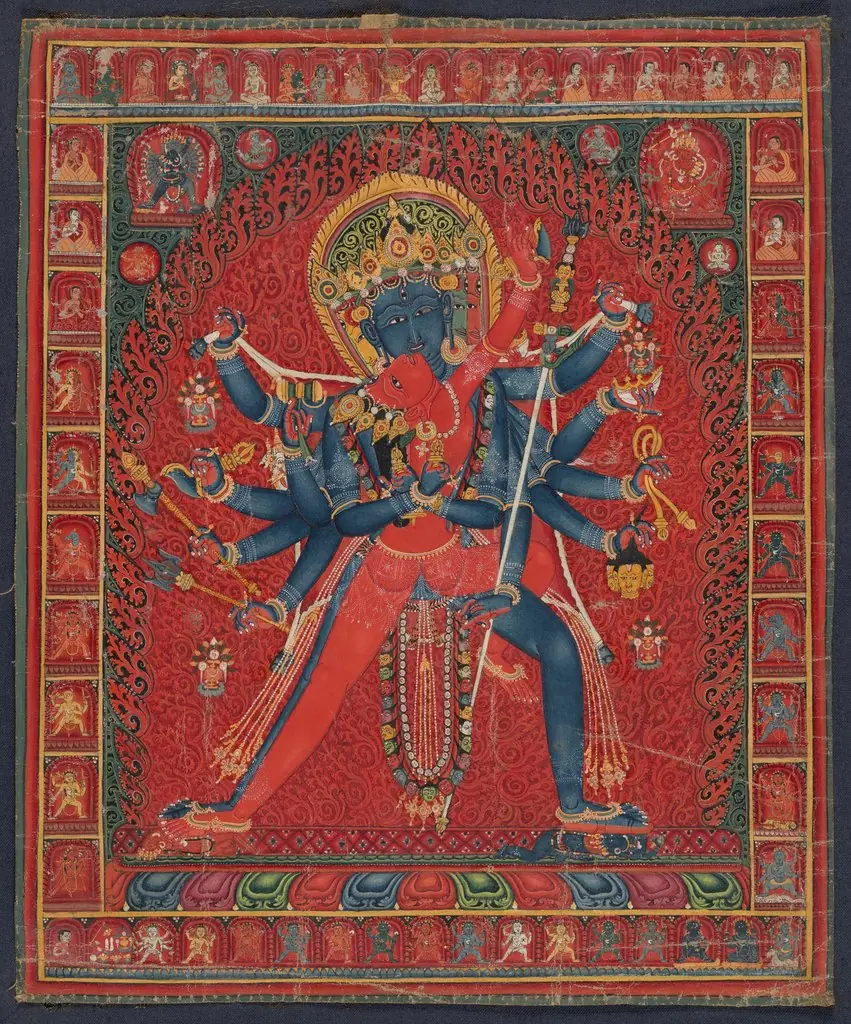 Chakrasamvara and consort Vajravarahi
 Painting from a Kalpa-sutra: Indra Praises the Embryo of Mahavira in the Womb of the Brahman Woman Devananda
 Painting and drawings
 Untitled
 Untitled