Artwork
Painting and drawings
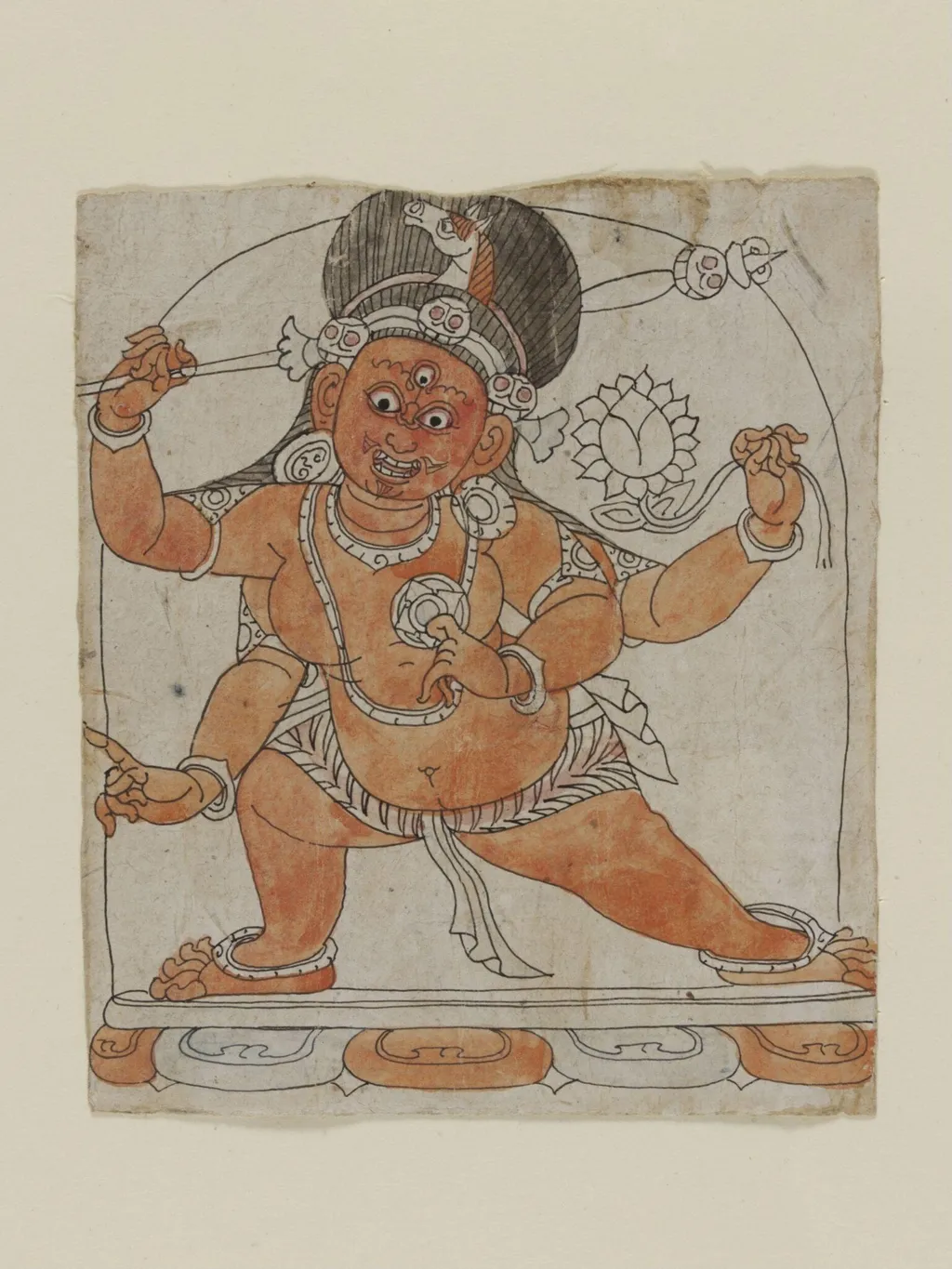
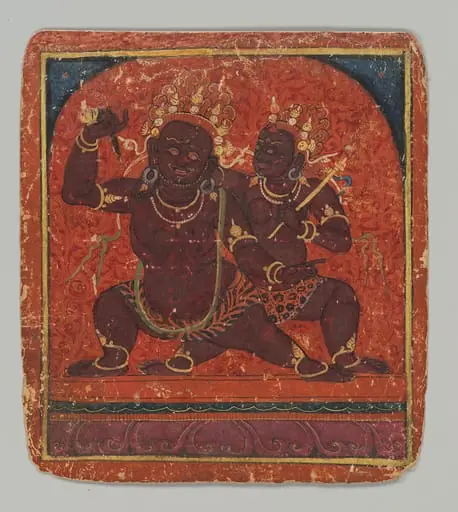
Painting and drawings is a drawing by Unknown. It dates from 1250 and is held in the collection of the Victoria and Albert Museum. This drawing, dated to approximately 1250, is one of a group of religious images created in the Himalayan region, likely Nepal or Tibet.
About this work
Overview
This drawing, dated to approximately 1250, is one of a group of religious images created in the Himalayan region, likely Nepal or Tibet. Executed in ink and pigment on paper, it reflects the devotional artistic traditions of the time. Its small scale and detailed linework suggest it was intended for private contemplation or ritual use rather than public display.
Subject & Meaning
The red face and wild hair convey fierce energy, common in iconography representing the subjugation of ignorance or negative forces.
The figure depicted is a wrathful deity, identifiable by its three eyes, bared fangs, and multiple arms. The red face and wild hair convey fierce energy, common in iconography representing the subjugation of ignorance or negative forces. The bow and flower-like object may symbolize the dual nature of spiritual power—both protective and transformative—while the swirling base suggests cosmic motion or divine presence.
Technique & Style
The drawing employs bold, fluid lines and flat areas of pigment, characteristic of Himalayan manuscript and thangka traditions. Asymmetrical ornamentation and intricate detailing on the belt and base echo decorative motifs seen in 15th-century Ladakhi murals, indicating a shared visual language across regional Buddhist communities. The compact composition emphasizes symbolic clarity over naturalism.
History & Provenance
The work entered the Victoria and Albert Museum’s collection in 1910, acquired from the London dealers Baillie and Gardner for £445.11.6. It was part of a larger group of Tibetan and Nepalese Lamaist objects collected during a period of heightened European interest in Himalayan religious art. Its original context remains undocumented, but its style aligns with devotional imagery used in monastic settings.
Context
Created during a time of flourishing Buddhist artistic exchange between Nepal and Tibet, the drawing reflects the integration of Indian tantric iconography with local Himalayan aesthetics. Similar figures appear in ritual texts and temple murals, where they served as meditative aids. The presence of such imagery in private collections suggests its use extended beyond monastic walls into lay devotional practice.
Legacy
This drawing contributes to the understanding of how Himalayan religious iconography was transmitted and adapted across regions. Its preservation in a major museum collection highlights its role in documenting the visual culture of Tibetan Buddhism. While its maker is unknown, its stylistic links to broader traditions underscore the interconnectedness of artistic practice across medieval Buddhist communities.
Artist & collection

 Domestic Scene
 Giacomo and Cardinal Marco, investing Andrea, Abbot of San Zeno, with his Benefice
 The Nymph of Fontainebleau
 Portrait of a Woman
 Madonna and Child with Saints in the Enclosed Garden
 Venus and Minerva
 Family Group of Four on Sofa
 Wall painting from Room H of the Villa of P. Fannius Synistor at Boscoreale
 Untitled
 Shiva in his form as Bichandi or Bhikshatana
 Untitled
 Double-Sided Painted Banner (Paubha) with God Shiva
 Painting from a Kalpa-sutra: Indra Praises the Embryo of Mahavira in the Womb of the Brahman Woman Devananda
 The rakshasa Kabandha supporting Rama and Lakshmana on his arms.
 Double-Sided Painted Banner (Paubha) with God Shiva and Goddess Durga
 Untitled
 Shiva and Nandi
 Untitled
 Painting from a Kalpa-sutra: Indra Praises the Embryo of Mahavira in the Womb of the Brahman Woman Devananda
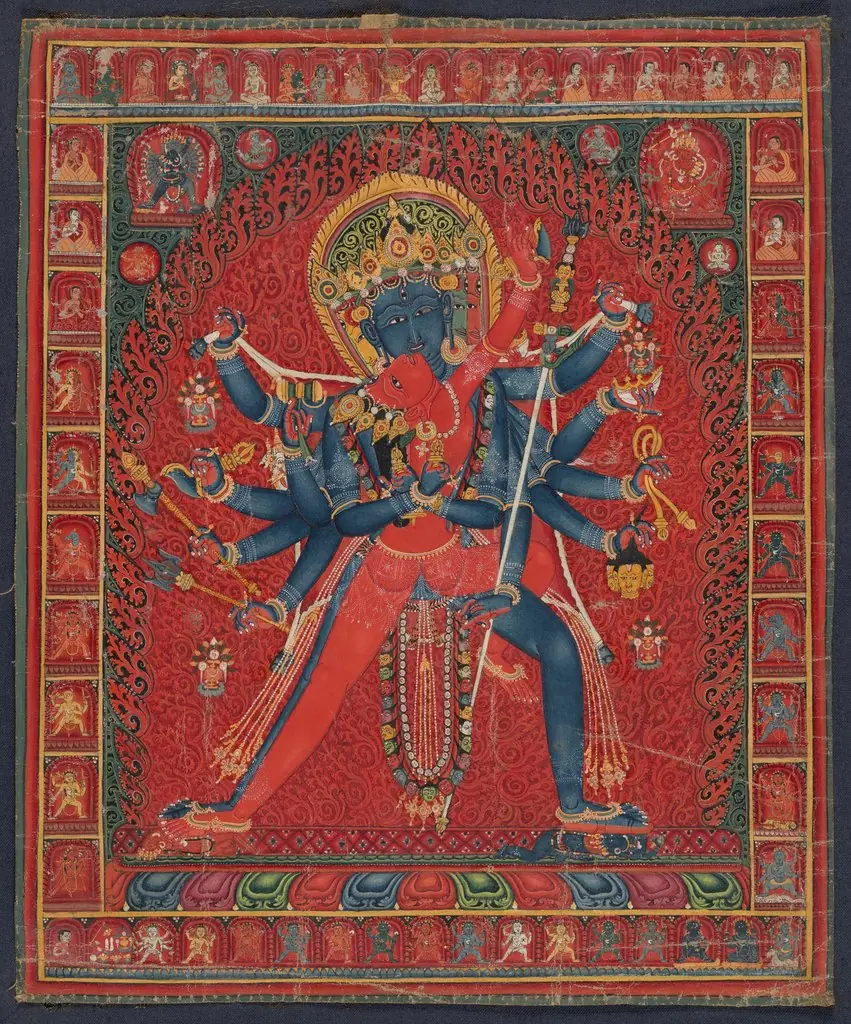 Chakrasamvara and consort Vajravarahi