Artwork
Funerary Portrait
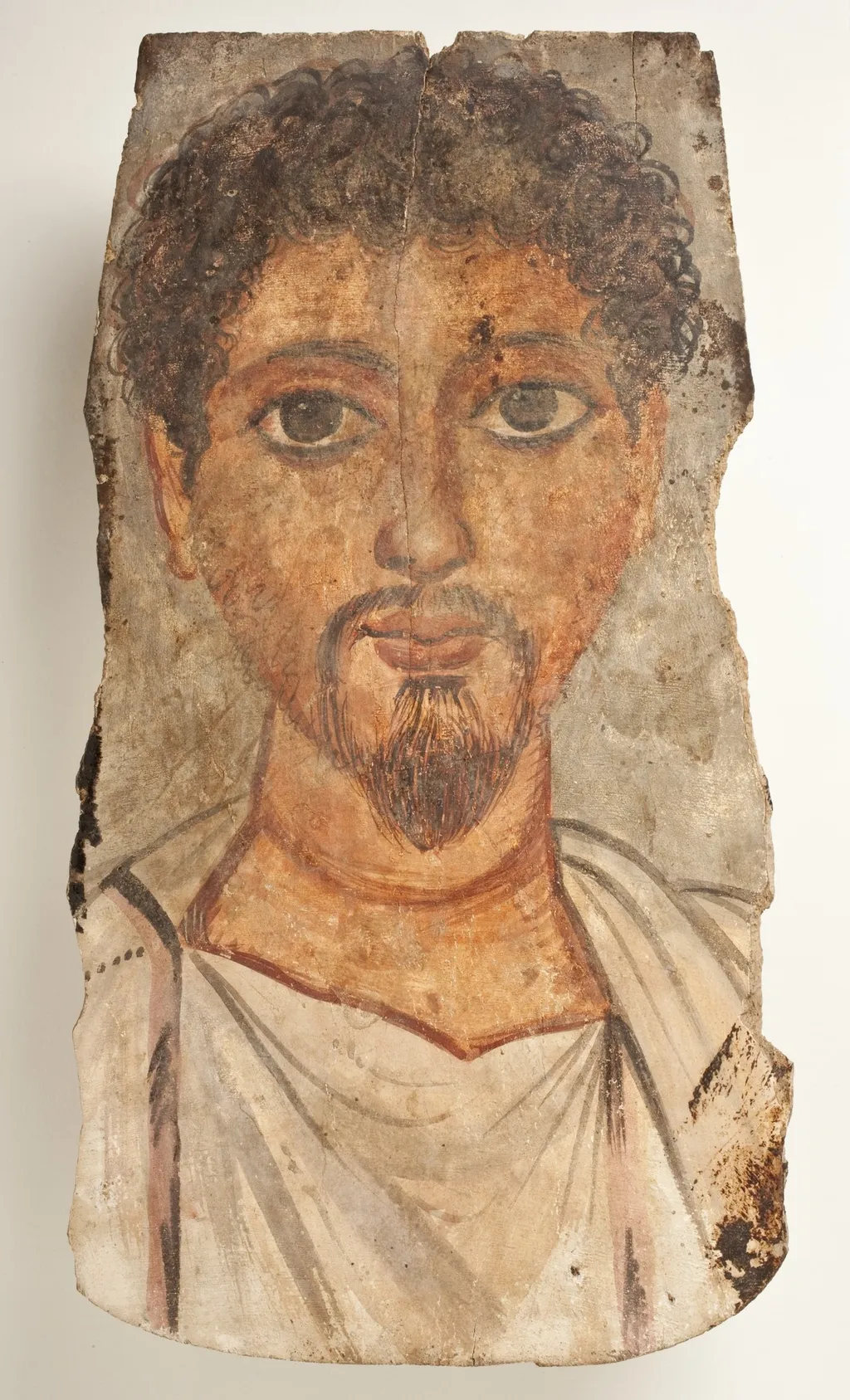
Funerary Portrait is an unspecified painting by Unknown. It is held in the collection of the Los Angeles County Museum of Art.
About this work
Overview
Its preservation reflects the dry climate of the region and the cultural practice of honoring the dead through visual likeness.
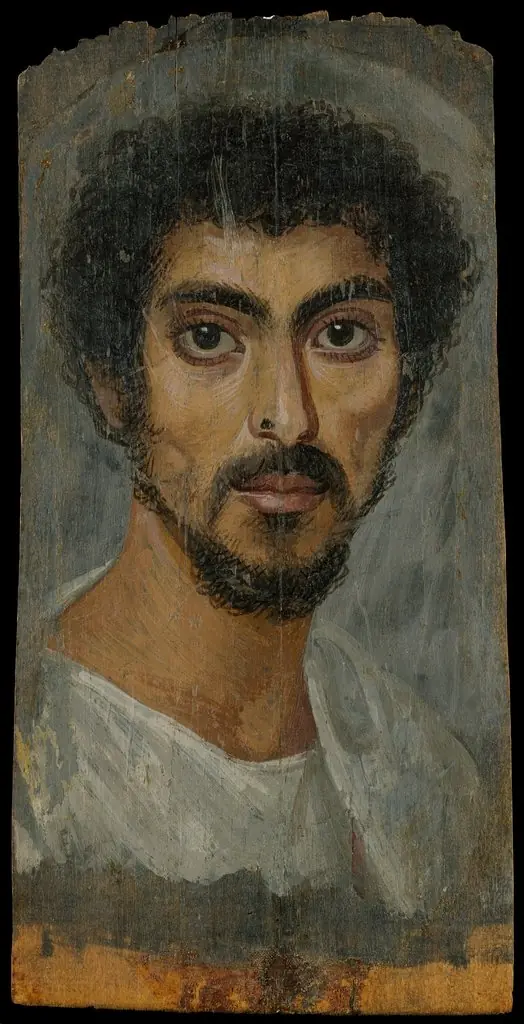
This painting is a funerary portrait from the Roman period, likely created in Egypt during the first or second century CE. It depicts a male individual with dark, curly hair and a beard, rendered in encaustic on wood. The portrait was intended for placement in a tomb, serving as a lasting representation of the deceased. Its preservation reflects the dry climate of the region and the cultural practice of honoring the dead through visual likeness.
Subject & Meaning
The man portrayed is shown with a calm, direct gaze, suggesting a sense of presence and continuity beyond death. His attire—a simple white tunic with a folded collar—indicates modest social standing, common among non-elite Roman citizens. The neutral expression and frontal orientation reflect a desire to capture the individual’s essential identity rather than emotional state, aligning with funerary traditions that emphasized permanence over expression.
Technique & Style
Executed in encaustic—pigment mixed with heated beeswax—the portrait employs layered brushwork to model facial features with subtle gradations of tone. The light background isolates the figure, enhancing three-dimensionality without elaborate setting. The technique allows for both precision and warmth, characteristic of Fayum portraits, where naturalism blends with stylized conventions to convey individuality within a cultural framework.
History & Provenance
This portrait originates from the Roman province of Egypt, where Greco-Roman artistic traditions merged with local burial customs. Such portraits were affixed to mummy wrappings in necropolises near Fayum. The painting’s survival is exceptional; most organic materials decayed, but arid conditions preserved these works. It entered modern collections through 19th-century archaeological excavations, often without precise provenance.
Context
Funerary portraits like this one emerged during the Roman occupation of Egypt, reflecting a syncretism of Egyptian mummification practices and Hellenistic portraiture. They were produced for middle-class families seeking to honor ancestors with lifelike images. Unlike earlier Egyptian idealized depictions, these portraits emphasized individual features, revealing a cultural shift toward personal identity in death.
Legacy
These portraits have reshaped modern understanding of Roman-era art, demonstrating a high degree of naturalism centuries before the Renaissance. Their survival offers rare insight into the appearance, dress, and social identity of non-elite populations. Today, they are studied as both artistic achievements and anthropological records, bridging classical antiquity and the early medieval world.
Artist & collection

 Domestic Scene
 Giacomo and Cardinal Marco, investing Andrea, Abbot of San Zeno, with his Benefice
 The Nymph of Fontainebleau
 Portrait of a Woman
 Madonna and Child with Saints in the Enclosed Garden
 Venus and Minerva
 Family Group of Four on Sofa
 Wall painting from Room H of the Villa of P. Fannius Synistor at Boscoreale
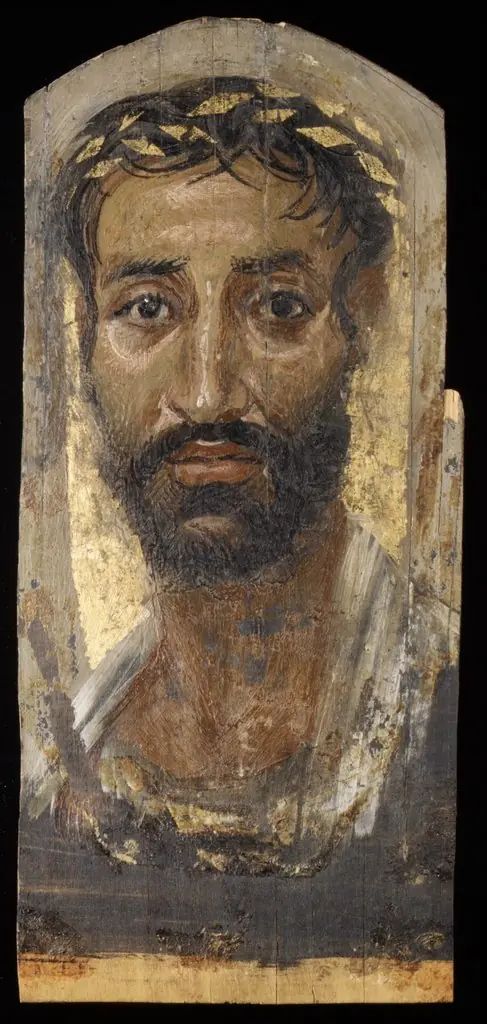 Portrait of a thin-faced man
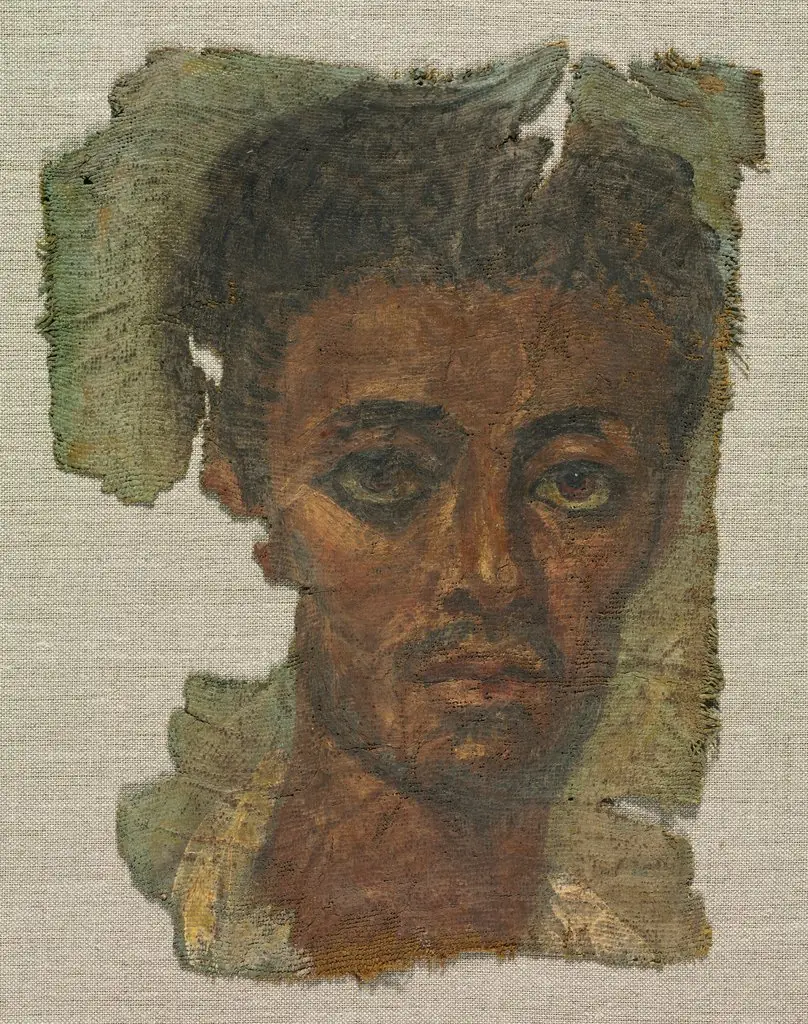 Funerary Panel of a Man
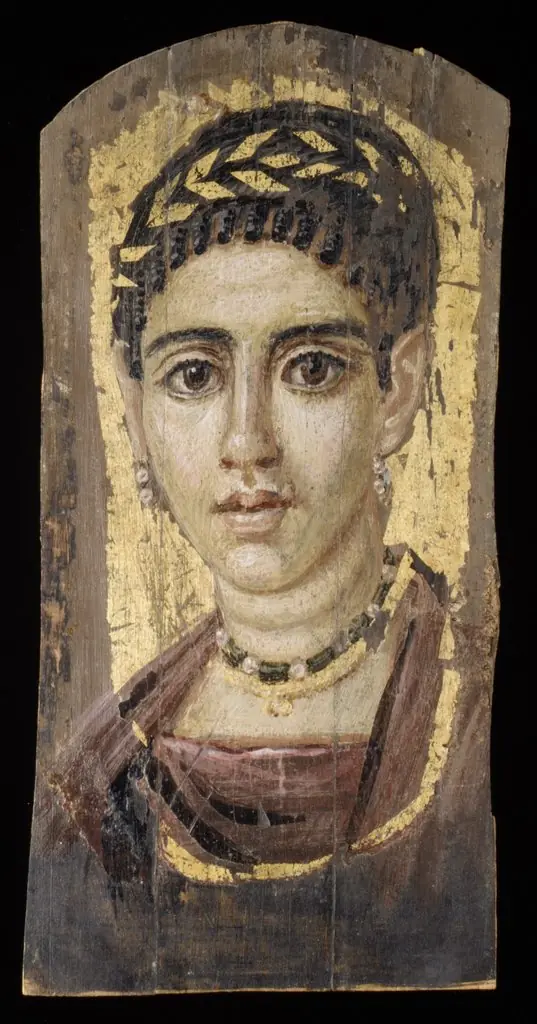 Portrait of a young woman with a gilded wreath
 Portrait of a man with a mole on his nose
 Portrait of a Youth with a Surgical Cut in one Eye
 Funerary Panel of a Man
 Portrait of a young woman in red
 Portrait of a Noblewoman
 Portrait of the Boy Eutyches
 Wall Painting of a Male Saint