Artwork
Portrait of a young woman with a gilded wreath
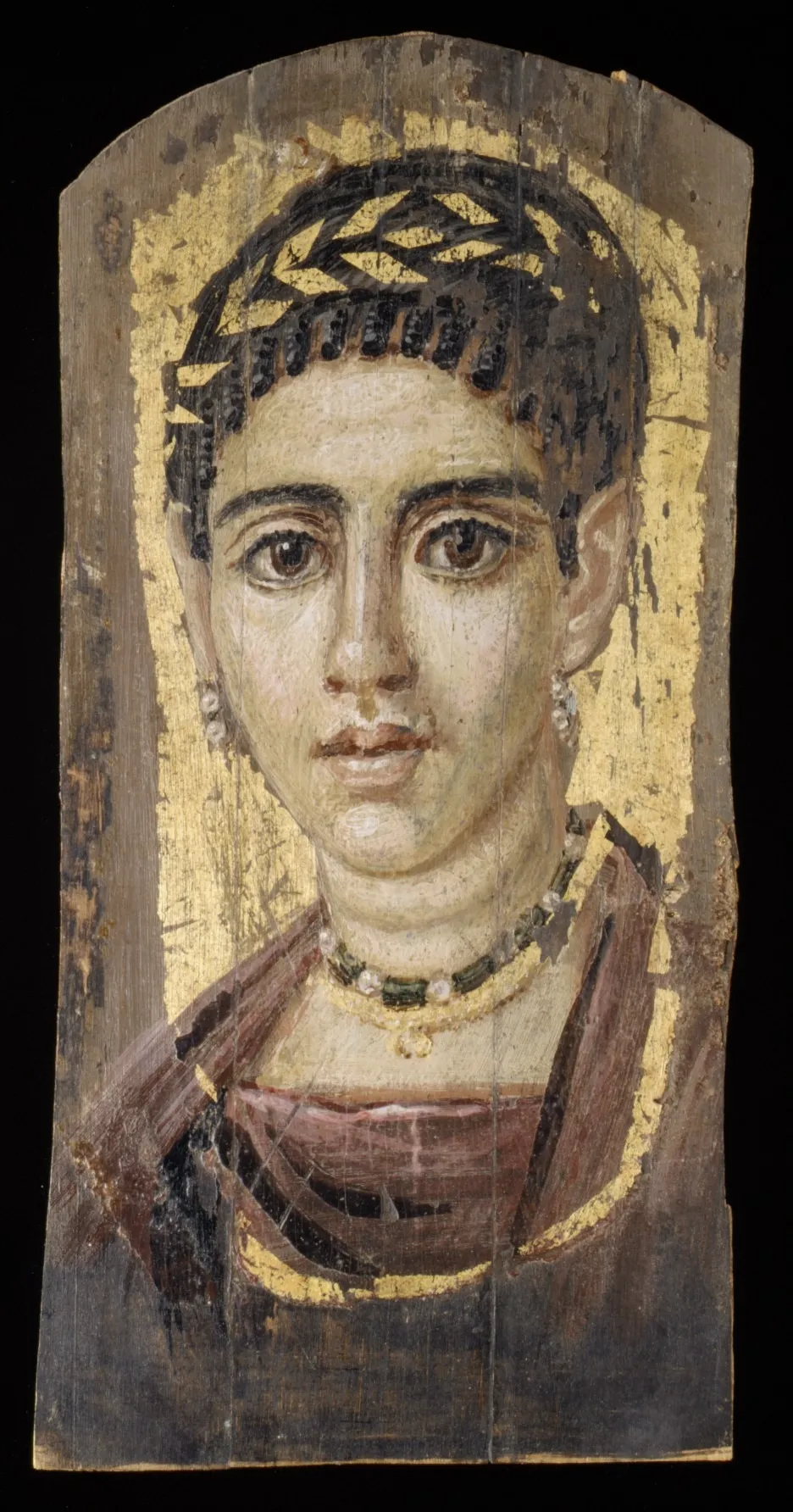
Portrait of a young woman with a gilded wreath is an unspecified painting by Unknown. It dates from 1850 and is held in the collection of the Metropolitan Museum of Art. This oil painting portrays a young woman adorned with a gilded wreath, set against a softly lit background that emphasizes her dark attire.
About this work
Overview
Subtle lighting highlights the texture of her clothing and the metallic sheen of the wreath, drawing attention to her restrained expression and refined details.
This oil painting portrays a young woman adorned with a gilded wreath, set against a softly lit background that emphasizes her dark attire. The composition focuses on her quiet presence, with minimal distraction from the surrounding space. Subtle lighting highlights the texture of her clothing and the metallic sheen of the wreath, drawing attention to her restrained expression and refined details.
Subject & Meaning
The subject is a young woman whose downward gaze suggests contemplation or modesty. The gilded wreath, likely referencing classical antiquity, may imply status, virtue, or idealized beauty rather than religious symbolism. Her simple dress and unadorned jewelry contrast with the ornate headpiece, creating a tension between humility and elevated symbolism.
Technique & Style
The artist employs a realistic approach to facial rendering, with careful modeling of light on skin and delicate brushwork in the eyes and hair. The dark dress absorbs ambient light, enhancing the luminosity of the gold wreath. Background tones are muted and even, allowing the figure to emerge with quiet authority through tonal contrast rather than dramatic chiaroscuro.
History & Provenance
The painting resides in the collection of the Metropolitan Museum of Art, acquired as part of its broader holdings of European portraiture. Its origins are not fully documented, but stylistic elements suggest a Northern European or Italian Renaissance influence, likely from the 16th or early 17th century. No known patron or artist has been definitively attributed.
Context
During the period in which it was likely created, portraits of women often incorporated classical motifs to convey moral or intellectual virtue. The gilded wreath aligns with contemporary trends that linked female portraiture to ideals of grace and refinement. Such works were typically commissioned by elite families to affirm social standing through symbolic rather than literal representation.
Legacy
Though not widely exhibited or studied, the painting contributes to the understanding of how modest portraiture could convey status through subtle symbolism. Its restrained elegance reflects a broader artistic preference for psychological depth over theatricality, offering insight into private ideals of beauty and dignity in early modern Europe.
Artist & collection

 Domestic Scene
 Giacomo and Cardinal Marco, investing Andrea, Abbot of San Zeno, with his Benefice
 The Nymph of Fontainebleau
 Portrait of a Woman
 Madonna and Child with Saints in the Enclosed Garden
 Venus and Minerva
 Family Group of Four on Sofa
 Wall painting from Room H of the Villa of P. Fannius Synistor at Boscoreale
 Funerary Portrait of a Young Girl
 Portrait of a young woman in red
 Head of a Woman
 Portrait of a Noblewoman
 Mummy Portrait - Woman with Necklace
 Portrait of a Woman
 Portrait of the Boy Eutyches
 Funerary Portrait of a Woman
 Portrait of a thin-faced man
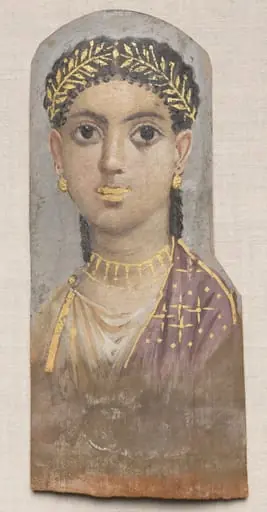 Funerary Portrait of a Young Girl
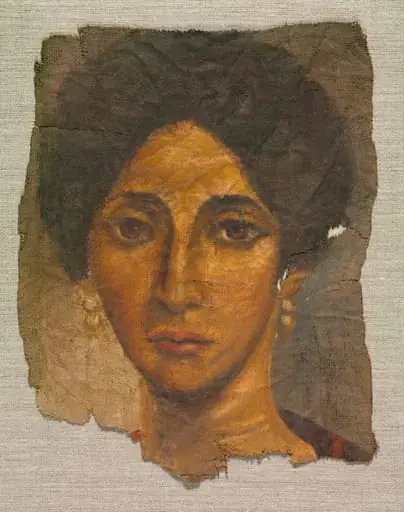 Funerary Portrait of a Woman
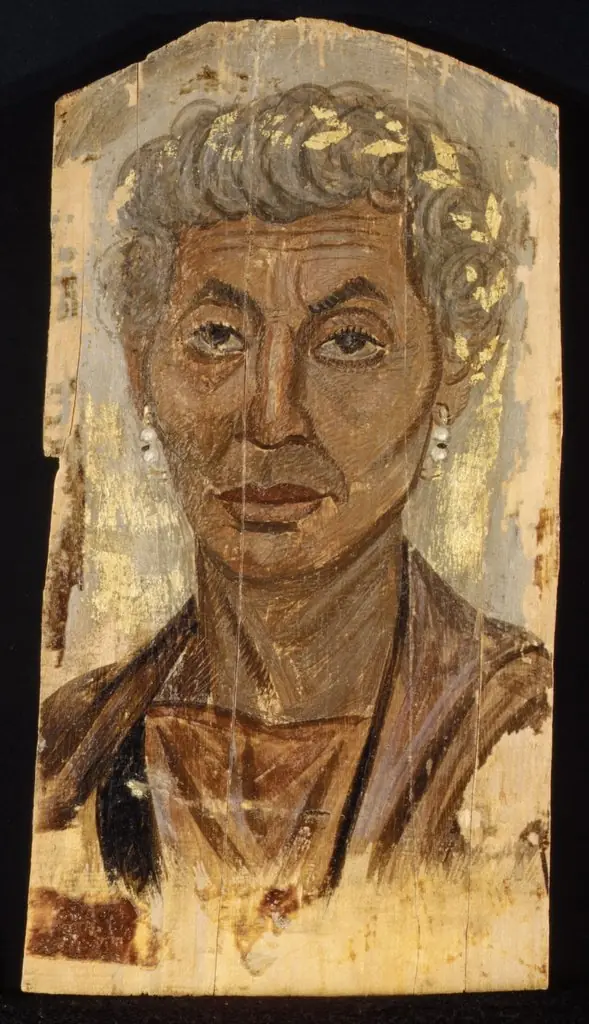 Portrait of an elderly lady with a gold wreath