Artwork
Kalpa Sutra
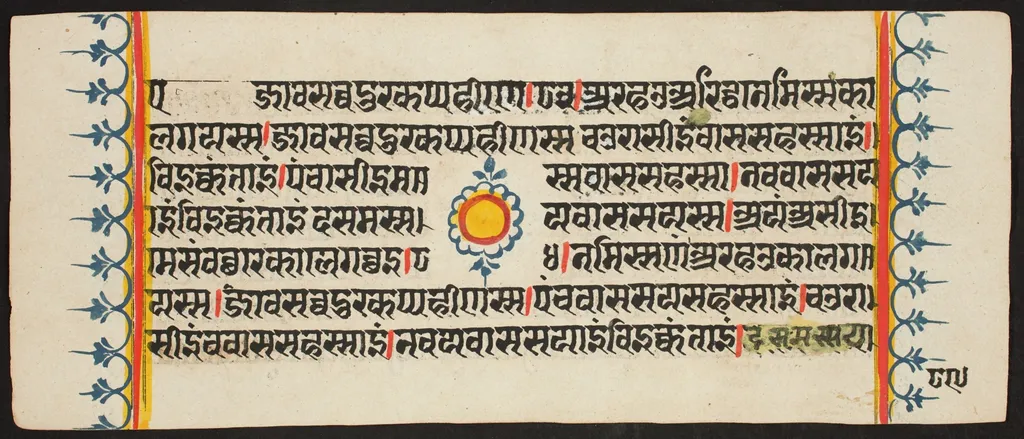
Kalpa Sutra is an unspecified painting by Unknown. It is held in the collection of the Detroit Institute of Arts.
About this work
Overview
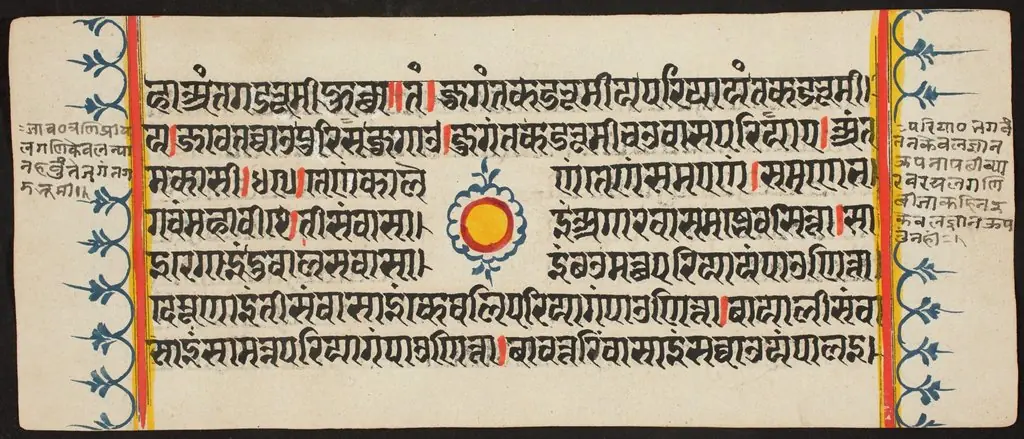
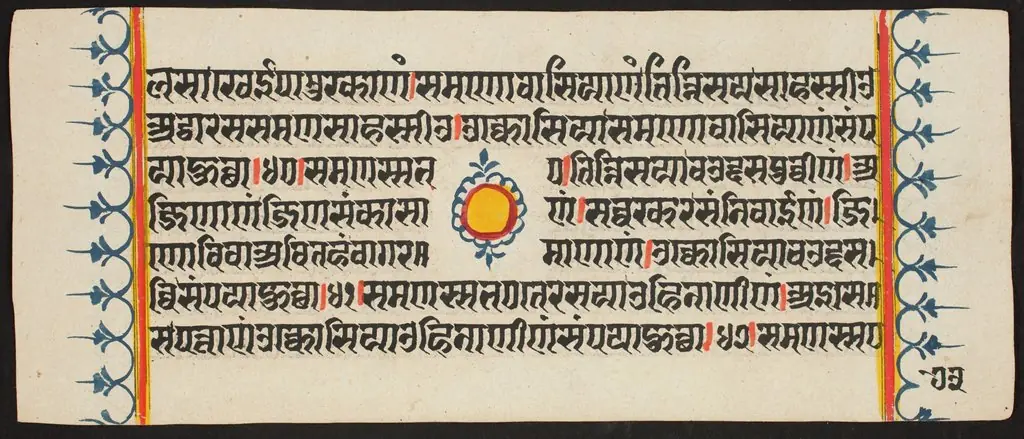
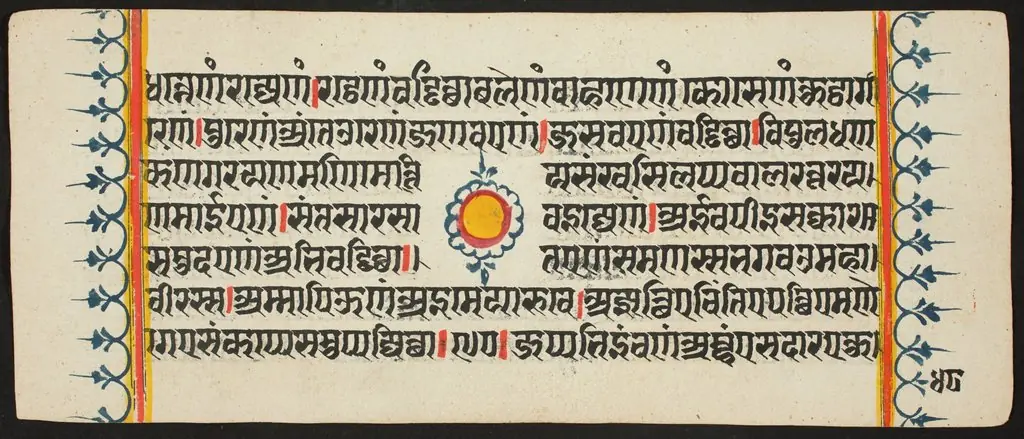
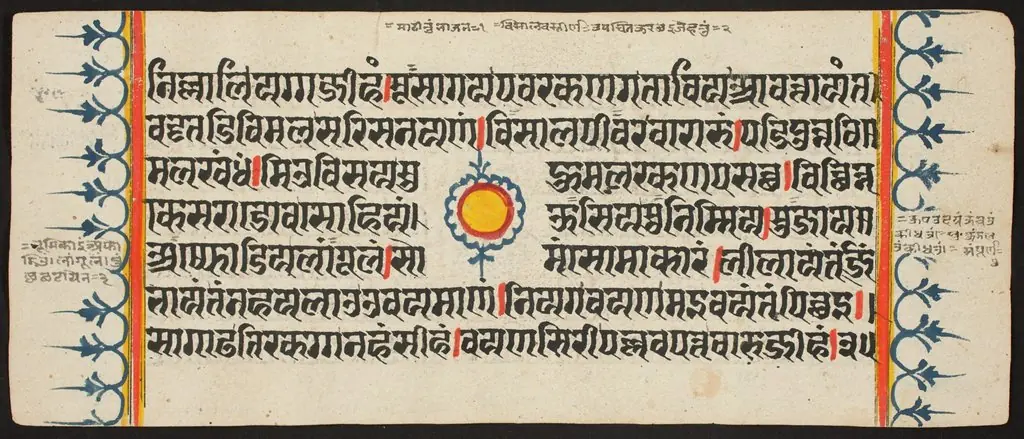
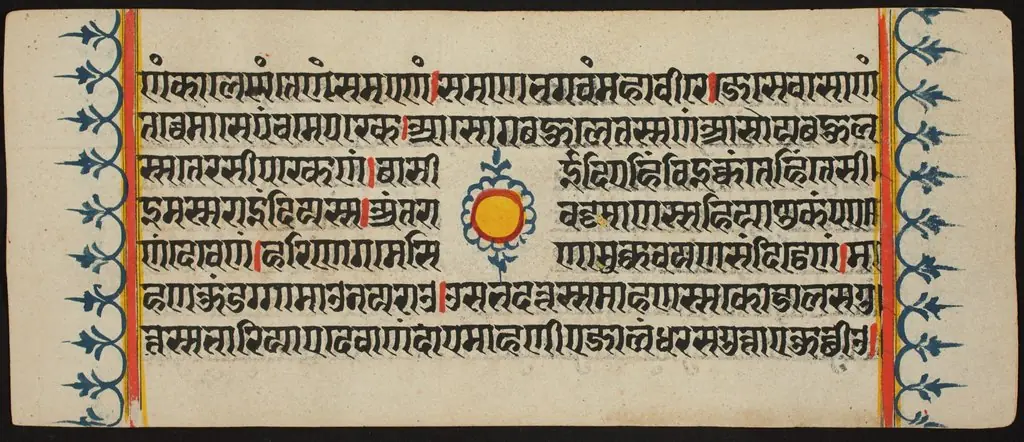
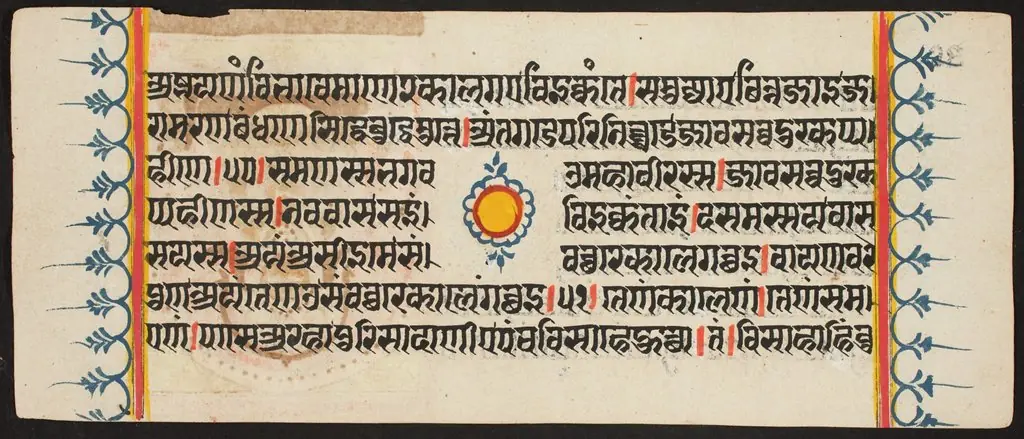
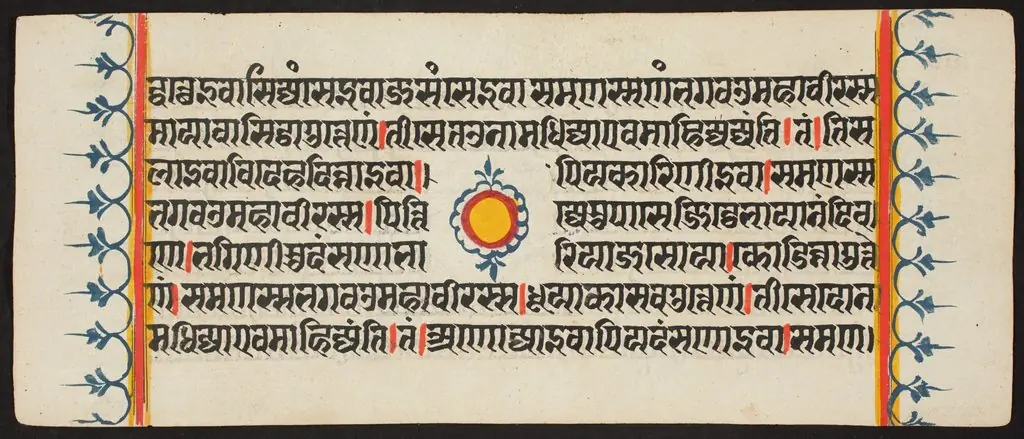
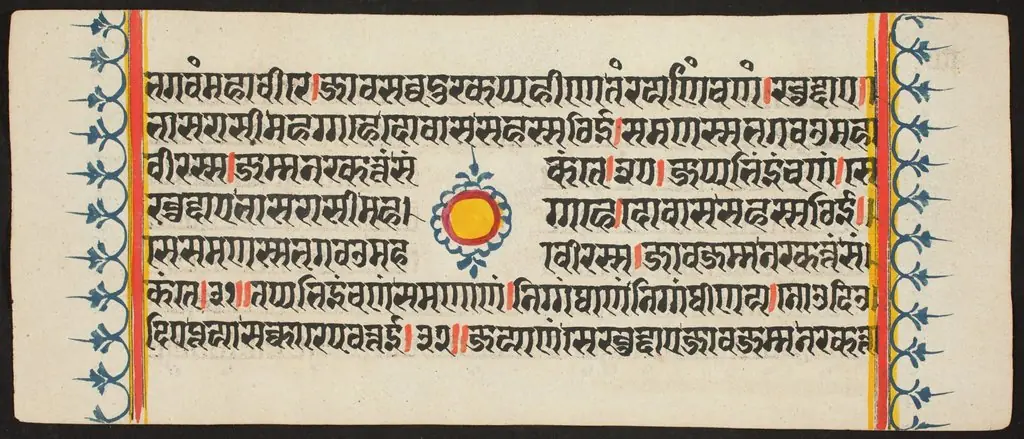
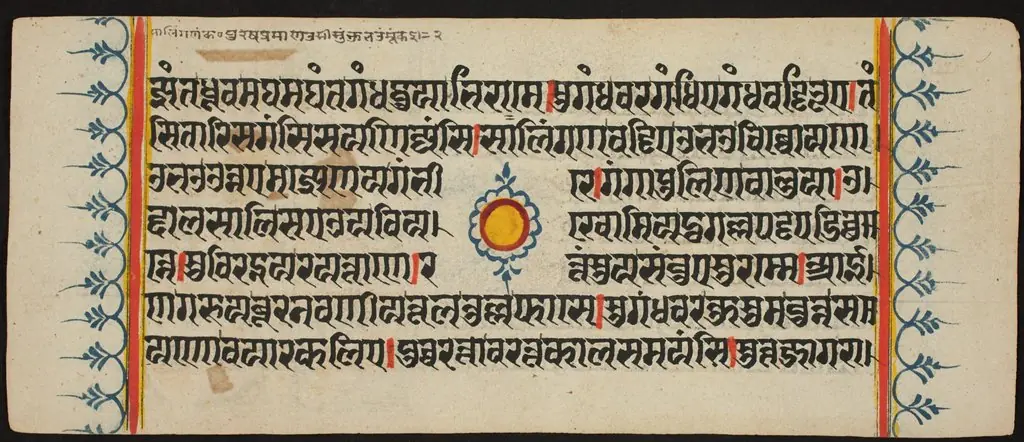
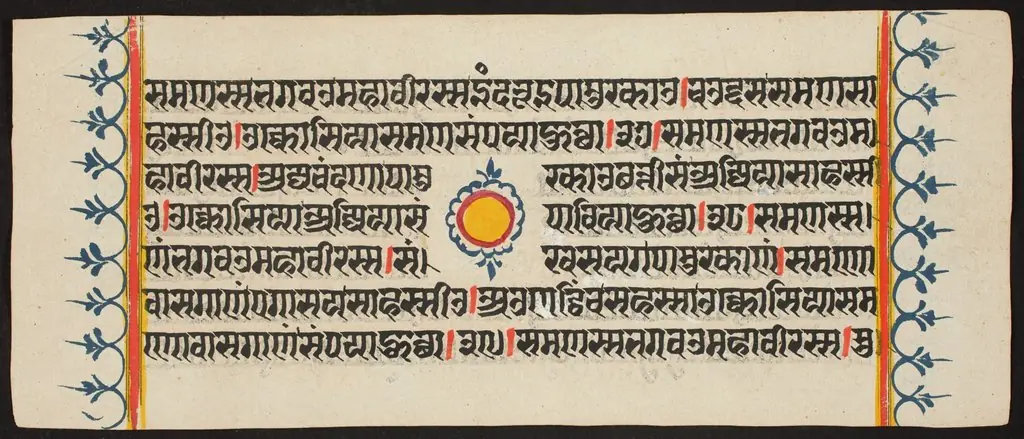
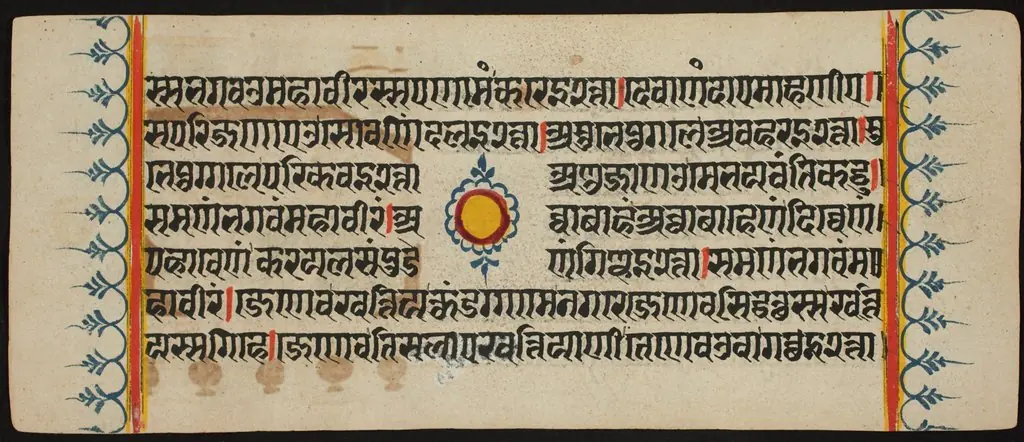
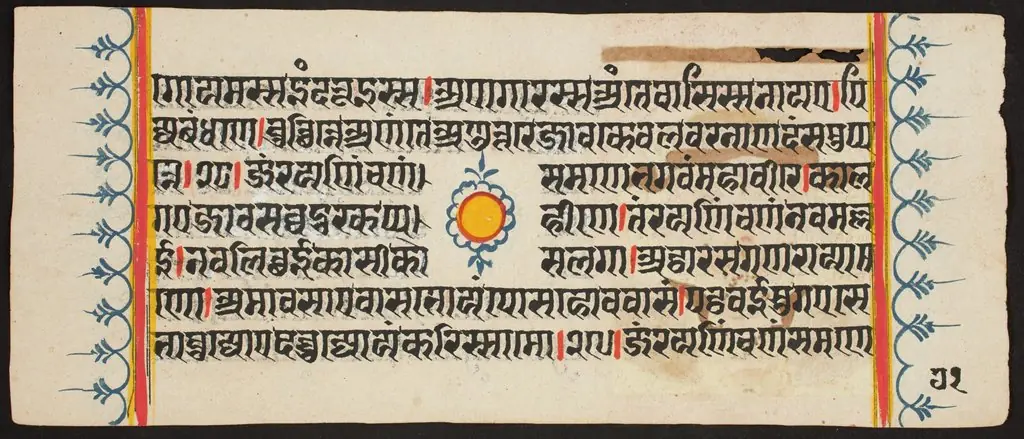
The light beige background enhances legibility and focuses attention on the text and ornamentation, typical of manuscript illumination in medieval India.
This painting is a folio from a manuscript associated with the Kalpa Sutra, a Jain religious text. It presents a structured arrangement of black script divided by thin red borders, suggesting a liturgical or ritual function. A central decorative motif—a yellow circle outlined in red, encircled by blue floral elements—anchors the composition. The light beige background enhances legibility and focuses attention on the text and ornamentation, typical of manuscript illumination in medieval India.
Subject & Meaning
The text, though written in a script not yet identified, is likely part of a Jain sacred narrative, possibly detailing the lives of Tirthankaras or monastic rules. The central emblem, with its circular form and botanical surrounds, may symbolize cosmic order or spiritual enlightenment. Red accents and borders could denote sacred divisions within the text, guiding ritual recitation. The absence of figural imagery aligns with Jain artistic conventions emphasizing textual purity over representation.
Technique & Style
The script is rendered in dense black ink, with careful penwork suggesting skilled calligraphy. Red lines separate textual units, functioning as visual pauses. The central motif is painted with mineral pigments—yellow ochre, vermilion, and lapis lazuli—applied with precision. The background, left unadorned in light beige, serves as a neutral field that heightens the contrast of the ink and pigments. The style reflects regional manuscript traditions of western India, circa 14th–15th century.
History & Provenance
This folio originates from a larger illuminated manuscript of the Kalpa Sutra, likely produced in a Jain monastic center in Gujarat or Rajasthan. Such manuscripts were commissioned by wealthy patrons or monastic communities for ceremonial use. Its survival suggests careful preservation, possibly within temple archives or private collections. The unknown script may indicate a localized dialect or a now-lost variant of Prakrit or Sanskrit used in ritual contexts.
Context
Produced during a period of flourishing Jain manuscript culture, this folio reflects the integration of textual devotion and visual symbolism. Jain communities emphasized the sacredness of written word, leading to elaborate illumination of religious texts. Similar decorative elements appear in other Jain manuscripts, where geometric and floral motifs served both aesthetic and symbolic roles, reinforcing spiritual themes without depicting human or divine figures.
Legacy
Though the script remains undeciphered, the folio contributes to the study of Jain liturgical practices and regional artistic traditions. Its preservation offers insight into how sacred texts were physically structured for ritual use. Modern scholars continue to analyze such manuscripts to reconstruct lost linguistic forms and understand the interplay between writing, ornament, and religious discipline in pre-modern South Asia.
Artist & collection

 Domestic Scene
 Giacomo and Cardinal Marco, investing Andrea, Abbot of San Zeno, with his Benefice
 The Nymph of Fontainebleau
 Portrait of a Woman
 Madonna and Child with Saints in the Enclosed Garden
 Venus and Minerva
 Family Group of Four on Sofa
 Wall painting from Room H of the Villa of P. Fannius Synistor at Boscoreale