Artwork
Kalpa Sutra
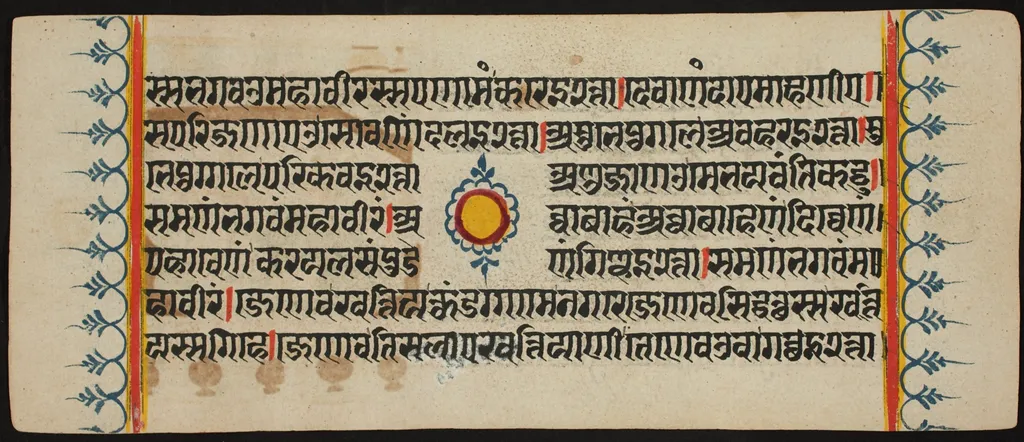
Kalpa Sutra is an unspecified painting by Unknown. It is held in the collection of the Detroit Institute of Arts.
About this work
Overview
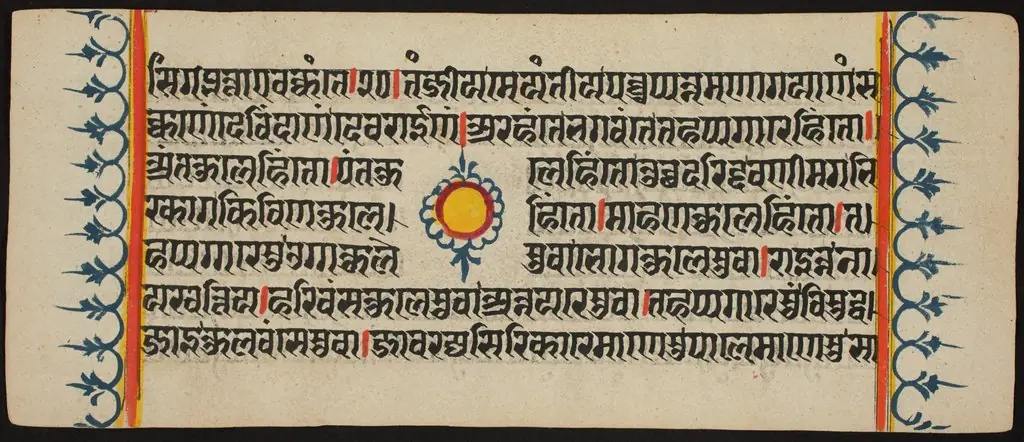
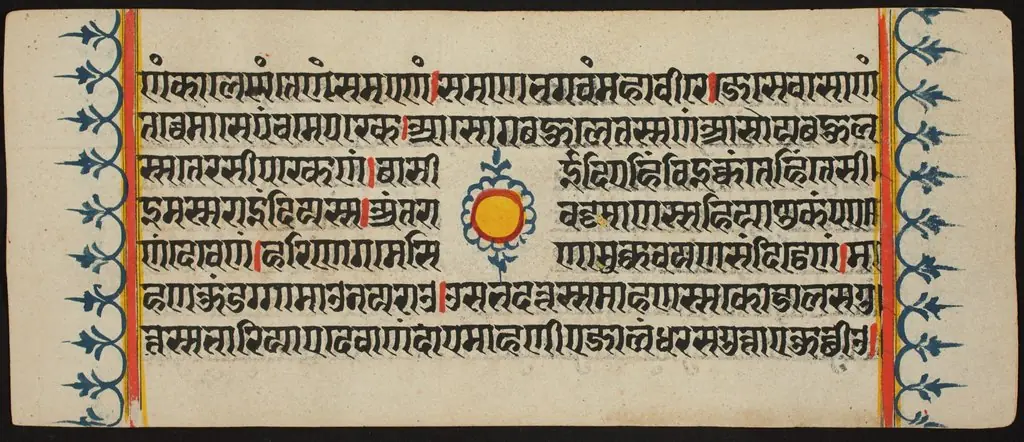
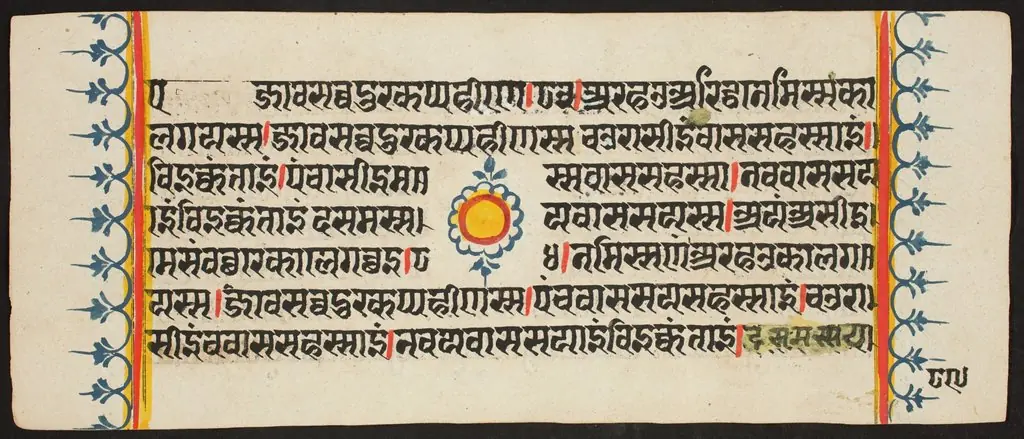
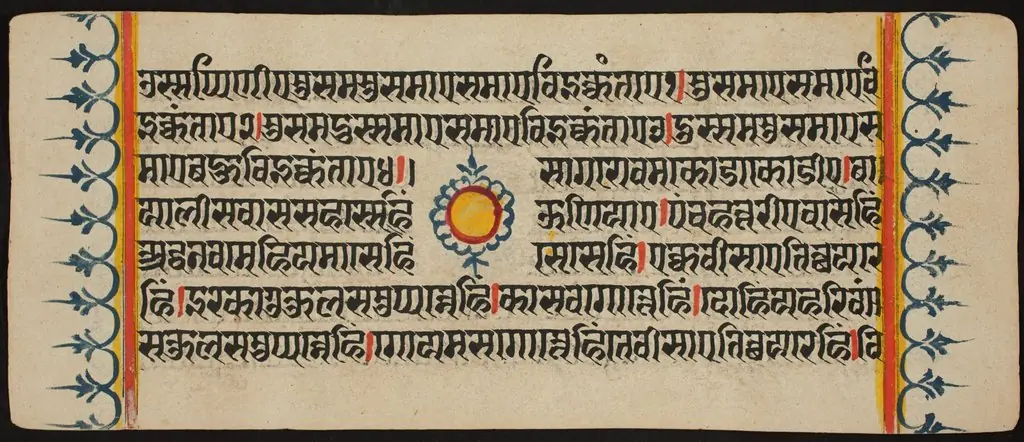
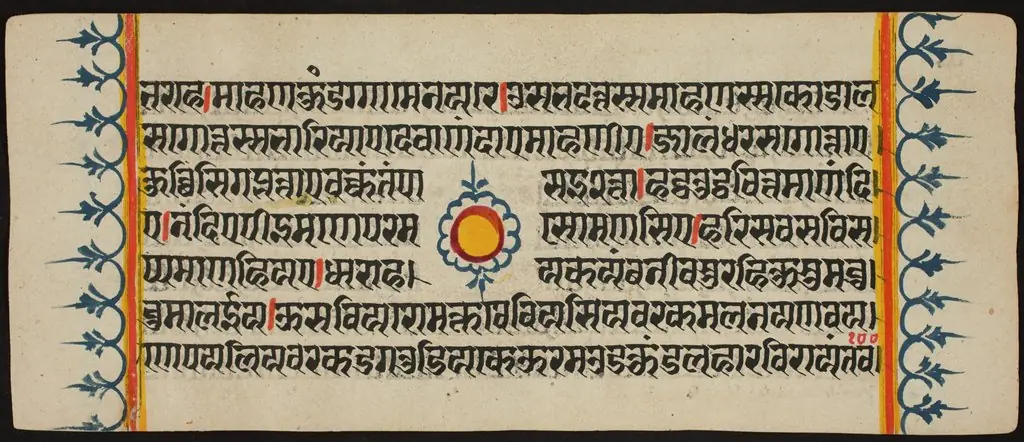
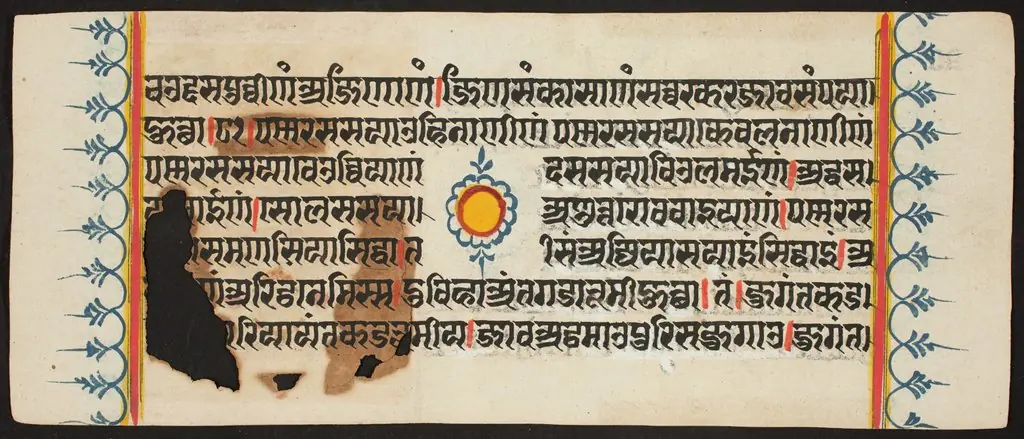
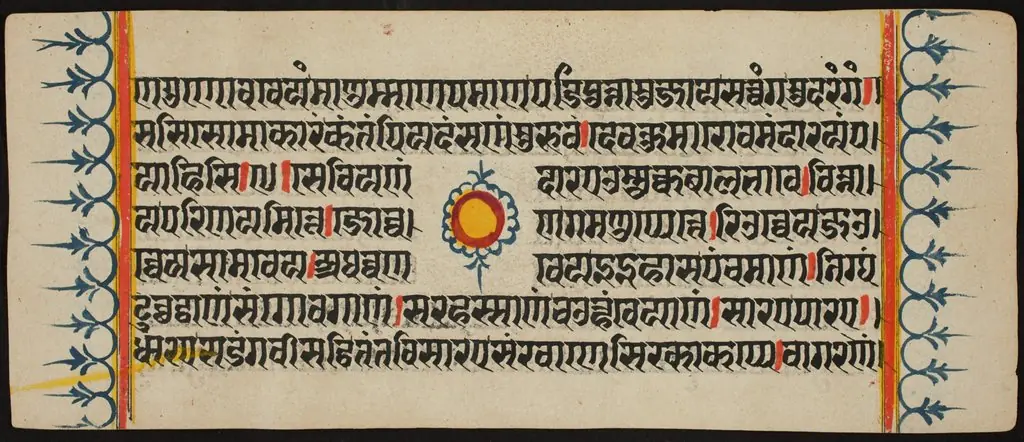
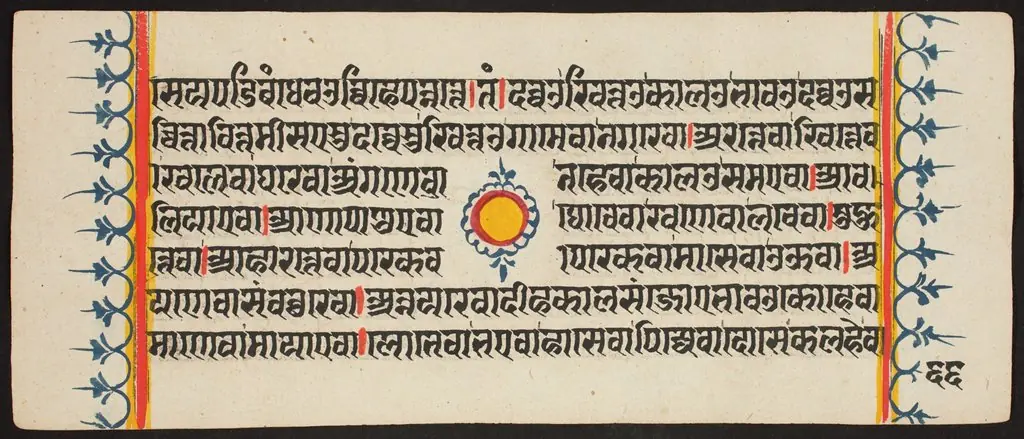
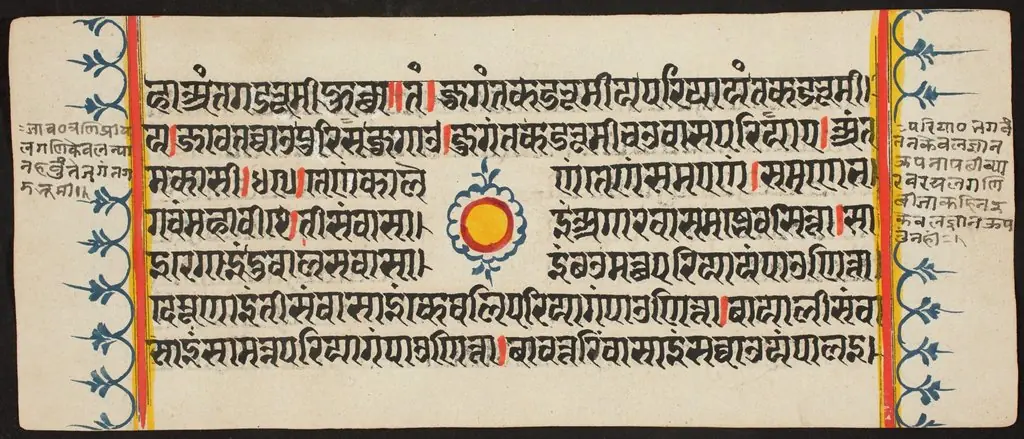
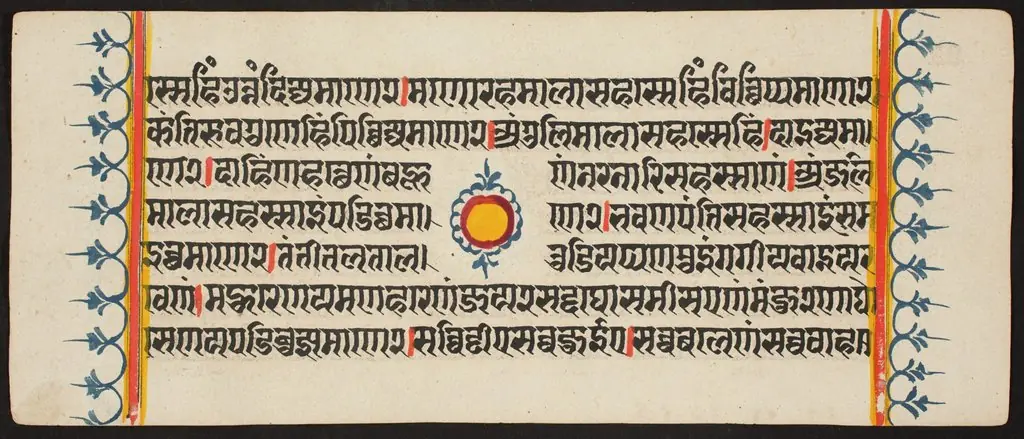
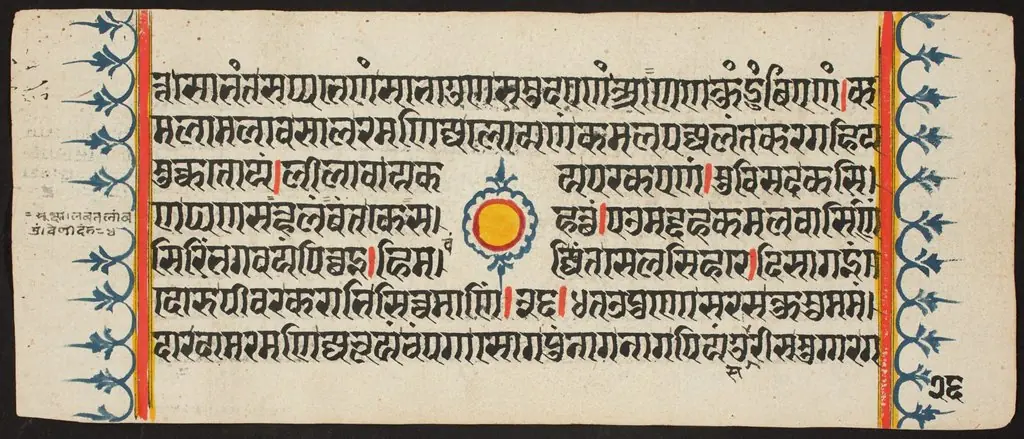
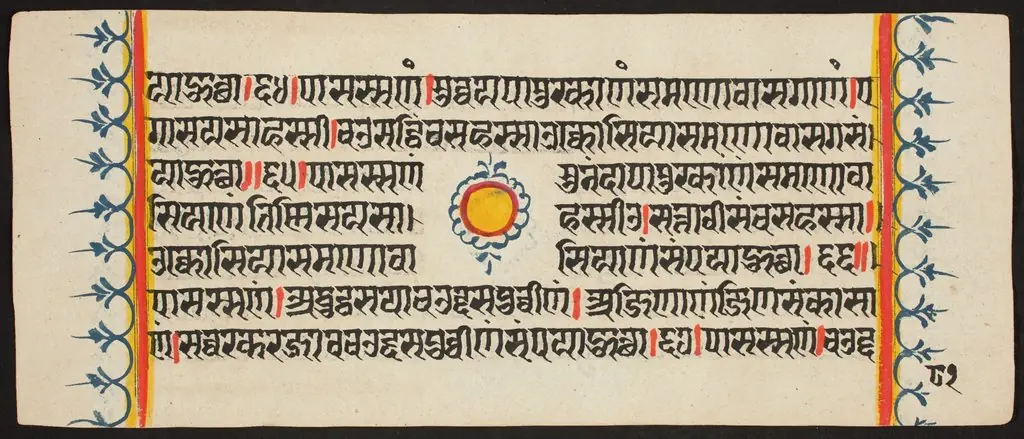
The surrounding borders feature stylized blue floral patterns, separated from the text by a thin yellow line, creating a structured yet ornate layout.
This painted manuscript page originates from a Kalpa Sutra manuscript, a Jain religious text. It presents a single folio with calligraphic script in black ink, accented with red. A central yellow disc, framed by red and blue floral motifs, anchors the composition. The surrounding borders feature stylized blue floral patterns, separated from the text by a thin yellow line, creating a structured yet ornate layout.
Subject & Meaning
The page contains sacred Jain scripture, likely recounting the lives of Tirthankaras. The central yellow circle may symbolize the soul or spiritual purity, common in Jain iconography. The floral borders and decorative accents reflect the reverence for the text, transforming the written word into a meditative object. The visual hierarchy emphasizes the sanctity of the content through ornamentation.
Technique & Style
The script is executed in a formal, cursive hand with deliberate flourishes, typical of Jain manuscript traditions. Ink is applied with precision, and red highlights are added by hand, possibly to mark important passages. The floral designs are rendered in flat, opaque pigments—yellow, red, and blue—applied with fine brushes. The use of geometric borders and symmetrical patterns reflects a disciplined aesthetic.
History & Provenance
This folio belongs to a larger manuscript tradition from western India, likely produced between the 14th and 16th centuries. Such pages were created by Jain monks or commissioned lay patrons for temple use. The specific script remains undeciphered, suggesting a regional or esoteric variant. Its survival indicates careful preservation within monastic or private collections over centuries.
Context
Jain manuscripts of this period were often produced in Gujarat or Rajasthan, where scriptural study and artistic patronage flourished. The emphasis on visual harmony and textual precision aligns with Jain principles of non-violence and order. These pages were not merely read but venerated, used in ritual recitation and displayed during religious festivals.
Legacy
Though the script remains undeciphered, the page exemplifies the Jain commitment to preserving sacred texts through art. Its design influenced later manuscript traditions in western India and continues to inform modern studies of Jain visual culture. The integration of text and ornament underscores a broader South Asian tradition where writing and imagery coexist as sacred expressions.
Artist & collection

 Domestic Scene
 Giacomo and Cardinal Marco, investing Andrea, Abbot of San Zeno, with his Benefice
 The Nymph of Fontainebleau
 Portrait of a Woman
 Madonna and Child with Saints in the Enclosed Garden
 Venus and Minerva
 Family Group of Four on Sofa
 Wall painting from Room H of the Villa of P. Fannius Synistor at Boscoreale