Artwork
Portrait of a Gentleman in Armour
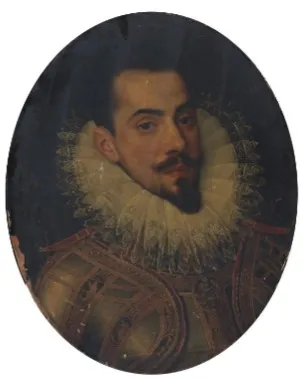
Portrait of a Gentleman in Armour is an unspecified painting by Unknown. It is held in the collection of the National Gallery of Ireland. This oil painting depicts a man dressed in partial armor, rendered with precise realism against a deep, unbroken background.
About this work
Overview
The artist’s focus on texture and form suggests a portrait commissioned to convey status and composure, typical of early modern European elite portraiture.
This oil painting depicts a man dressed in partial armor, rendered with precise realism against a deep, unbroken background. The subject’s face, framed by a stiff linen ruff and a neatly groomed mustache, is illuminated with careful attention to light and shadow. The artist’s focus on texture and form suggests a portrait commissioned to convey status and composure, typical of early modern European elite portraiture.
Subject & Meaning
The sitter, likely a nobleman or military officer, is portrayed not in full battle gear but in ceremonial armor, suggesting a role defined by authority rather than combat. The stillness of his expression and the polished surface of his armor imply dignity and self-possession. The absence of symbolic objects or landscape directs focus to the individual’s presence, emphasizing personal identity over allegory.
Technique & Style
The artist employs chiaroscuro to model the contours of the armor and the sitter’s face, enhancing three-dimensionality without overt drama. Brushwork is controlled, with fine detailing in the metal’s reflections and the crisp folds of the ruff. The dark background isolates the figure, heightening the tactile quality of the materials and reinforcing the portrait’s intimate, frontal composition.
History & Provenance
The painting resides in the National Gallery of Ireland, where it has been held since the 19th century. Its origins trace to the late 16th or early 17th century, possibly from a Northern European workshop. While the sitter’s identity remains unconfirmed, its stylistic qualities align with portraiture produced in regions under Habsburg influence, where military elites frequently commissioned such images.
Context
During this period, portraits of armored gentlemen were common among the nobility, serving as visual assertions of rank and martial virtue. Unlike battlefield scenes, these works emphasized personal bearing and material wealth. The restrained palette and lack of ornamentation reflect a shift toward understated elegance, contrasting with the flamboyance of earlier Renaissance portraiture.
Legacy
The painting endures as a quiet testament to the skill of anonymous or lesser-known portraitists of the era. Its preservation allows study of how armor was rendered in paint and how facial expression was used to convey authority without overt grandeur. It contributes to broader understanding of how elite identity was visually constructed outside the most celebrated artistic centers.
Artist & collection

 Domestic Scene
 Giacomo and Cardinal Marco, investing Andrea, Abbot of San Zeno, with his Benefice
 The Nymph of Fontainebleau
 Portrait of a Woman
 Madonna and Child with Saints in the Enclosed Garden
 Venus and Minerva
 Family Group of Four on Sofa
 Wall painting from Room H of the Villa of P. Fannius Synistor at Boscoreale
 Portrait of a gentleman
 Portrait of Jean Fourmenois
 Portrait of a Young Man
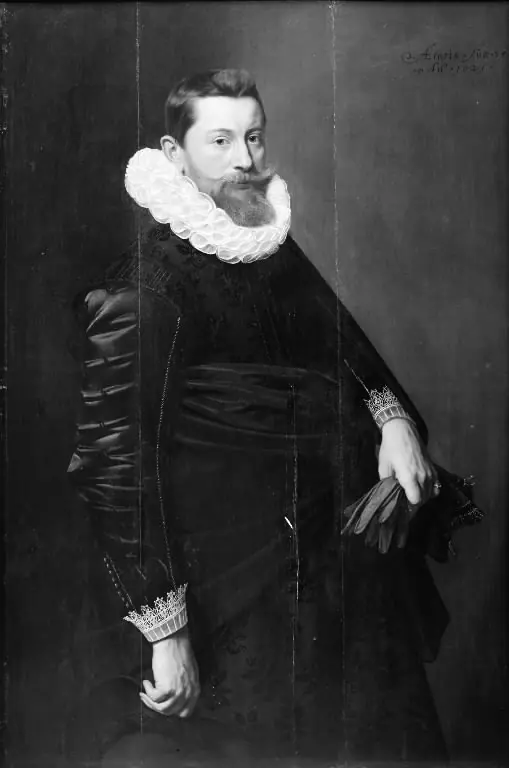 Portrait of a Gentleman
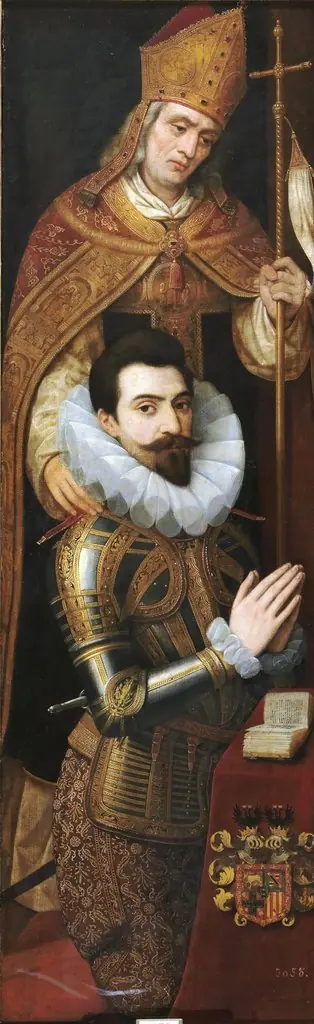 Alonso de Idiáquez duque de Ciudad Real (Cittá-Reale en Nápoles)
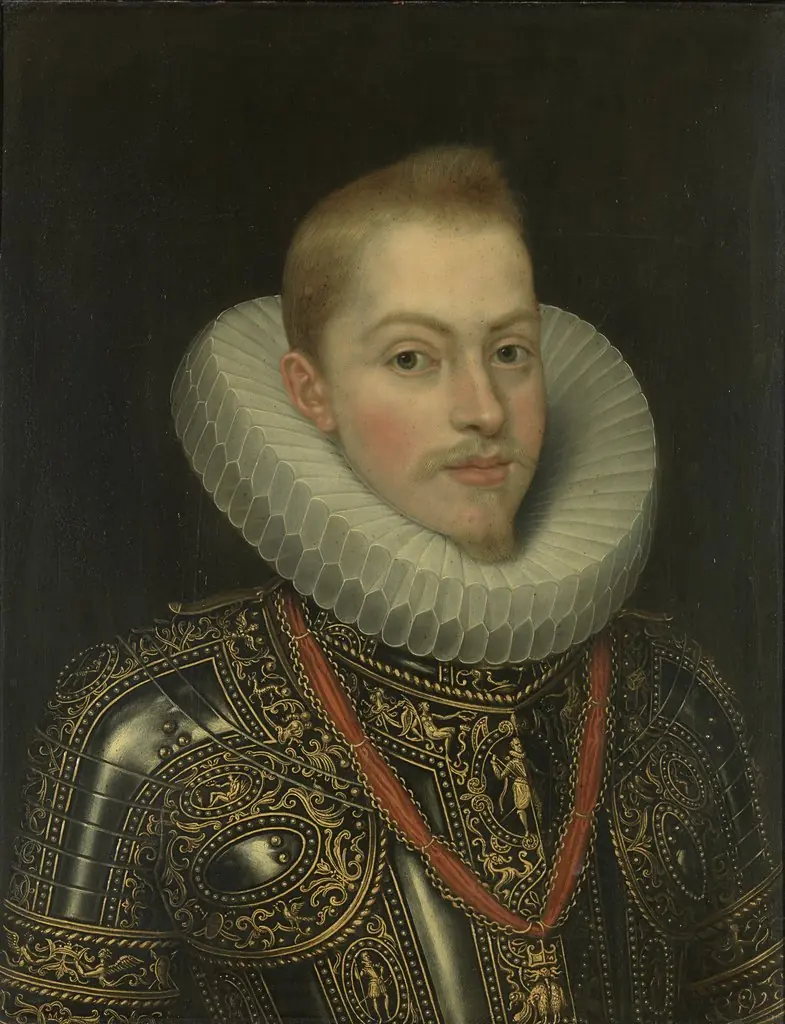 Portrait of Philip III, King of Spain
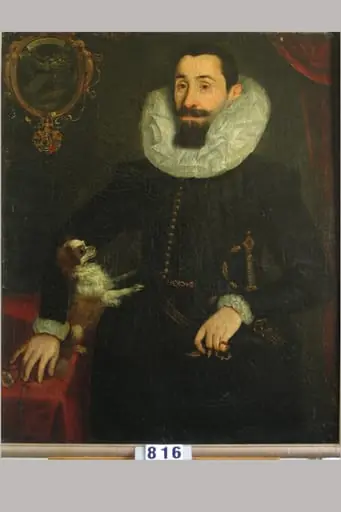 Necunoscut în costum german de curte (în Reg. Inv.: Necunoscut în costum german)
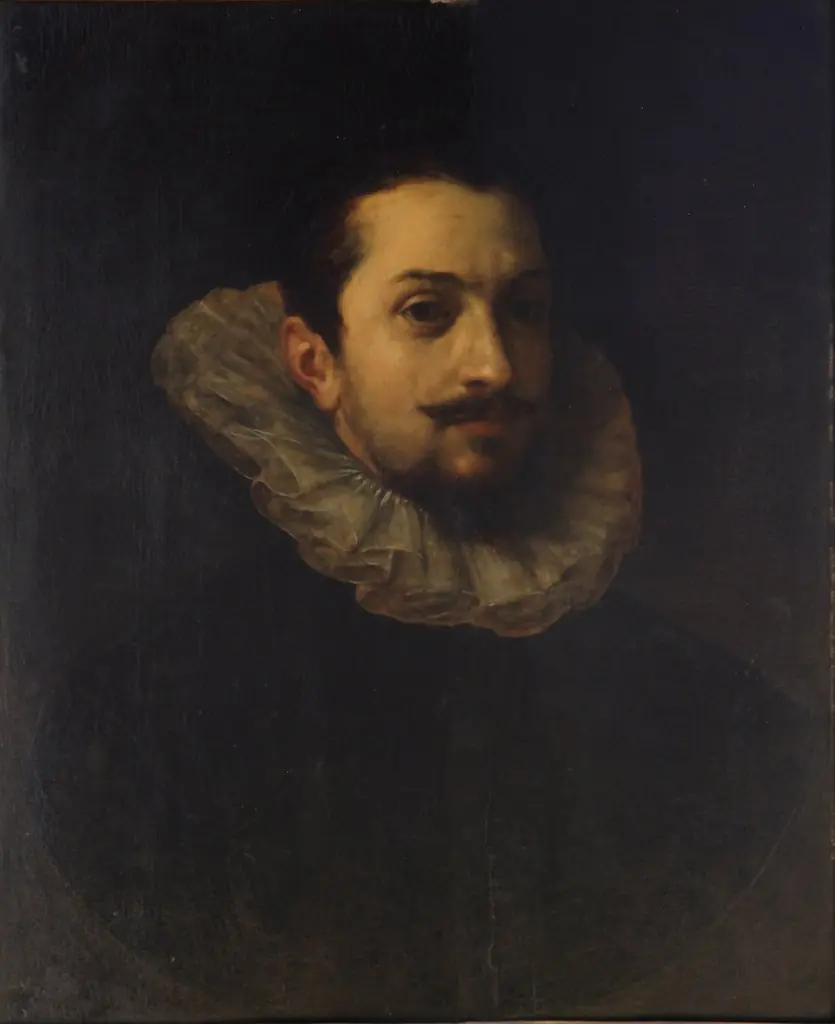 Portrait of a man
 Filippo d'Angeli
 Portrait of a Man