Artwork
Page from Tales of a Parrot (Tuti-nama): text page
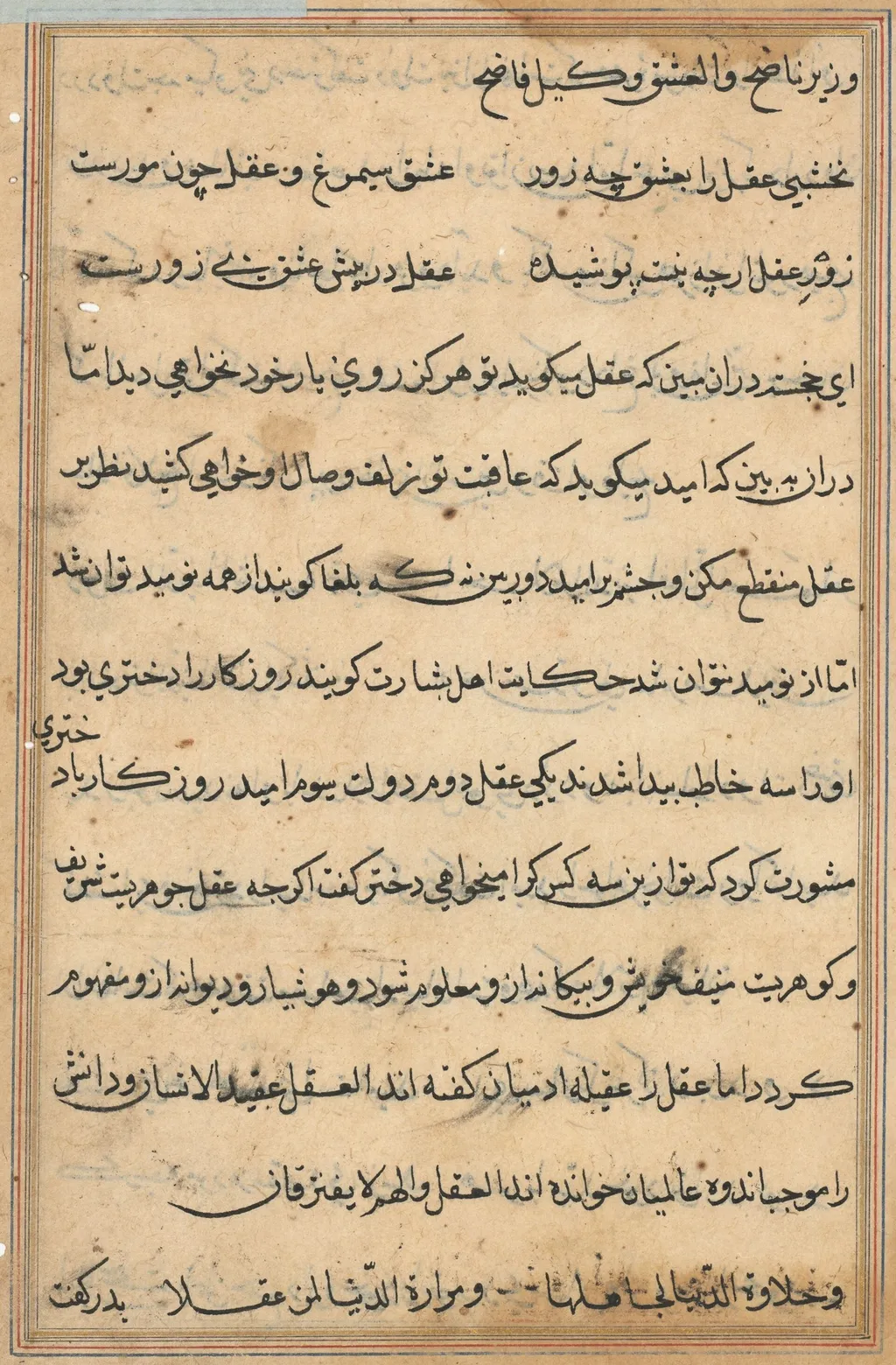
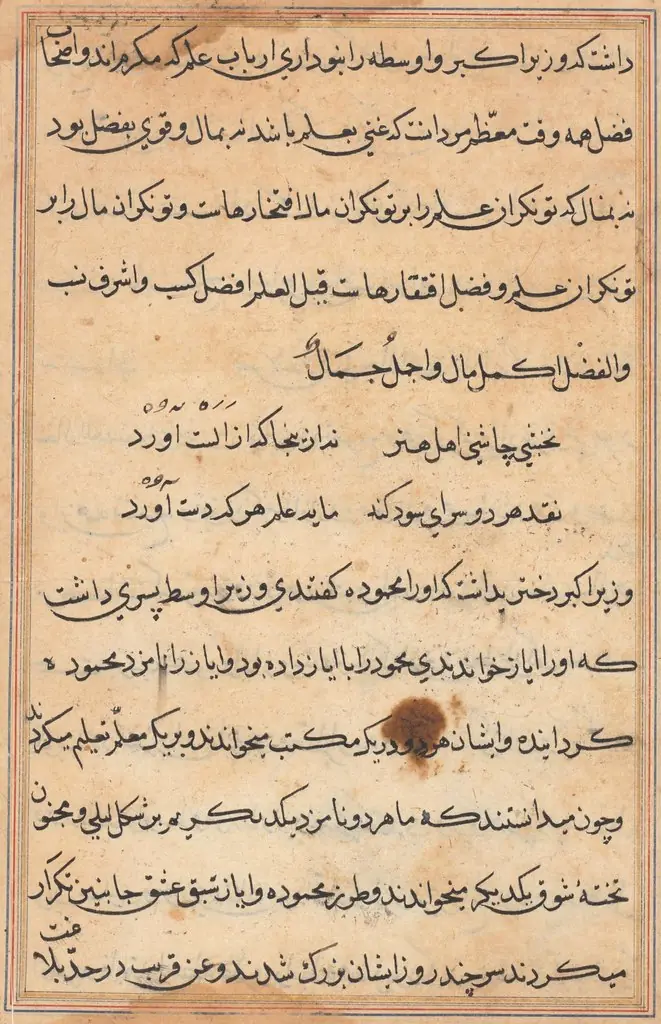
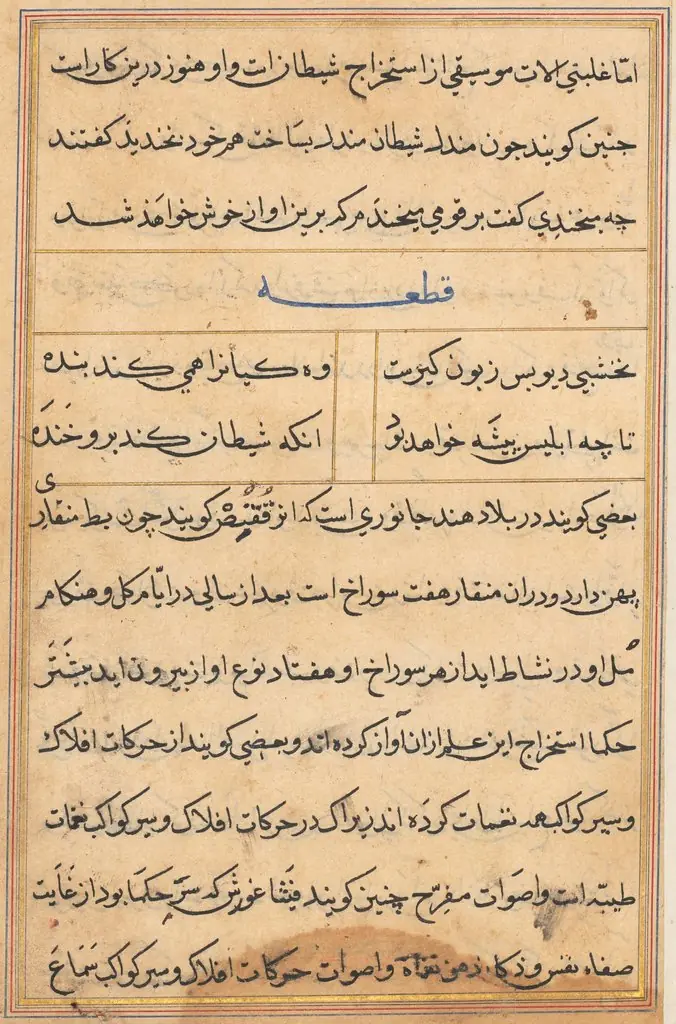
Page from Tales of a Parrot (Tuti-nama): text page is an unspecified painting. It dates from 1560 and is held in the collection of the Cleveland Museum of Art. The work presents a visual representation of a manuscript page from the Persian collection known as *Tuti‑nama* (Tales of a Parrot).
About this work
Overview
The work presents a visual representation of a manuscript page from the Persian collection known as *Tuti‑nama* (Tales of a Parrot). Rendered as a painted illusion, the image captures a single leaf of text rendered in black ink on a light‑colored background, framed by a thin red line and a broader blue border. The surface appears weathered, with faint stains and torn edges suggesting age.
Subject & Meaning
The depicted page likely contains a narrative or poetic excerpt, typical of the *Tuti‑nama* tradition that blends moral instruction with whimsical storytelling. While the precise content remains unreadable, the presence of underlined passages highlighted in blue hints at emphasis on particular verses, perhaps indicating moral or didactic focal points within the larger tale.
Technique & Style
Subtle shading conveys the texture of aged paper, including stains and ragged edges.
Executed with meticulous brushwork, the artist reproduces the calligraphic script in a fluid, flowing hand, preserving the original ink density and line quality. The composition balances the stark black text against a muted beige field, while the decorative borders—thin red and thicker blue—add a modest chromatic contrast. Subtle shading conveys the texture of aged paper, including stains and ragged edges.
History & Provenance
The painting is a later visual interpretation of a historical manuscript, created to document or celebrate the *Tuti‑nama* tradition. Its provenance traces to a collection of Persian literary artifacts, though specific details of its commissioning or acquisition remain undocumented. The work serves as a bridge between the original handwritten codex and contemporary museum audiences.
Context
*Tuti‑nama* manuscripts were popular in the Safavid and Mughal periods, often illustrated with miniature paintings and elaborate borders. This painted page reflects that aesthetic, emphasizing the reverence for textual art in Persian culture. By isolating a single leaf, the artist underscores the manuscript’s role as both literary and visual object within its historical milieu.
Artist & collection

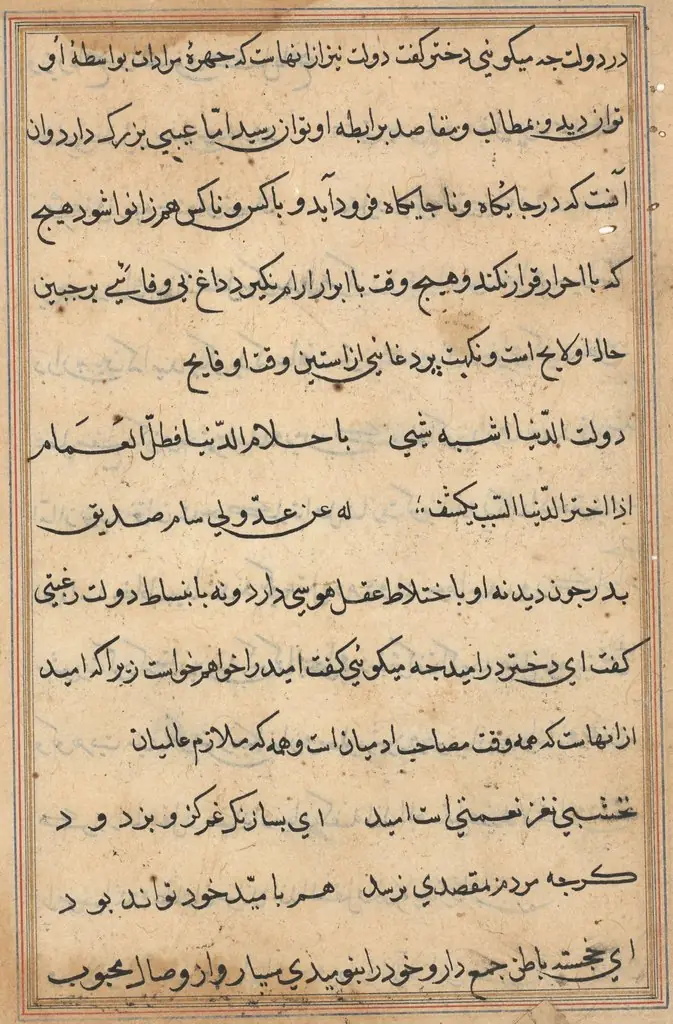 Page from Tales of a Parrot (Tuti-nama): text page
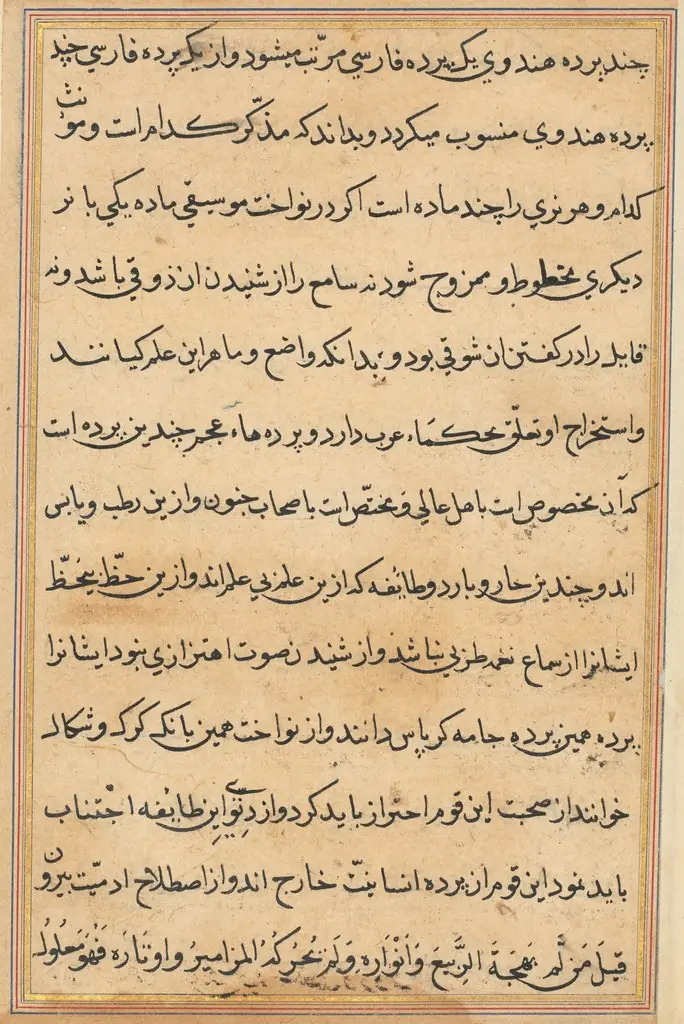 Page from Tales of a Parrot (Tuti-nama): text page
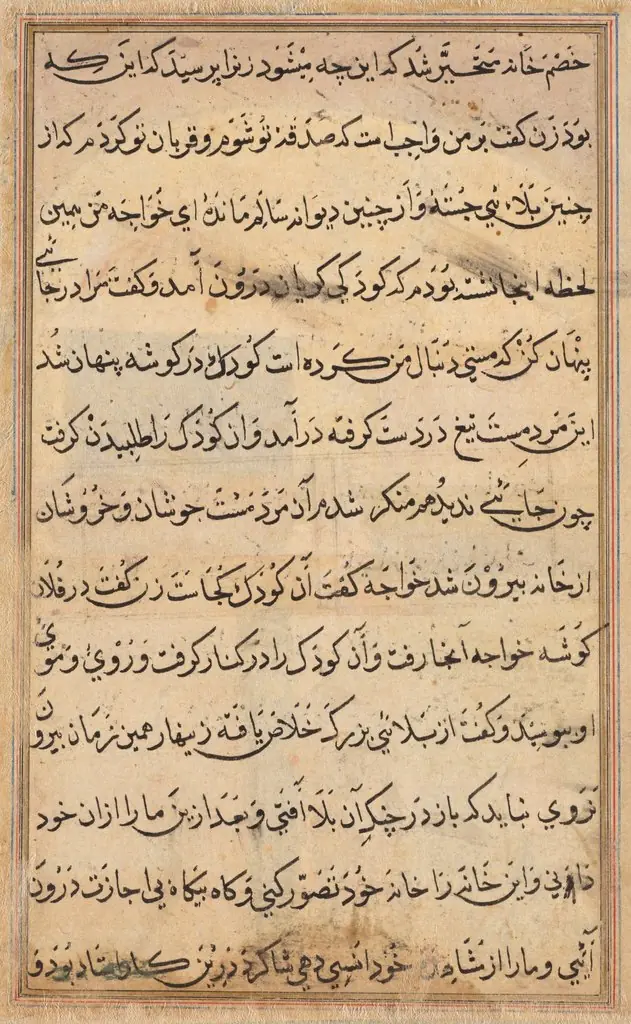 Page from Tales of a Parrot (Tuti-nama): text page
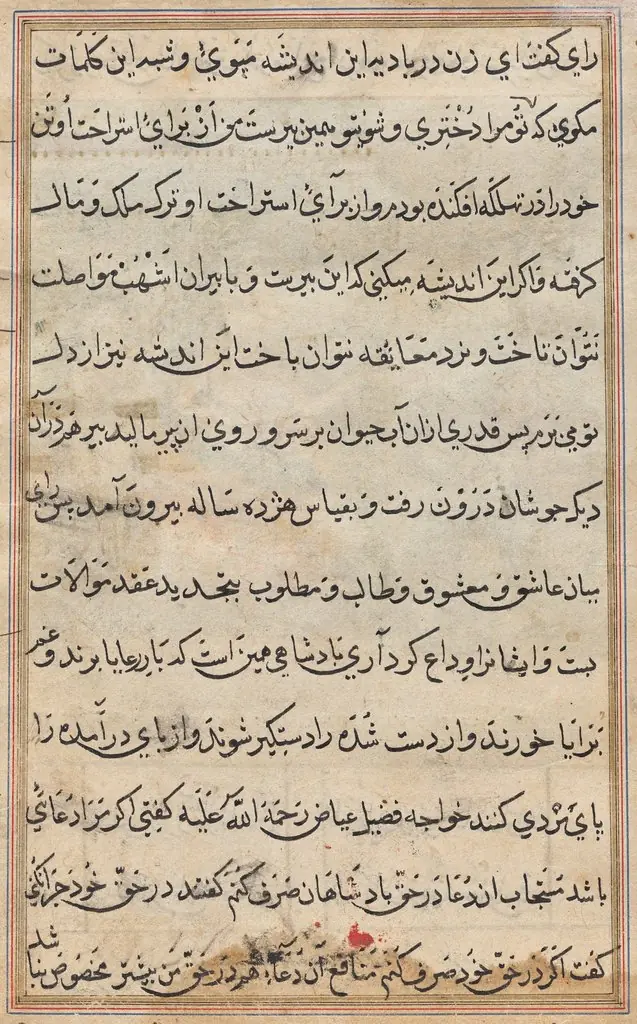 Page from Tales of a Parrot (Tuti-nama): text page
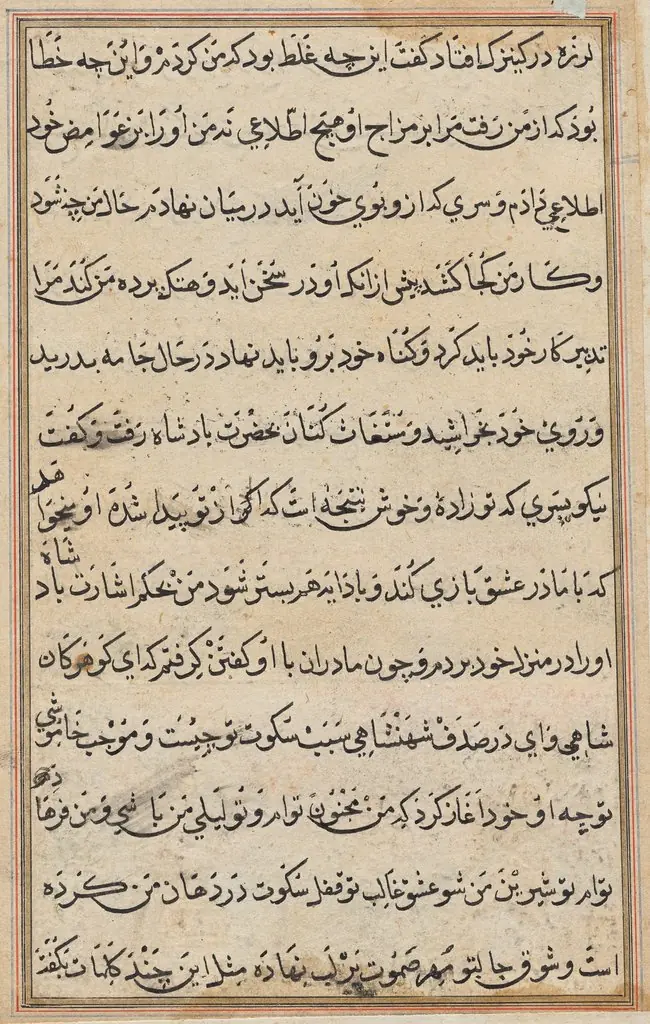 Page from Tales of a Parrot (Tuti-nama): text page
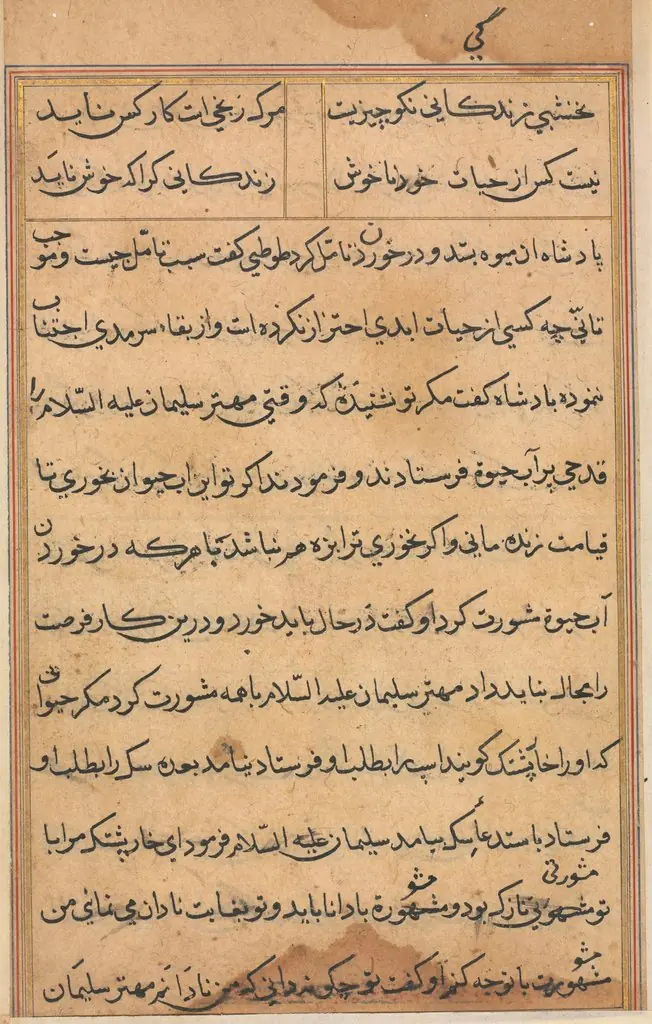 Page from Tales of a Parrot (Tuti-nama): text page
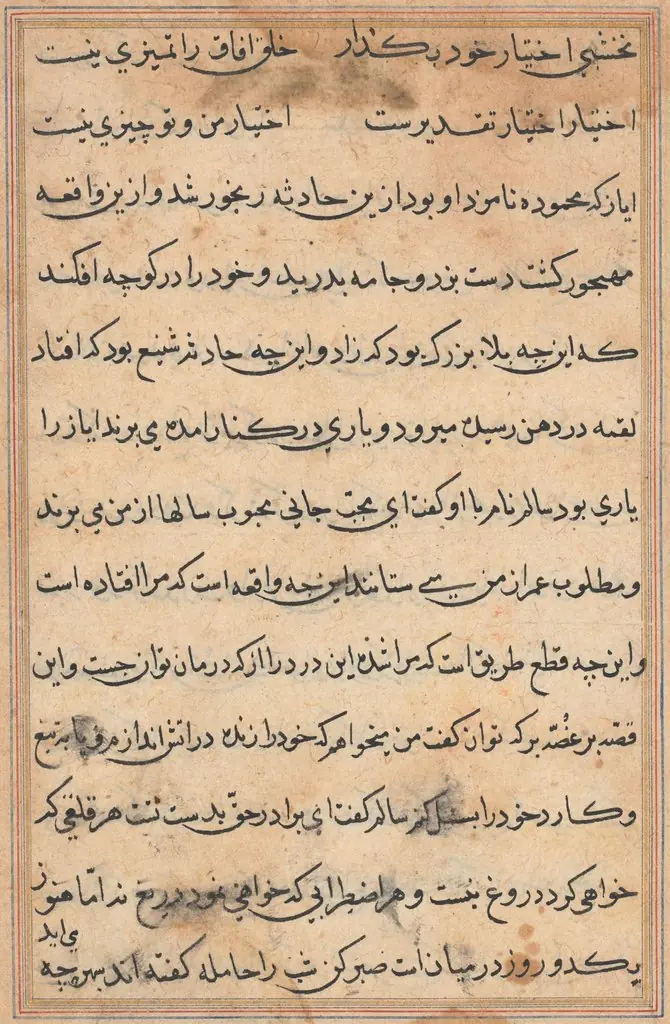 Page from Tales of a Parrot (Tuti-nama): text page
 Page from Tales of a Parrot (Tuti-nama): text page
 Page from Tales of a Parrot (Tuti-nama): text page