Artwork
Portrait of a Nobleman
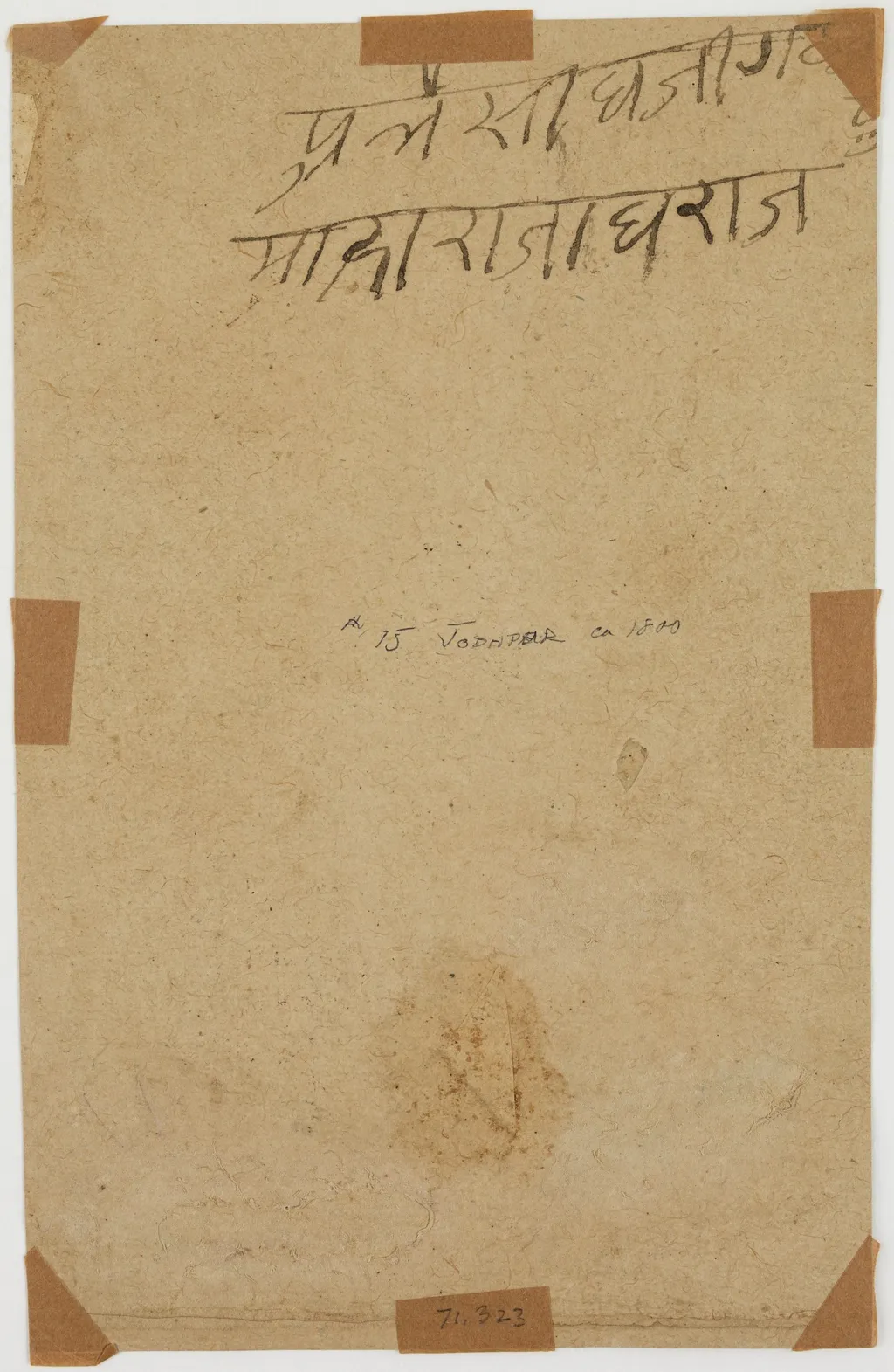
Portrait of a Nobleman is an unspecified painting by the Neoclassicist artist Unknown. It dates from 1800 and is held in the collection of the Detroit Institute of Arts.
About this work
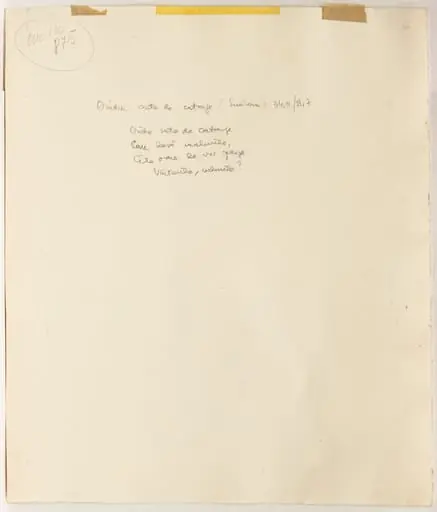
The edges are reinforced with brown tape, suggesting it might have once held a fragile or damaged artwork.
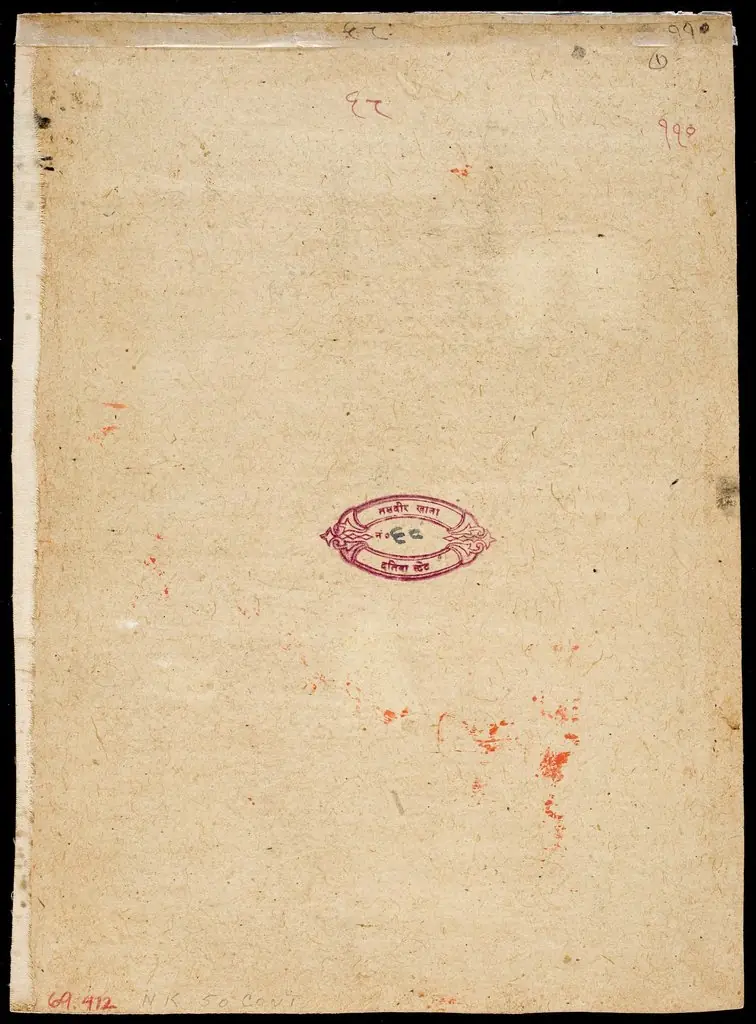
This image shows an empty, faded brown paper frame with two lines of script in black ink at the top. The script looks like an old label, possibly in a language that uses characters with curved shapes. There’s also a small handwritten note in the bottom left corner that reads “A 15 Jodhpur ca 1800.”
The paper has a few small stains and marks, like it’s been handled a lot over time. The edges are reinforced with brown tape, suggesting it might have once held a fragile or damaged artwork.
Next, check out the Detroit Institute of Arts to see what else they hold.
Overview
The work identified as “Portrait of a Nobleman” is a painted image that currently exists only as a faded brown paper mount. The mount bears two lines of black‑ink script resembling an older label, along with a marginal note reading “A 15 Jodhpur ca 1800.” The paper shows signs of extensive handling, small stains, and is reinforced with brown tape, indicating past conservation efforts.
Subject & Meaning
While the original painted surface is no longer visible, the title suggests a representation of an aristocratic figure from the Jodhpur region of India. Such portraits traditionally emphasized status through clothing, jewelry, and posture, serving both as personal commemoration and as a visual record of lineage within princely courts.
Technique & Style
Because the painting itself is absent, details of the artist’s technique, palette, and stylistic influences cannot be directly assessed. The surviving paper mount, however, points to a 19th‑century Indian context, where oil on canvas and miniature watercolor traditions coexisted, often employing fine brushwork and rich pigments to convey texture and regalia.
History & Provenance
The marginal annotation places the work in Jodhpur around 1800, situating it within the late‑Mughal or early Rajput period of Indian art. The paper’s reinforced edges and multiple stains imply that the object has been handled repeatedly, likely moving through private collections before arriving at the Detroit Institute of Arts, where it is now catalogued.
Context
At the turn of the 19th century, Jodhpur’s ruling class commissioned portraits to assert legitimacy and document alliances. Such works were often displayed in palaces or diplomatic settings, reflecting a blend of indigenous artistic conventions and influences from European portraiture introduced through colonial contact.
Artist & collection

 Domestic Scene
 Giacomo and Cardinal Marco, investing Andrea, Abbot of San Zeno, with his Benefice
 The Nymph of Fontainebleau
 Portrait of a Woman
 Madonna and Child with Saints in the Enclosed Garden
 Venus and Minerva
 Family Group of Four on Sofa
 Wall painting from Room H of the Villa of P. Fannius Synistor at Boscoreale
 Țigăncușă cu ochi verzi (țigancă)
 The Meeting of Radha and Krishna in the Forest of Brindaban
 Tătăroaică
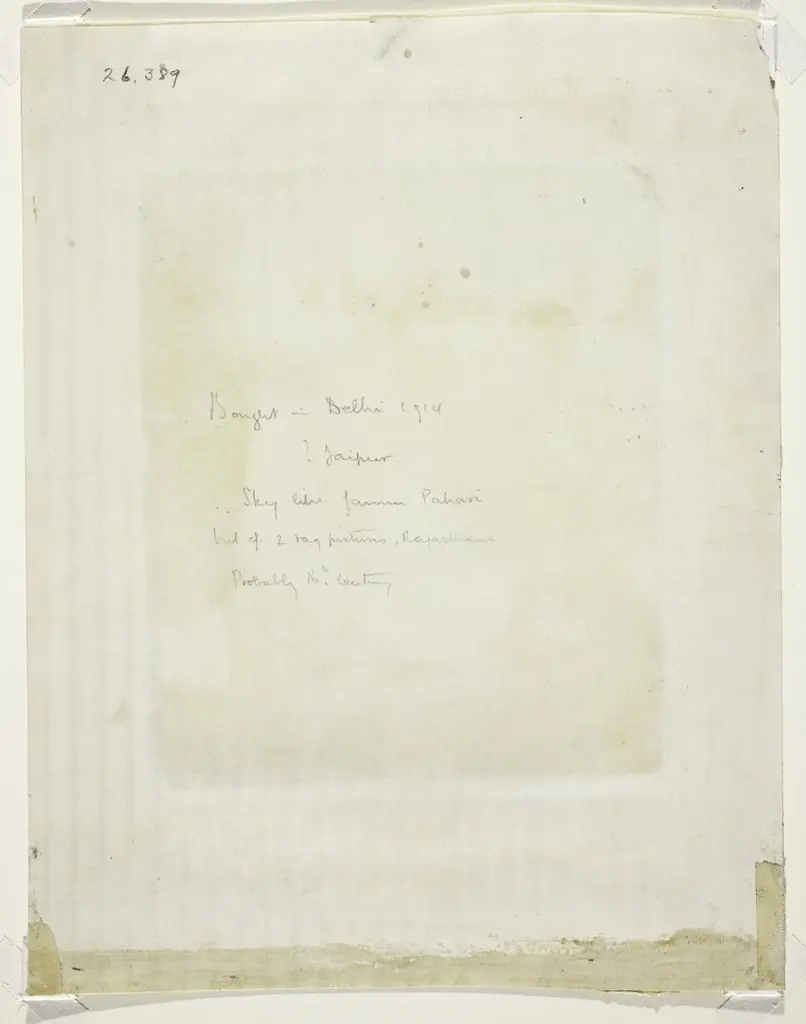 Gaura-Mallara Ragini (A Musical Mode)
 Caricatură
 Zbor
Zbor La târg în Muscel
 Femeie în picioare
 La oglindă
 Dancers and Performers (Page from a Sketchbook)
 Prince in Pavilion; Princess with Attendants in Court
 Dintre sute de catarge