Artwork
La oglindă
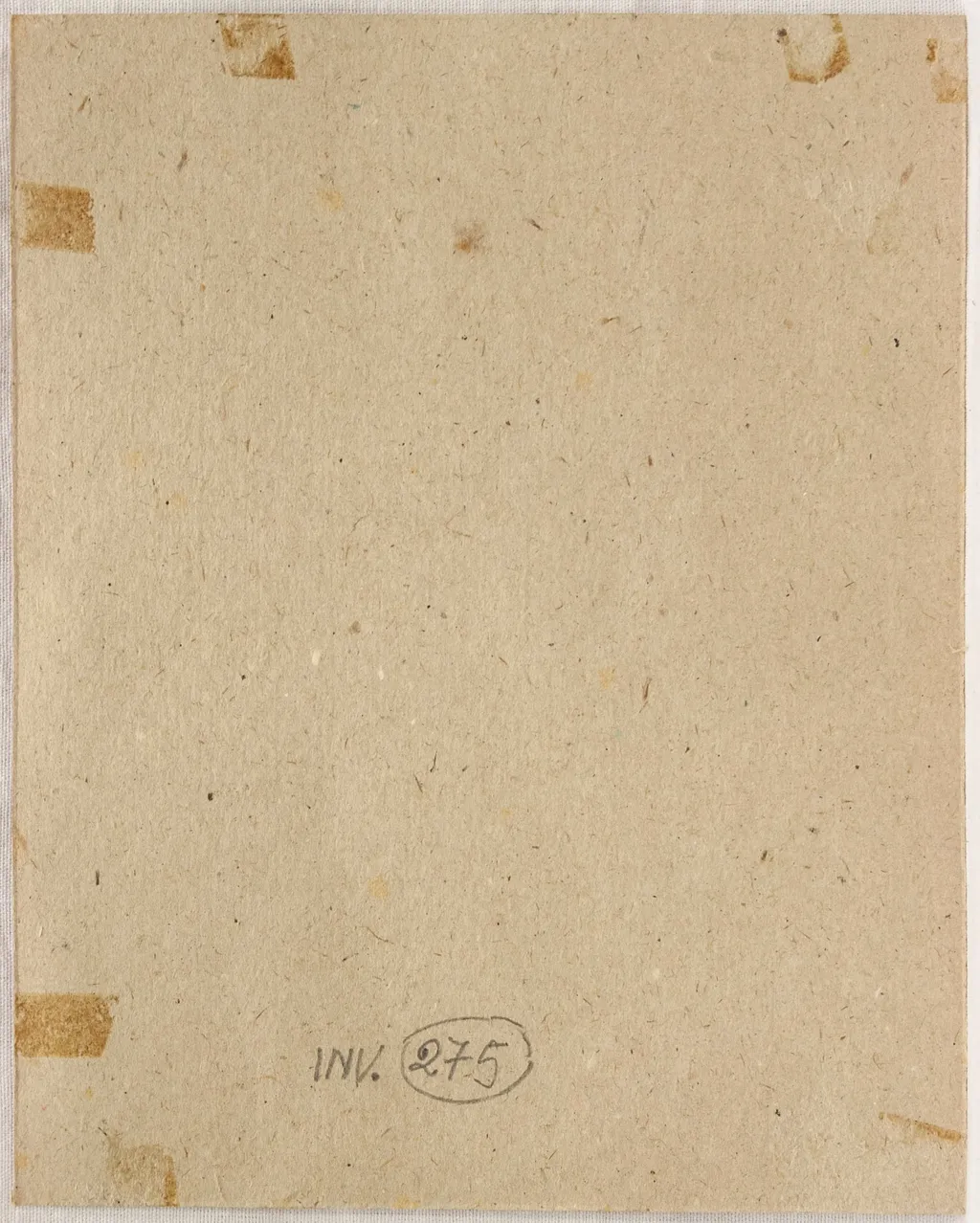
La oglindă is a drawing by Theodor Pallady. It dates from 1950 and is held in the collection of the Gavrila Simion Eco-Museum Research Institute Tulcea.
About this work
Overview
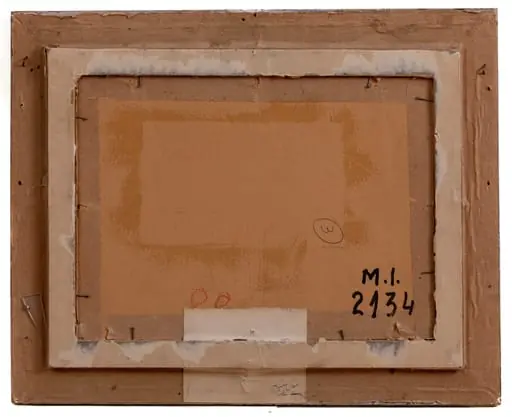
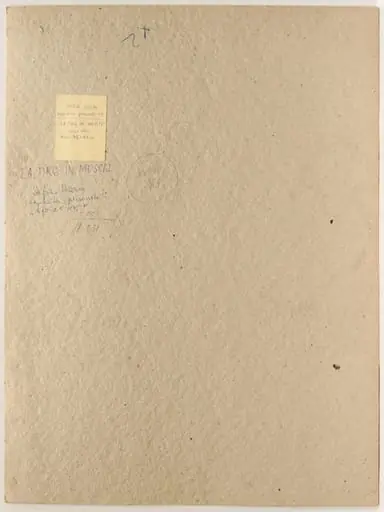
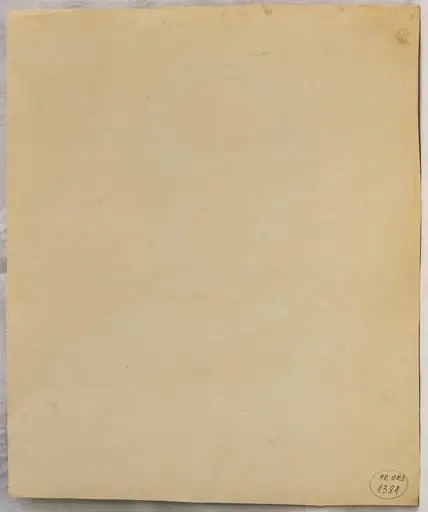
What remains is not the painted surface but its reverse: a piece of coarse, light-brown cardboard, likely the original backing of a lost work.
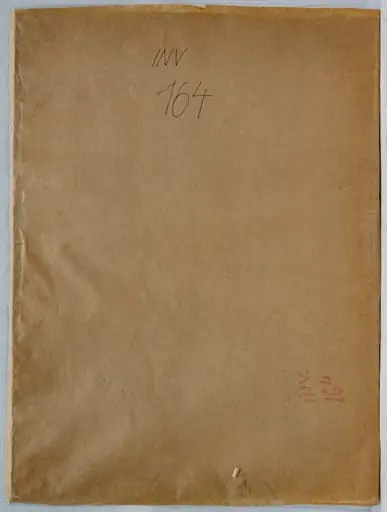
La oglindă is a fragmentary artifact attributed to Theodor Pallady, dated around 1950. What remains is not the painted surface but its reverse: a piece of coarse, light-brown cardboard, likely the original backing of a lost work. The surface bears faint discolorations and adhesive residue, with a pencil inscription reading 'INV. 275' at the center bottom. It is now preserved as a standalone object in the Museum of Ethnography, valued for its material trace rather than its visual composition.
Subject & Meaning
The title, meaning 'The Mirror,' suggests a reflective theme, but the surviving fragment offers no imagery. Its significance lies in its physicality as a remnant—evidence of an artwork that once existed, now absent. The handwritten inventory number implies institutional care, transforming the backing into a document of provenance rather than a creative expression. The work’s meaning is now tied to absence and archival memory.
Technique & Style
No pictorial technique is visible on this fragment. The cardboard’s rough, fibrous texture indicates common industrial material of the period, possibly paper pulp. The tape at the corners, likely adhesive used for mounting, reveals a practical method of display rather than artistic embellishment. The pencil inscription is utilitarian, not calligraphic, reflecting standard museum labeling practices of the time.
History & Provenance
The object was once part of a larger artwork by Pallady, later detached and preserved as a backing. Its inclusion in the Museum of Ethnography’s collection suggests it was retained for its association with the artist, not its aesthetic qualities. The inventory number 'INV. 275' confirms it entered the institution’s catalog, though its original context as part of a painting or drawing remains undocumented.
Context
In mid-20th century Romania, artists like Pallady often reused materials due to economic constraints. Backings like this were typically discarded after a work’s display life ended. The preservation of this fragment reflects a later shift in curatorial values, where even non-visual remnants of an artist’s process gained archival importance as cultural artifacts.
Legacy
La oglindă endures not as a finished artwork but as a silent witness to its own erasure. It represents a broader trend in modern museology: the recognition of material traces—backings, labels, mounts—as meaningful components of artistic history. Its quiet presence invites reflection on what survives of creative labor when the primary work is lost.
Artist & collection
Museum
Gavrila Simion Eco-Museum Research Institute Tulcea
Continue through works from the same source collection.