Artwork
Tantric Manuscript "Sangrahani Sutra"
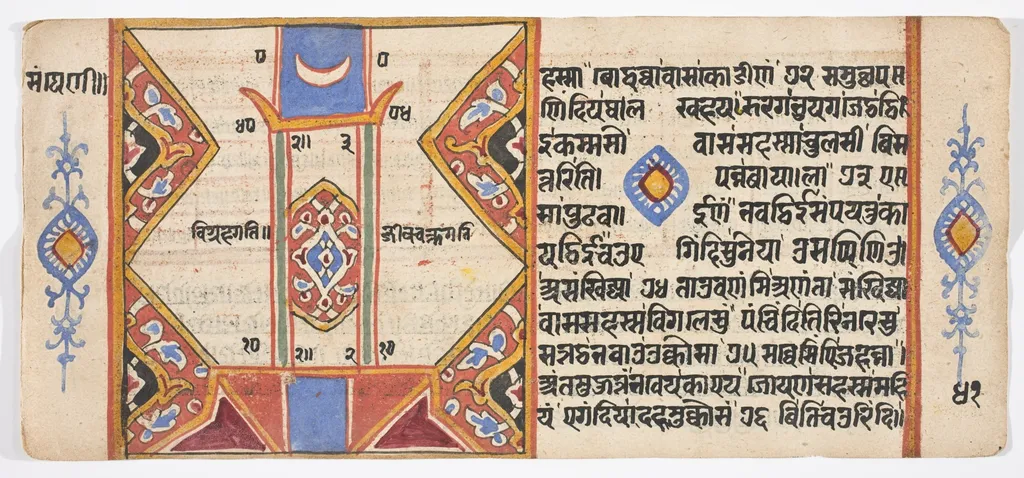
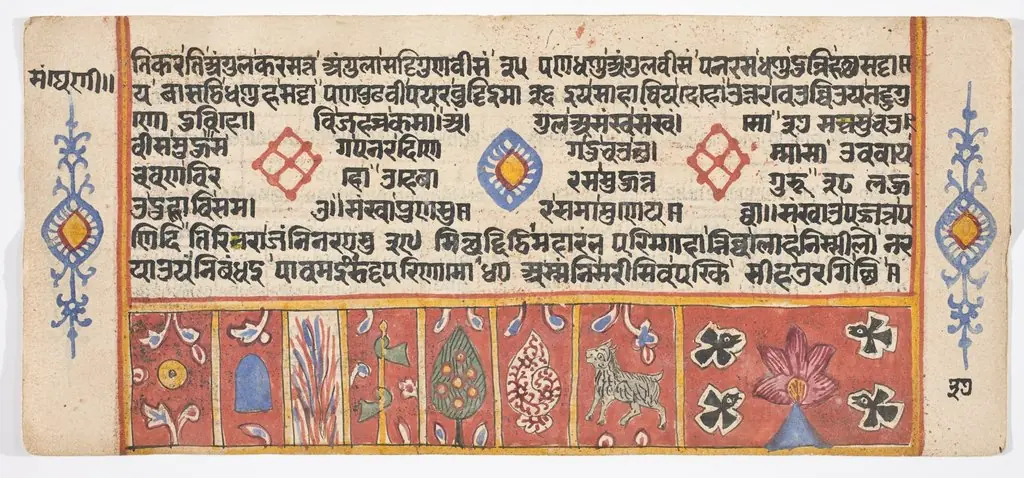
Tantric Manuscript "Sangrahani Sutra" is an unspecified painting by Unknown. It is held in the collection of the Detroit Institute of Arts. This manuscript page originates from a Tantric Buddhist tradition, likely produced in the Himalayan region during the late medieval period.
About this work
Overview
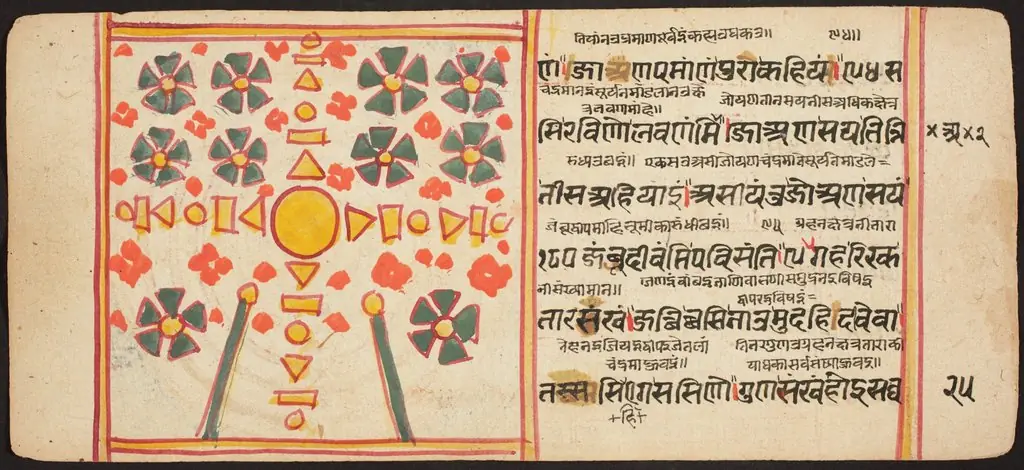
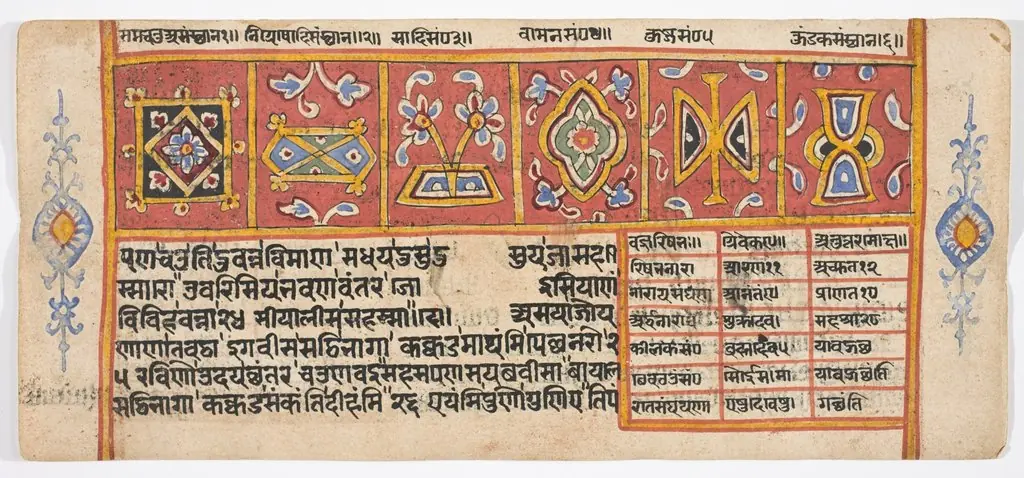
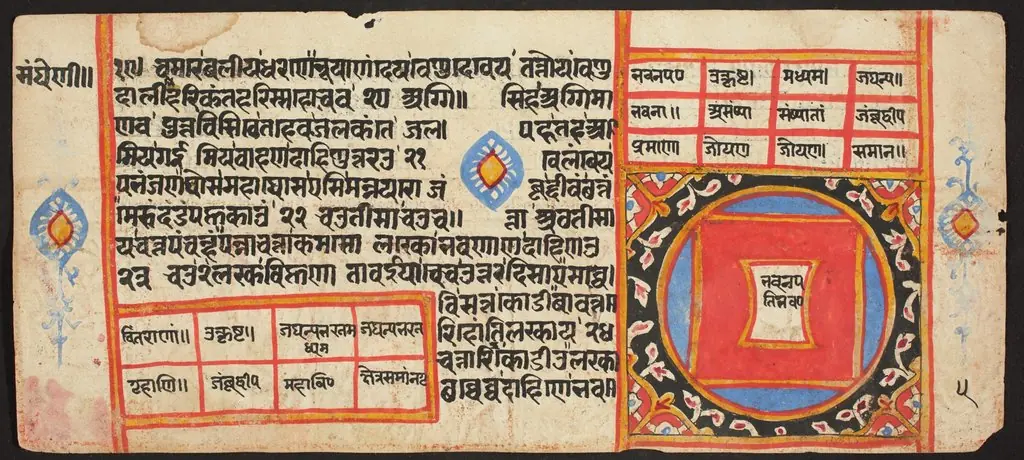
Its composition centers on a geometrically structured field, bounded by ornate red and yellow borders, with blue accents framing key elements.
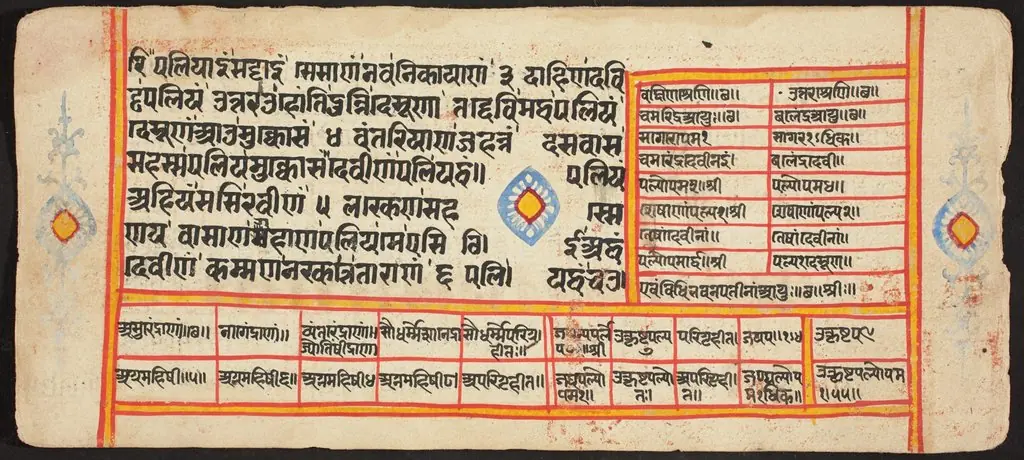
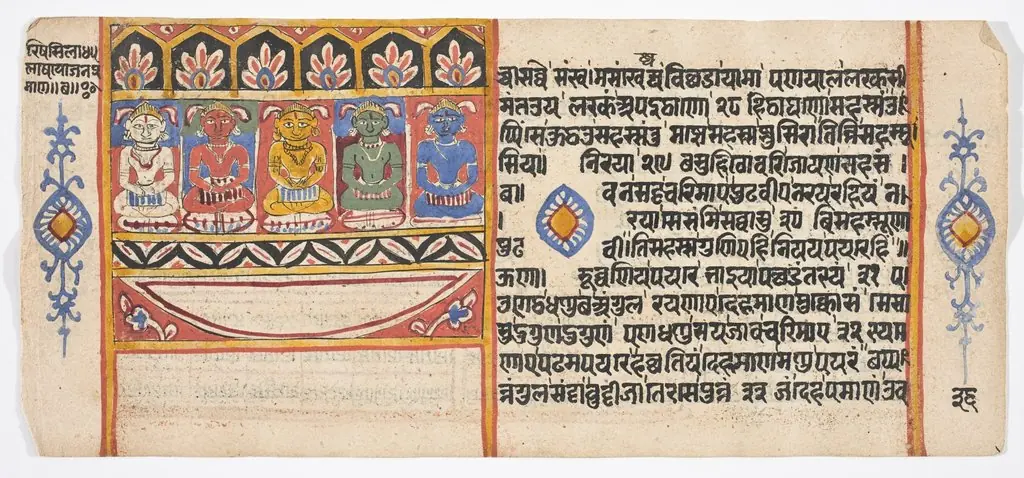
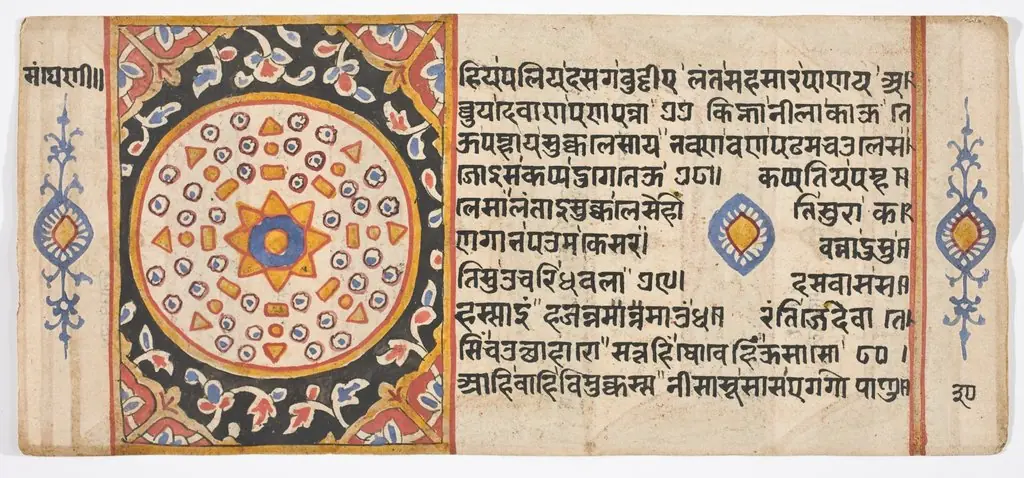
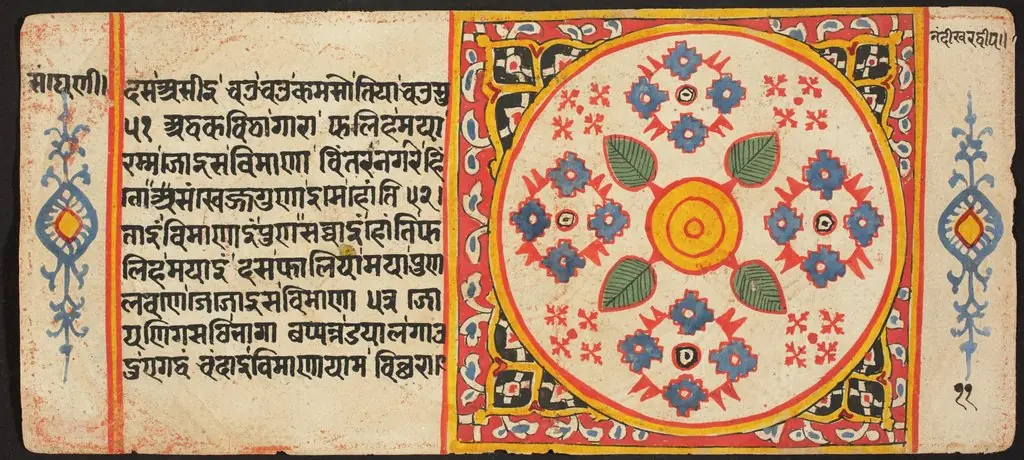
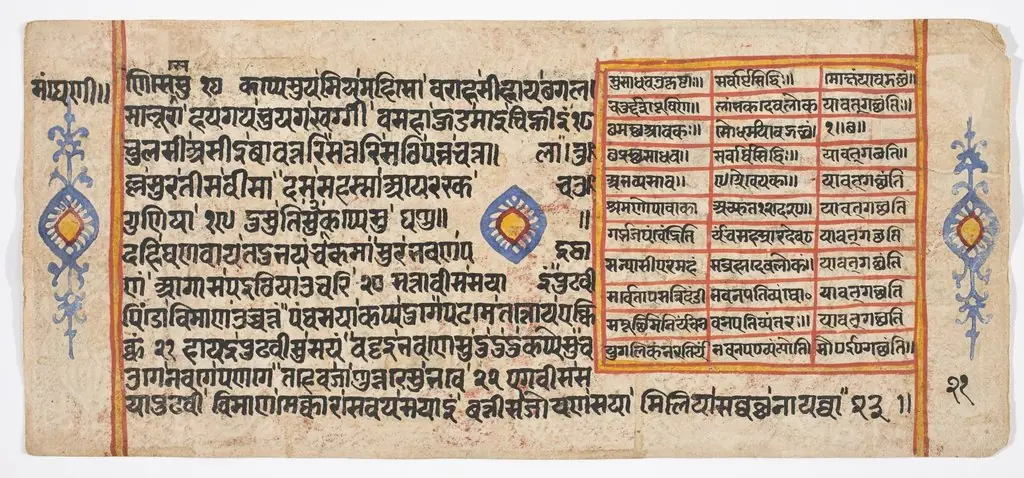
This manuscript page originates from a Tantric Buddhist tradition, likely produced in the Himalayan region during the late medieval period. Its composition centers on a geometrically structured field, bounded by ornate red and yellow borders, with blue accents framing key elements. The page combines sacred geometry with calligraphic text, reflecting its ritual function as a devotional or meditative aid rather than a purely literary document.
Subject & Meaning
The central square, divided by red lines and containing a smaller blue square, symbolizes the mandala—a cosmic diagram representing spiritual order and the path to enlightenment. The blue rectangle above may denote the celestial realm or the presence of a deity. The arrangement invites contemplation, aligning visual structure with Tantric practices that use geometry to map inner states and divine energies.
Technique & Style
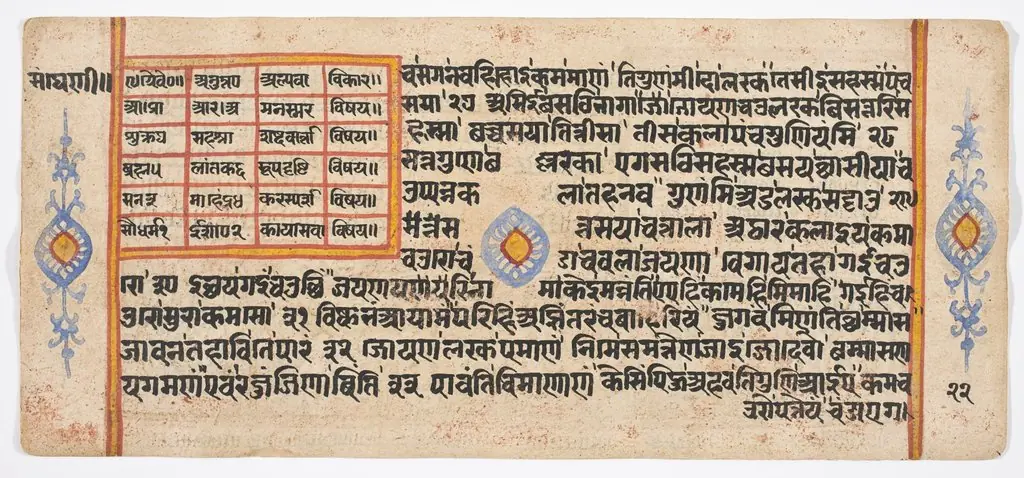
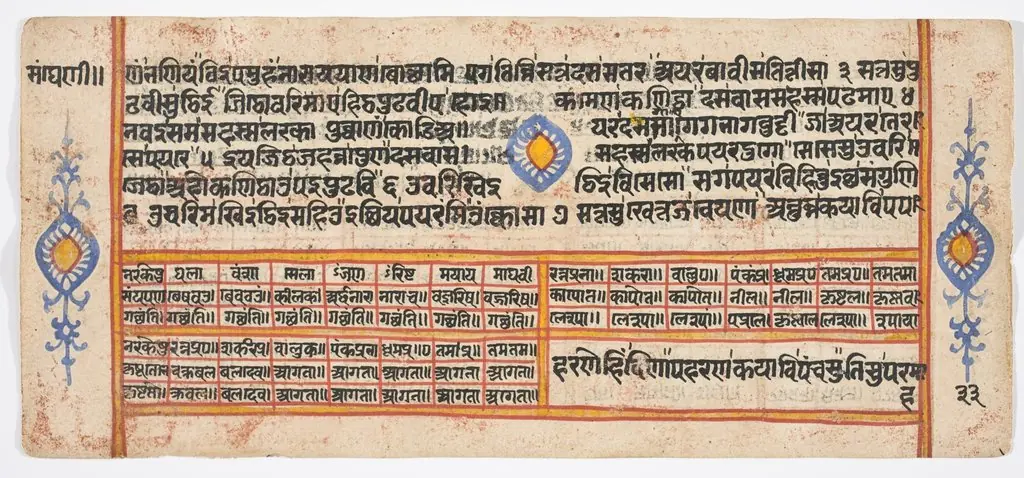
The page was executed with meticulous precision using mineral pigments on handmade paper. Fine red lines define the mandala’s structure, while blue and yellow elements provide contrast and emphasis. The script, though undeciphered here, follows regional conventions of Himalayan Buddhist writing. Decorative borders and repetitive patterns reflect a standardized iconographic language, common in liturgical manuscripts of the period.
History & Provenance
The manuscript likely belonged to a monastic community in Tibet or Nepal, where such texts were copied and preserved for ritual use. Its survival suggests it was treated with reverence, possibly stored in temple libraries or used in private meditation. No definitive record of its early ownership exists, but stylistic parallels link it to 14th- to 16th-century Himalayan workshops known for devotional manuscript production.
Context
This page belongs to a broader tradition of Tantric Buddhist manuscripts that merged visual symbolism with sacred text. Such works were not merely read but experienced—activated through ritual, visualization, and recitation. The integration of geometric form and script reflects the belief that sacred knowledge could be encoded in both image and writing, serving as a bridge between the material and the transcendent.
Legacy
Though the specific text remains untranslated, the page’s design continues to inform contemporary studies of Himalayan Buddhist art and ritual practice. Its preservation offers insight into how spiritual concepts were materialized through disciplined craftsmanship. Modern scholars and practitioners alike recognize its role in sustaining a visual language that connected meditation, cosmology, and textual authority.
Artist & collection

 Domestic Scene
 Giacomo and Cardinal Marco, investing Andrea, Abbot of San Zeno, with his Benefice
 The Nymph of Fontainebleau
 Portrait of a Woman
 Madonna and Child with Saints in the Enclosed Garden
 Venus and Minerva
 Family Group of Four on Sofa
 Wall painting from Room H of the Villa of P. Fannius Synistor at Boscoreale
 Tantric Manuscript "Sangrahani Sutra"
 Tantric Manuscript "Sangrahani Sutra"
 Tantric Manuscript "Sangrahani Sutra"
 Tantric Manuscript "Sangrahani Sutra"
 Tantric Manuscript "Sangrahani Sutra"
 Tantric Manuscript "Sangrahani Sutra"
 Tantric Manuscript "Sangrahani Sutra"
 Tantric Manuscript "Sangrahani Sutra"
 Tantric Manuscript "Sangrahani Sutra"
 Tantric Manuscript "Sangrahani Sutra"
 Tantric Manuscript "Sangrahani Sutra"
 Tantric Manuscript "Sangrahani Sutra"