Artwork
Portrait of Grand Duke Nikolay Pavlovich
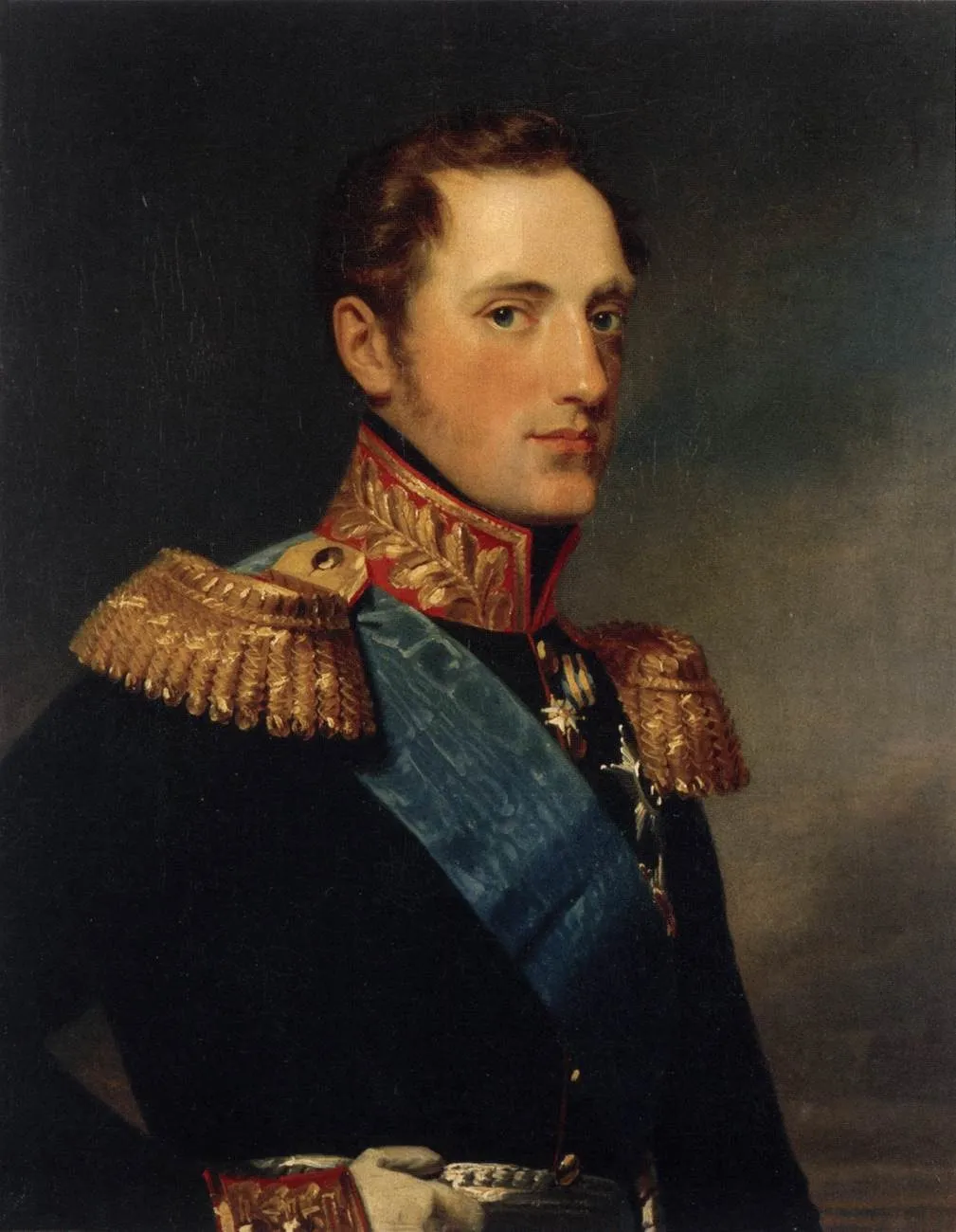
Portrait of Grand Duke Nikolay Pavlovich is an oil painting by Unknown. It dates from 1824 and is held in the collection of the Hermitage Museum.
About this work
The fact that it's a portrait of a grand duke suggests it might have been important to the person or family depicted.
The painting is called Portrait of Grand Duke Nikolay Pavlovich.
It was made in 1824 using oil paint.
The artist who made it is not well-known to me, so I won't guess.
This portrait is interesting because it's from a specific time period.
The fact that it's a portrait of a grand duke suggests it might have been important to the person or family depicted.
You can learn more about this kind of art by looking at the State Hermitage Museum.
Overview
The work titled Portrait of Grand Duke Nikolay Pavlovich is an oil painting executed in 1824. It presents the Russian grand duke in a formal, seated pose, rendered with the conventions of early‑19th‑century portraiture. The canvas measures a typical size for court commissions of the period, and its composition emphasizes the sitter’s rank through attire and regalia.
Subject & Meaning
The subject, Grand Duke Nikolay Pavlovich, was a member of the Romanov dynasty who later became Emperor Nicholas I. The portrait serves both as a personal likeness and as a visual affirmation of dynastic continuity, highlighting the duke’s aristocratic status through sumptuous clothing and insignia that signal his place within the imperial hierarchy.
Technique & Style
Executed in oil on canvas, the painting employs a restrained palette of deep reds, blues, and earth tones. The brushwork is smooth and controlled, typical of academic portraiture, allowing for precise rendering of facial features and fabric textures. Light falls gently across the figure, modeling the form without dramatic chiaroscuro, reflecting the neoclassical aesthetic prevalent in Russian court art of the 1820s.
History & Provenance
The portrait was likely commissioned by the imperial family shortly after Nikolay Pavlovich’s elevation to grand duke. Though the artist’s identity remains undocumented, the work entered the collection of the State Hermitage Museum, where it has been displayed as part of the museum’s extensive holdings of Russian imperial portraiture.
Context
Created during a period of political consolidation under Alexander I, the portrait reflects the broader use of visual art to reinforce monarchical authority. In the early 19th century, Russian court portraiture often combined Western academic techniques with native symbols of power, situating the sitter within both European artistic trends and Russian statecraft.
Artist & collection

 Domestic Scene
 Giacomo and Cardinal Marco, investing Andrea, Abbot of San Zeno, with his Benefice
 The Nymph of Fontainebleau
 Portrait of a Woman
 Madonna and Child with Saints in the Enclosed Garden
 Venus and Minerva
 Family Group of Four on Sofa
 Wall painting from Room H of the Villa of P. Fannius Synistor at Boscoreale
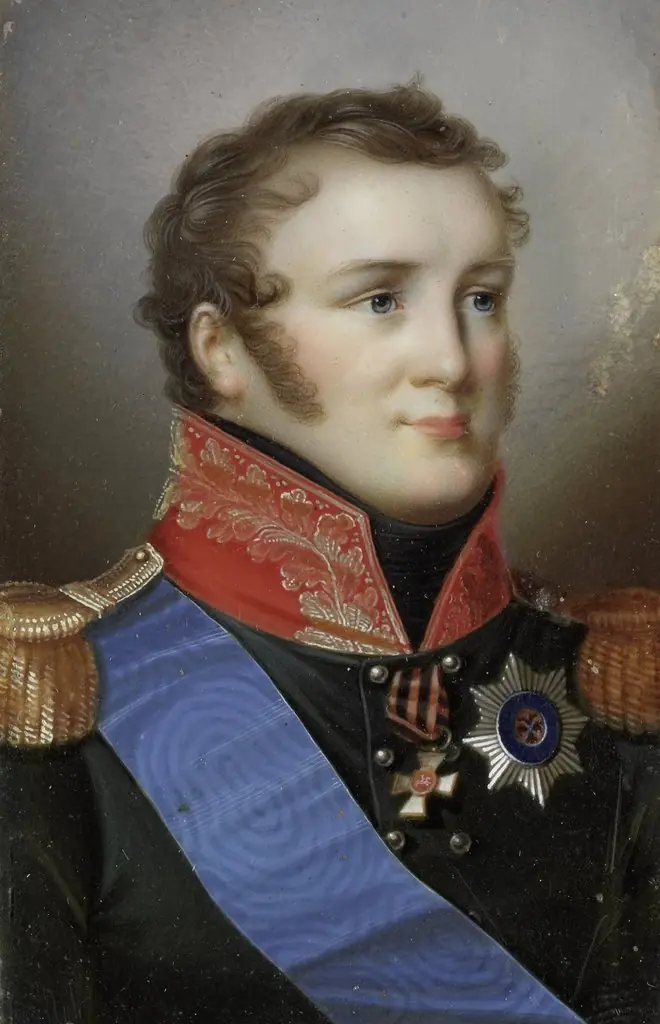 Portrait of Alexander I Romanov (1777-1825)
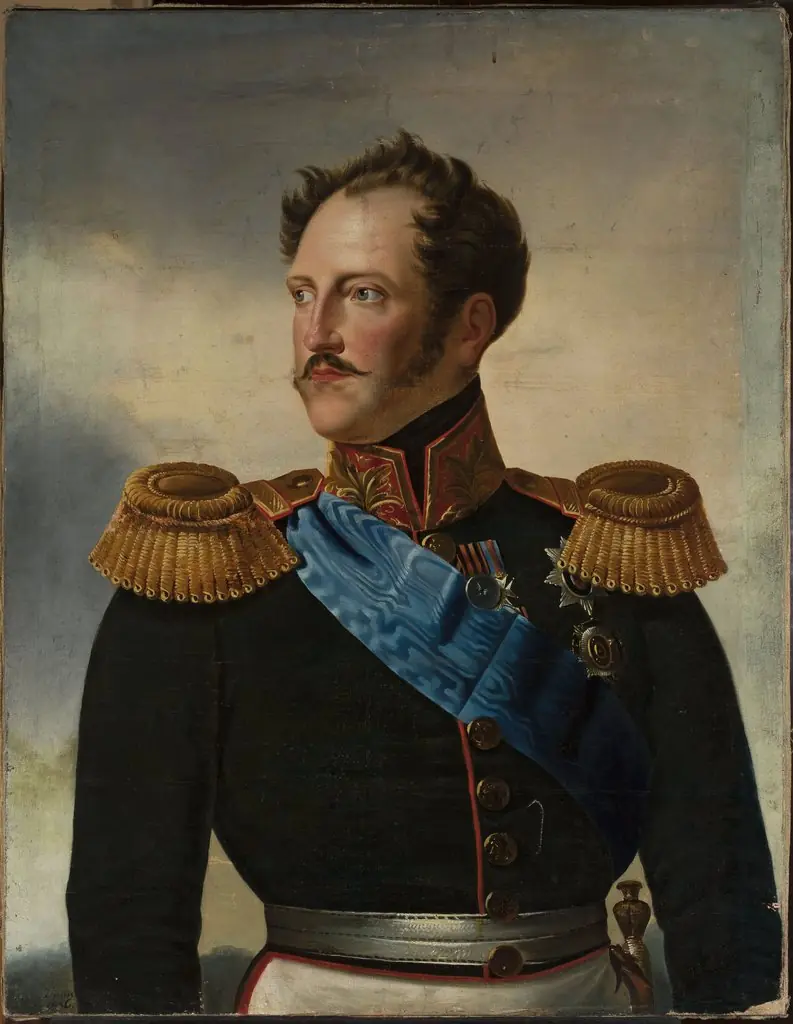 Portrait of Tsar Nicholas I
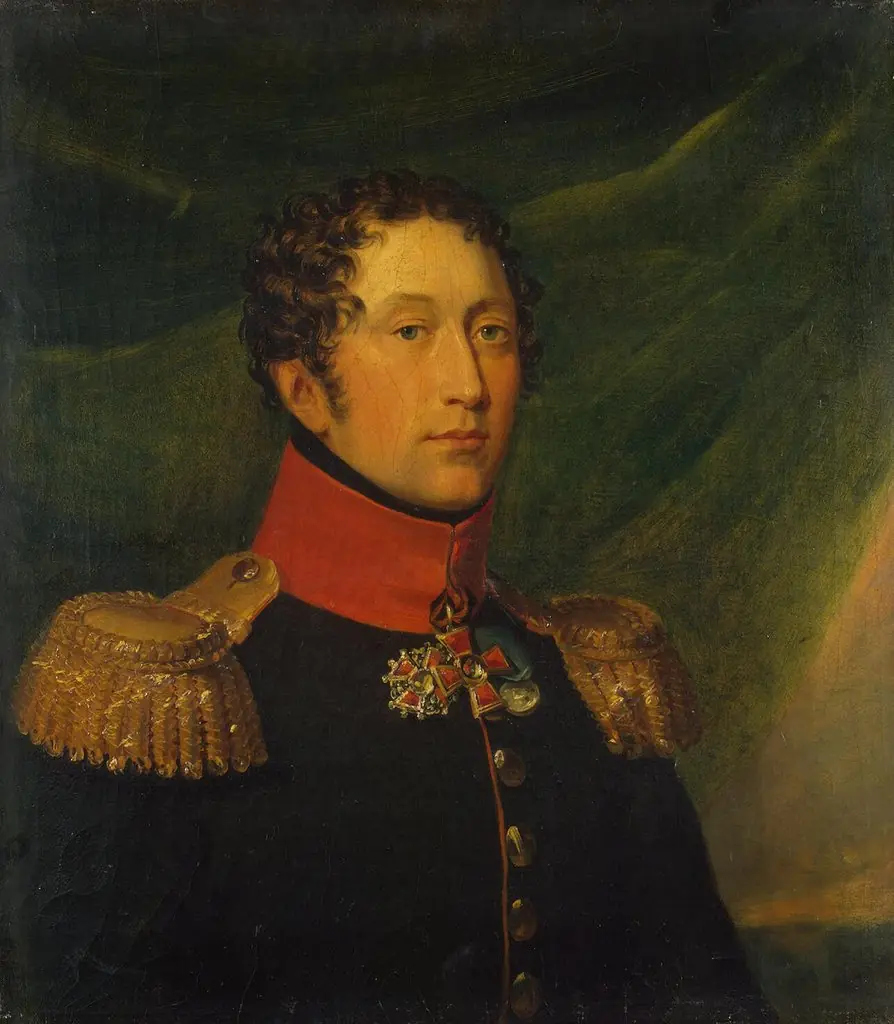 Portrait of Alexey S. Kologrivov (1776-1818)
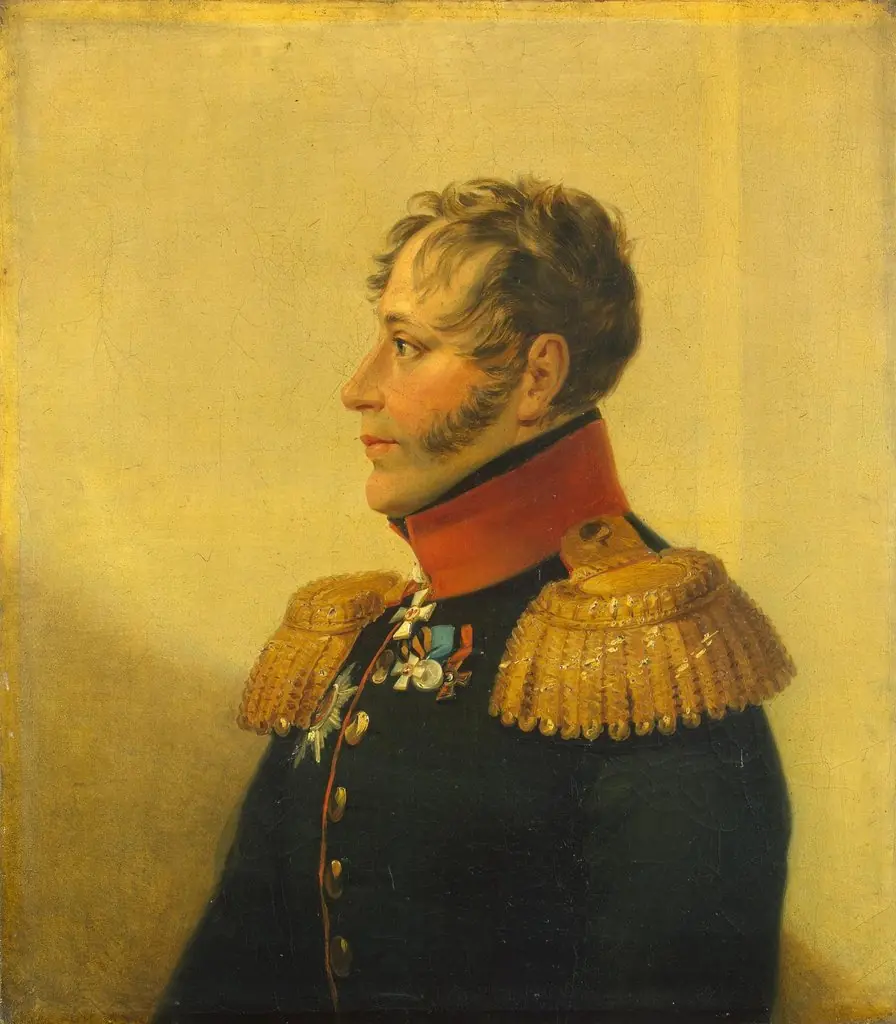 Portrait of Yegor A. Akhte (1772-1826)
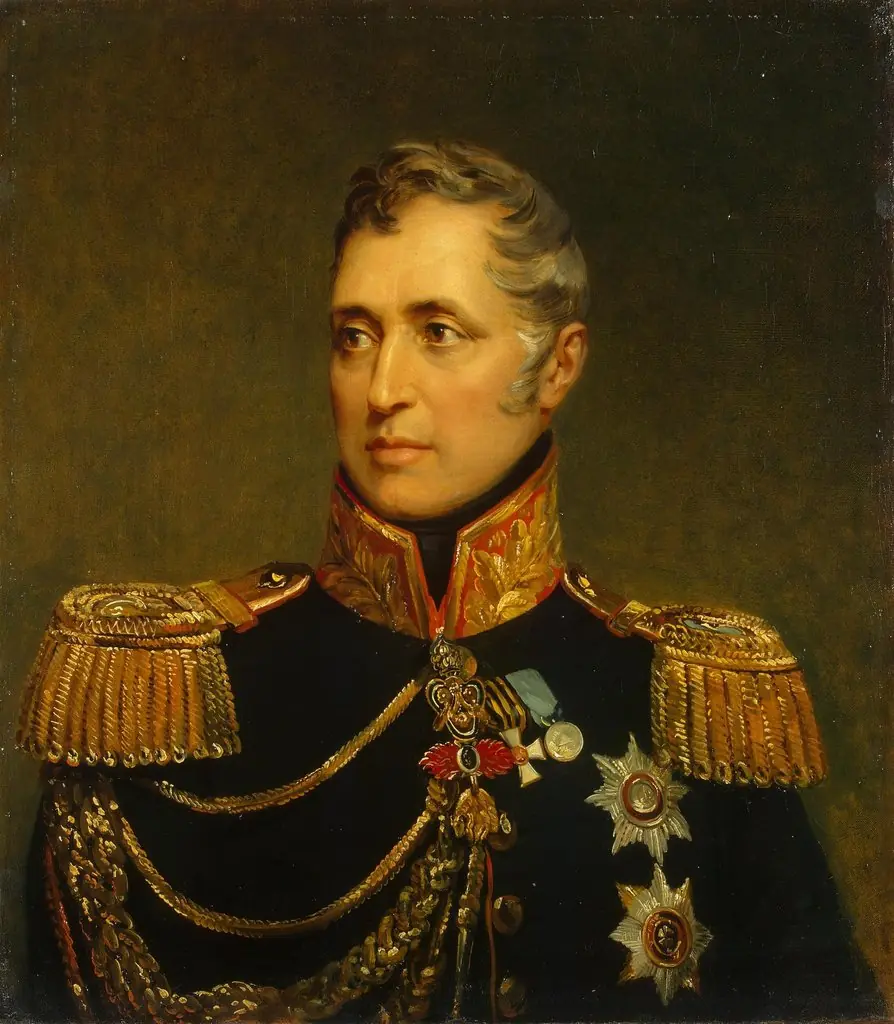 Portrait of Karl O. Pozzo di Borgo (1764-1842)
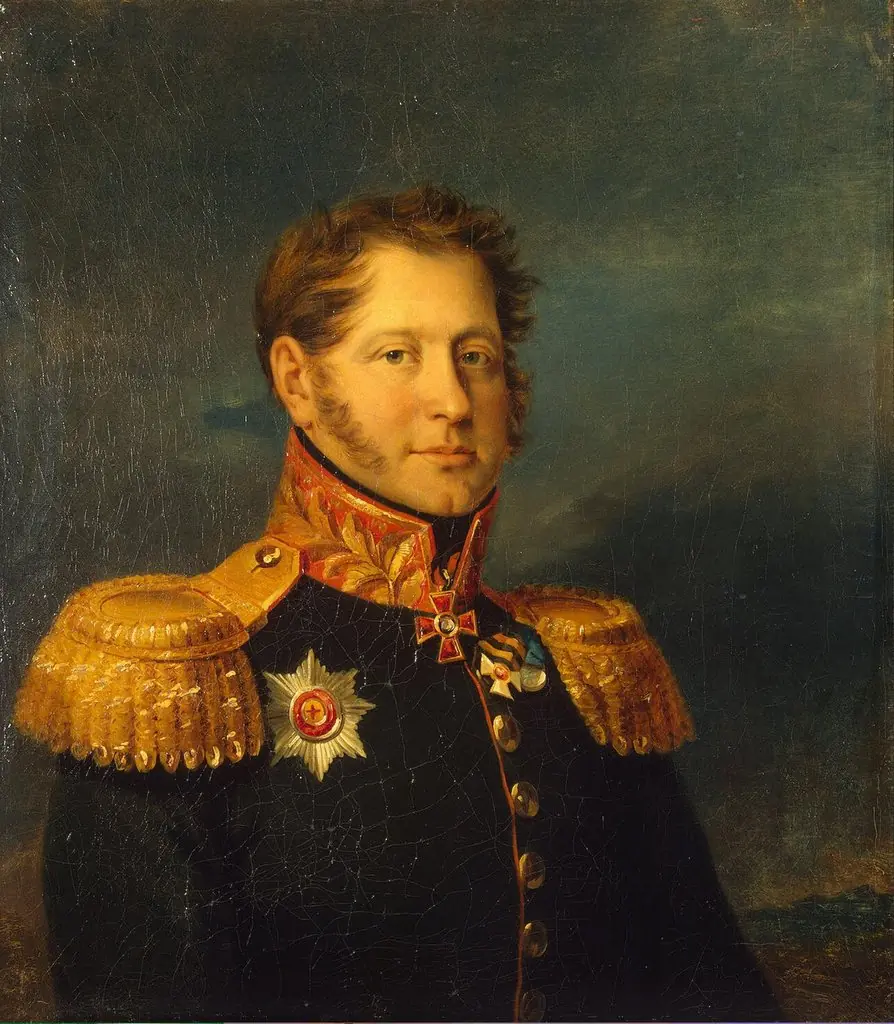 Portrait of Alexander I. Gressor (1772-1822)
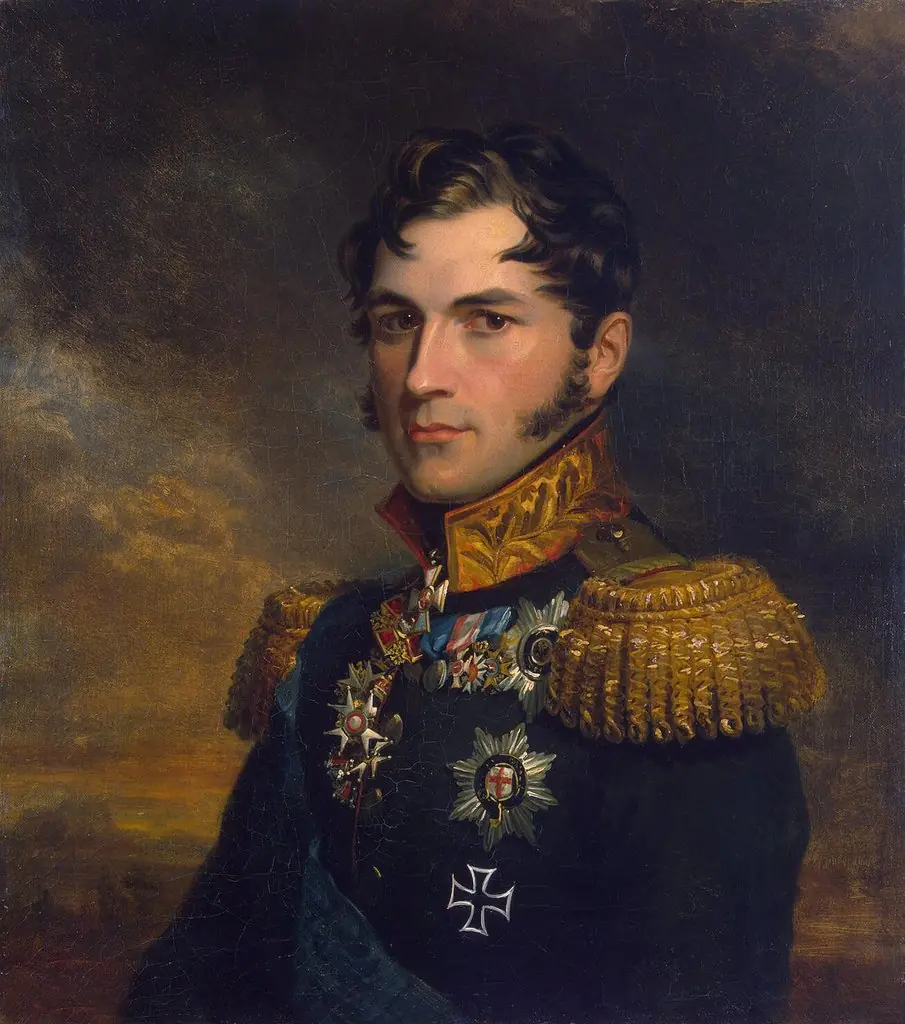 Portrait of Leopold, Prince of Saxe-Coburg (1790-1865)
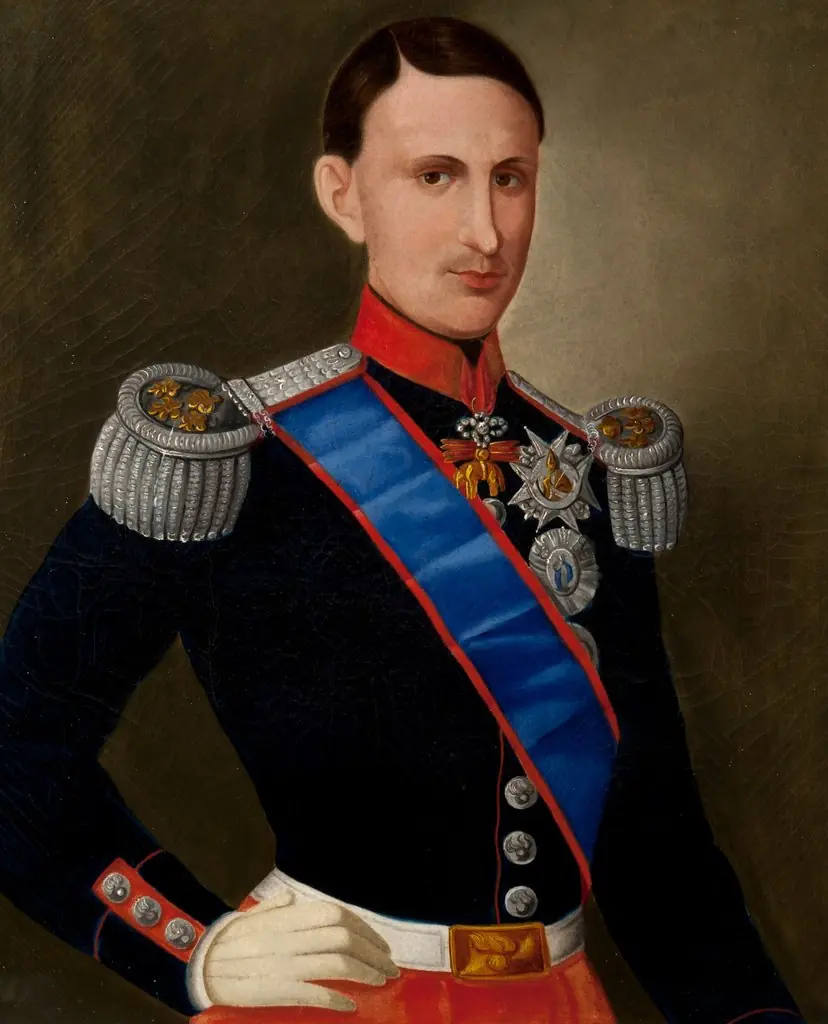 Ritratto di Francesco II di Borbone
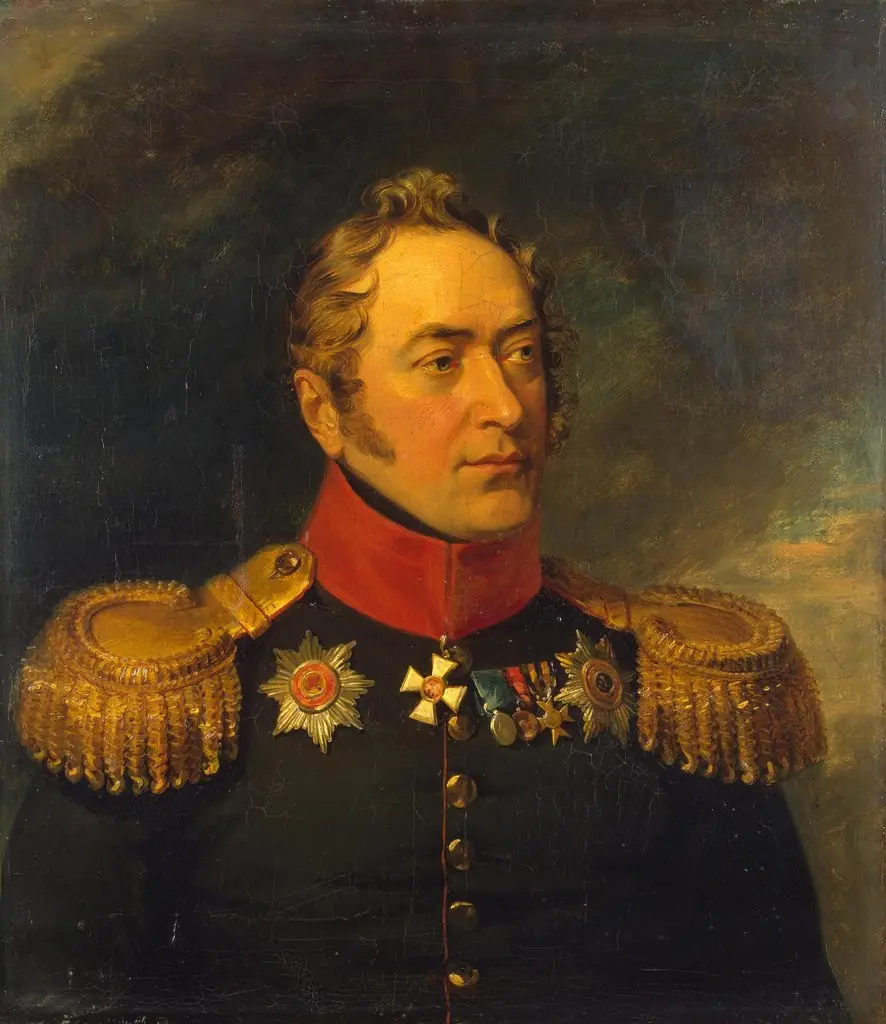 Portrait of Nikolai N. Khovansky (1777-1837)
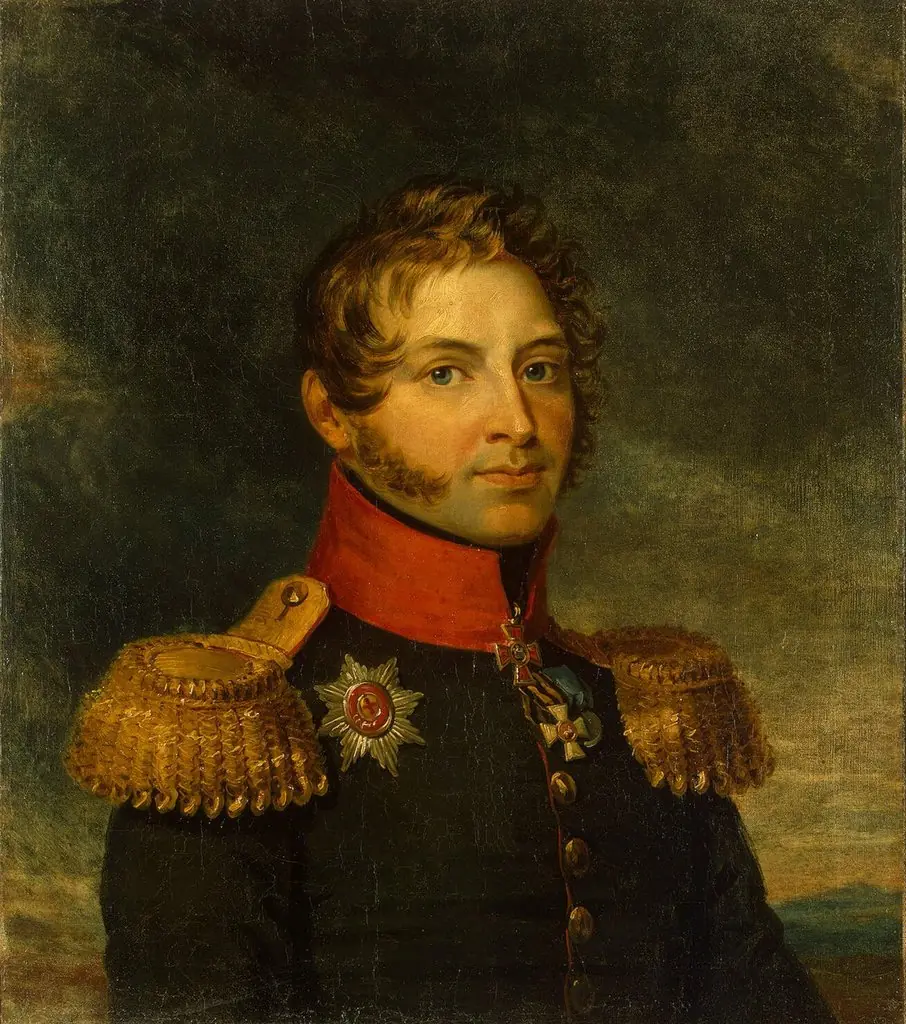 Portrait of Alexander P. Kutuzov (1777-1817)