Artwork
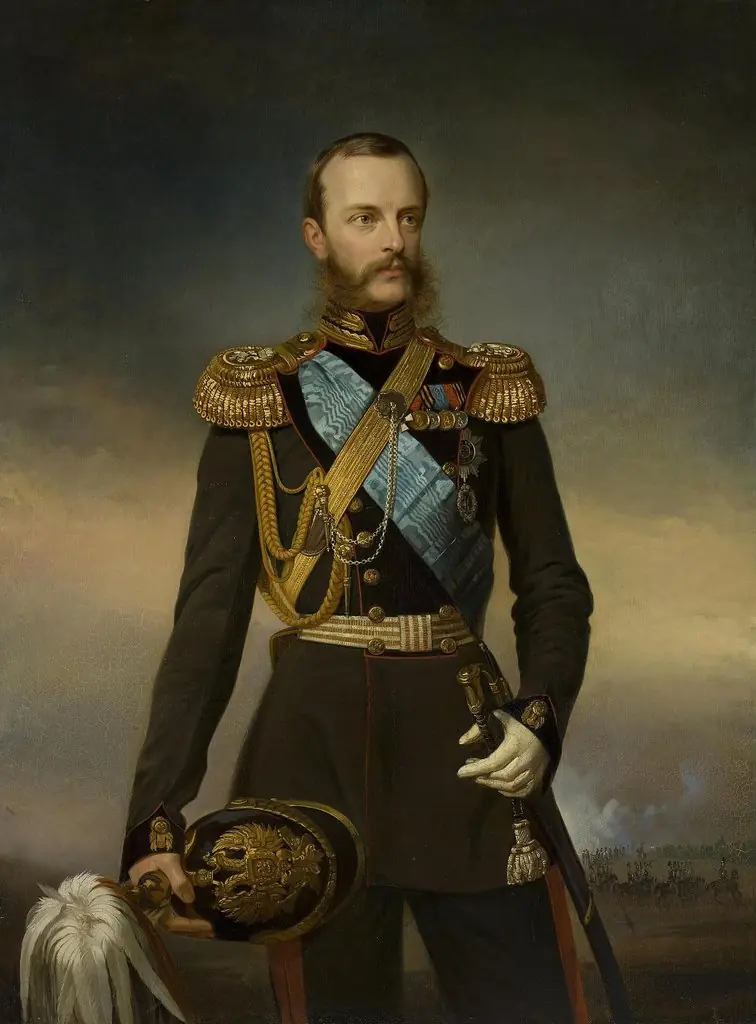
Portrait of Tsar Nicholas I
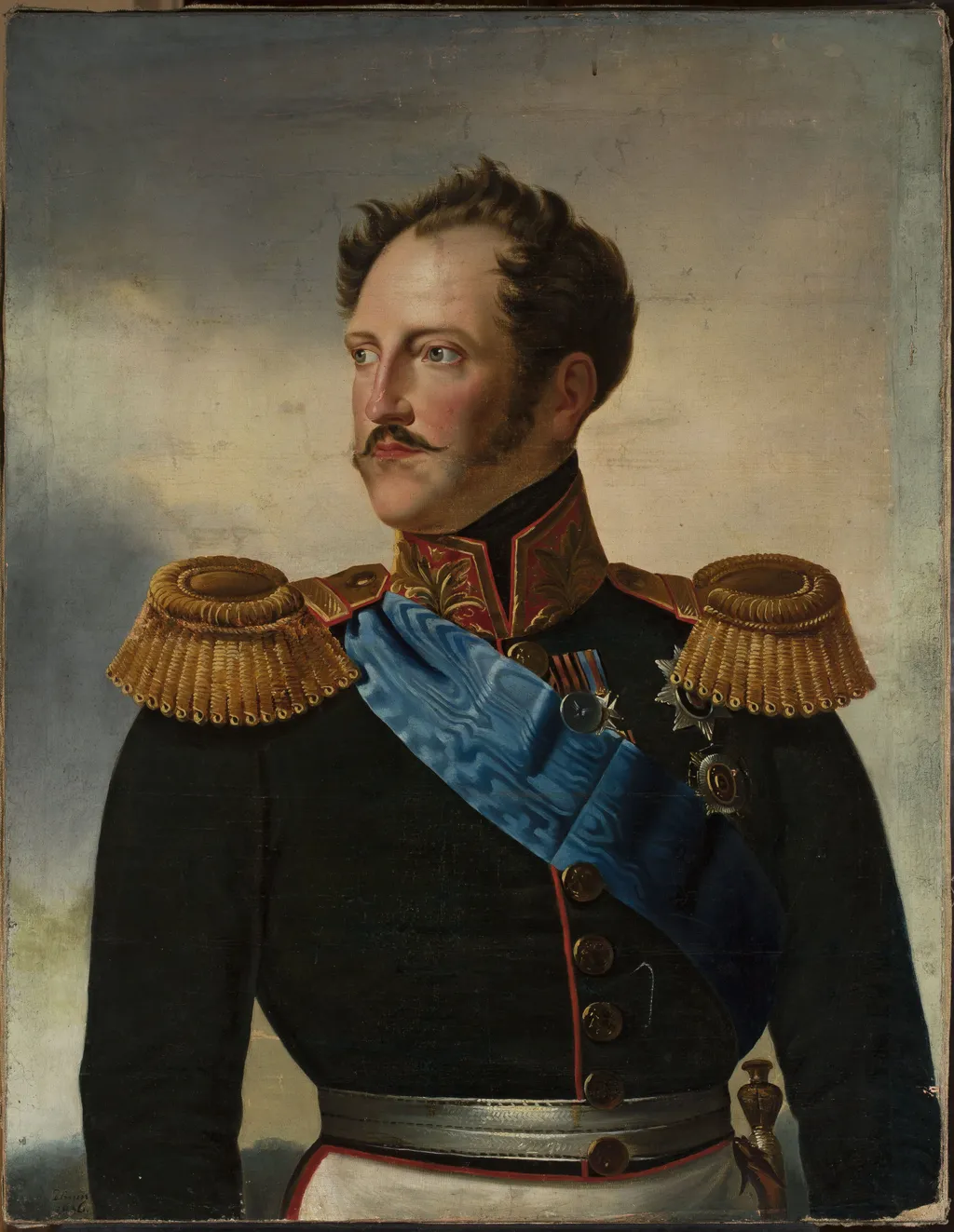
Portrait of Tsar Nicholas I is an oil painting by Unknown. It dates from 1836 and is held in the collection of the National Museum in Warsaw. This oil painting presents Tsar Nicholas I of Russia in full military attire, rendered with precise detail and restrained tonality.
About this work
Overview
This oil painting presents Tsar Nicholas I of Russia in full military attire, rendered with precise detail and restrained tonality.
This oil painting presents Tsar Nicholas I of Russia in full military attire, rendered with precise detail and restrained tonality. The composition centers on the monarch’s stern demeanor, framed against a muted, overcast sky. The artist employs oil paint to capture texture in fabric, metal, and skin, emphasizing authority through formal composition and controlled lighting rather than ornate decoration.
Subject & Meaning
The portrait conveys the tsar’s role as a military leader and autocrat. His uniform, adorned with medals and a blue sash, signifies rank and state service. The absence of regalia like crowns or thrones shifts focus to his personal authority and discipline. His gaze, directed away from the viewer, suggests introspection or vigilance, reinforcing the image of a ruler detached yet resolute.
Technique & Style
The artist uses subtle gradations of light and shadow to model the uniform’s metallic embellishments and the contours of the face. The gray sky provides a neutral backdrop, enhancing the figure’s solidity without distraction. Brushwork is controlled, favoring clarity over flourish, with attention to the sheen of gold epaulets and the crisp fold of the red collar, demonstrating mastery in rendering material texture through oil.
History & Provenance
Commissioned during Nicholas I’s reign, the portrait was likely intended for official display, reinforcing imperial presence across the empire. It was painted by a court-appointed artist, consistent with the tradition of using portraiture to legitimize and disseminate the ruler’s image. Its current location and acquisition history remain tied to state collections, reflecting its institutional significance.
Context
In early 19th-century Russia, state portraiture served political ends, emphasizing order and continuity. Nicholas I’s image was carefully curated to project strength amid rising unrest. This portrait aligns with broader European trends of military portraiture but avoids romanticism, favoring a sober, almost austere realism that mirrored the tsar’s own conservative ideology.
Legacy
The portrait remains a representative example of imperial Russian visual culture, valued for its historical documentation rather than artistic innovation. It contributes to scholarly understanding of how authority was visually constructed in autocratic regimes. While not widely exhibited internationally, it holds enduring relevance in Russian art historical studies.
Artist & collection

 Domestic Scene
 Giacomo and Cardinal Marco, investing Andrea, Abbot of San Zeno, with his Benefice
 The Nymph of Fontainebleau
 Portrait of a Woman
 Madonna and Child with Saints in the Enclosed Garden
 Venus and Minerva
 Family Group of Four on Sofa
 Wall painting from Room H of the Villa of P. Fannius Synistor at Boscoreale
 Portrait of Tsar Alexander I
 Portrait of Emperor Nicholas I
 Portrait of Emperor Nicholas I
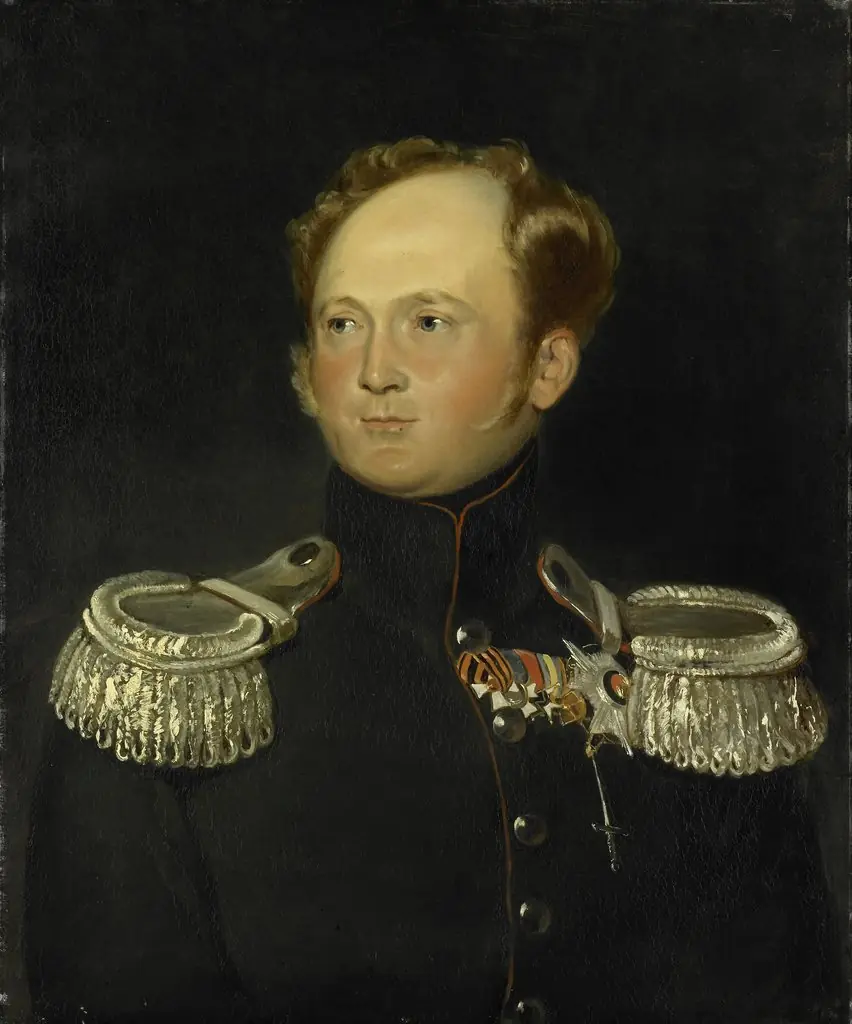 Portrait of Alexander I, Emperor of Russia
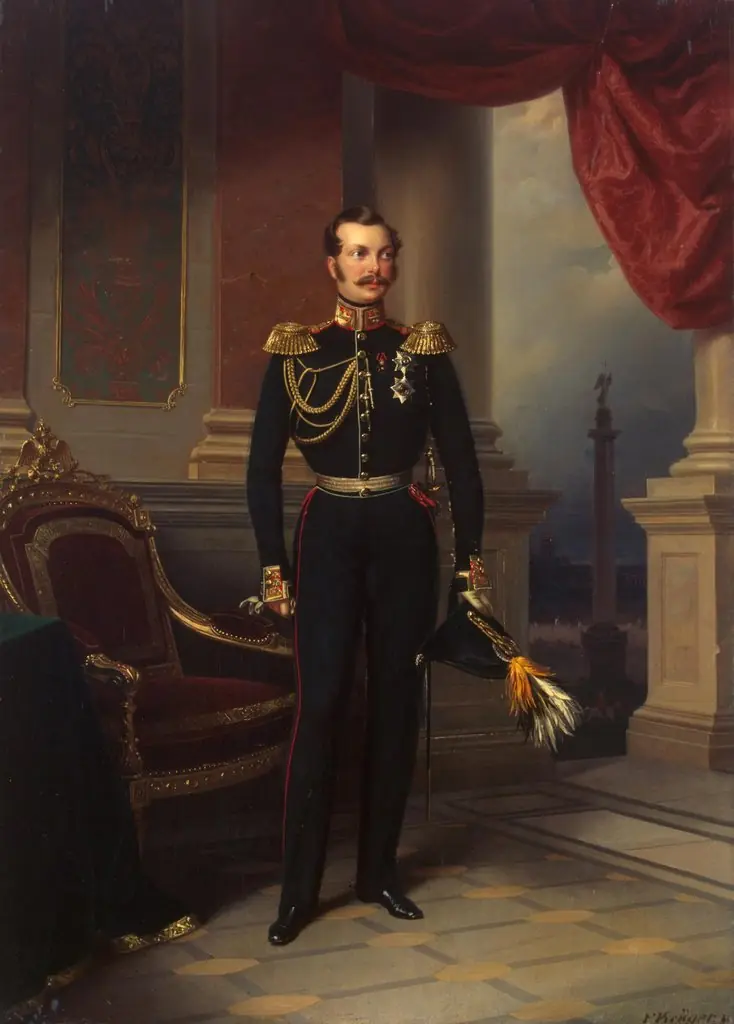 Portrait of Grand Prince Alexander Nikolayevich
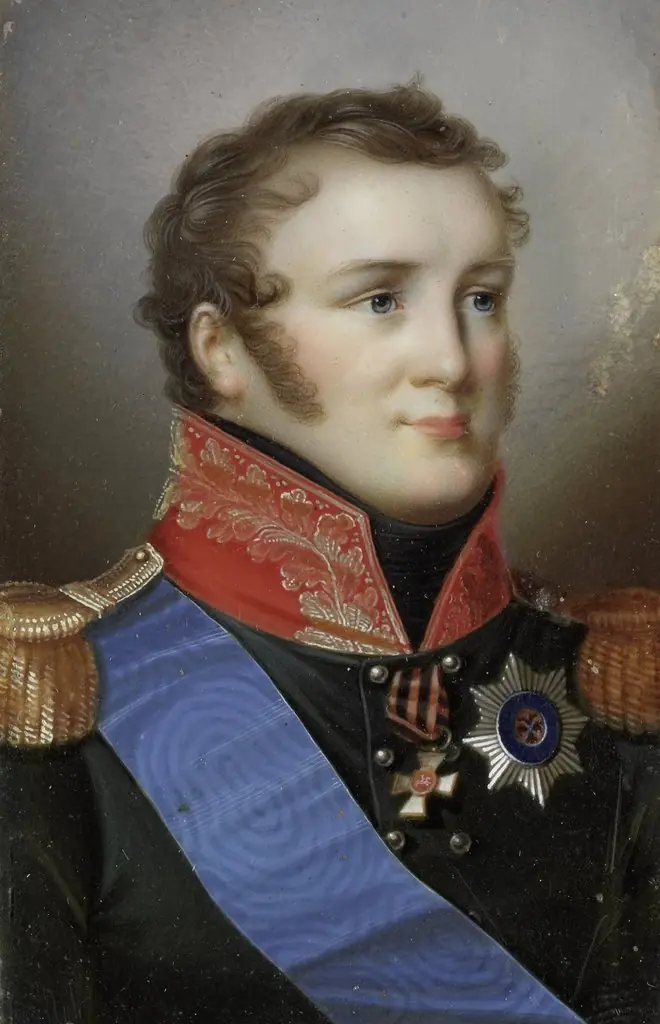 Portrait of Alexander I Romanov (1777-1825)
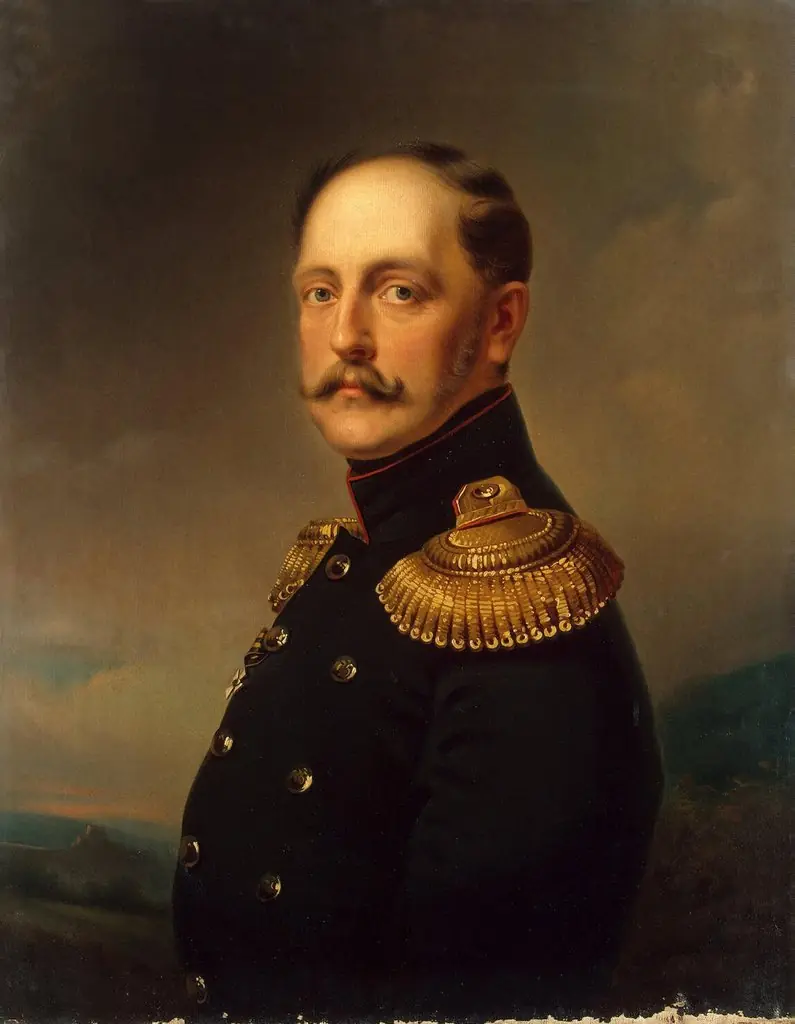 "Portrait of Emperor Nicholas I" Type of Kruger
 Portrait of Grand Duke Mikhail Nikolaevich