Artwork
Tantric Manuscript "Sangrahani Sutra"
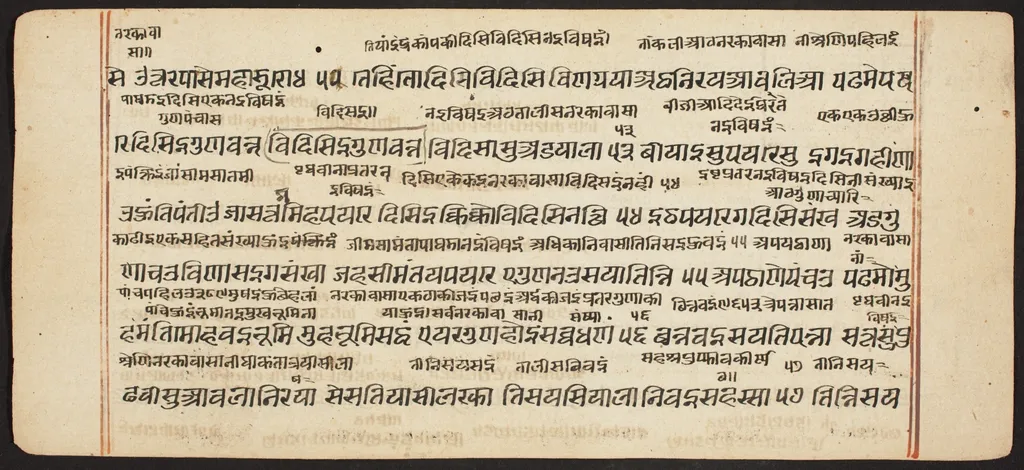
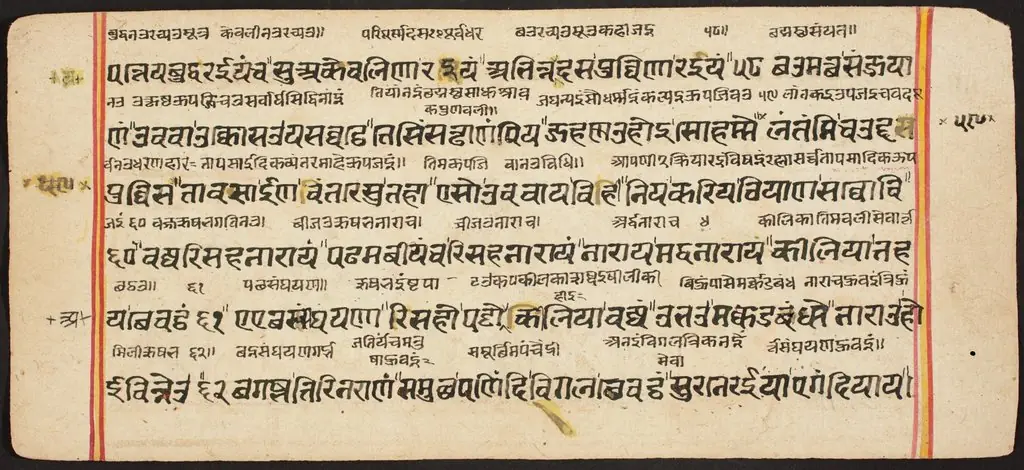
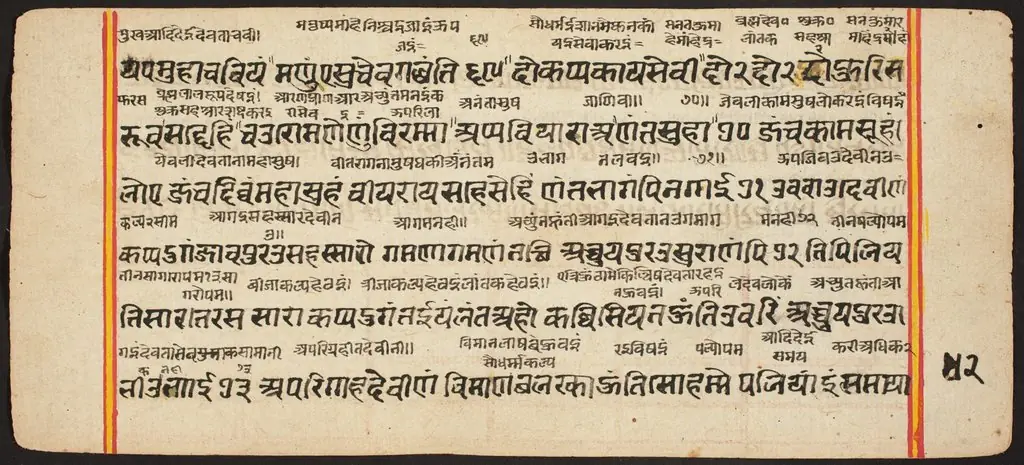
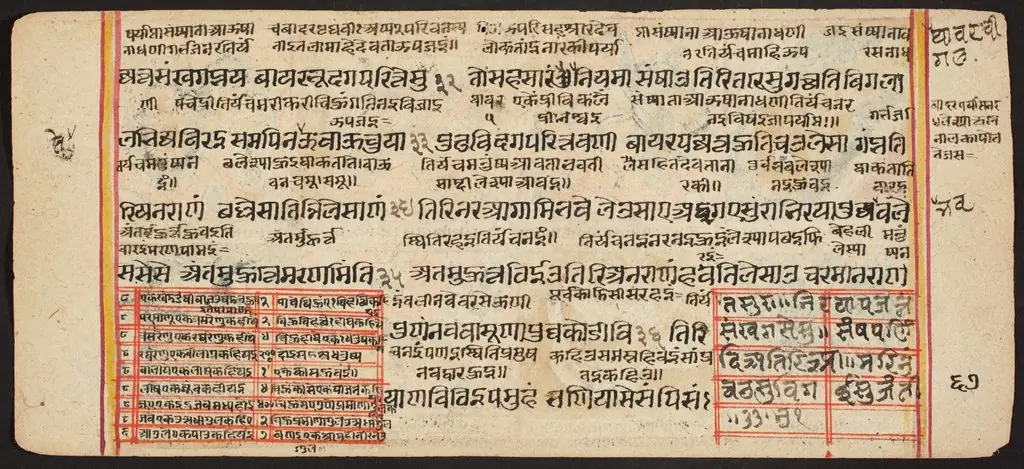
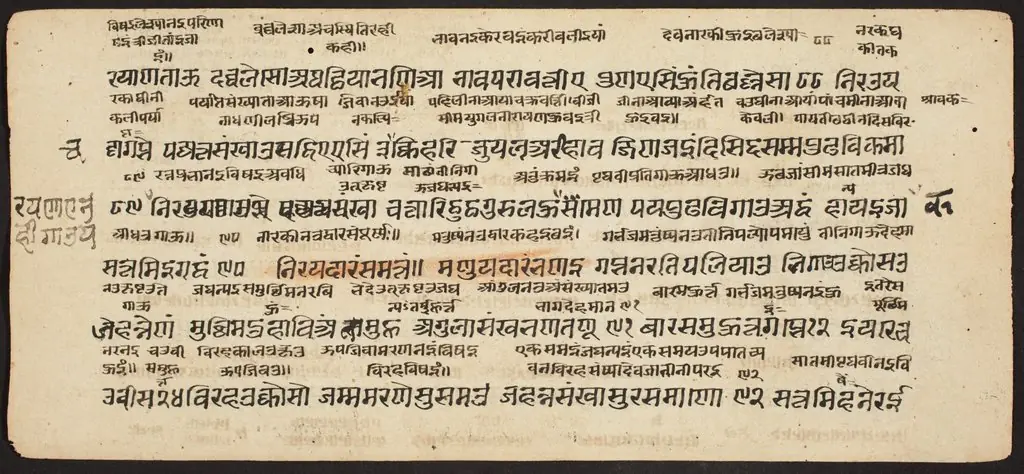
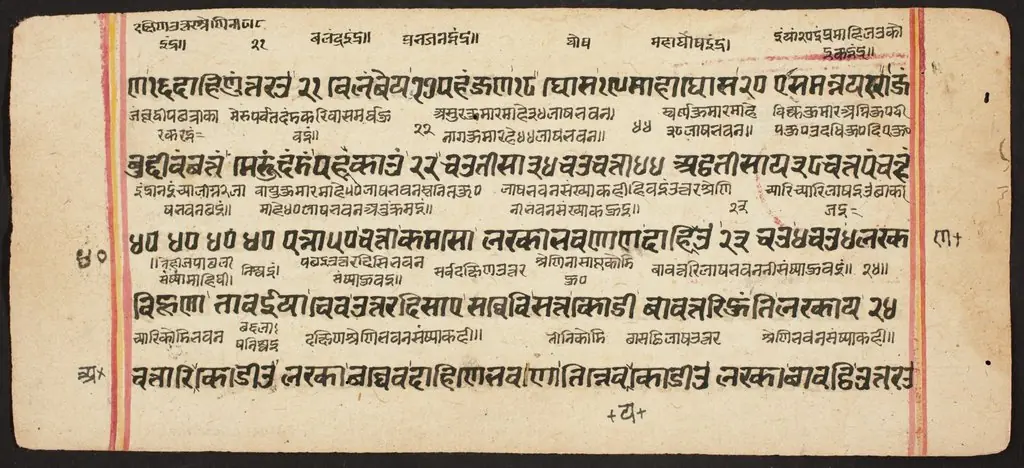
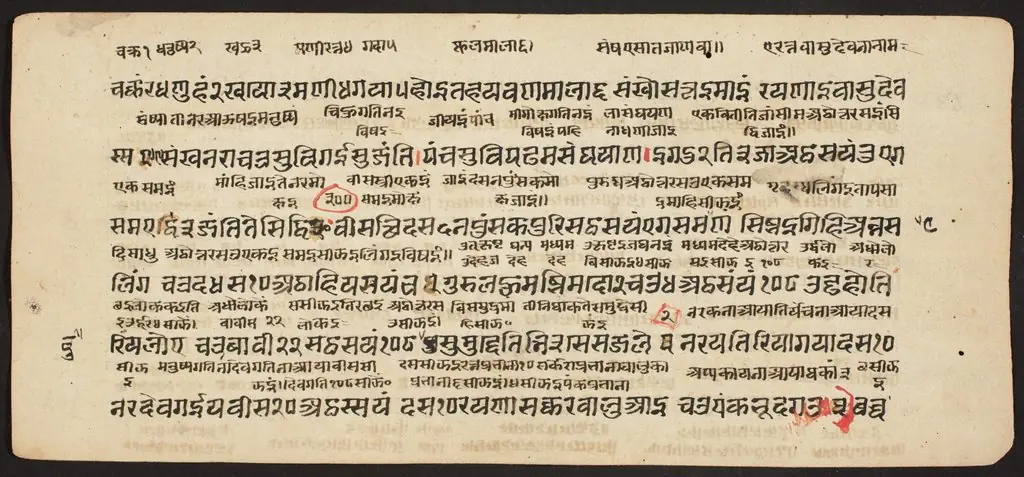
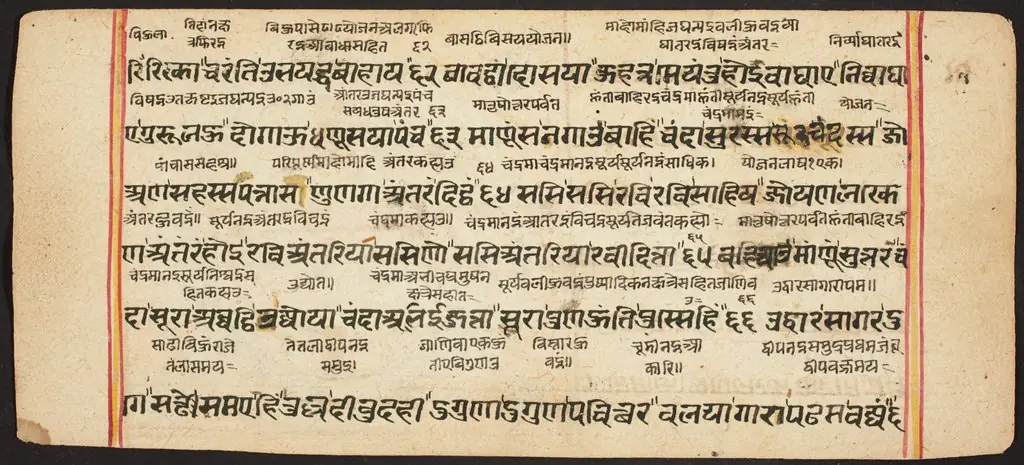
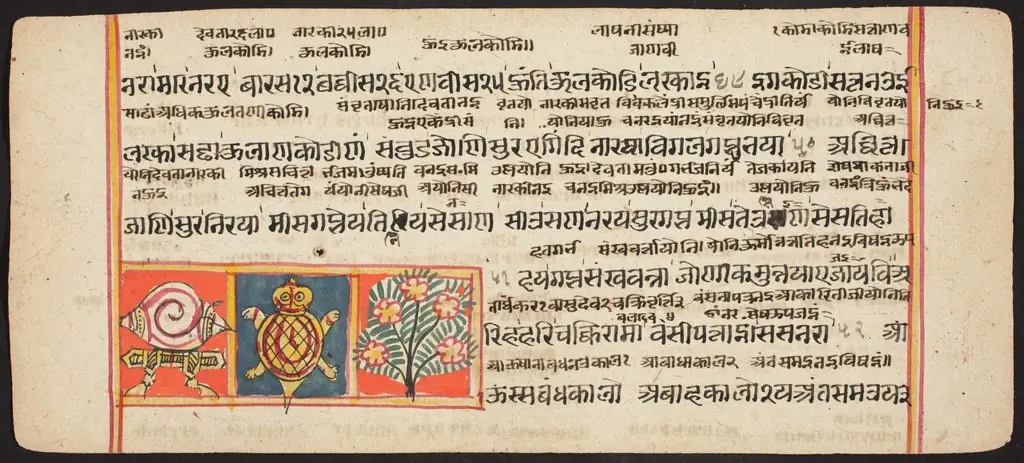
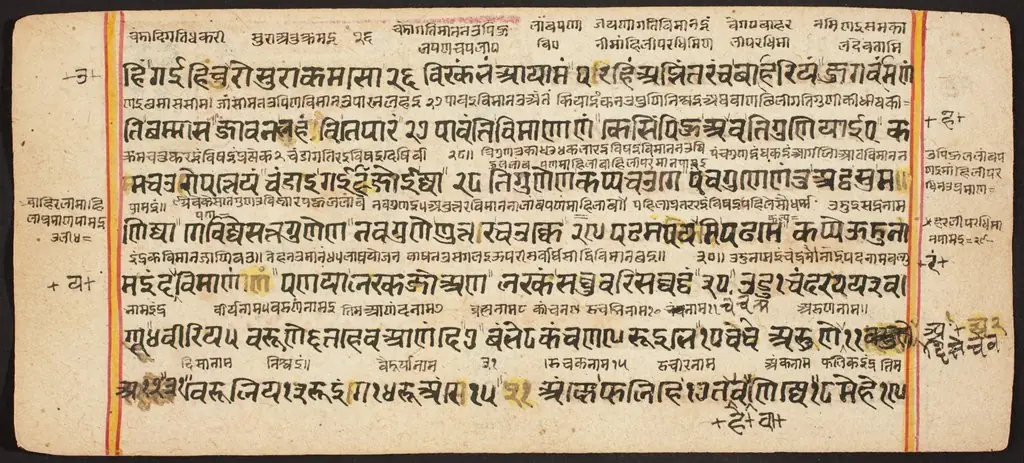
Tantric Manuscript "Sangrahani Sutra" is an unspecified painting by Unknown. It is held in the collection of the Detroit Institute of Arts. This folio is part of a handwritten Tantric Buddhist manuscript known as the Sangrahani Sutra, produced in medieval India.
About this work
Overview
The text is rendered in black ink on a pale, fibrous paper substrate, with visible signs of age including edge fraying and small perforations.
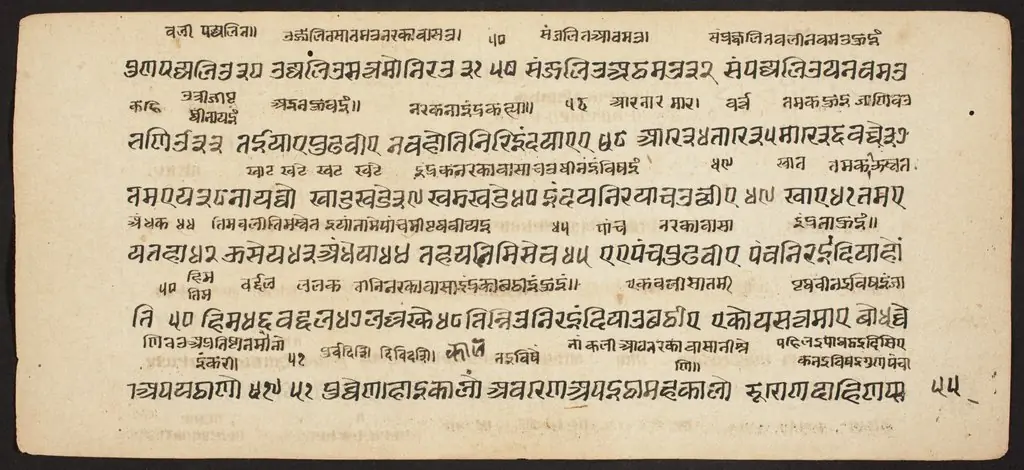
This folio is part of a handwritten Tantric Buddhist manuscript known as the Sangrahani Sutra, produced in medieval India. The text is rendered in black ink on a pale, fibrous paper substrate, with visible signs of age including edge fraying and small perforations. Its appearance reflects centuries of handling and environmental exposure, preserving the material authenticity of its creation rather than idealizing its condition.
Subject & Meaning
The Sangrahani Sutra is a doctrinal text central to certain esoteric Buddhist traditions, compiling teachings on ritual practice and metaphysical principles. Its script, likely in Sanskrit or a regional Prakrit, serves not merely as conveyance of doctrine but as a sacred object in itself, where the precision of writing was considered an act of devotion and spiritual discipline.
Technique & Style
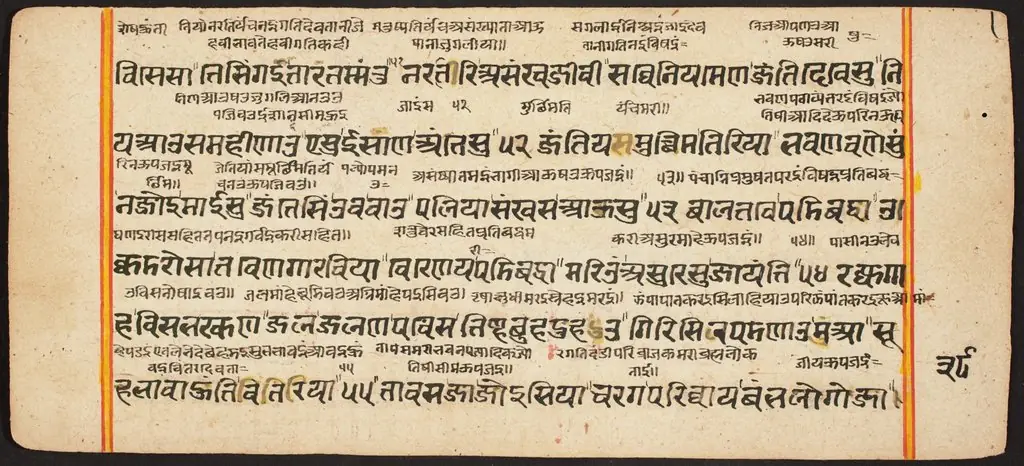
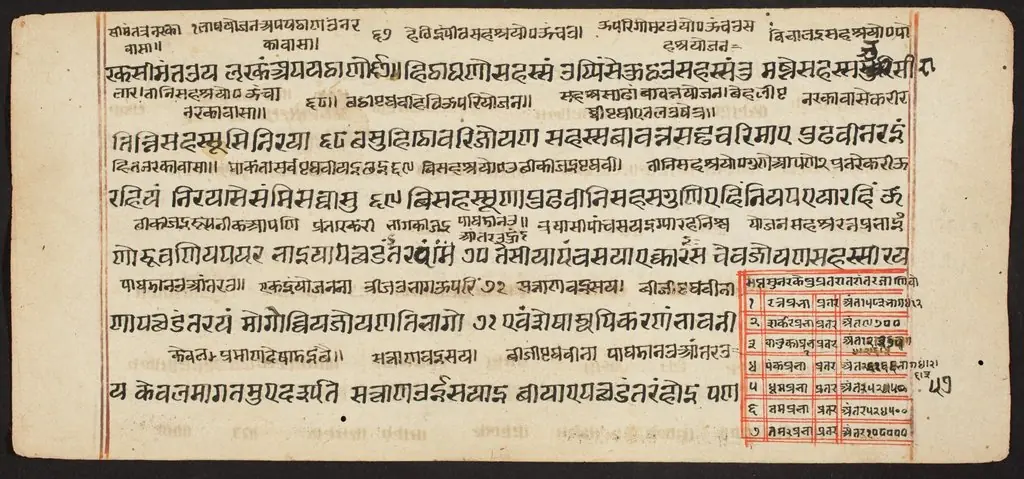
The script is executed in a fine, dense hand with consistent brushwork, featuring subtle flourishes at character terminals and careful spacing between lines. Decorative elements are minimal but intentional—delicate ink accents and ruled margins suggest a monastic scribe’s disciplined approach. The absence of illustrative imagery aligns with textual-focused Tantric traditions that prioritized verbal precision over pictorial representation.
History & Provenance
The manuscript likely originated in eastern India during the late medieval period, possibly within a monastic center active in the transmission of Vajrayana teachings. Its survival through centuries implies careful preservation, though its current condition indicates prolonged use and eventual transition into a收藏 context, possibly entering a museum collection in the 20th century.
Context
In the religious culture of its time, such manuscripts were not merely read but ritually handled, recited, and stored in sacred spaces. The physical wear reflects their role as living objects within devotional practice, distinct from later Western notions of texts as static artifacts. Their production required specialized training, often undertaken by monks over extended periods.
Legacy
Today, this folio stands as a material witness to the transmission of esoteric Buddhist thought across South Asia. It contributes to scholarly understanding of pre-modern manuscript culture, illustrating how spiritual authority was embedded in the materiality of writing—its ink, paper, and imperfections alike.
Artist & collection

 Domestic Scene
 Giacomo and Cardinal Marco, investing Andrea, Abbot of San Zeno, with his Benefice
 The Nymph of Fontainebleau
 Portrait of a Woman
 Madonna and Child with Saints in the Enclosed Garden
 Venus and Minerva
 Family Group of Four on Sofa
 Wall painting from Room H of the Villa of P. Fannius Synistor at Boscoreale
 Tantric Manuscript "Sangrahani Sutra"
 Tantric Manuscript "Sangrahani Sutra"
 Tantric Manuscript "Sangrahani Sutra"
 Tantric Manuscript "Sangrahani Sutra"
 Tantric Manuscript "Sangrahani Sutra"
 Tantric Manuscript "Sangrahani Sutra"
 Tantric Manuscript "Sangrahani Sutra"
 Tantric Manuscript "Sangrahani Sutra"
 Tantric Manuscript "Sangrahani Sutra"
 Tantric Manuscript "Sangrahani Sutra"
 Tantric Manuscript "Sangrahani Sutra"
 Tantric Manuscript "Sangrahani Sutra"