Artwork
Philip the Good
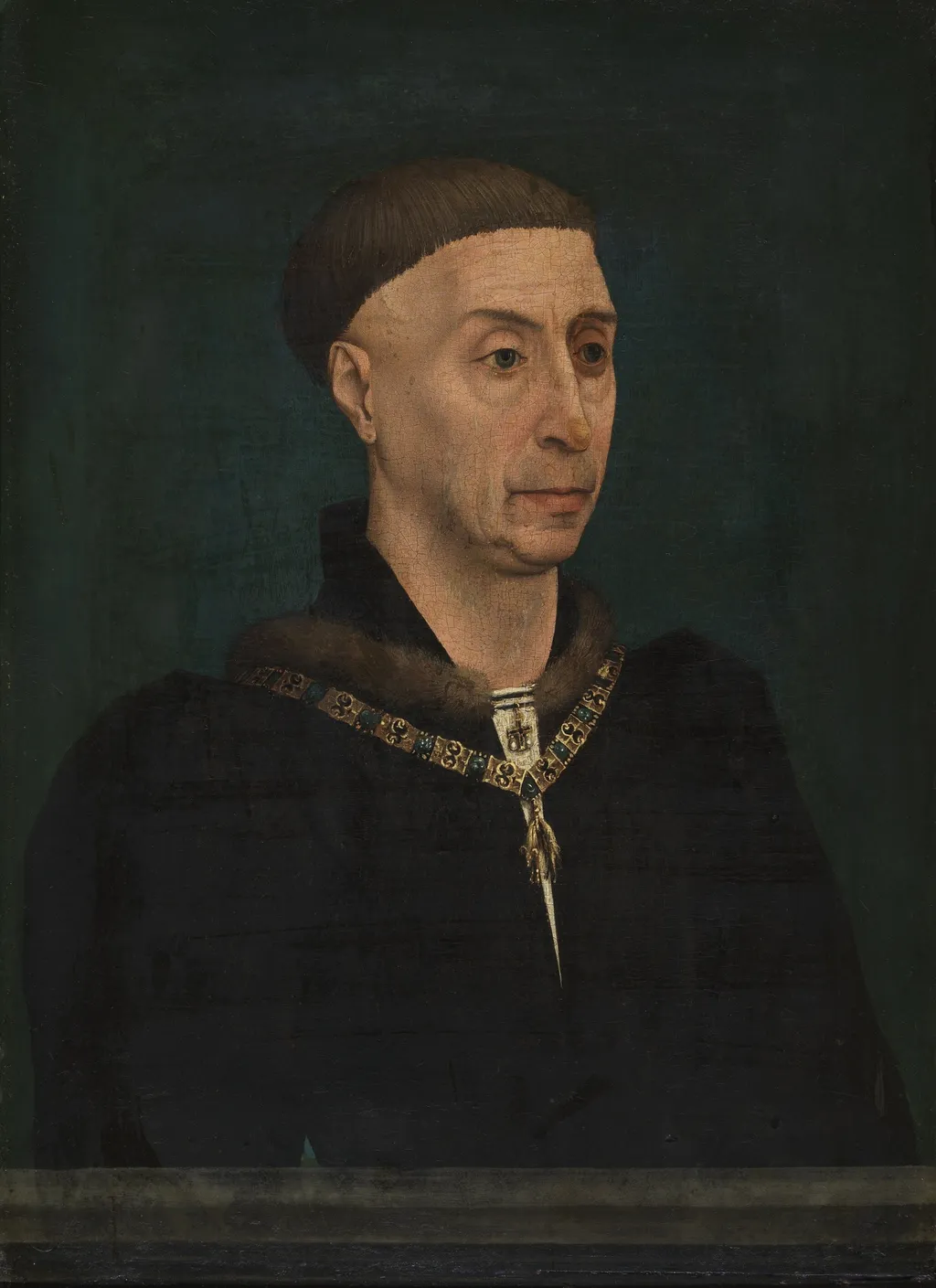
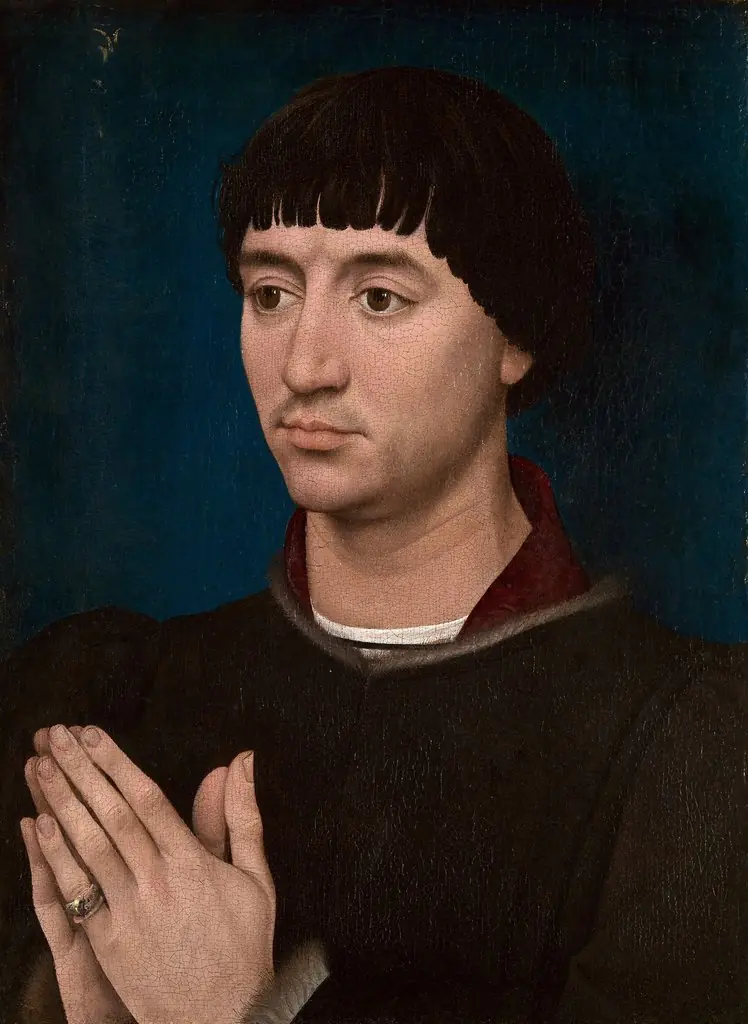
Philip the Good is an oil painting by the Northern Renaissance artist Unknown. It dates from 1451 and is held in the collection of the Royal Museum of Fine Arts Antwerp. The work portrays a solemn figure dressed in a dark robe trimmed with fur, his collar adorned with gold chains and a modest pendant.
About this work
Overview
The work portrays a solemn figure dressed in a dark robe trimmed with fur, his collar adorned with gold chains and a modest pendant. Set against an unadorned, shadowy backdrop, the composition directs attention to the sitter’s visage and attire, emphasizing the contrast between the muted background and the illuminated facial features.
Subject & Meaning
The portrait likely represents a high-ranking individual, suggested by the luxurious fur lining and gold ornamentation. The restrained expression and austere setting convey authority and dignity, while the subtle play of light across the face hints at a contemplative or solemn demeanor appropriate to a person of status.
Technique & Style
Executed in oil, the painting benefits from the medium’s capacity for smooth tonal transitions, allowing the artist to model the face with delicate gradations of light and shadow. The use of chiaroscuro heightens the three‑dimensional effect, creating a dramatic contrast that isolates the figure from the dark background and accentuates the texture of the fur and metalwork.
Context
The work belongs to a tradition of courtly portraiture where oil paint and chiaroscuro were employed to convey realism and prestige. Such portraits were often commissioned to affirm the sitter’s rank and to serve as visual records within noble households or public collections.
Artist & collection

 Domestic Scene
 Giacomo and Cardinal Marco, investing Andrea, Abbot of San Zeno, with his Benefice
 The Nymph of Fontainebleau
 Portrait of a Woman
 Madonna and Child with Saints in the Enclosed Garden
 Venus and Minerva
 Family Group of Four on Sofa
 Wall painting from Room H of the Villa of P. Fannius Synistor at Boscoreale
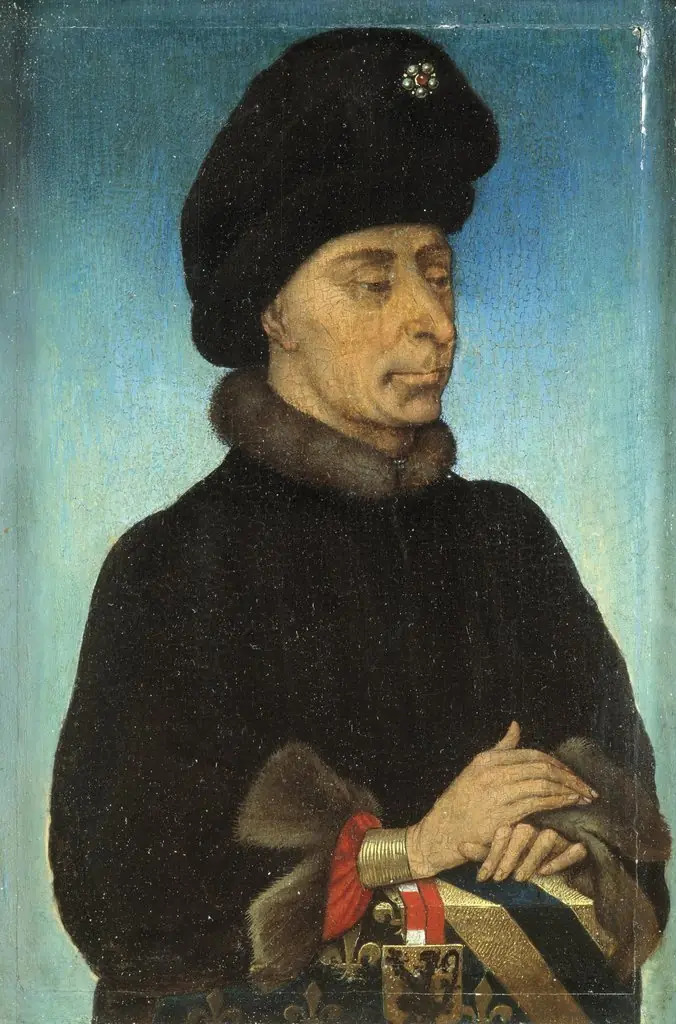 John the Fearless, Duke of Burgundy
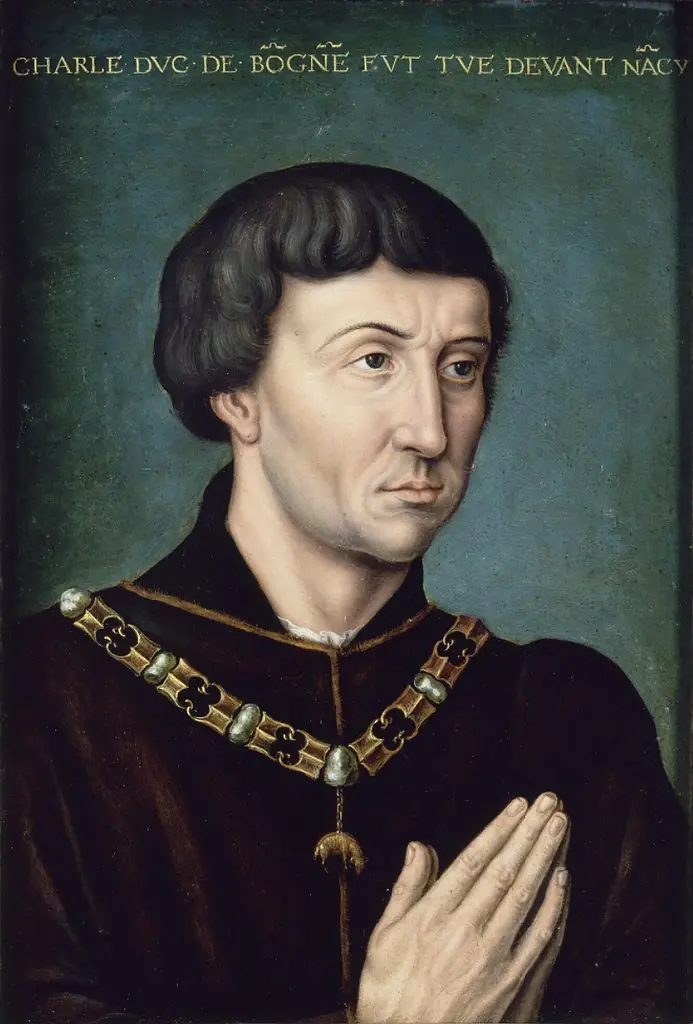 Portrait of Charles the Bold, Duke of Burgundy (1433-1477)
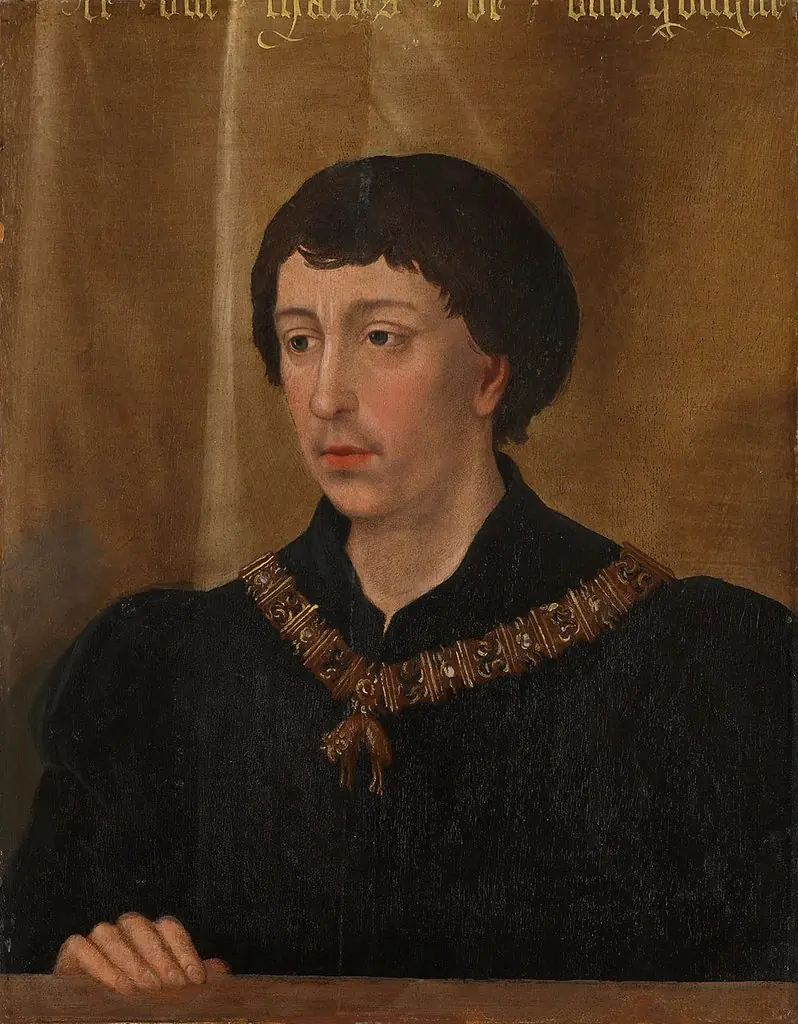 Herzog Karl der Kühne (1433-1477) von Burgund
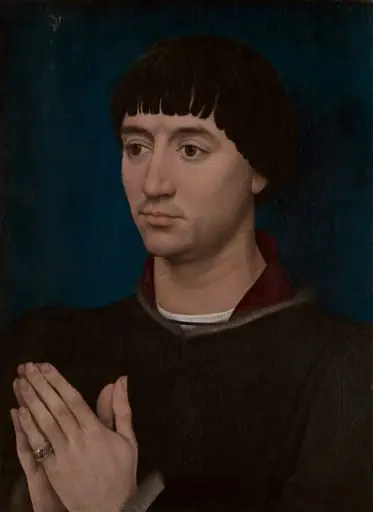 Portrait of Jean Gros (recto); Coat of Arms of Jean Gros (verso)
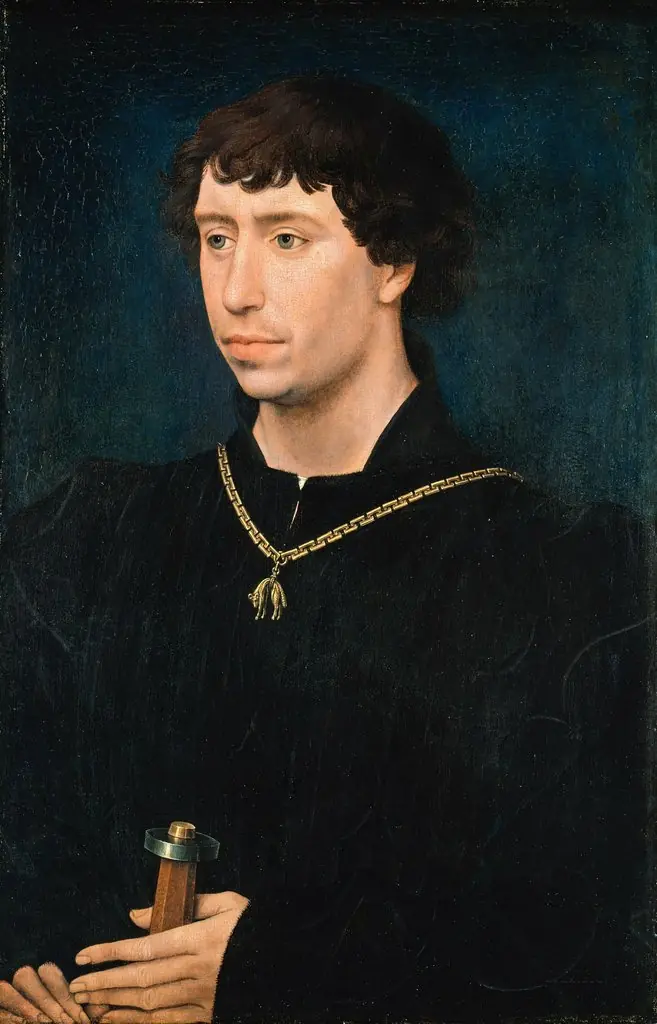 Portrait of Charles the Bold
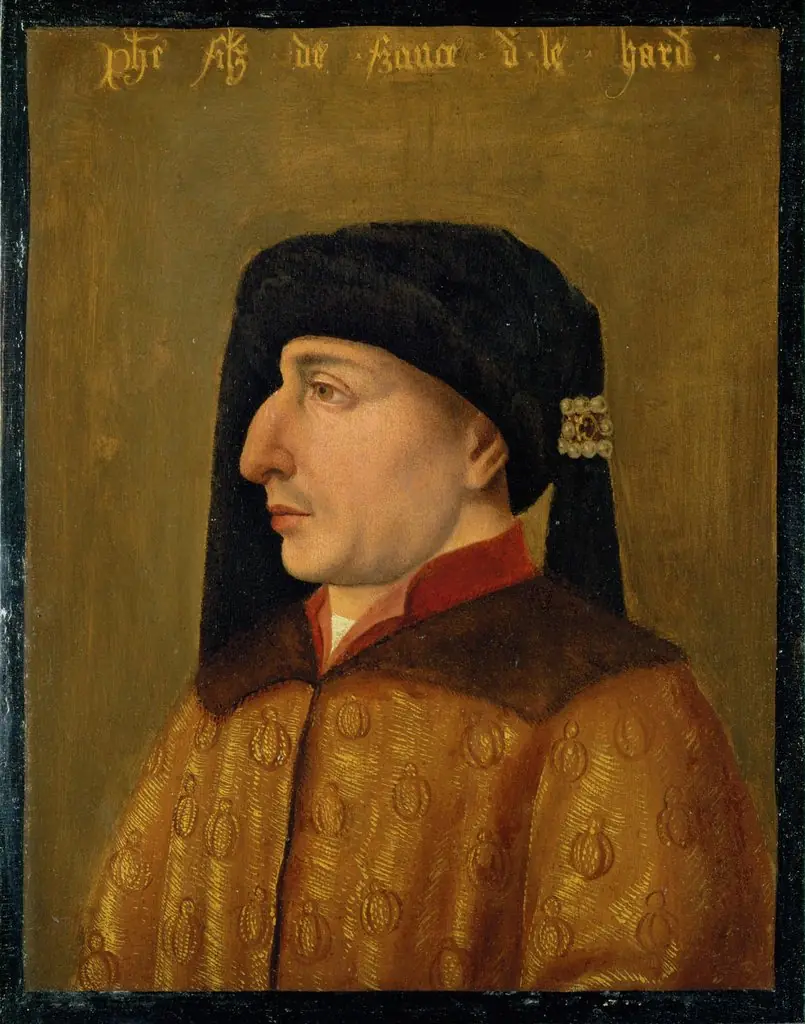 Herzog Philipp der Kühne (1342-1404) von Burgund im Profil
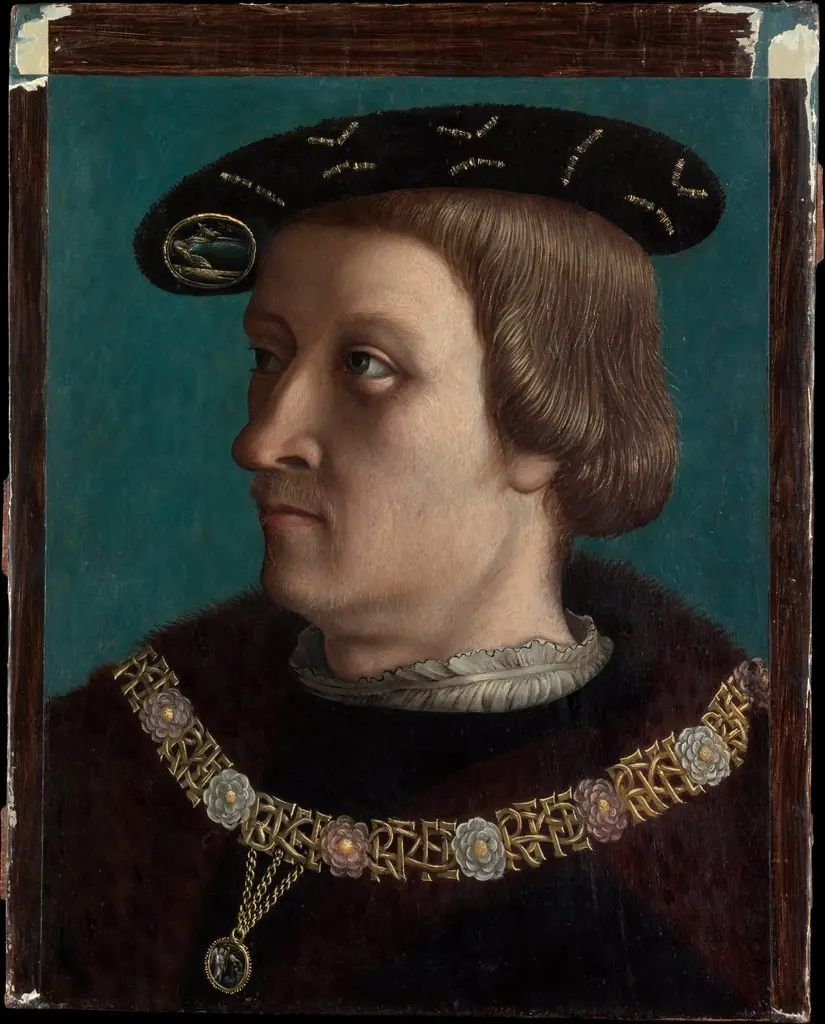 Portrait of a Man Wearing the Order of the Annunziata of Savoy
 Portrait of Jean Gros