Artwork
Kalpa Sutra
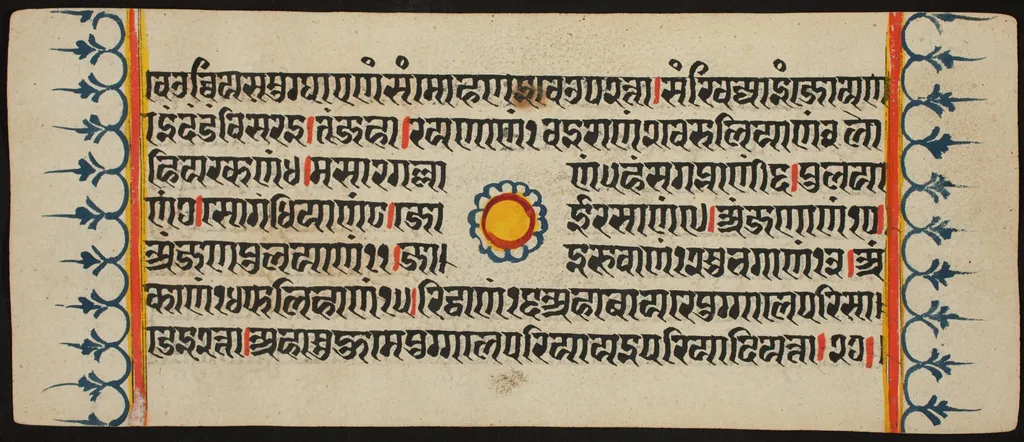
Kalpa Sutra is an unspecified painting by Unknown. It is held in the collection of the Detroit Institute of Arts.
About this work
Overview
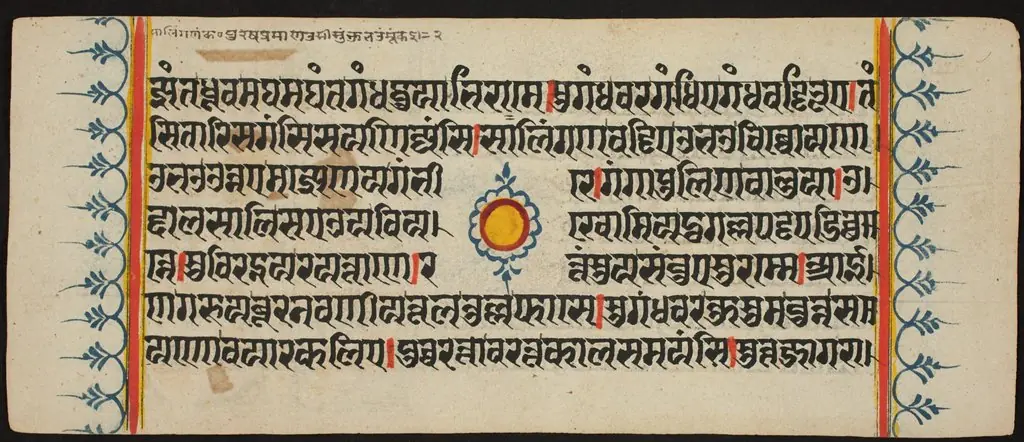
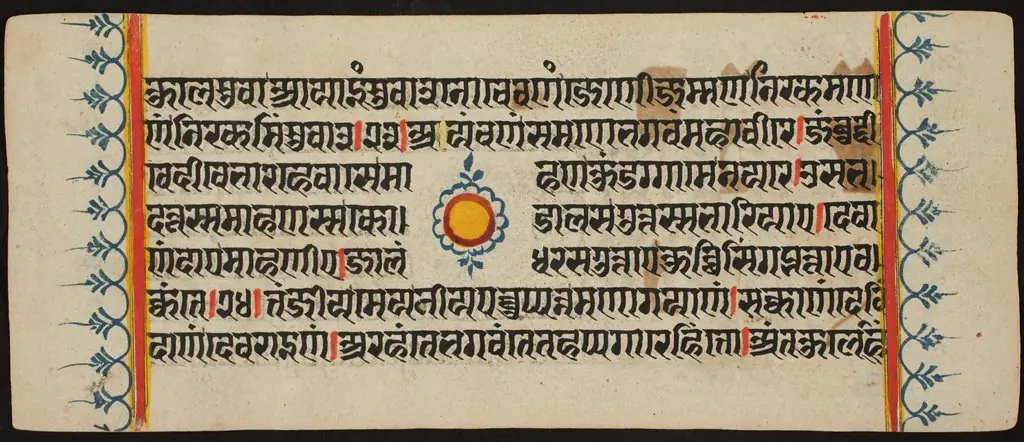
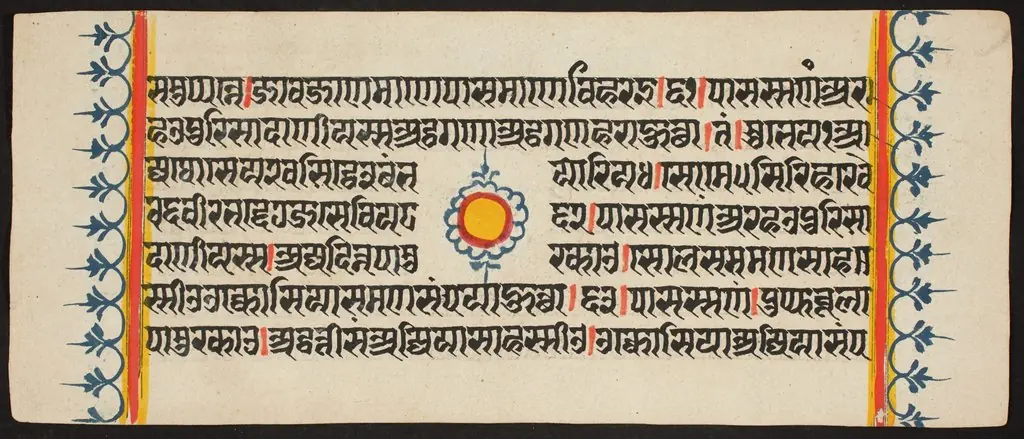
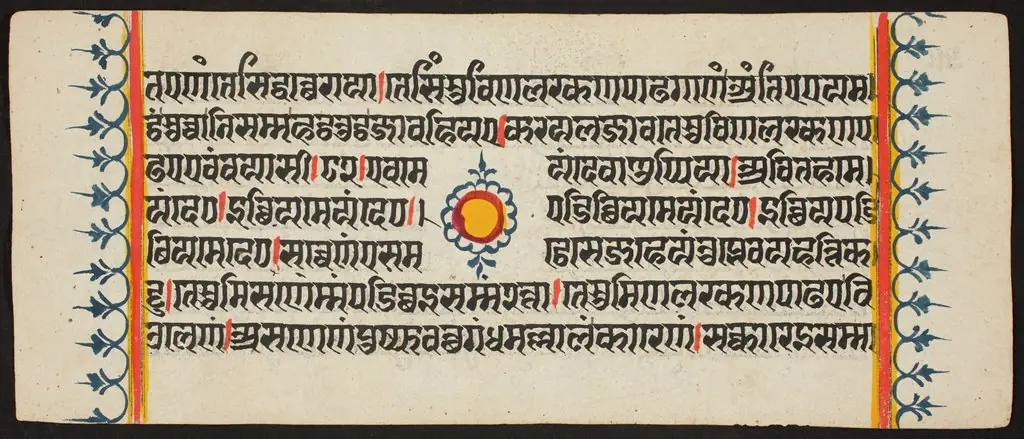
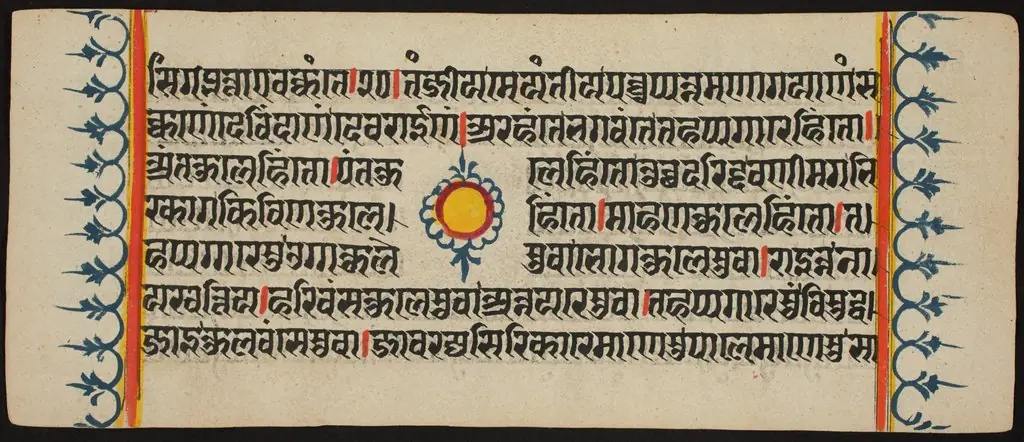
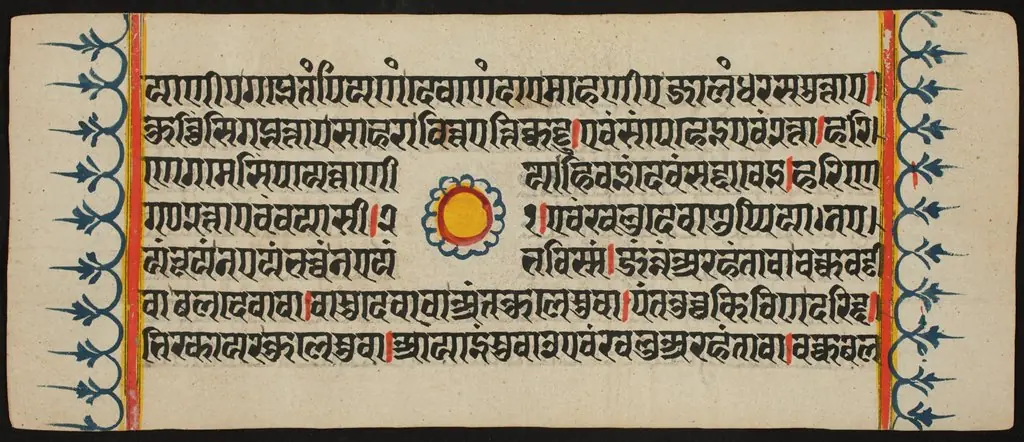
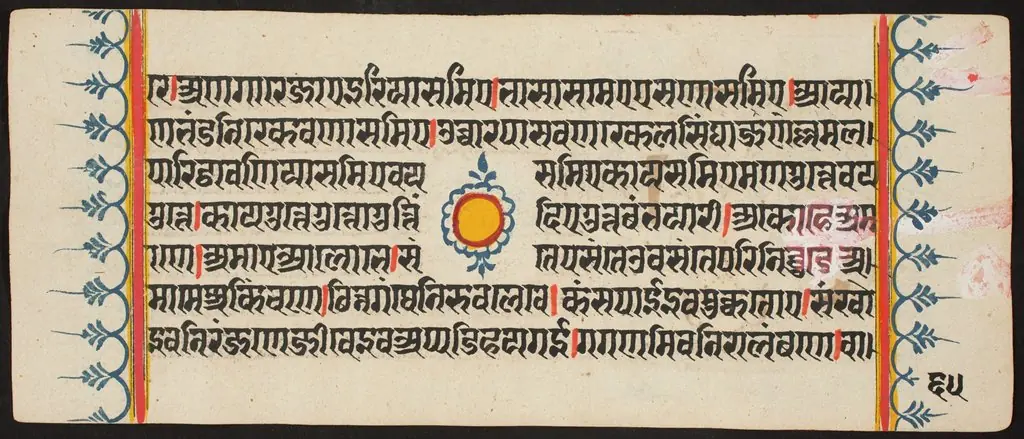
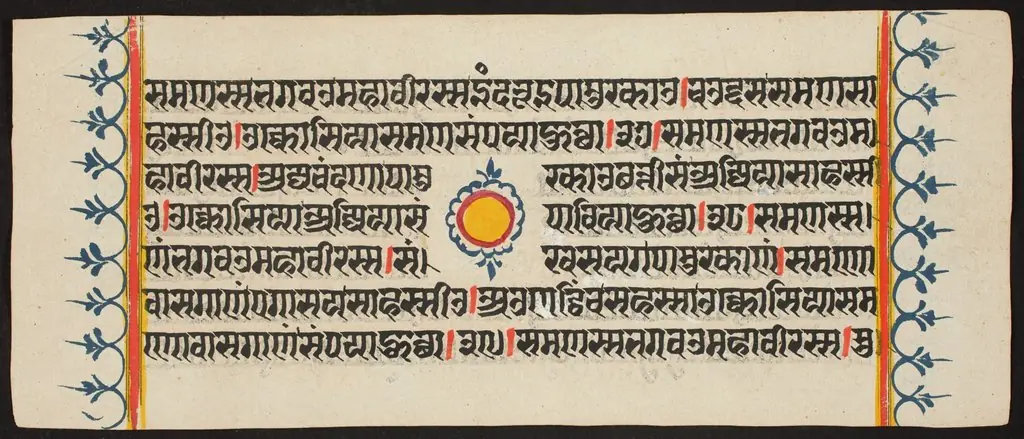
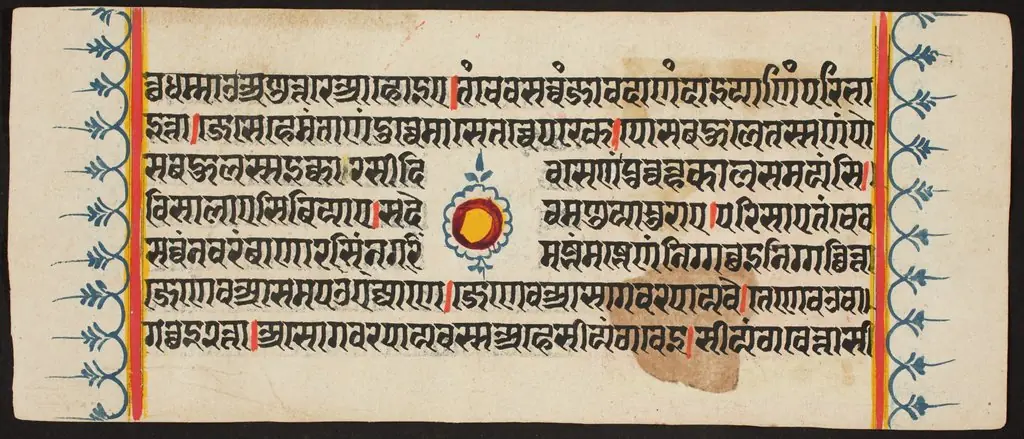
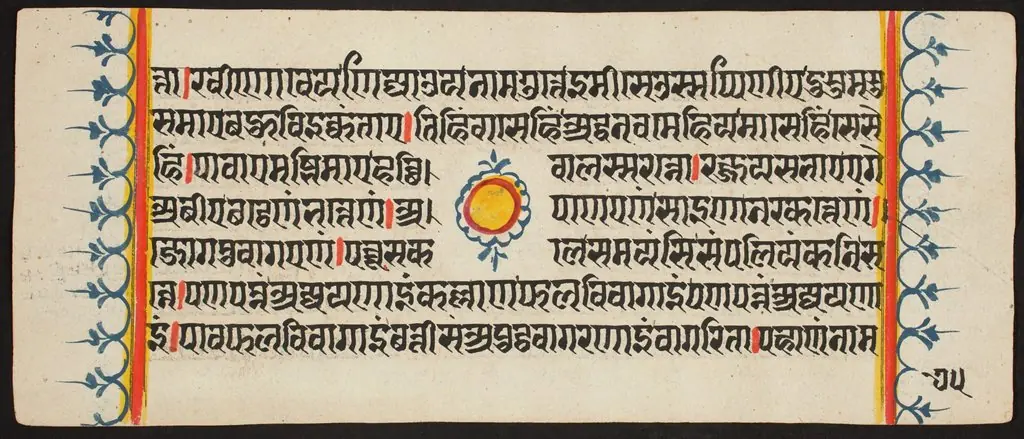
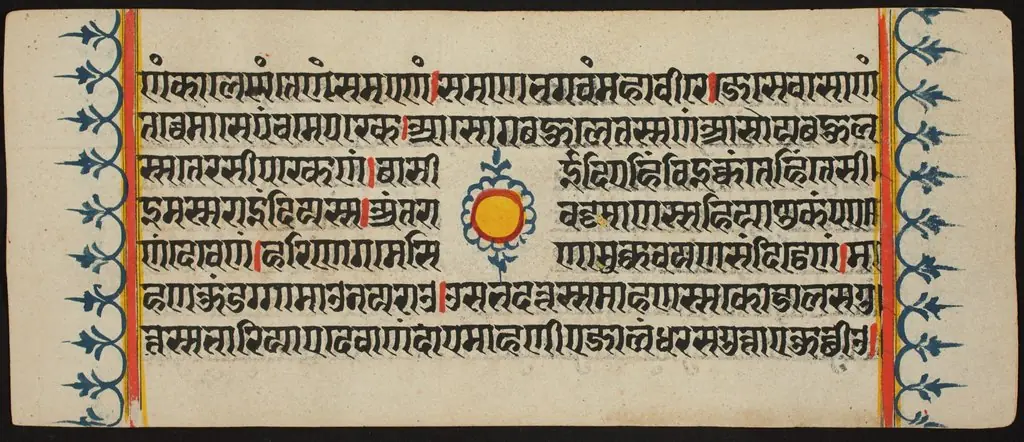
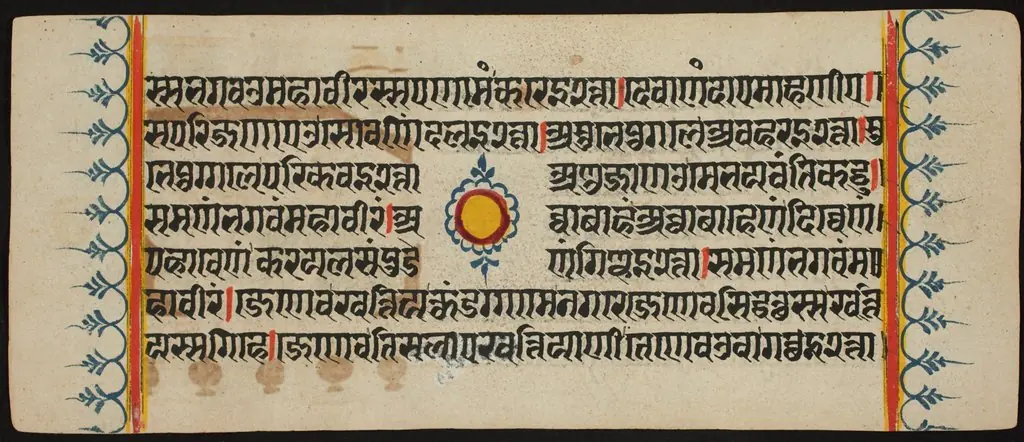
The composition emphasizes textual sanctity through decorative framing, reflecting the devotional function of such manuscripts in Jain monastic practice.
This painted manuscript page belongs to the Kalpa Sutra tradition, a Jain religious text used in ritual recitation. It features handwritten script in black ink, accented with red pigment and a central yellow circle, all set against a pale beige ground bordered in darker tones. The composition emphasizes textual sanctity through decorative framing, reflecting the devotional function of such manuscripts in Jain monastic practice.
Subject & Meaning
The script, though not decipherable here, is likely a portion of the Kalpa Sutra, detailing the lives of Jain Tirthankaras and monastic rules. The central yellow circle may symbolize the soul or spiritual focus, while the surrounding patterns—geometric and floral—serve as visual meditations, reinforcing the sacred nature of the words. The design invites contemplation, aligning form with spiritual intent.
Technique & Style
The painting employs fine brushwork typical of western Indian manuscript illumination. Ink lines are precise, with red highlights applied in thin washes and the central circle rendered in opaque yellow pigment. The border uses layered pigments to create depth, while the beige background remains unadorned to direct attention to the text. Materials are natural: mineral pigments and plant-based inks on prepared paper or palm leaf.
History & Provenance
Produced in Gujarat or Rajasthan between the 14th and 16th centuries, such pages were copied by Jain monks for liturgical use. These manuscripts were often stored in temple libraries or carried by ascetics. This fragment likely originated from a larger codex, its survival suggesting it was preserved due to ritual significance rather than aesthetic value alone.
Context
In Jain religious life, handwritten scriptures were treated as embodiments of sacred knowledge. The decorative elements were not ornamental but devotional, guiding focus during recitation. Similar manuscripts appear in temple collections across western India, where the act of copying and viewing the text was considered a meritorious practice, reinforcing spiritual discipline.
Legacy
Though no longer used in active ritual, these pages remain vital to the study of Jain art and textual traditions. Scholars value them for their paleographic details and material evidence of pre-modern bookmaking. Contemporary Jain communities recognize them as cultural anchors, preserving the visual language of centuries-old spiritual practice.
Artist & collection

 Domestic Scene
 Giacomo and Cardinal Marco, investing Andrea, Abbot of San Zeno, with his Benefice
 The Nymph of Fontainebleau
 Portrait of a Woman
 Madonna and Child with Saints in the Enclosed Garden
 Venus and Minerva
 Family Group of Four on Sofa
 Wall painting from Room H of the Villa of P. Fannius Synistor at Boscoreale