Artwork
Portrait of Józef Skumin Tyszkiewicz (ca. 1694–1754), starosta in Samogitia
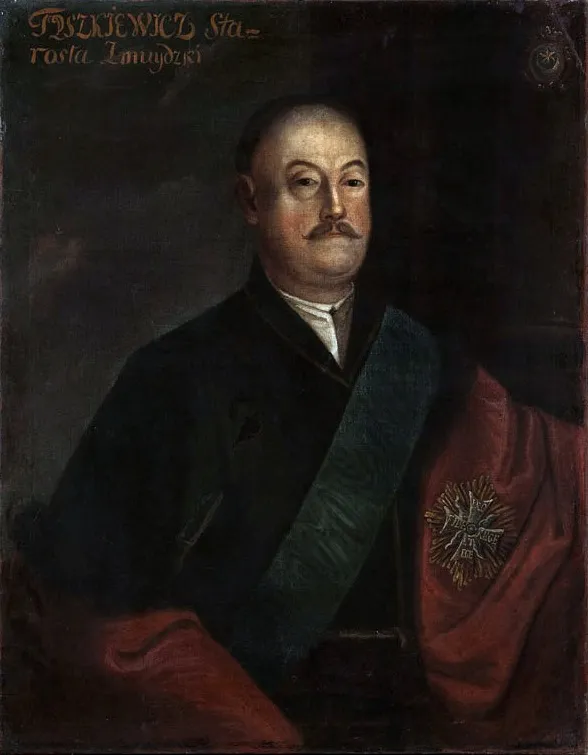
Portrait of Józef Skumin Tyszkiewicz (ca. 1694–1754), starosta in Samogitia is an oil painting by Unknown. It dates from 1797 and is held in the collection of the National Museum in Warsaw. This oil on canvas portrait presents Józef Skumin Tyszkiewicz (c.
About this work
Overview
His direct gaze and solemn expression convey the formal dignity typical of early‑18th‑century noble portraiture.
This oil on canvas portrait presents Józef Skumin Tyszkiewicz (c. 1694–1754), who served as starosta of Samogitia. Rendered against a dark, unadorned background, the composition centers the sitter in a dark coat trimmed with a green sash, a white shirt, and a red drape over his left arm. His direct gaze and solemn expression convey the formal dignity typical of early‑18th‑century noble portraiture.
Subject & Meaning
Józef Skumin Tyszkiewicz was a member of the Polish‑Lithuanian aristocracy, holding the administrative office of starosta, a regional governor. The portrait emphasizes his status through attire and posture: the green sash denotes official rank, while the red fabric may allude to martial or ceremonial authority. The restrained setting underscores the sitter’s role as a public official rather than a private individual.
Technique & Style
Executed in oil, the work employs a limited palette of deep blacks, muted greens, and a touch of red, allowing subtle modeling of facial features and fabric folds. The painter uses chiaroscuro to isolate the figure from the background, creating a three‑dimensional presence. Brushwork is smooth in the skin tones, contrasting with more textured handling of the coat’s surface, reflecting the conventions of baroque portraiture in the Polish‑Lithuanian Commonwealth.
History & Provenance
The portrait dates from the early 18th century, contemporaneous with Tyszkiewicz’s tenure as starosta. While specific ownership records are scarce, the painting likely remained within the Tyszkiewicz family estates before entering public collections. Its survival offers insight into the visual culture of the Lithuanian nobility and the administrative elite of the Commonwealth.
Artist & collection

 Domestic Scene
 Giacomo and Cardinal Marco, investing Andrea, Abbot of San Zeno, with his Benefice
 The Nymph of Fontainebleau
 Portrait of a Woman
 Madonna and Child with Saints in the Enclosed Garden
 Venus and Minerva
 Family Group of Four on Sofa
 Wall painting from Room H of the Villa of P. Fannius Synistor at Boscoreale
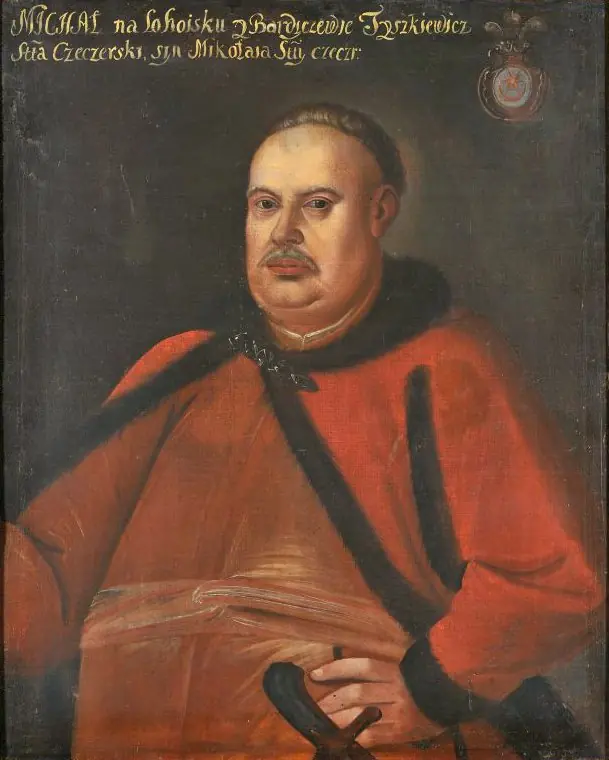 Portrait of Michał Tyszkiewicz, Leliwa coat of arms (?–before 1703), starosta of Chachersk
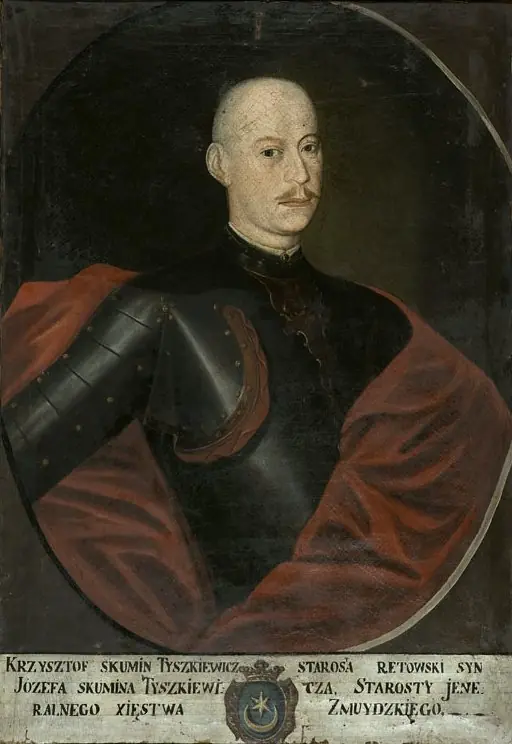 Portrait of Krzysztof Skumin Tyszkiewicz (1729–1762), starosta of Rietavas
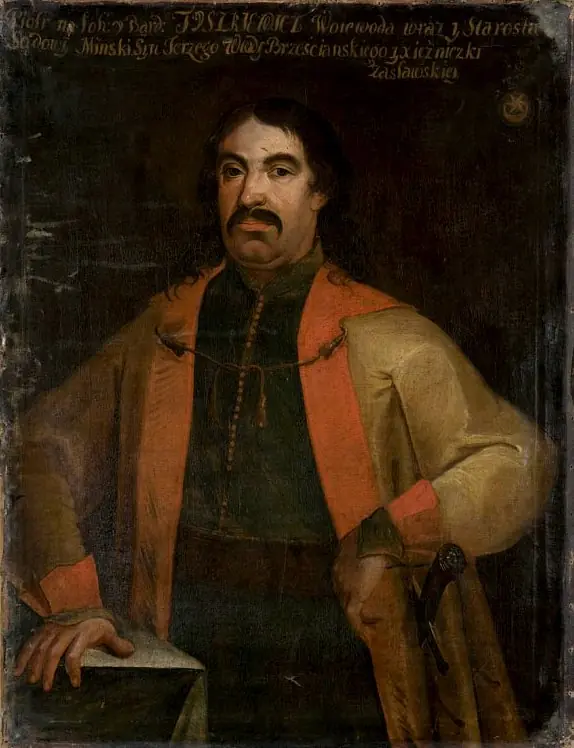 Portrait of Piotr Tyszkiewicz (?–1631?), voivode and starosta of Minsk
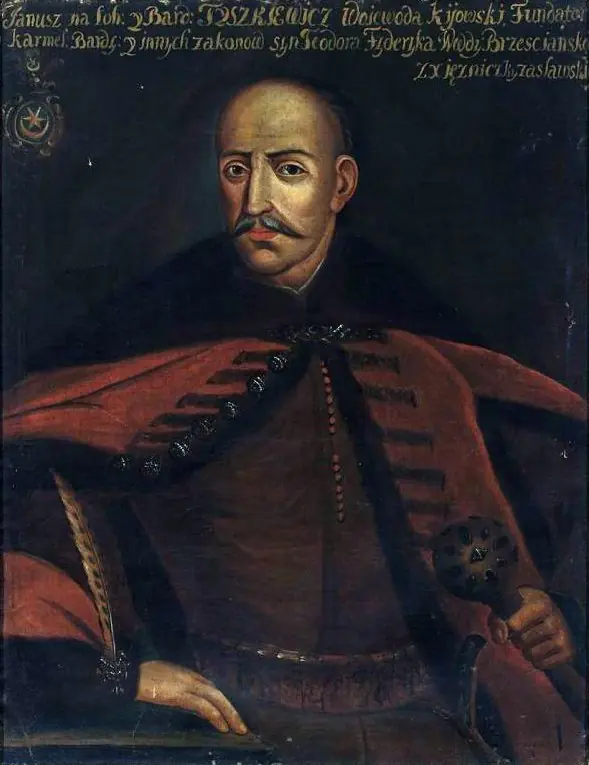 Portrait of Janusz Tyszkiewicz (1570–1649), Leliwa coat of arms, voivode of Kiev
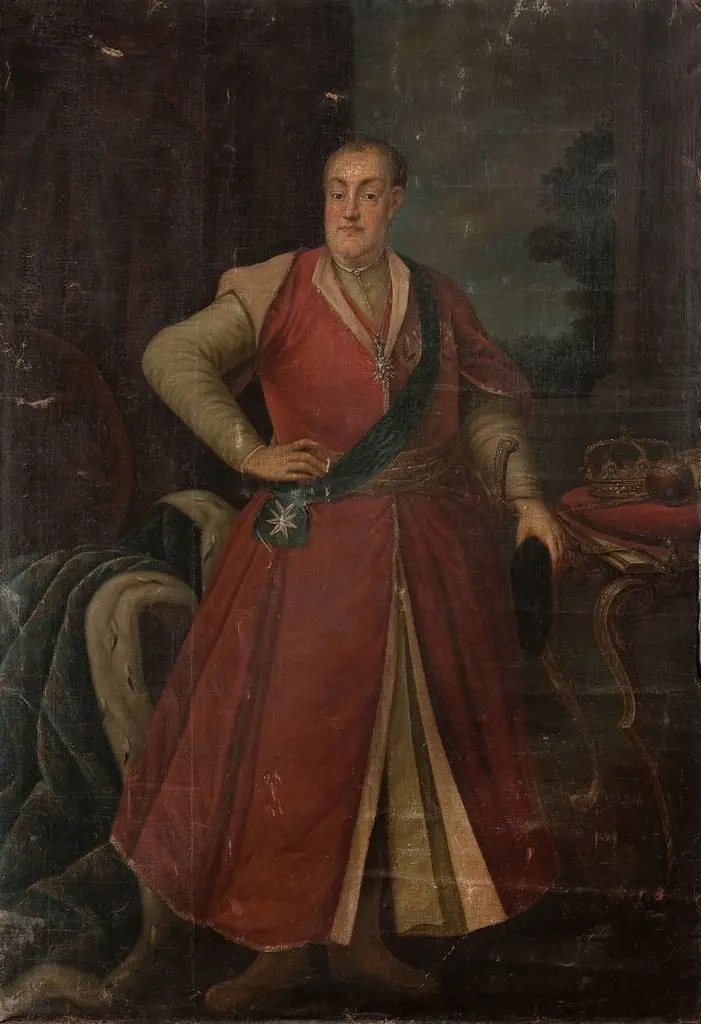 Portrait of Augustus III (1696–1763), King of Poland
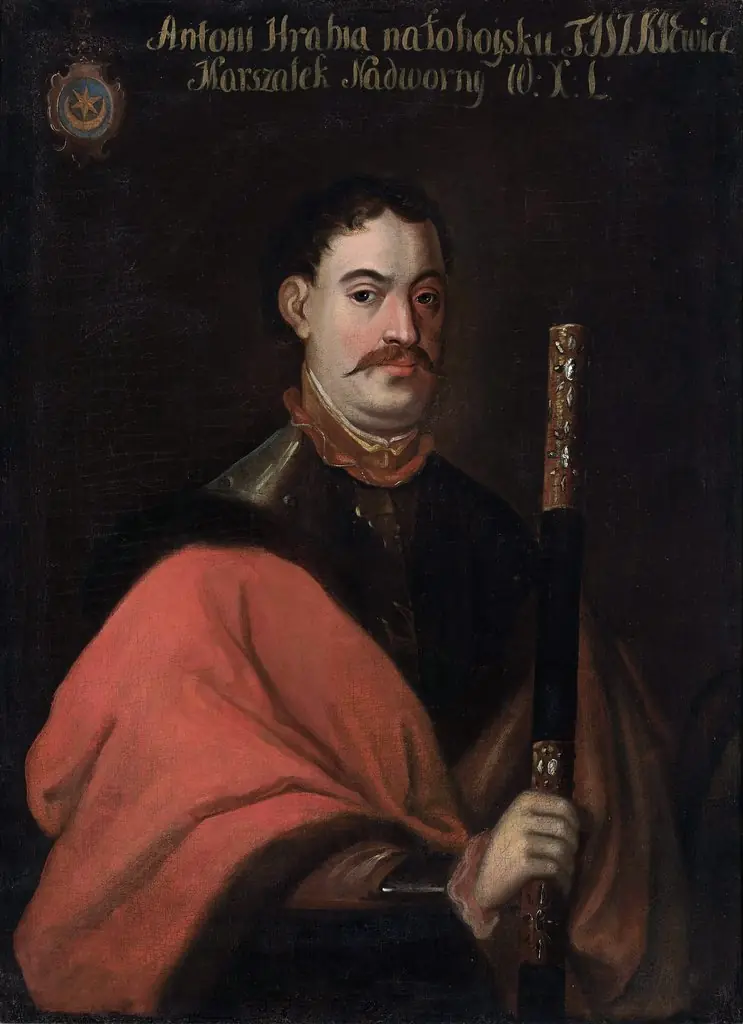 Portrait of Antoni Jan Tyszkiewicz (1609–1649), Leliwa coat of arms, court marshal of the Grand Duchy of Lithuania