Artwork
Portrait of Janusz Tyszkiewicz (1570–1649), Leliwa coat of arms, voivode of Kiev
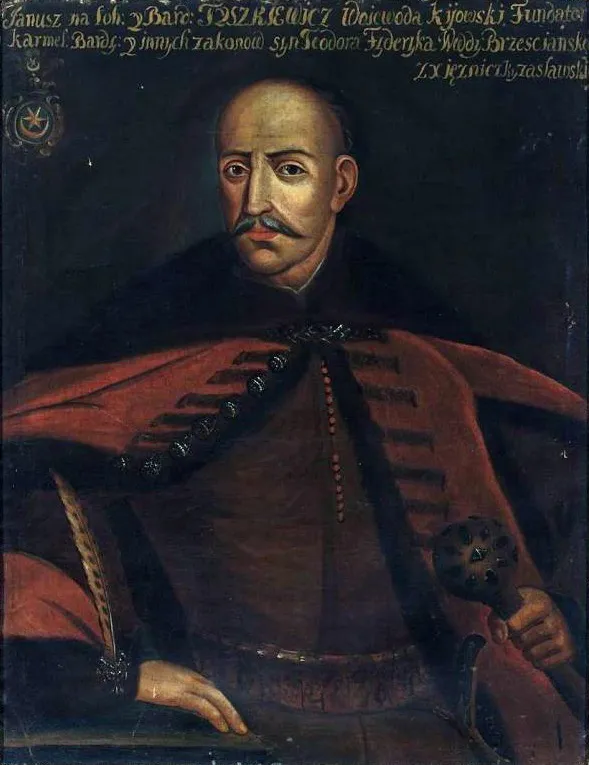
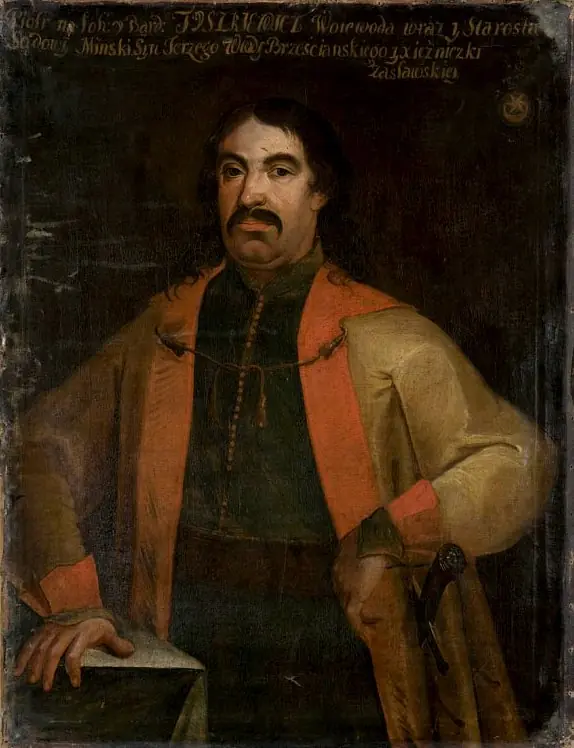
Portrait of Janusz Tyszkiewicz (1570–1649), Leliwa coat of arms, voivode of Kiev is an oil painting by Unknown. It dates from 1797 and is held in the collection of the National Museum in Warsaw. This oil painting depicts Janusz Tyszkiewicz, a Polish nobleman and voivode of Kiev, rendered in a formal, full-length portrait.
About this work
Overview
This oil painting depicts Janusz Tyszkiewicz, a Polish nobleman and voivode of Kiev, rendered in a formal, full-length portrait. Dressed in military attire with a fur-trimmed red coat and gold buttons, he is shown with a sword and white glove, emphasizing his status and role. The plain black background isolates the figure, focusing attention on his stern expression and precise detailing.
Subject & Meaning
Tyszkiewicz is portrayed as a disciplined nobleman and military leader, his attire and posture reflecting authority and duty. The sword and glove symbolize his readiness for command and adherence to aristocratic codes of conduct. The Leliwa coat of arms, though not visible in the description, would have affirmed his lineage and political standing within the Polish-Lithuanian Commonwealth.
Technique & Style
The artist employs chiaroscuro to model the face and fabric with subtle gradations of light, enhancing the three-dimensionality of the figure. The dark wig, rich textures of fur and velvet, and sharp definition of the glove suggest meticulous attention to material detail. The composition is restrained, avoiding decorative elements to prioritize psychological presence and social identity.
History & Provenance
Commissioned during Tyszkiewicz’s tenure as voivode, the portrait likely served to assert his political legitimacy and familial prestige. It remained within the Tyszkiewicz family until entering the collection of the National Museum in Warsaw, where it is now preserved as part of Poland’s early modern aristocratic portraiture.
Context
In late 16th- and early 17th-century Poland, portraits of magnates often combined military symbolism with refined dress to convey both martial responsibility and noble lineage. This work aligns with a broader trend of using portraiture to reinforce social hierarchy and personal legacy in a decentralized Commonwealth where visual representation was a tool of political identity.
Legacy
The portrait stands as a representative example of Polish noble portraiture from the era, valued for its restrained elegance and historical specificity. It contributes to scholarly understanding of how aristocratic identity was visually constructed in the Polish-Lithuanian Commonwealth, influencing later depictions of elite figures in regional art.
Artist & collection

 Domestic Scene
 Giacomo and Cardinal Marco, investing Andrea, Abbot of San Zeno, with his Benefice
 The Nymph of Fontainebleau
 Portrait of a Woman
 Madonna and Child with Saints in the Enclosed Garden
 Venus and Minerva
 Family Group of Four on Sofa
 Wall painting from Room H of the Villa of P. Fannius Synistor at Boscoreale
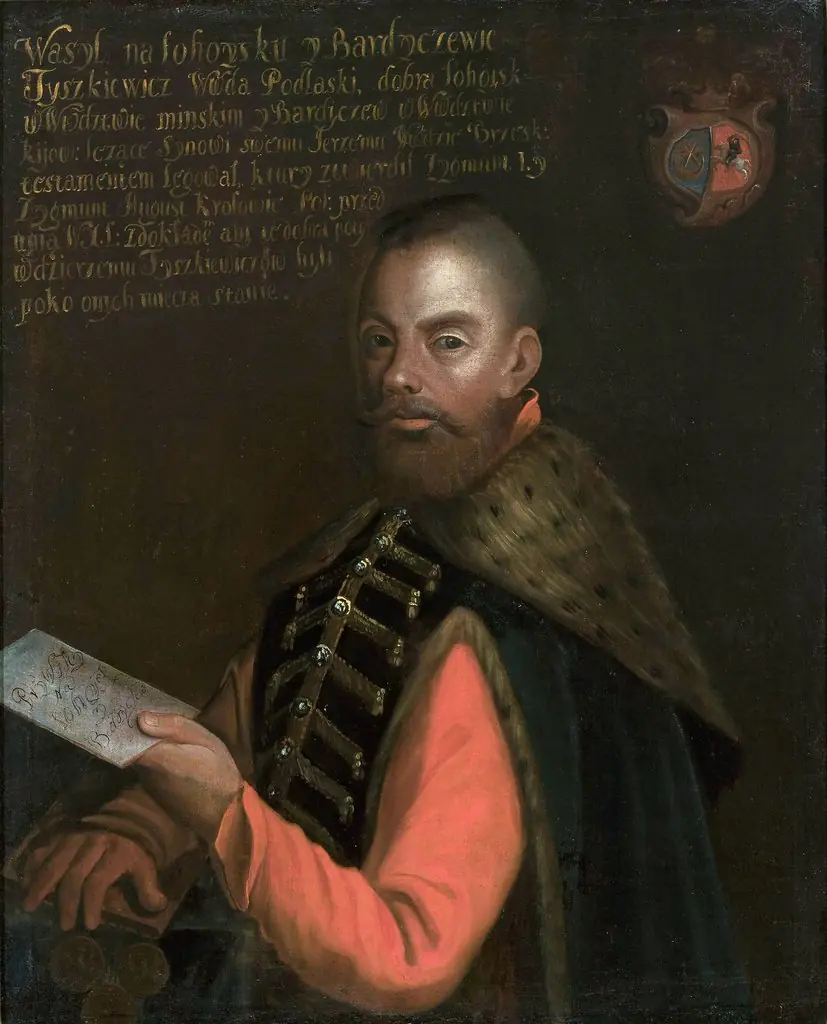 Portrait of Wasyl Tyszkiewicz, Leliwa coat of arms (?–1571), voivode of Podlasie
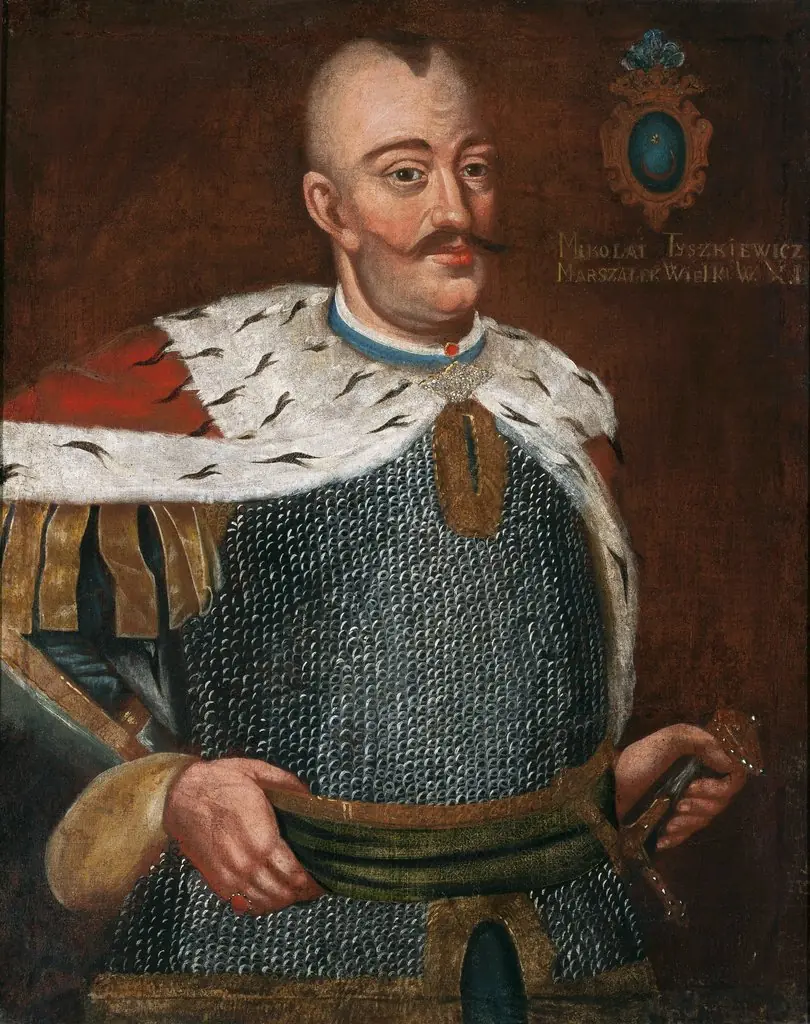 Portrait of Mikołaj Tyszkiewicz, Leliwa coat of arms, marshal of the Grand Duchy of Lithuania
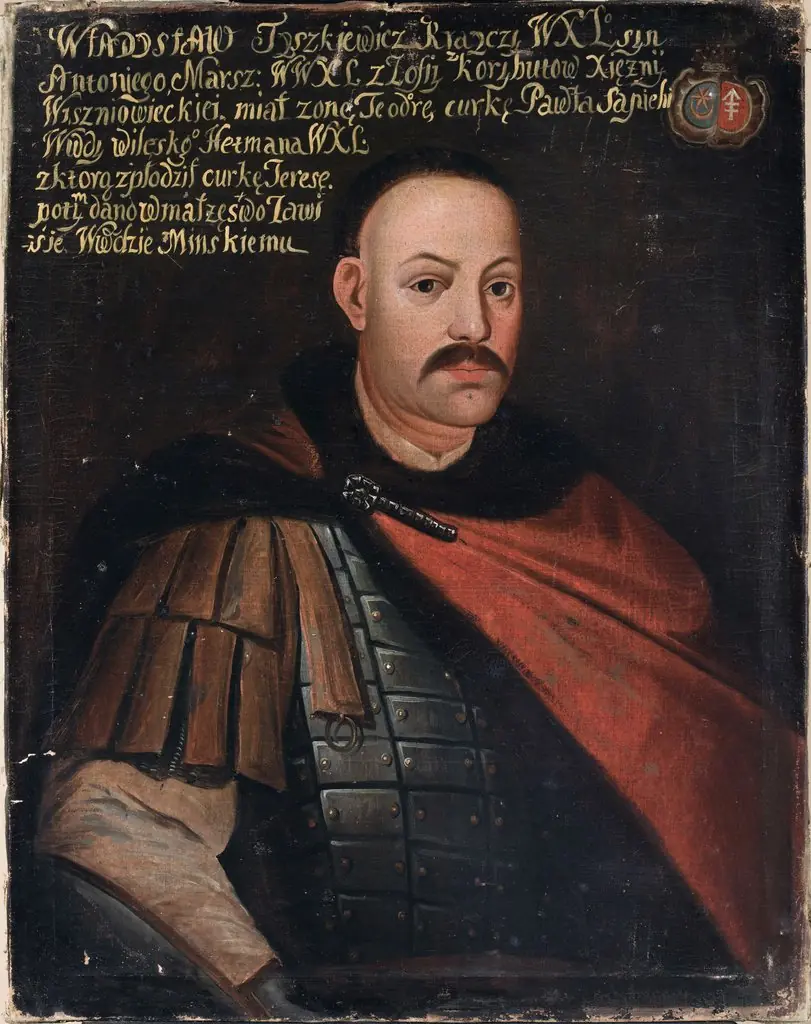 Portrait of Władysław Tyszkiewicz, Leliwa coat of arms (1644–1684), carver of the Grand Duchy of Lithuania
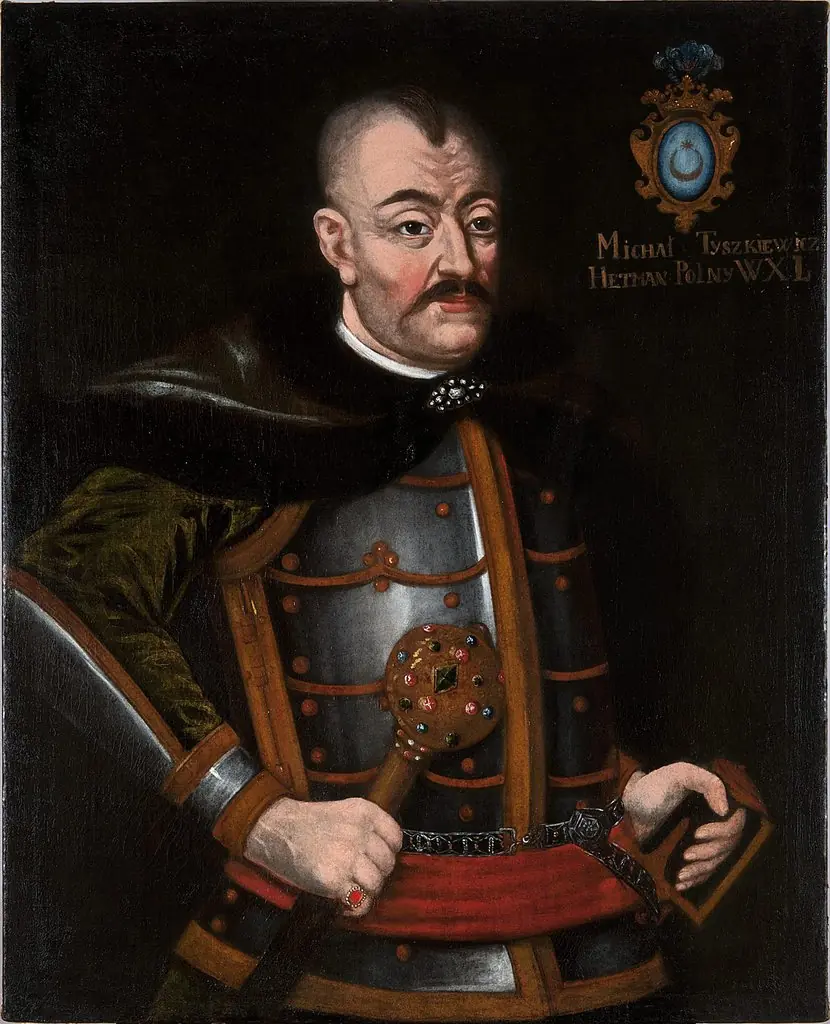 Portrait of Michał Tyszkiewicz, Leliwa coat of arms (?–after 1549), field hetman of the Grand Duchy of Lithuania
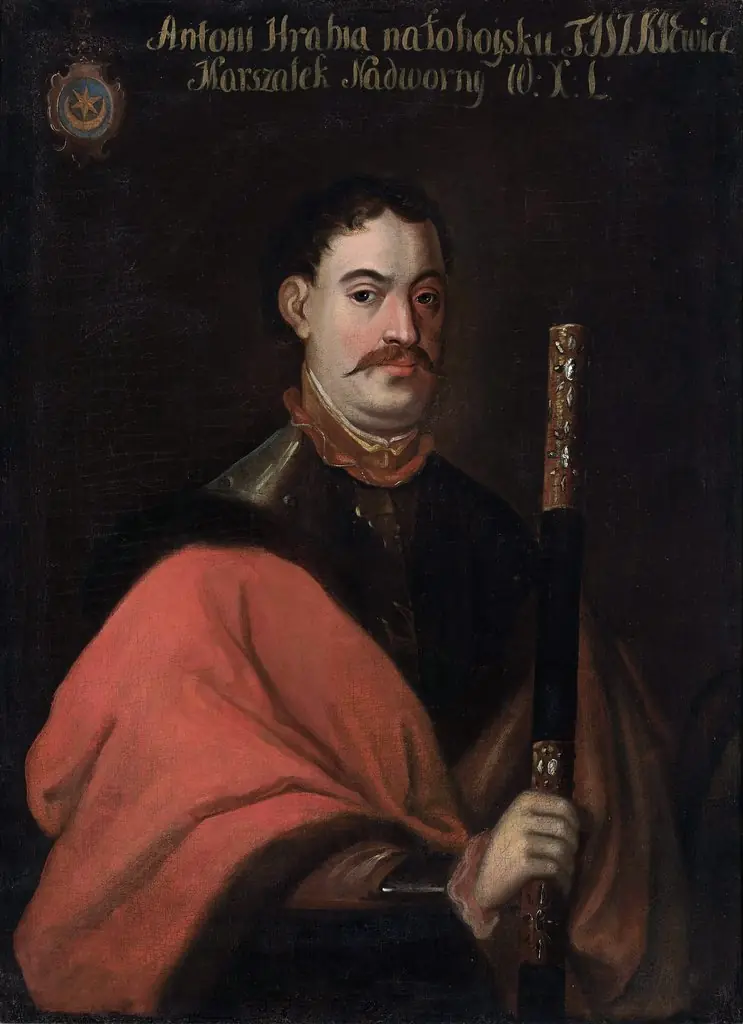 Portrait of Antoni Jan Tyszkiewicz (1609–1649), Leliwa coat of arms, court marshal of the Grand Duchy of Lithuania
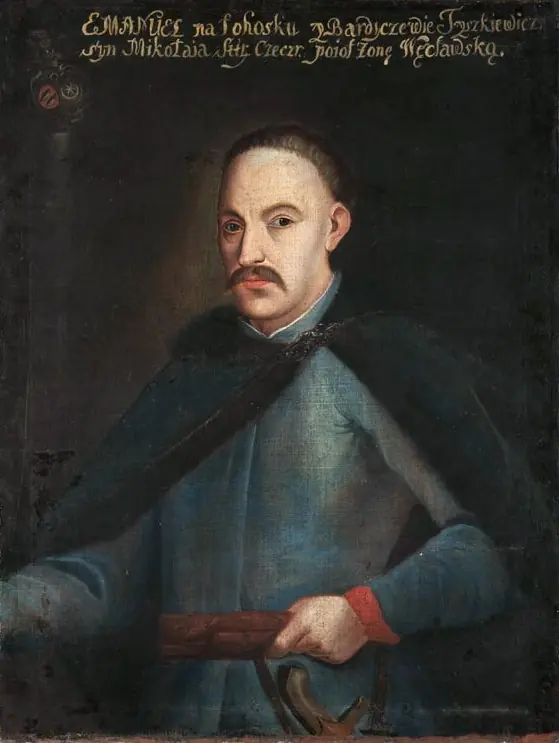 Portrait of Emanuel Władysław Tyszkiewicz, Leliwa coat of arms (?–1704), lord high steward of Brest
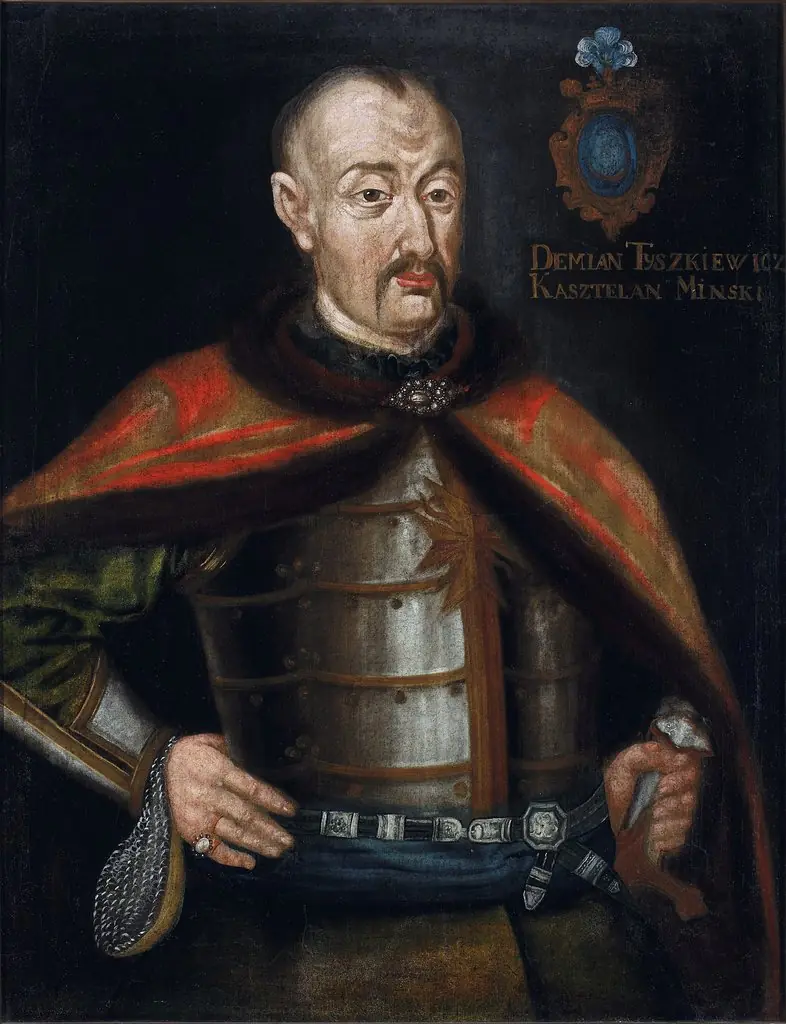 Portrait of Demian (Dmitri) Skumin Tyszkiewicz, Leliwa coat of arms (?–1609), castellan of Minsk
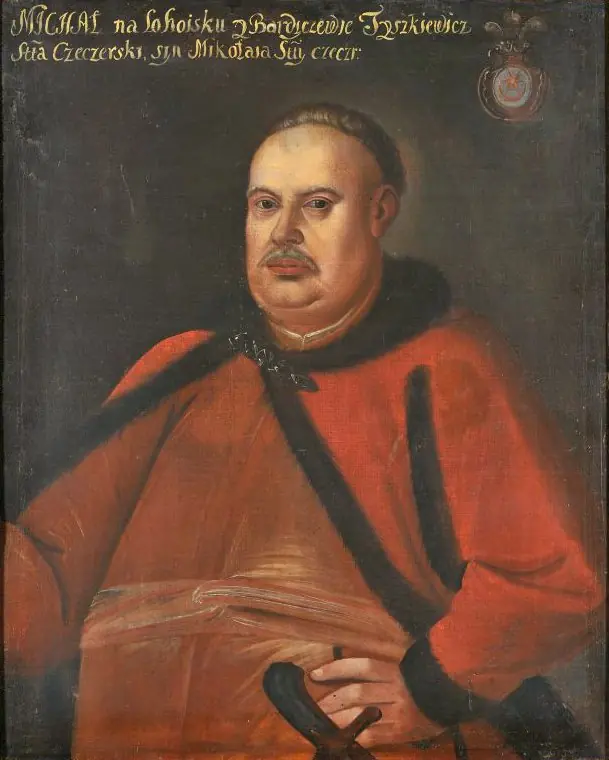 Portrait of Michał Tyszkiewicz, Leliwa coat of arms (?–before 1703), starosta of Chachersk
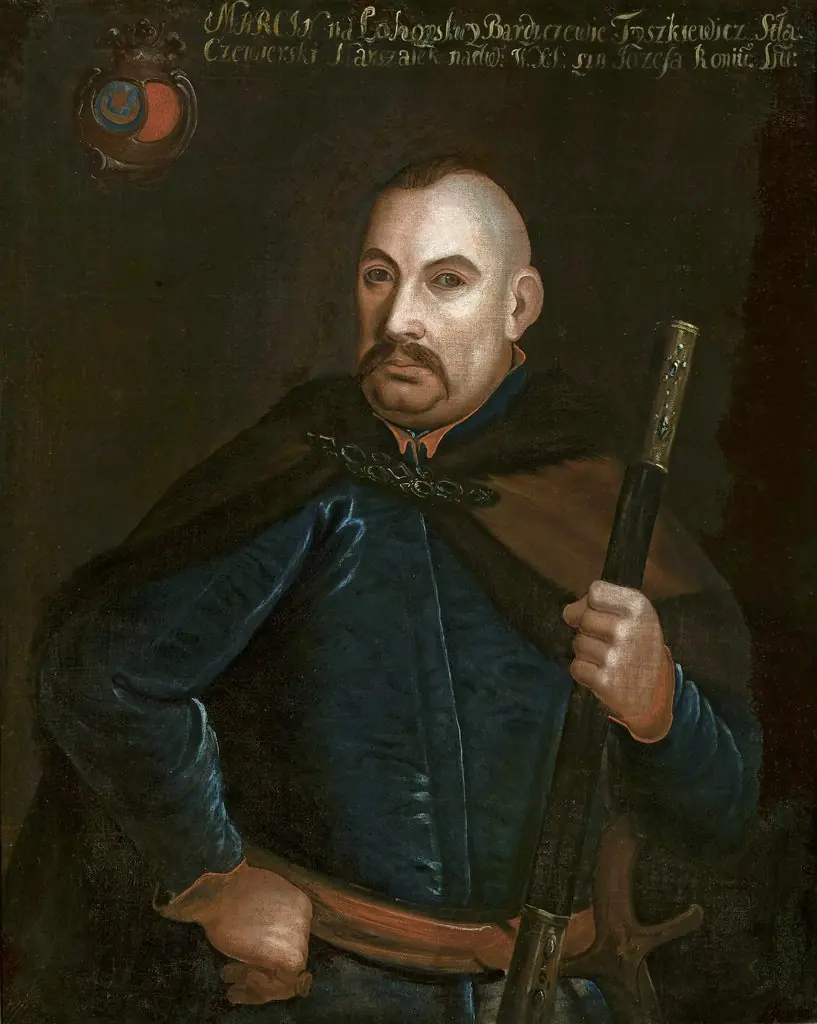 Portrait of Marcin Tyszkiewicz, Leliwa coat of arms (?–after 1631), court marshal of the Grand Duchy of Lithuania
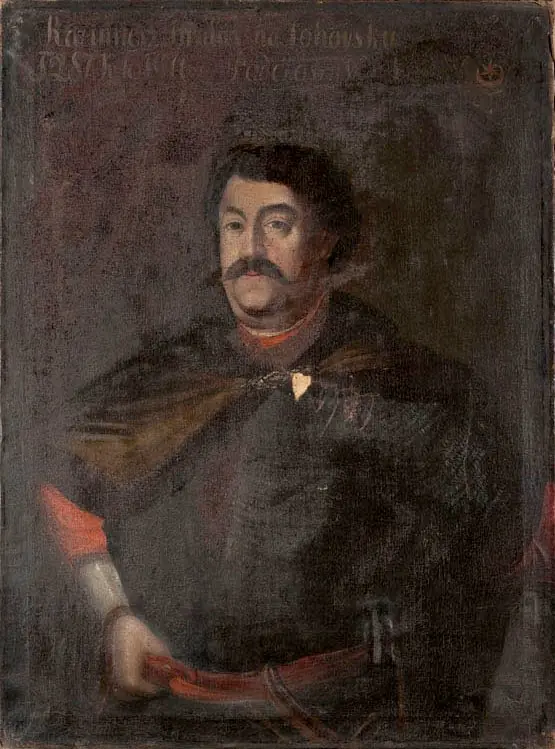 Portrait of Kazimierz Tyszkiewicz, Leliwa coat of arms (?–1652), cup-bearer of the Grand Duchy of Lithuania
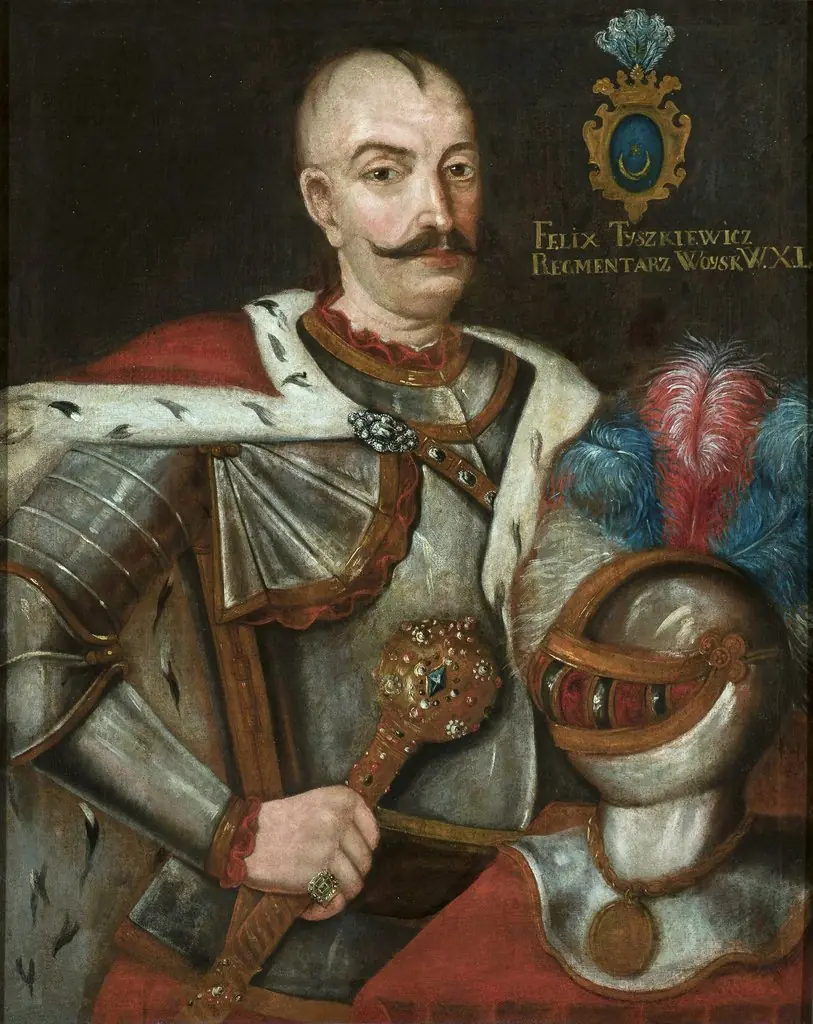 Portrait of Felix Tyszkiewicz (?–1649), Leliwa coat of arms, regimentarius (deputy hetman) of the Grand Duchy of Lithuania
 Portrait of Piotr Tyszkiewicz (?–1631?), voivode and starosta of Minsk