Artwork
Fifty-Four Scenes from The Tale of Genji
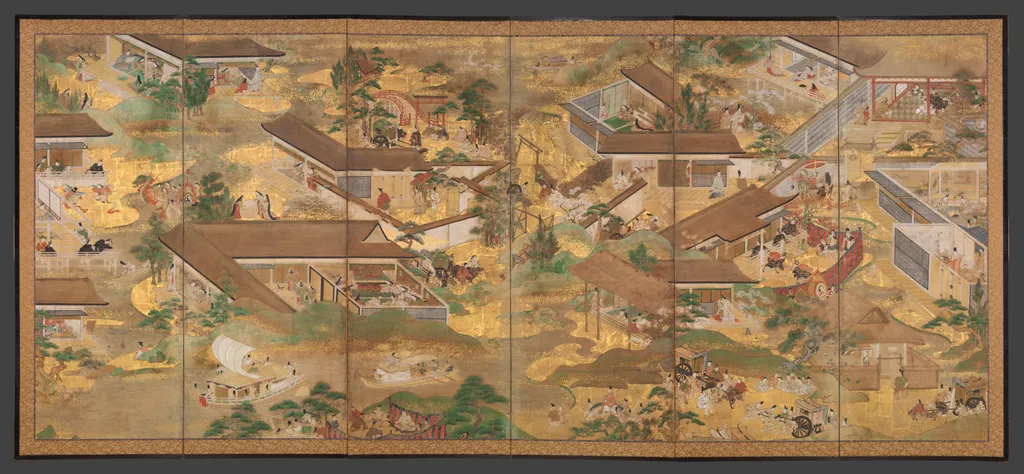
Fifty-Four Scenes from The Tale of Genji is an unspecified painting. It dates from 1692 and is held in the collection of the Metropolitan Museum of Art.
About this work
Overview
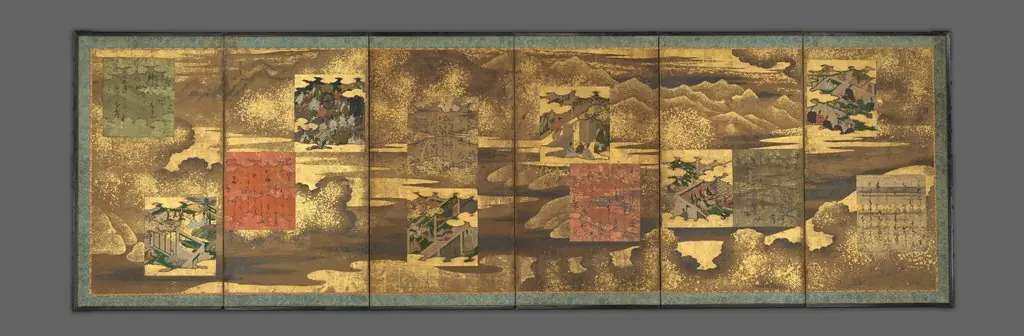
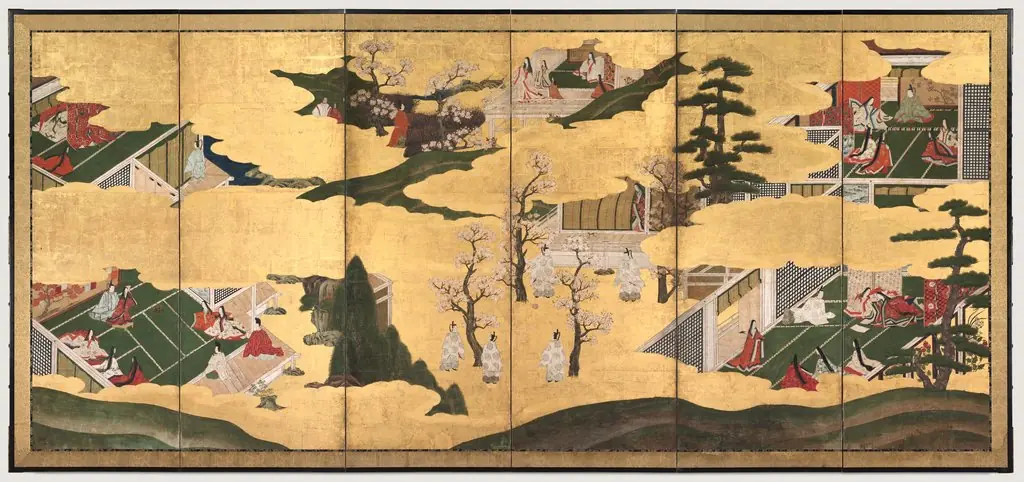
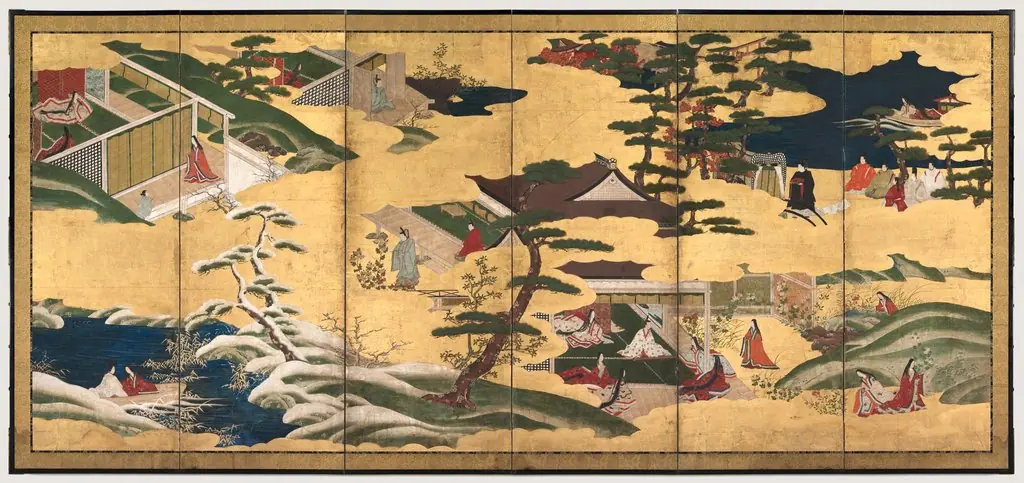
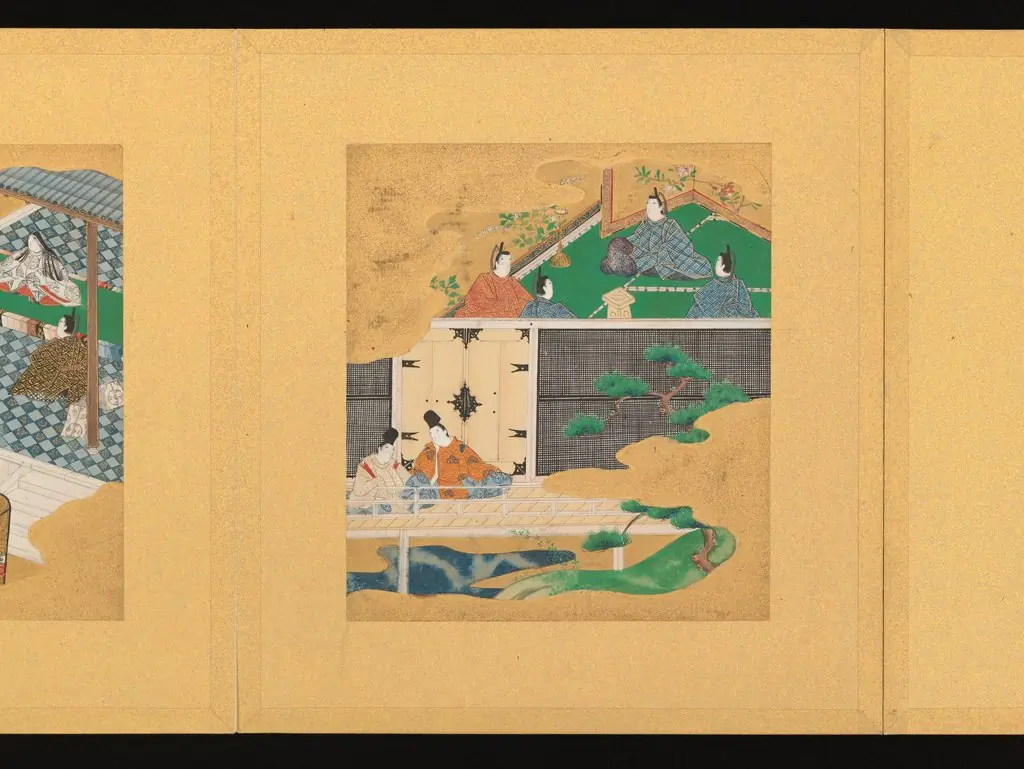
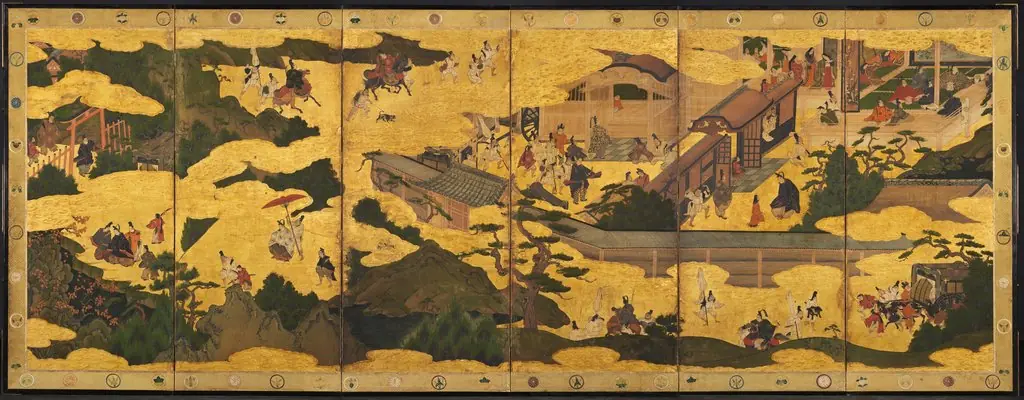
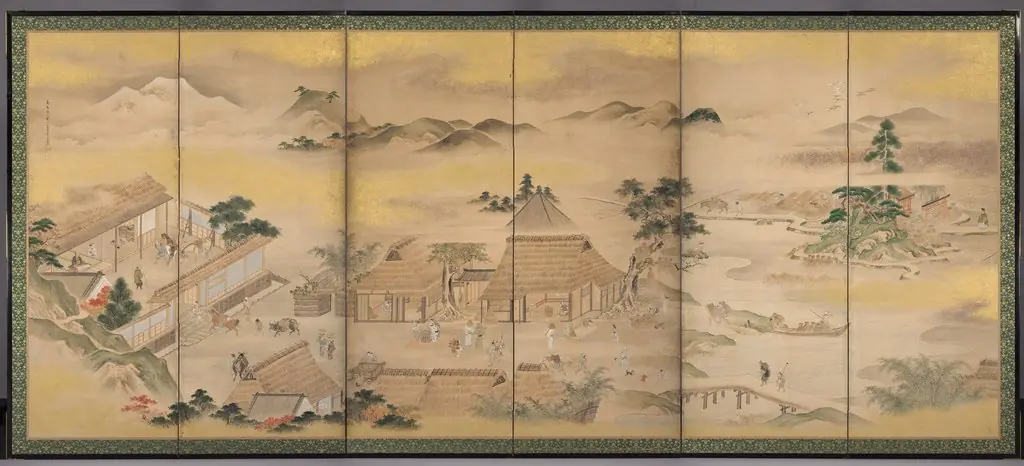
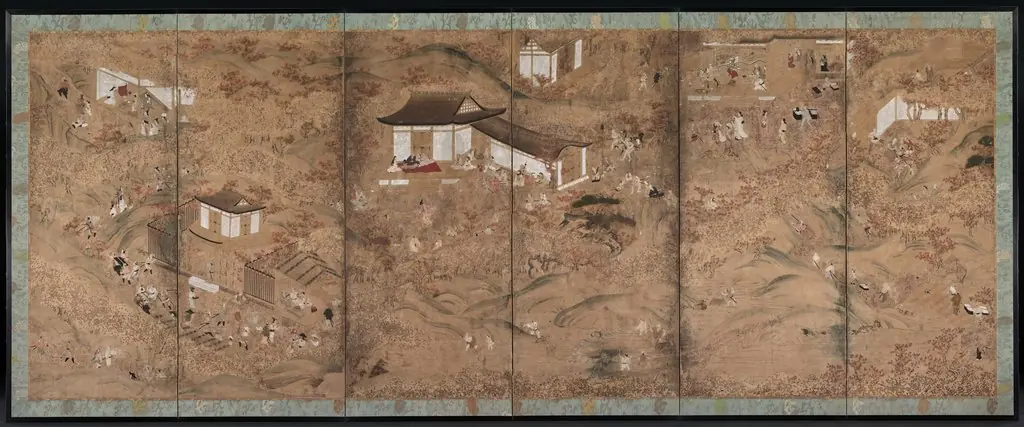
Fifty‑Four Scenes from The Tale of Genji is a multi‑panel folding screen that presents a dense visual narrative across a continuous landscape. The work arranges a succession of miniature vignettes—gardens, bridges, and figures in traditional robes—into a seamless scroll, inviting viewers to wander through the episodic world of the classic Japanese novel.
Subject & Meaning
Each vignette illustrates a moment from Murasaki Shikibu’s Tale of Genji, portraying courtly life, romantic encounters, and solitary contemplation. The juxtaposition of bustling gatherings with quiet scenes beside ponds or under trees reflects the novel’s themes of impermanence and the nuanced interplay between public ceremony and private emotion.
Technique & Style
The screen employs delicate brushwork on paper, rendered in a restrained palette of soft golds, muted greens, and cool blues, punctuated by occasional reds in garments and roof tiles. Light is suggested through subtle gradations, while lanterns create nocturnal atmospheres in select panels, demonstrating a sophisticated handling of spatial depth within miniature compositions.
History & Provenance
Created as a decorative and literary object, the screen was likely commissioned for a noble household during the Edo period, when illustrated renditions of classic literature were popular. It has since entered a museum collection, where it serves as a rare example of narrative screen painting that bridges literary tradition and visual art.
Artist & collection