Artwork
Edzard I (1462-1528), count of East Friesland
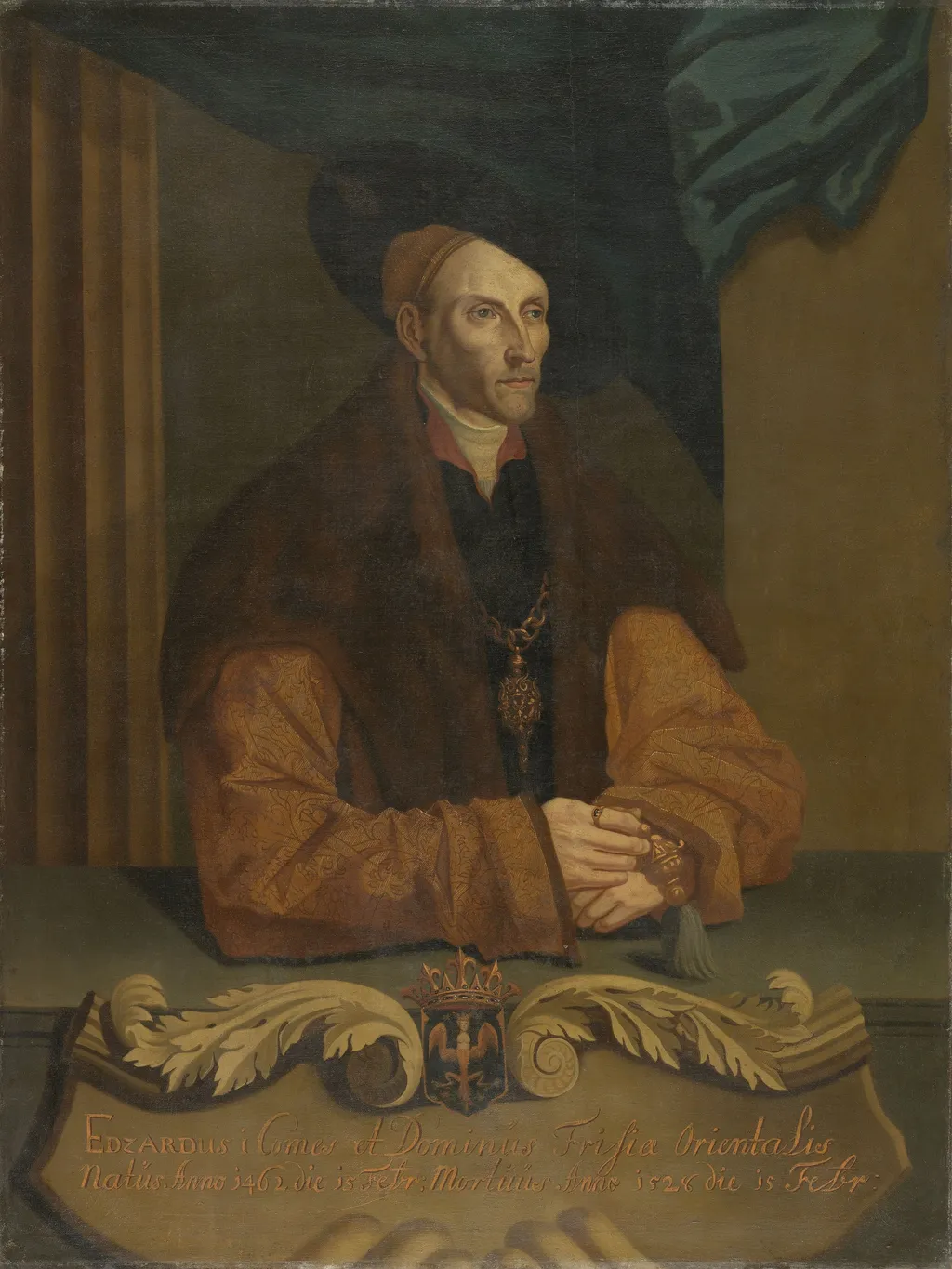
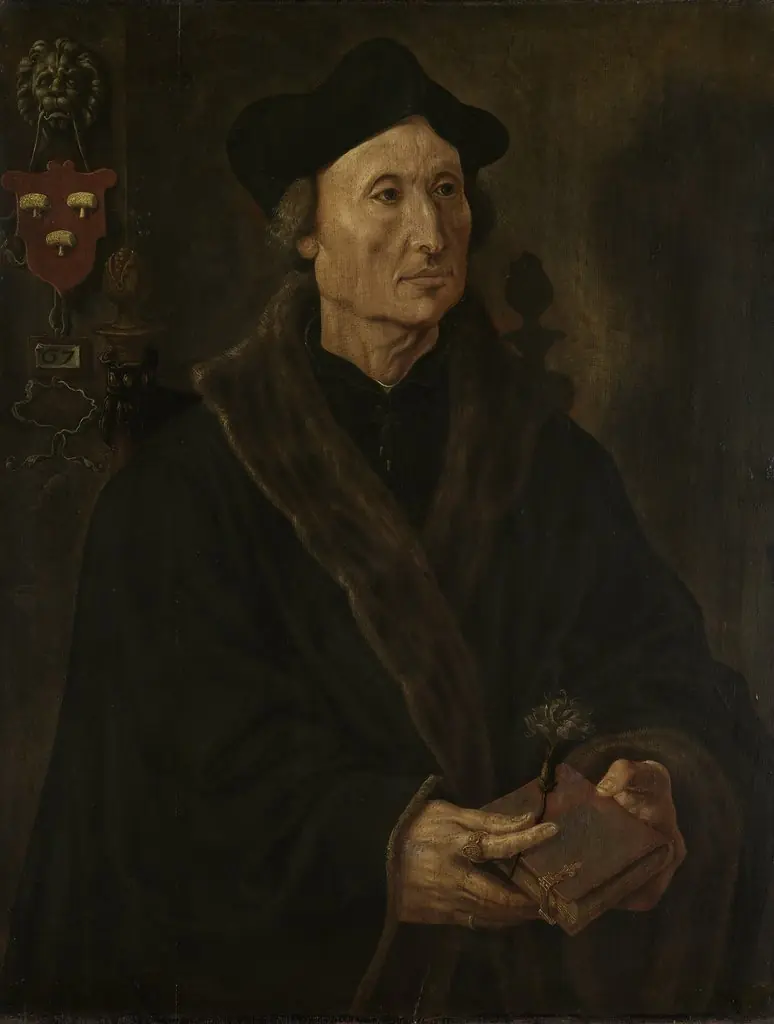
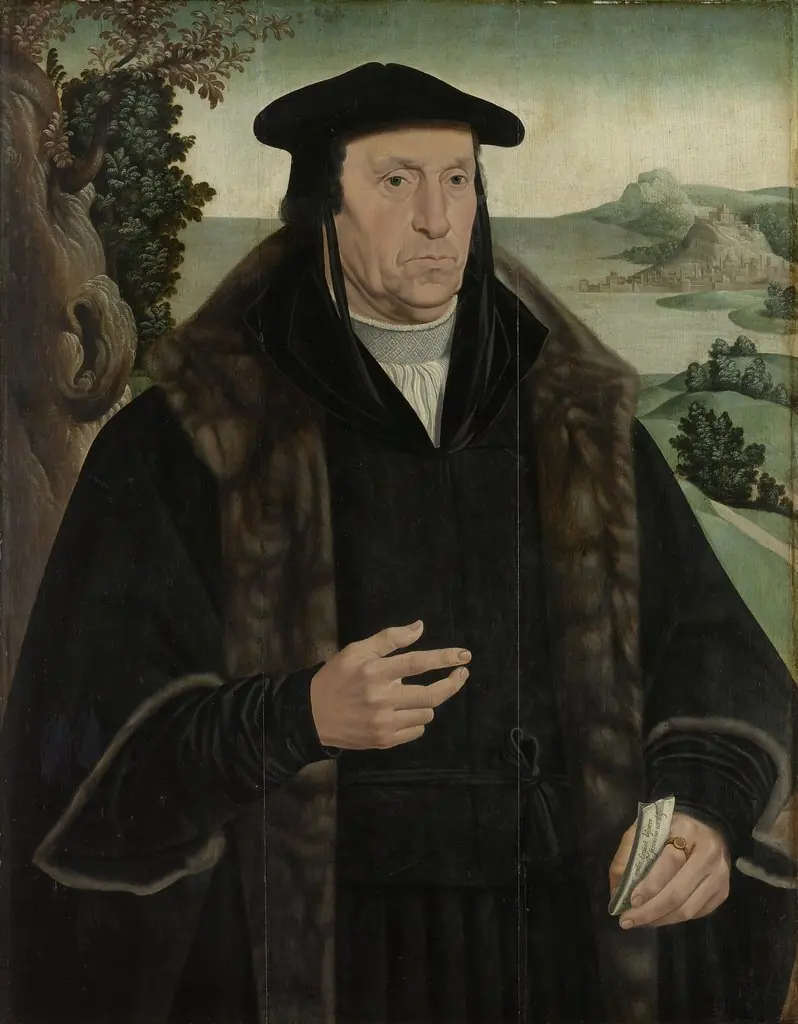
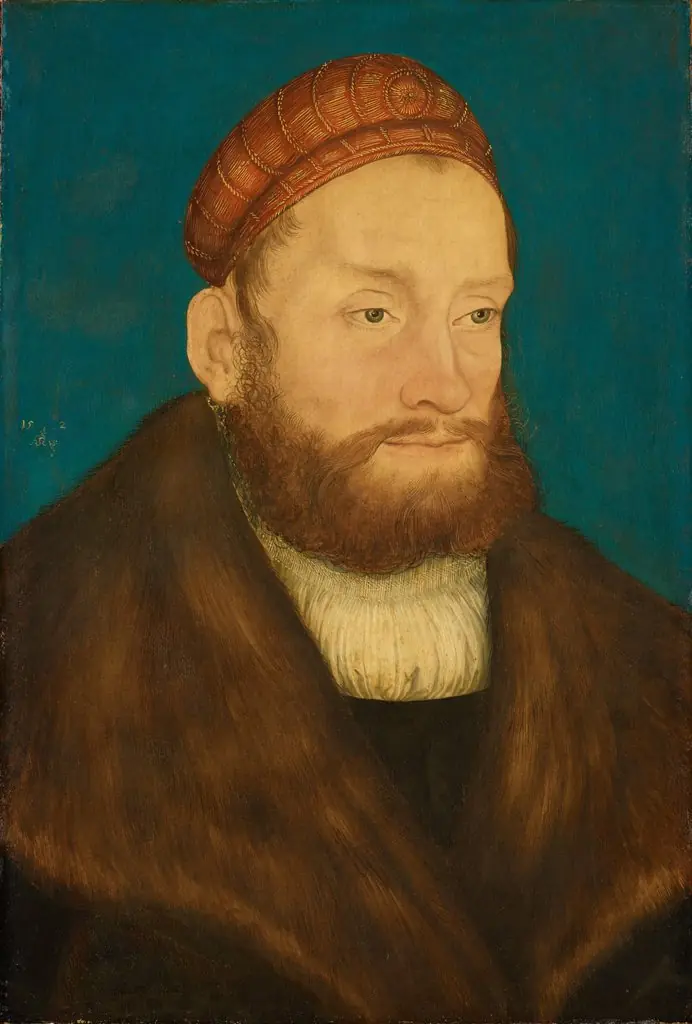
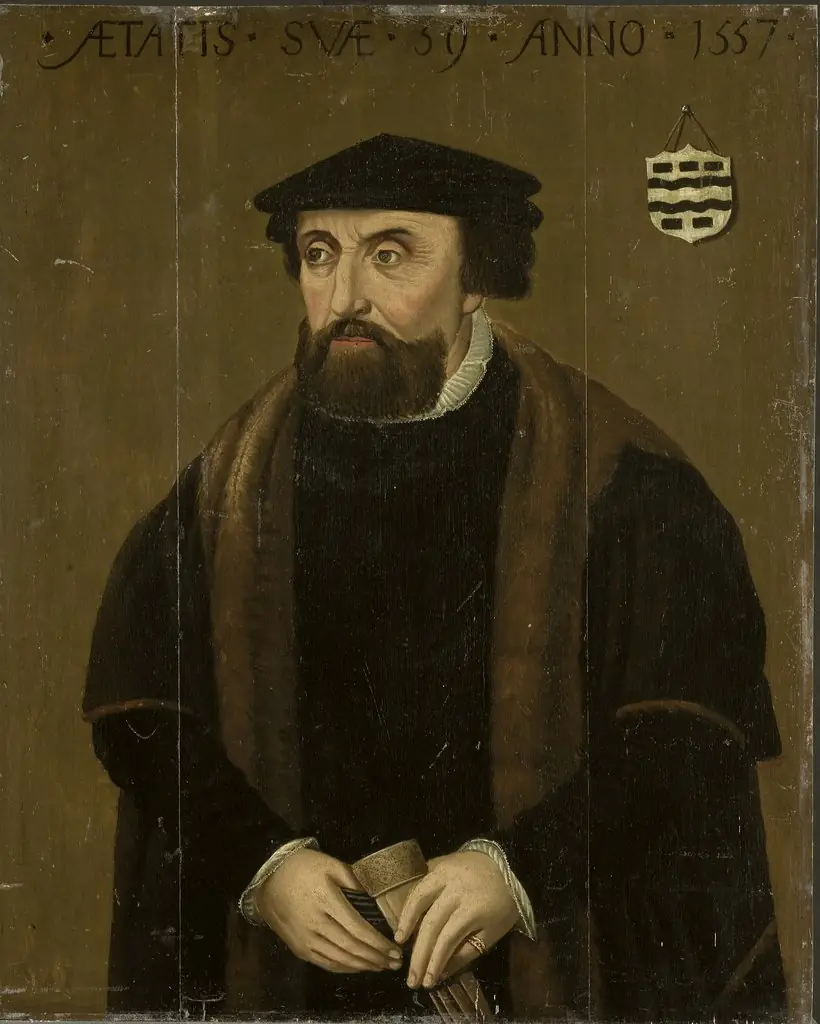
Edzard I (1462-1528), count of East Friesland is an oil painting. It dates from 1525 and is held in the collection of the Rijksmuseum. The oil painting depicts Edzard I, Count of East Frisia (1462–1528), seated in a dark robe with his hands folded.
About this work
Overview
The oil painting depicts Edzard I, Count of East Frisia (1462–1528), seated in a dark robe with his hands folded. A gold chain drapes across his chest, and a modest cap rests on his head. Behind him a low carved banner bears a crown and a lion emblazoned on a coat of arms, accompanied by a Latin inscription identifying the sitter.
Subject & Meaning
Edzard I governed the Frisian territories during a period of political consolidation and conflict with neighboring powers. The solemn expression and formal pose convey authority and piety, while the heraldic banner underscores his dynastic claim and the legitimacy of his rule within the Holy Roman Empire.
Technique & Style
Executed in oil on panel, the work relies on a restrained palette of deep blacks and muted earth tones, allowing the metallic sheen of the chain and the subtle modeling of the face to stand out. The painter employs a smooth, almost sculptural handling of flesh, contrasted with the flat, dark background that eliminates any spatial distraction.
History & Provenance
The portrait likely originated in the early sixteenth century, possibly commissioned by the count himself or by a close ally to affirm his status. It entered the collection of the East Frisian ruling family and was later transferred to a regional museum in the nineteenth century, where it remains part of the permanent holdings.
Context
Edzard's reign coincided with the Reformation and shifting allegiances among German principalities. Portraiture of this era served both as personal commemoration and as political propaganda, reinforcing the ruler's image amid religious and territorial upheavals.
Legacy
The painting stands as a rare visual document of East Frisian nobility, offering insight into the attire, insignia, and self-representation of a regional ruler on the eve of the early modern period. It continues to inform scholarly understanding of northern German court culture.
Artist & collection