Artwork
The wolf advises the lion to consult the cat, from a Tuti-nama (Tales of a Parrot): Fifteenth Night
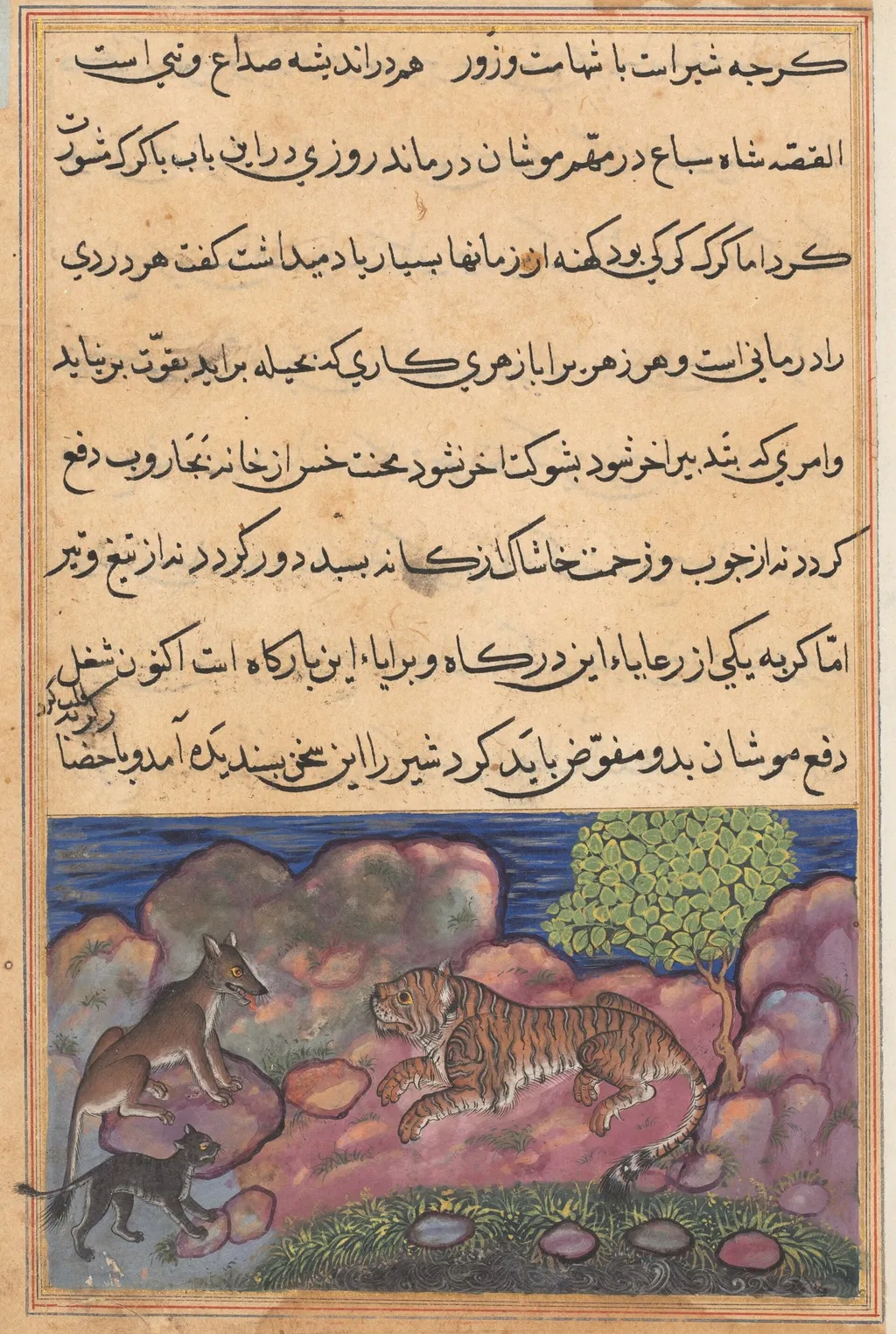
The wolf advises the lion to consult the cat, from a Tuti-nama (Tales of a Parrot): Fifteenth Night is an unspecified painting. It dates from 1560 and is held in the collection of the Cleveland Museum of Art. The miniature depicts a rocky hillside where three animals gather: a striped tiger, a dark‑coloured wolf, and a small black cat.
About this work
Overview
The miniature depicts a rocky hillside where three animals gather: a striped tiger, a dark‑coloured wolf, and a small black cat. The tiger stands alert, the wolf appears to address it, and the cat sits nearby. Above the scene a blue sky arches over a solitary green tree, while the ground is dotted with pink and purple blossoms. A line of Arabic‑style script runs across the top of the panel.
Subject & Meaning
The image illustrates a moment from the fifteenth‑night episode of the *Tuti‑nama* (Tales of a Parrot), a collection of moral animal stories. In this vignette the wolf offers counsel to the tiger, embodying the genre’s tradition of using animal dialogue to convey ethical advice.
Technique & Style
Executed in miniature painting technique, the work combines fine ink outlines with delicate washes of colour. The figures are rendered with precise brushwork that emphasizes the texture of the tiger’s stripes and the wolf’s fur, while the background employs flat washes of blue, green, pink and purple typical of Persian‑influenced manuscript illumination.
History & Provenance
The panel originates from a manuscript of the *Tuti‑nama*, a text that circulated widely across the Islamic world from the 14th to 17th centuries. The specific copy from which this illustration is taken entered the Cleveland Museum of Art’s collection through acquisition in the early 20th century, though the exact provenance prior to that remains undocumented.
Context
Animal fables such as those in the *Tuti‑nama* were popular didactic tools in medieval Persian and Ottoman courts, where they were often illustrated in richly decorated manuscripts. The scene reflects the broader artistic milieu of courtly manuscript production, where narrative and decorative elements were integrated to enhance moral instruction.
Artist & collection

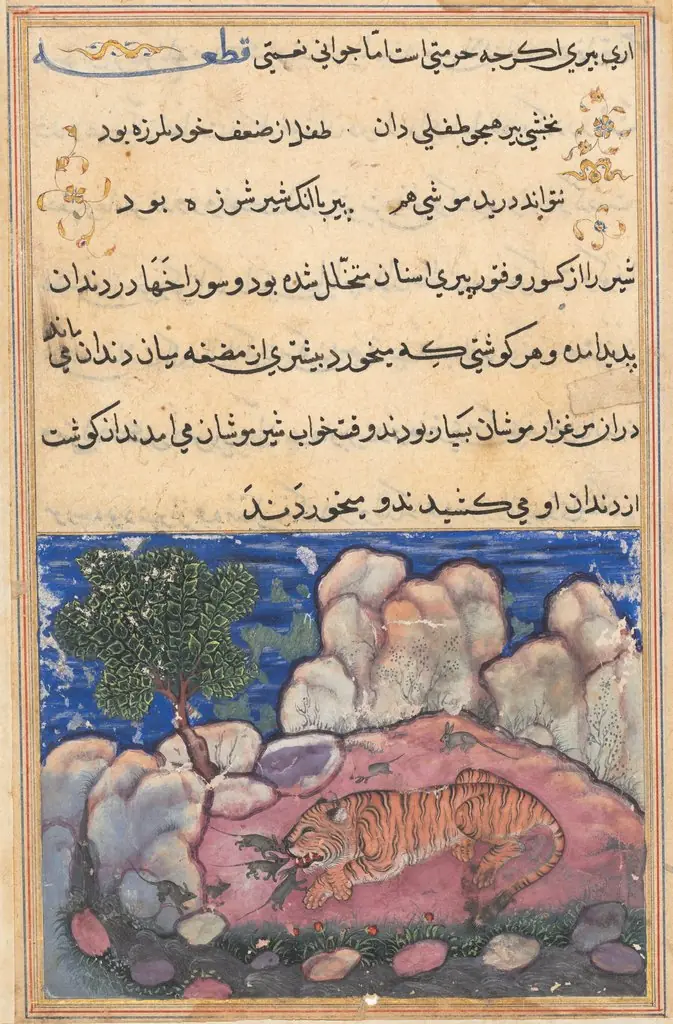 The lion disturbed by mice who eat the food trapped in his aging teeth, from a Tuti-nama (Tales of a Parrot): Fifteenth Night
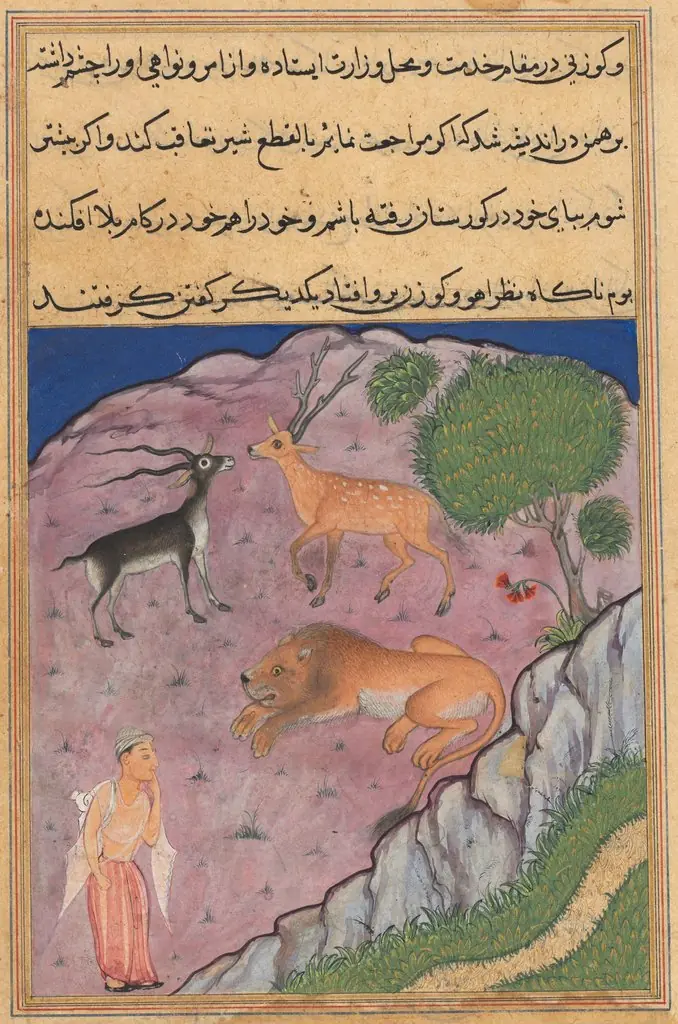 The Brahman comes upon a lion who has a deer and a gazelle as his viziers, from a Tuti-nama (Tales of a Parrot): Twenty-first Night
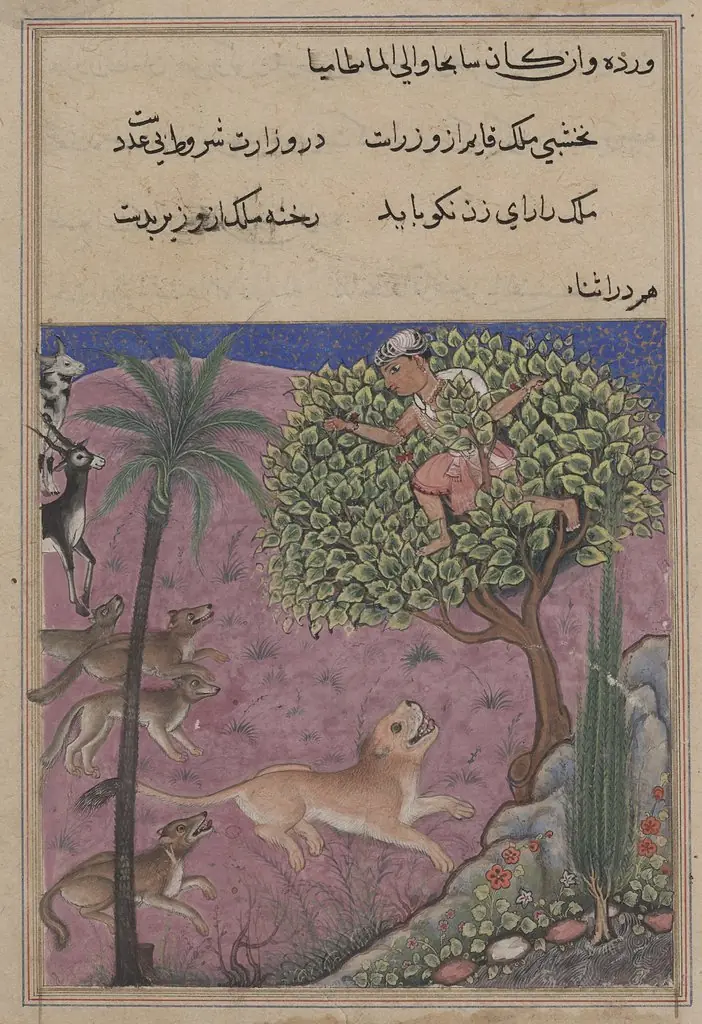 The wolf and the jackal, serving as viziers, instigate the lion who pursues the Brahman up a tree, from a Tuti-nama (Tales of a Parrot): Twenty-first Night
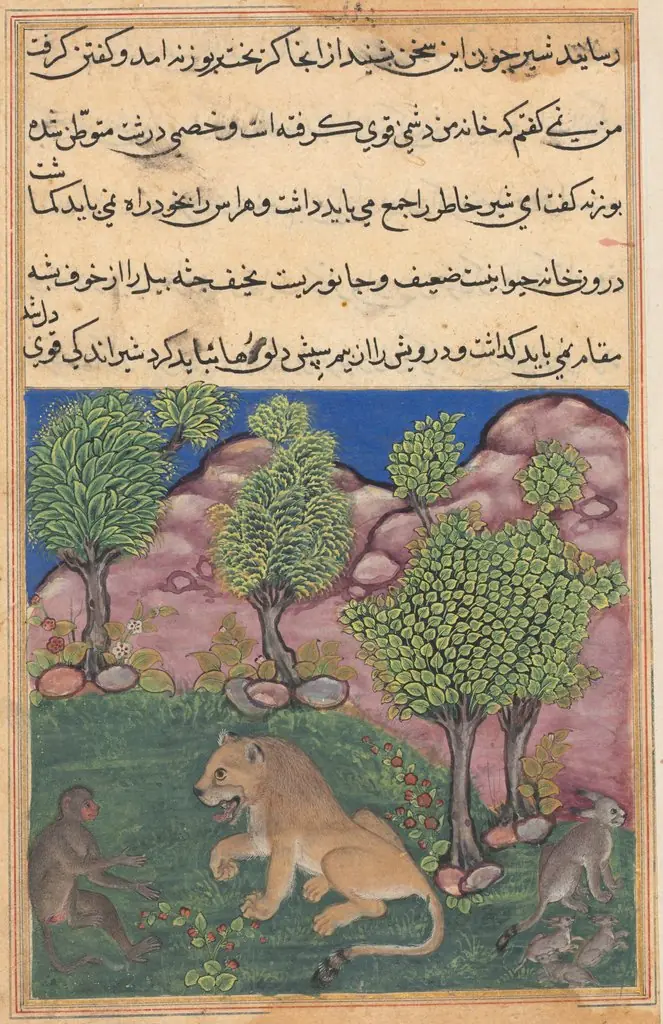 The monkey advises the suspicious lion to cast off fear and take possession of his territory, from a Tuti-nama (Tales of a Parrot): Twenty-ninth Night
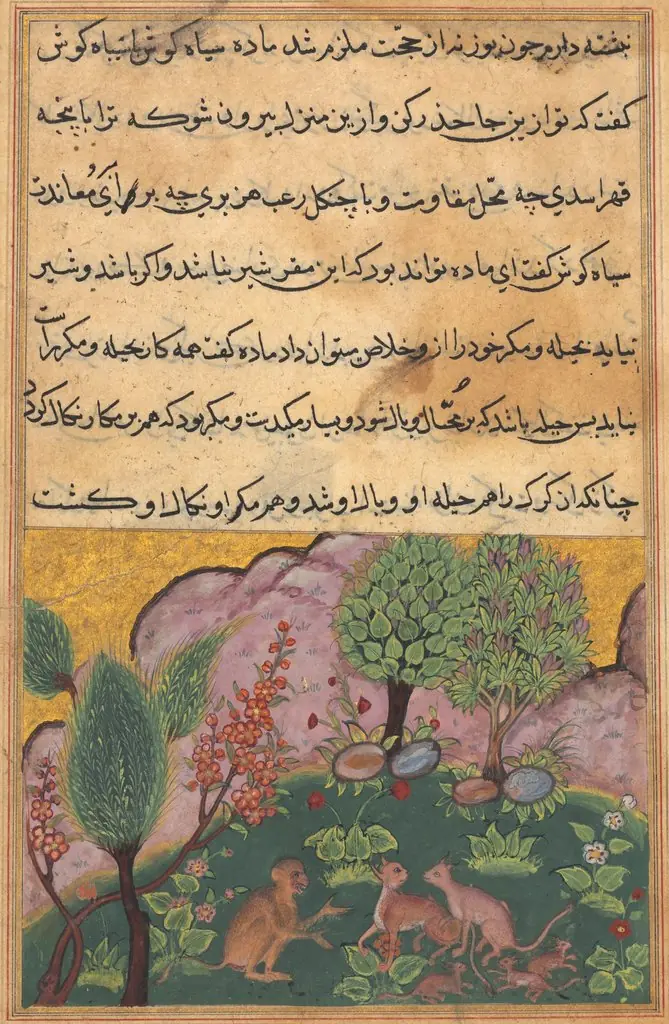 The monkey, serving as the lion’s chamberlain, converses with the lynx and its mate who have arrived with their cubs to settle in the lion’s domain, from a Tuti-nama (Tales of a Parrot): Twenty-ninth Night
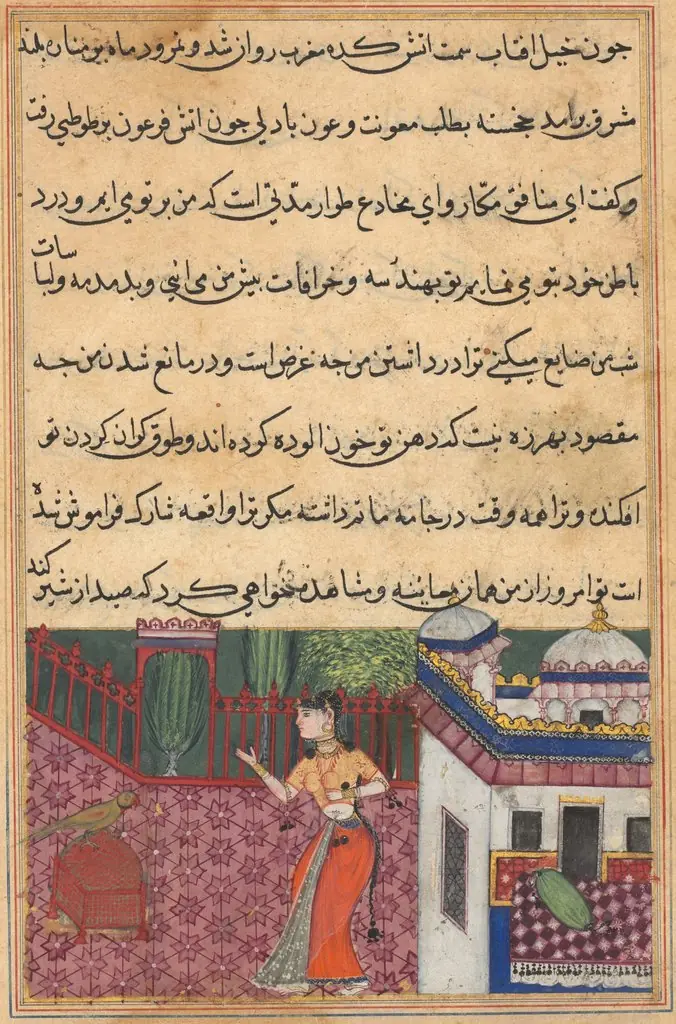 The parrot addresses Khujasta at the beginning of the thirty-third night, from a Tuti-nama (Tales of a Parrot)