Artwork
The Brahman comes upon a lion who has a deer and a gazelle as his viziers, from a Tuti-nama (Tales of a Parrot): Twenty-first Night
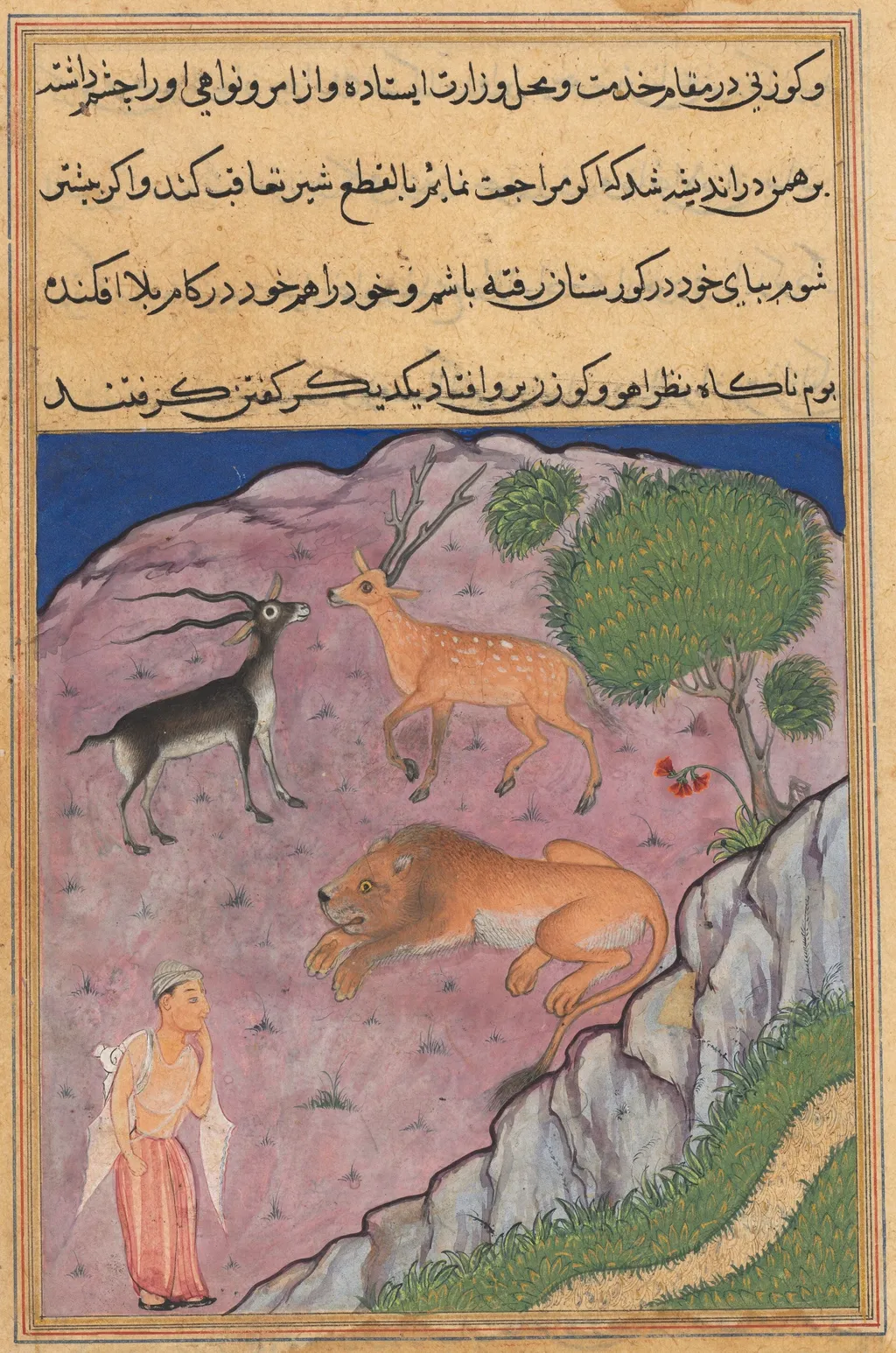
The Brahman comes upon a lion who has a deer and a gazelle as his viziers, from a Tuti-nama (Tales of a Parrot): Twenty-first Night is an unspecified painting. It dates from 1560 and is held in the collection of the Cleveland Museum of Art. The work depicts a pink‑toned rocky slope where a lion reclines beside a deer and a goat‑like creature that serve as its attendants.
About this work
Overview
The work depicts a pink‑toned rocky slope where a lion reclines beside a deer and a goat‑like creature that serve as its attendants. A figure dressed in a red skirt stands apart, observing the tranquil assembly. Above the scene, black Arabic calligraphy arches across the sky, while a leafy tree bearing red blossoms occupies the right side of the composition.
Subject & Meaning
The tableau illustrates a narrative from the medieval Persian collection known as the Tuti‑nama, or "Tales of a Parrot," specifically the twenty‑first night in which a Brahman encounters a lion presiding over a deer and a gazelle as viziers. The presence of the human observer suggests a moral or didactic element, inviting contemplation of hierarchy and harmony among disparate beings.
Technique & Style
Executed in a flat, brightly colored palette, the painting relies on uniform washes rather than chiaroscuro, giving each figure a decorative quality. The use of linear Arabic script as an integral visual element reflects the manuscript tradition, where text and image are interwoven to convey story and context simultaneously.
History & Provenance
The piece originates from a Persian illustrated manuscript dating to the late medieval period, a time when literary compilations such as the Tuti‑nama were widely copied and embellished. It entered the collection of the Cleveland Museum of Art through acquisition in the early twentieth century, joining a broader corpus of Persian miniature paintings held by the institution.
Context
During the era of its creation, Persian court culture prized the synthesis of poetry, prose, and visual art. Illustrated books served both educational and entertainment purposes, and the inclusion of animal viziers reflects a common motif in Persian storytelling that blends the natural world with allegorical significance.
Artist & collection

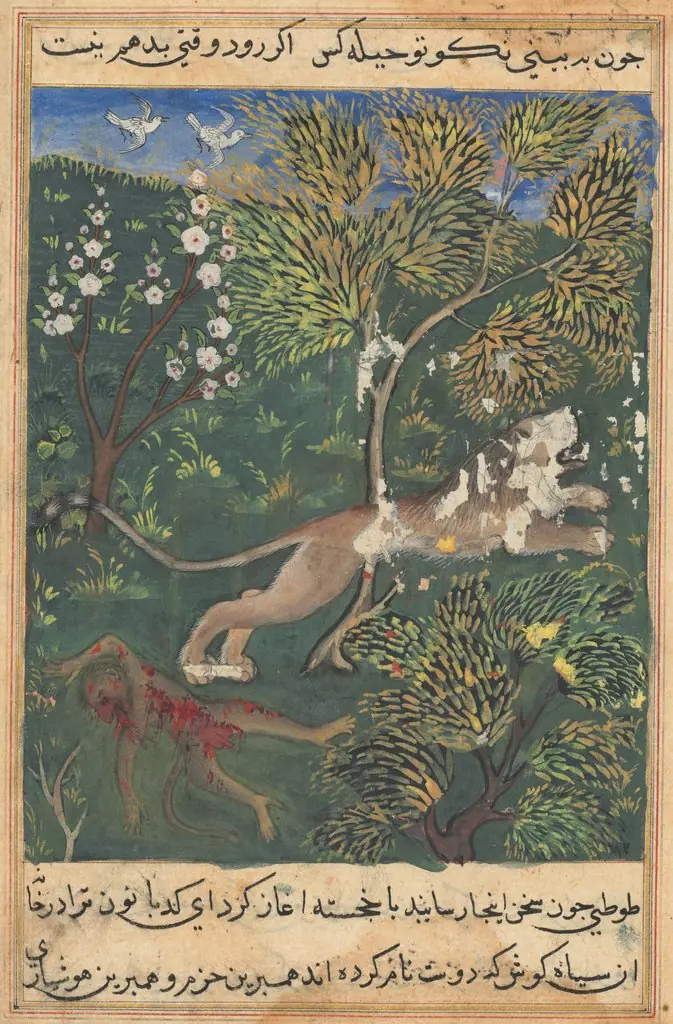 The lion, suspecting treachery on the part of the monkey, slays him and flees, from a Tuti-nama (Tales of a Parrot): Twenty-ninth Night
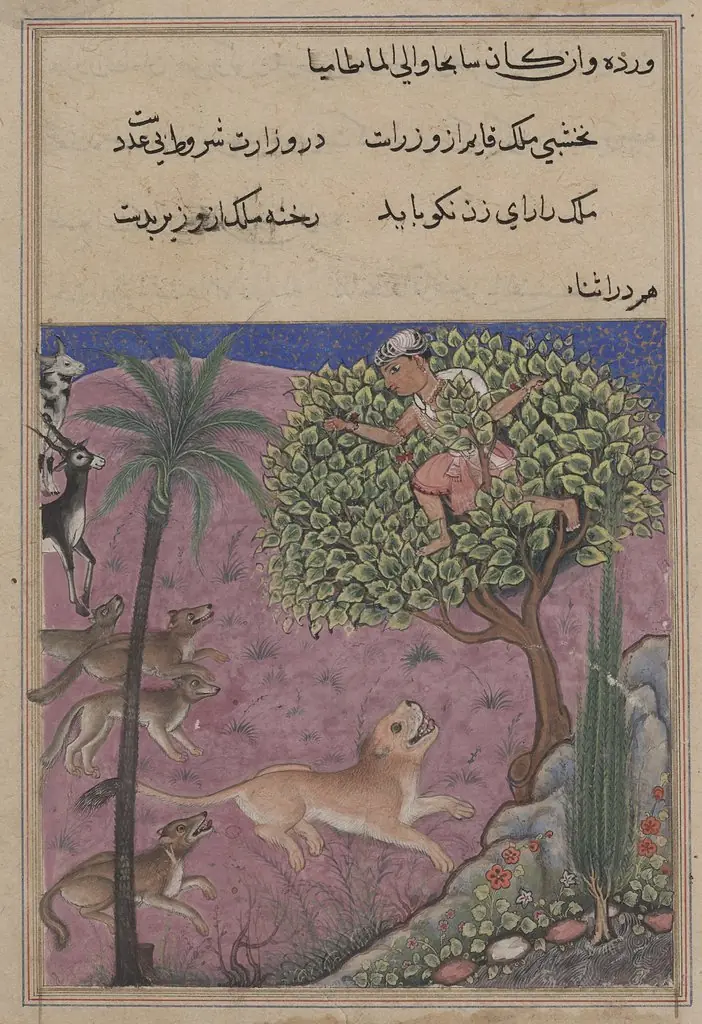 The wolf and the jackal, serving as viziers, instigate the lion who pursues the Brahman up a tree, from a Tuti-nama (Tales of a Parrot): Twenty-first Night
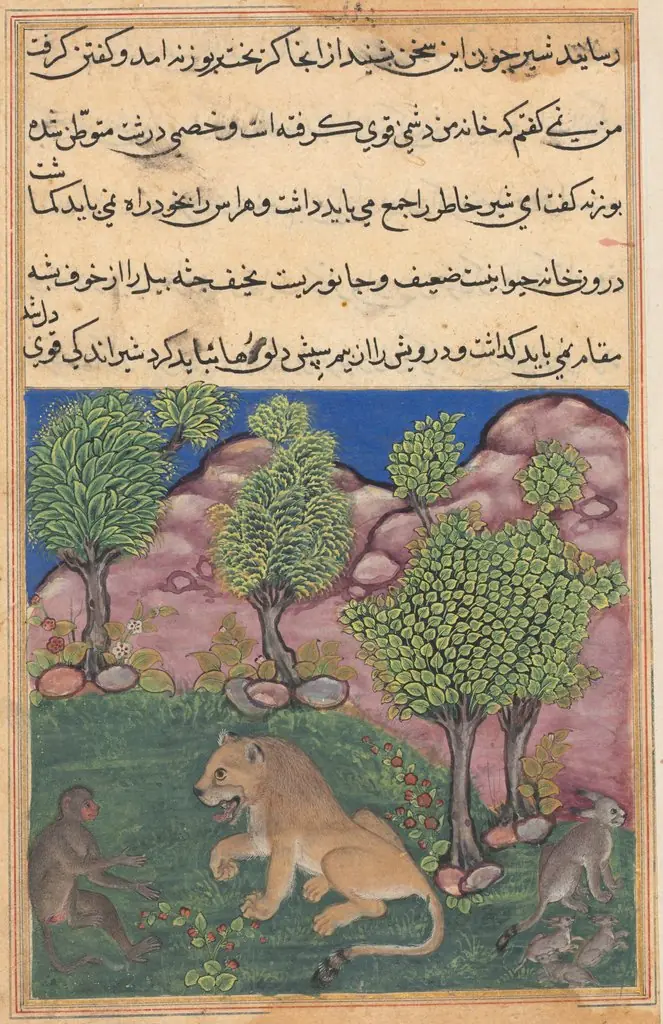 The monkey advises the suspicious lion to cast off fear and take possession of his territory, from a Tuti-nama (Tales of a Parrot): Twenty-ninth Night
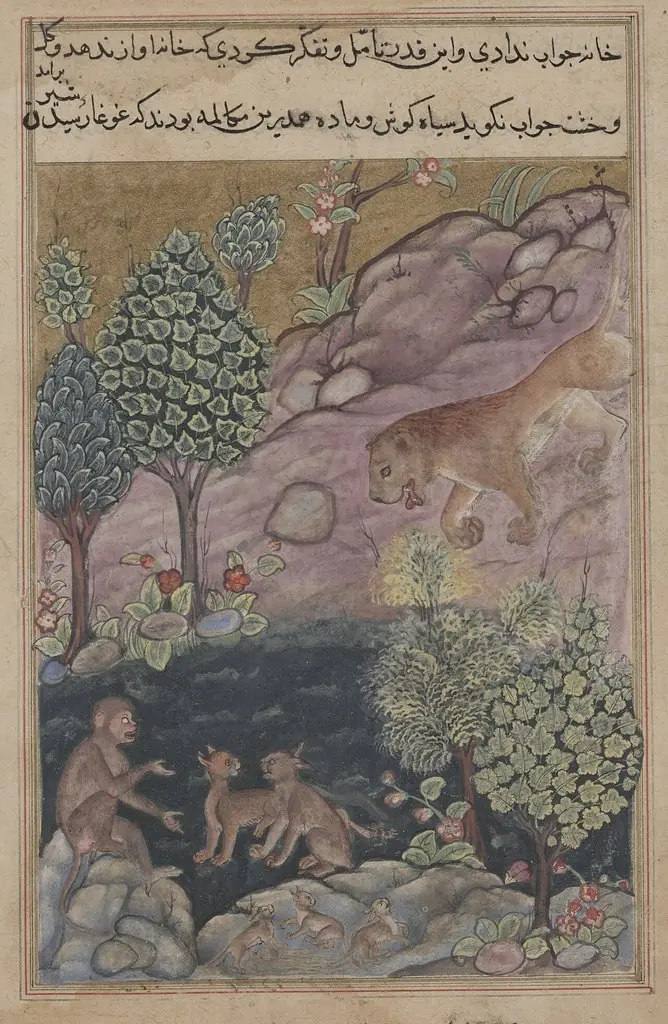 The lion returns to his territory and sees the monkey conversing with the lynx, from a Tuti-nama (Tales of a Parrot): Twenty-ninth Night
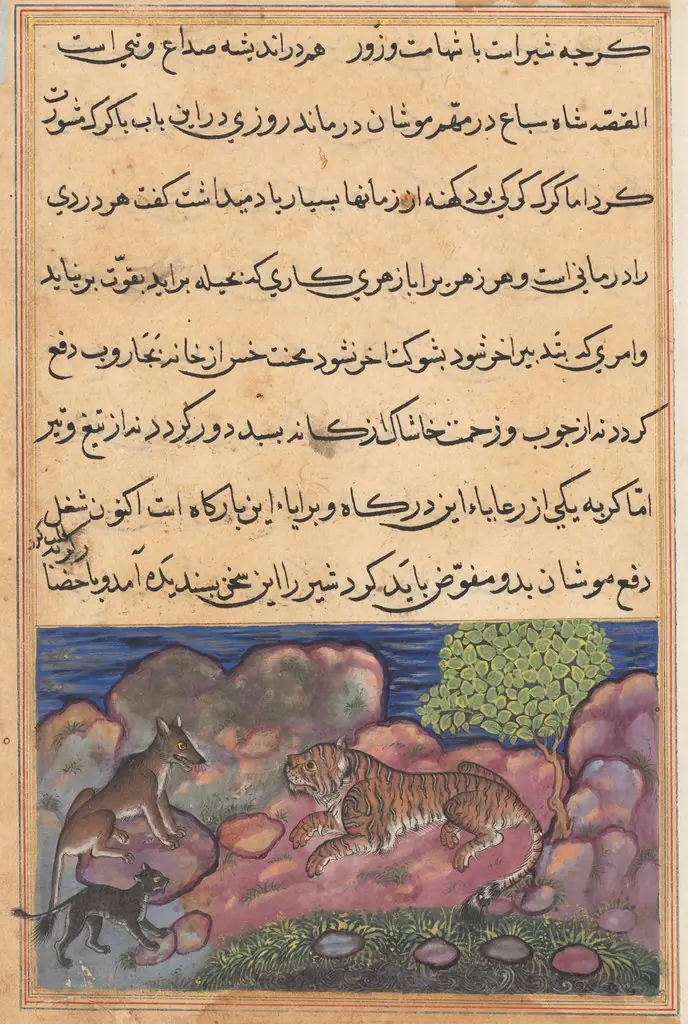 The wolf advises the lion to consult the cat, from a Tuti-nama (Tales of a Parrot): Fifteenth Night
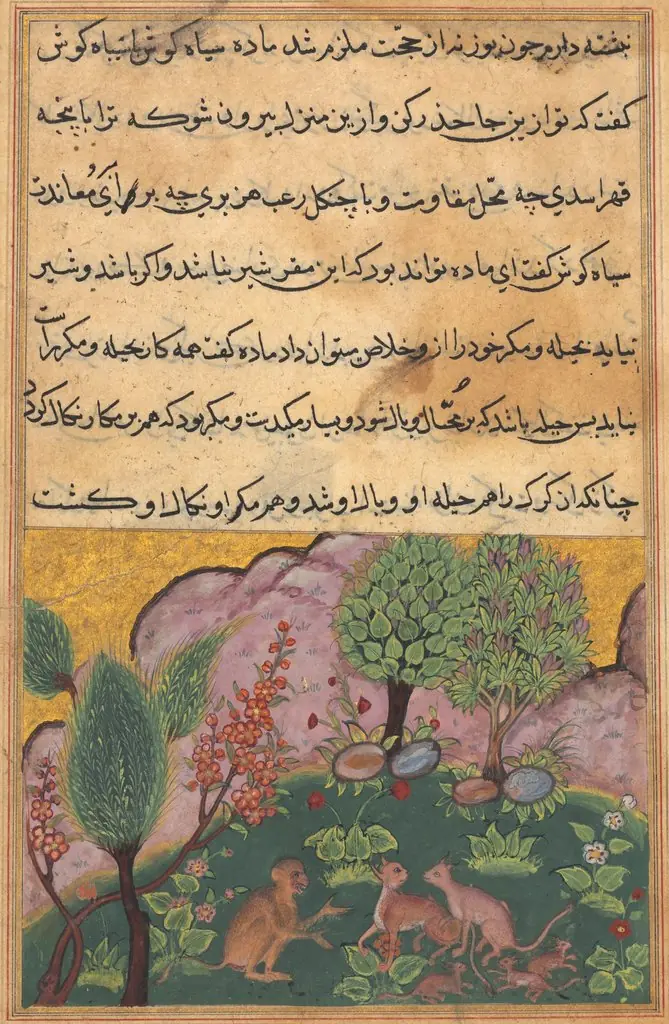 The monkey, serving as the lion’s chamberlain, converses with the lynx and its mate who have arrived with their cubs to settle in the lion’s domain, from a Tuti-nama (Tales of a Parrot): Twenty-ninth Night
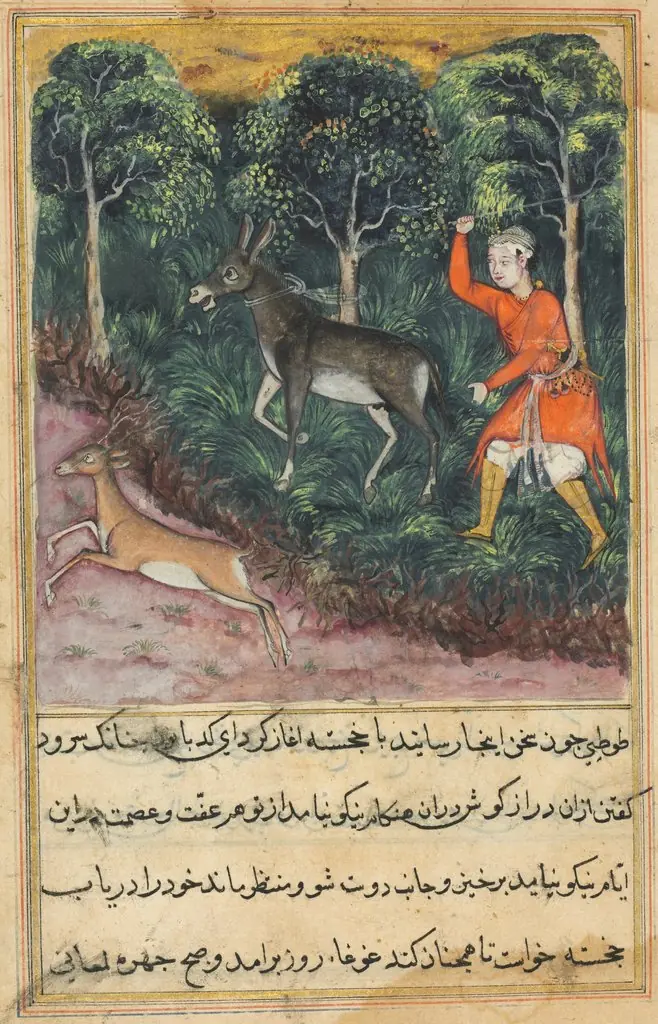 The gardener seizes and beats a donkey who insisted on braying, while the deer, its companion flees to safety, from a Tuti-nama (Tales of a Parrot): Forty-first Night
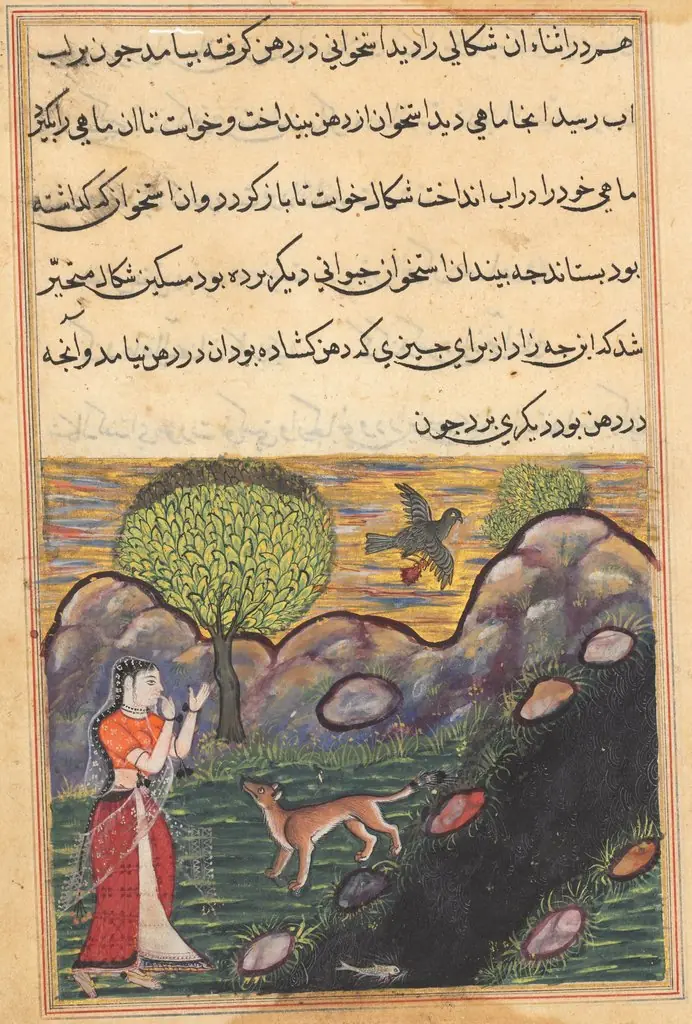 The daughter-in-law of the king of Banaras sees the jackal deprived of its food by a bird, as it unsuccessfully attempts to catch a fish, from a Tuti-nama (Tales of a Parrot): Sixteenth Night
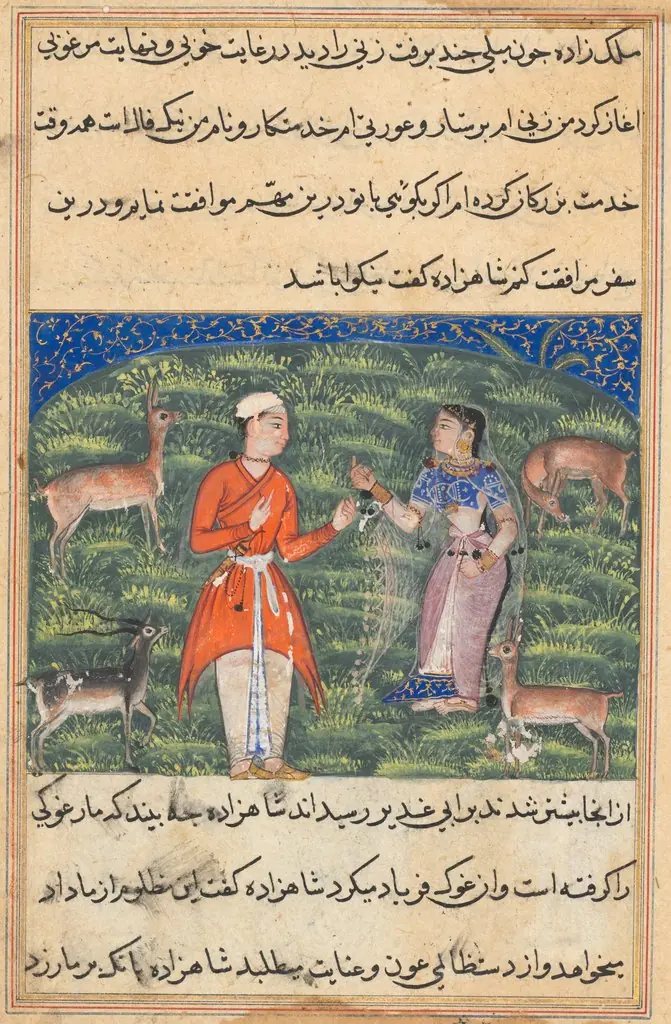 Nikfal, the fortune of the prince in the form of a woman, offers to accompany him, from a Tuti-nama (Tales of a Parrot): Eighteenth Night