Artwork
As punishment, the jester’s wife and the Zangi are thrown into fire and the emir’s wife and the mahout are trampled by an elephant, from a Tuti-nama (Tales of a Parrot), Twenty-second Night
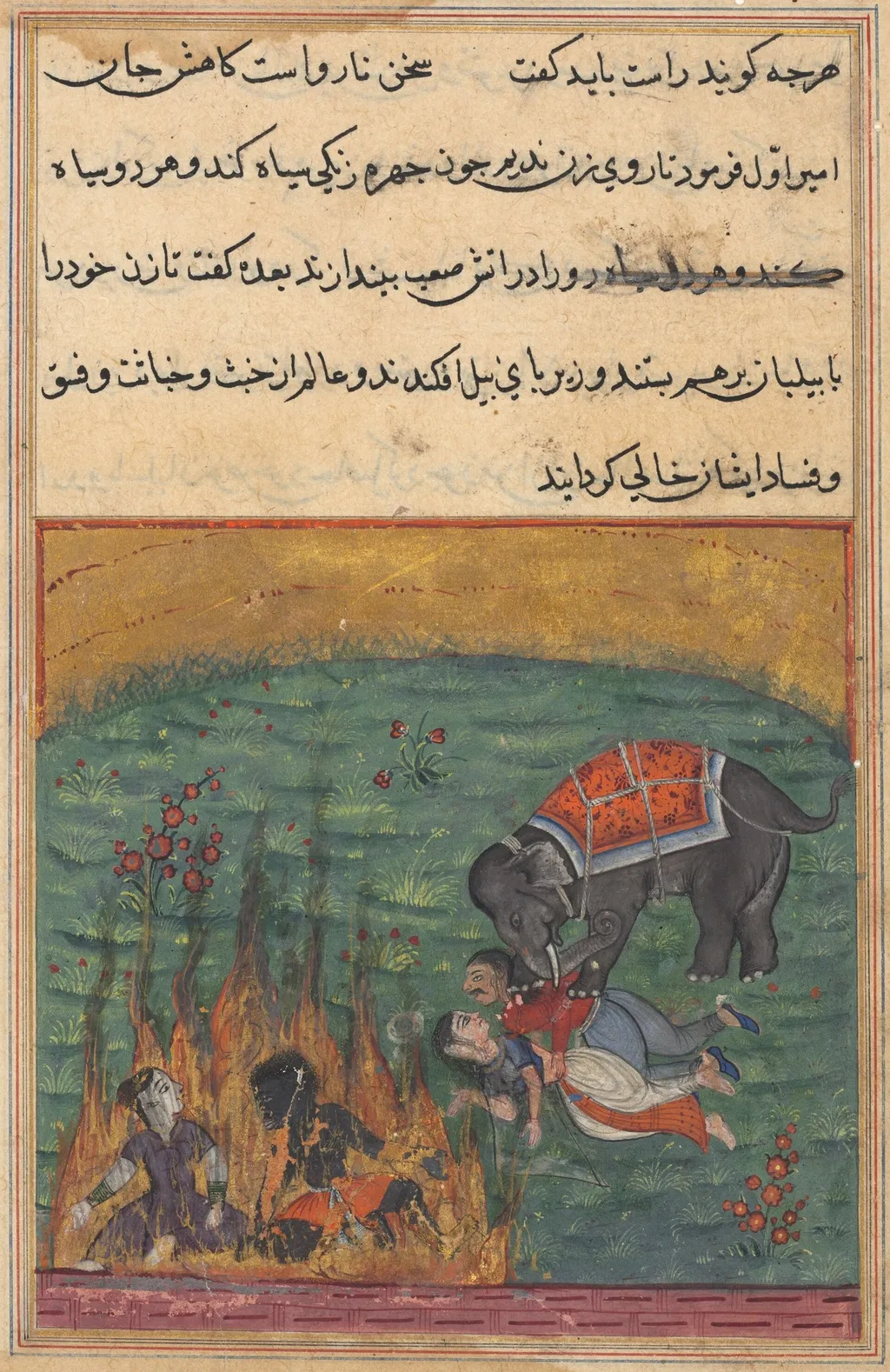
As punishment, the jester’s wife and the Zangi are thrown into fire and the emir’s wife and the mahout are trampled by an elephant, from a Tuti-nama (Tales of a Parrot), Twenty-second Night is an unspecified painting. It dates from 1560 and is held in the collection of the Cleveland Museum of Art.
About this work
Overview
The work illustrates a dramatic episode from a Persian narrative manuscript, depicting a punitive scene in which an elephant, adorned with a red‑and‑white saddle, steps on two women while other figures observe. The composition is set on a grassy plain with trees bearing red fruit and a small fire glowing in the distance, rendered in a palette of faded greens, browns, reds and blues.
Subject & Meaning
The image visualizes a moment from the twenty‑second night of the Tuti‑nama, a collection of parrot‑told tales. In this episode, the jester’s wife and a character named Zangi are consigned to fire, while the emir’s wife and a mahout meet a harsher fate under the elephant’s trampling, reflecting themes of retributive justice within the story.
Technique & Style
Executed in miniature painting tradition, the piece combines delicate line work with flat areas of color. The figures are outlined in fine ink, their garments highlighted by bold reds and blues, while the background employs muted earth tones. The composition balances narrative clarity with ornamental detail, typical of Persian courtly manuscripts.
History & Provenance
The painting originates from a manuscript of the Tuti‑nama, a Persian literary work that circulated in the early modern period. It entered the collection of the Cleveland Museum of Art through acquisition of the manuscript volume, where it remains part of the museum’s Asian art holdings.
Context
Within Persian illustrated literature, scenes of moral punishment were common, serving both entertainment and didactic purposes. The inclusion of an elephant—a symbol of royal power—underscores the severity of the punishment and reflects the exotic imagery favored by courtly patrons.
Artist & collection

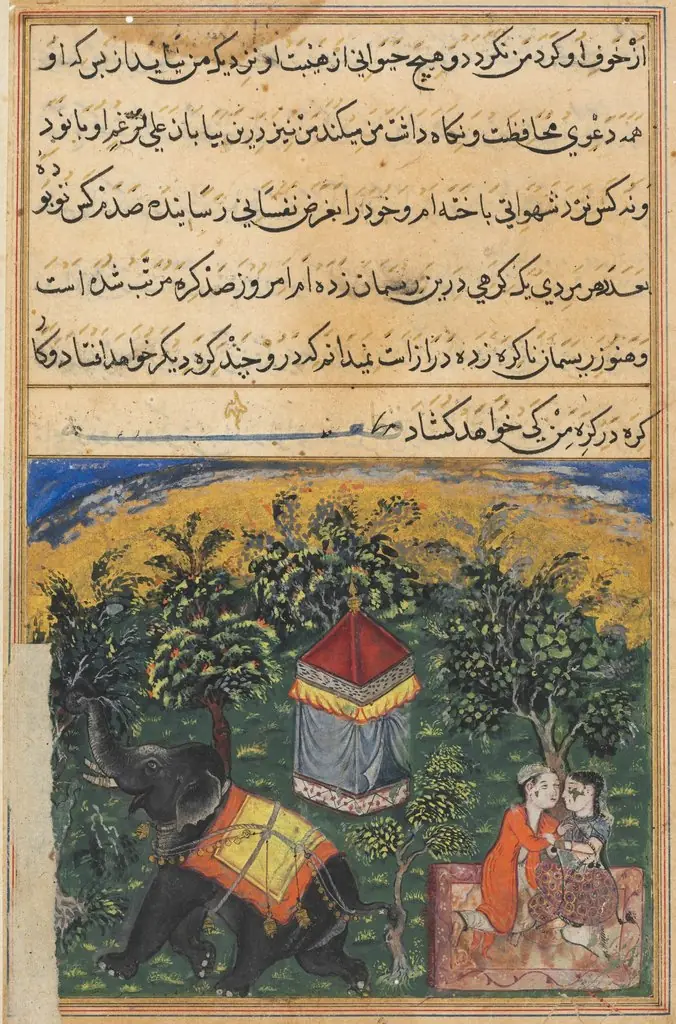 The mendicant’s wife deceives him with a soldier, from a Tuti-nama (Tales of a Parrot): Fourth Night
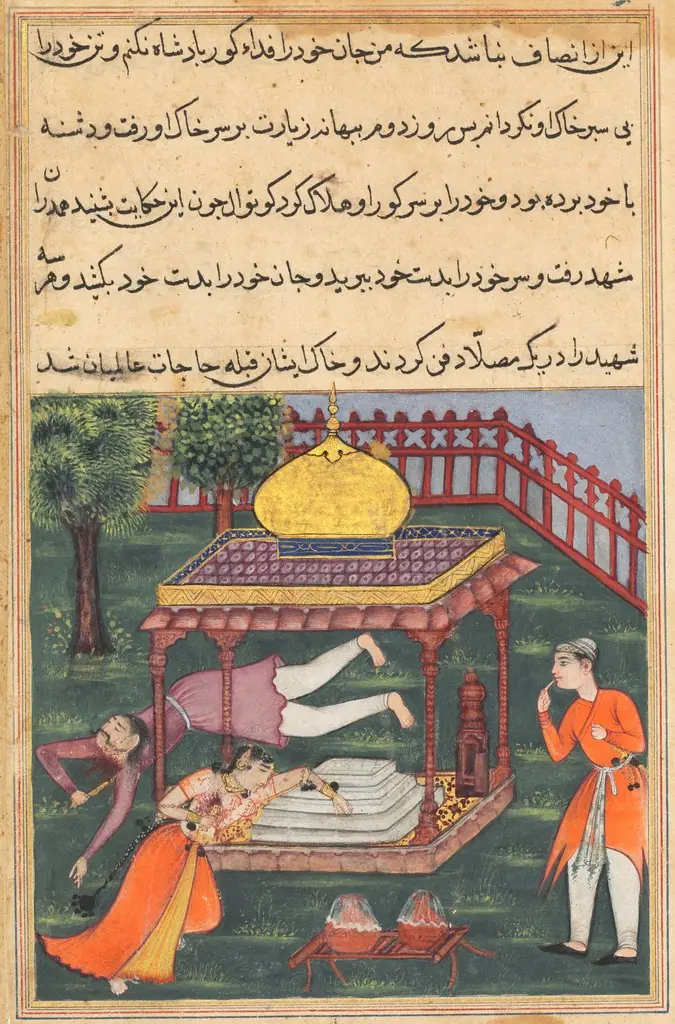 Mahrusa kills herself at the tomb of the king of Zabul, and her husband does likewise, from a Tuti-nama (Tales of a Parrot): Thirty-sixth Night
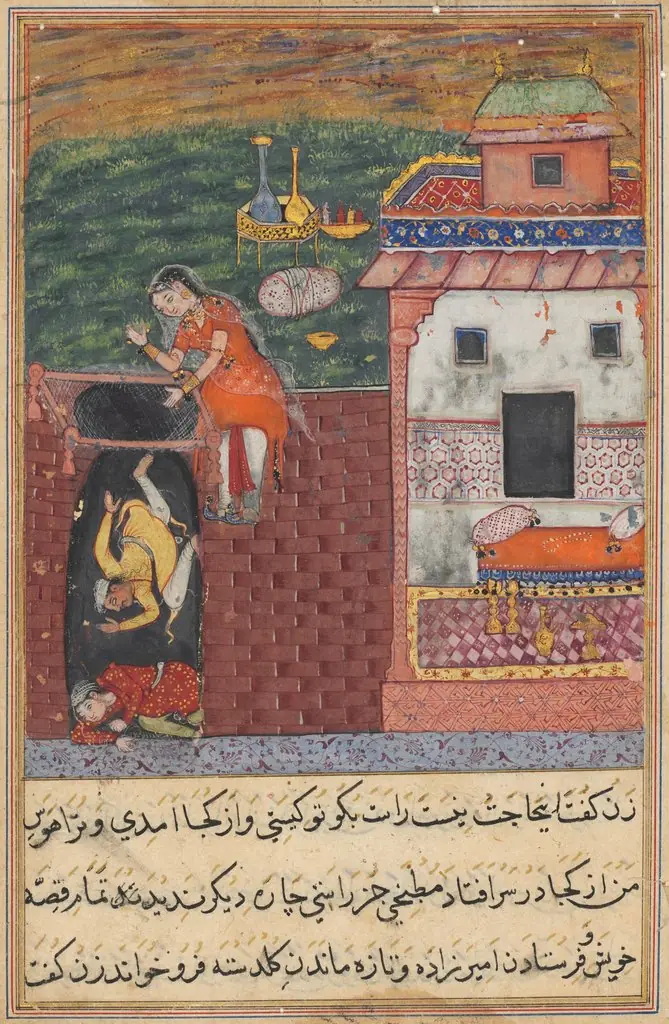 The two cooks, who attempt to seduce the warrior’s loyal wife, are trapped by her in a cellar, from a Tuti-nama (Tales of a Parrot): Fourth Night
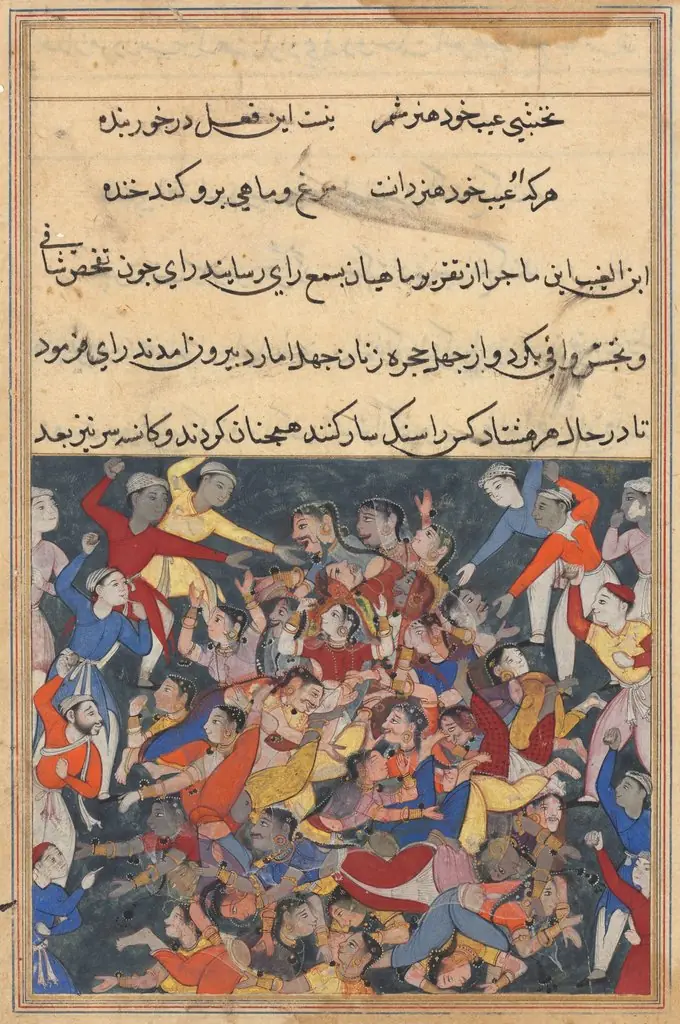 The forty wives and their secret paramours being punished by stoning to death, from a Tuti-nama (Tales of a Parrot): Twenty-third Night
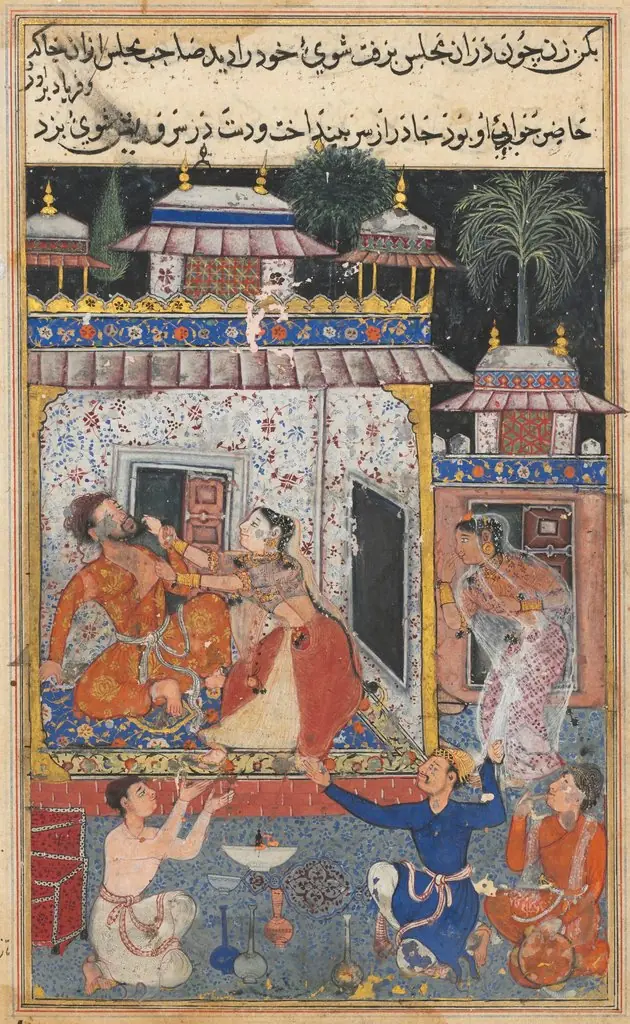 The deceitful wife assaults her erring husband, from a Tuti-nama (Tales of a Parrot): Eighth Night
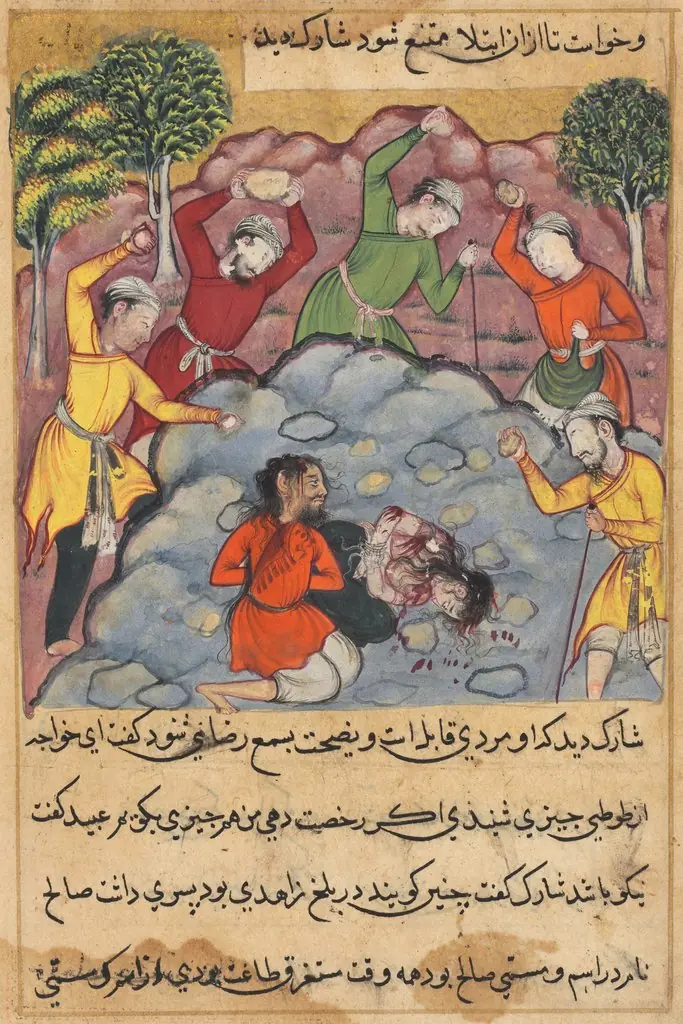 The Raja’s daughter and her lover stoned to death for adultery, from a Tuti-nama (Tales of a Parrot): Forty-Second Night
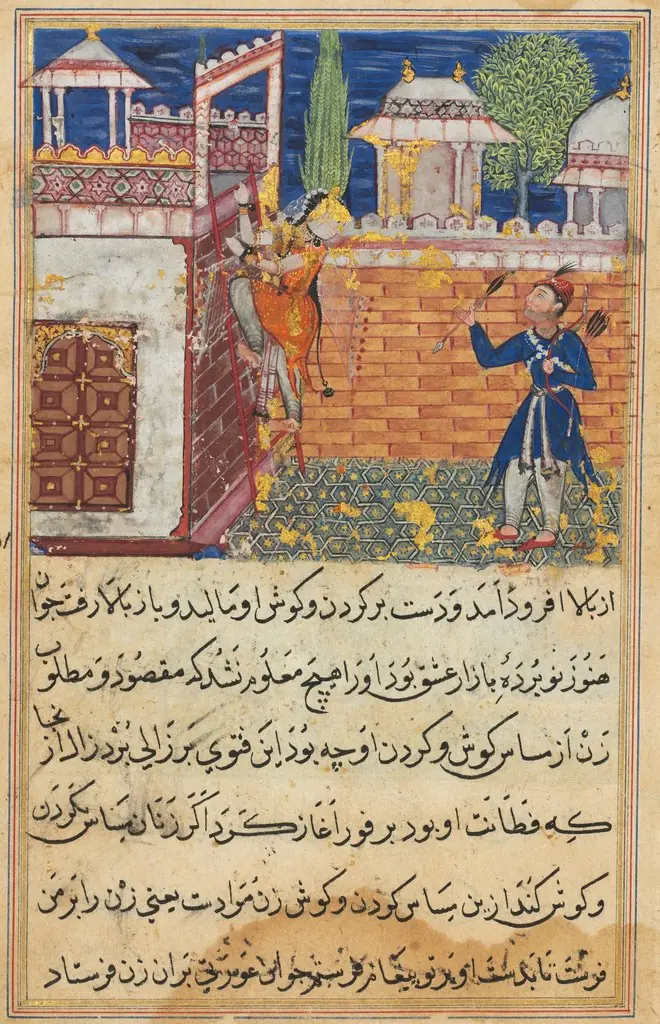 The deceitful wife returns to her terrace after caressing her lover, from a Tuti-nama (Tales of a Parrot): Eighth Night
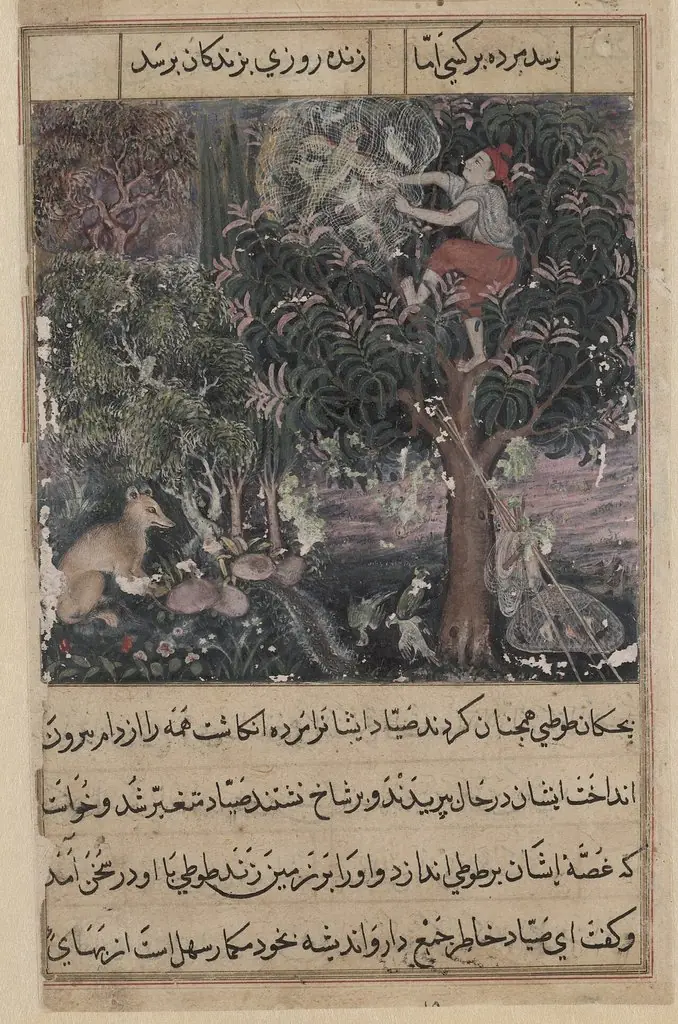 The hunter throws away the baby parrots, who pretend to be dead, and captures the mother, from a Tuti-nama (Tales of a Parrot): Fifth Night
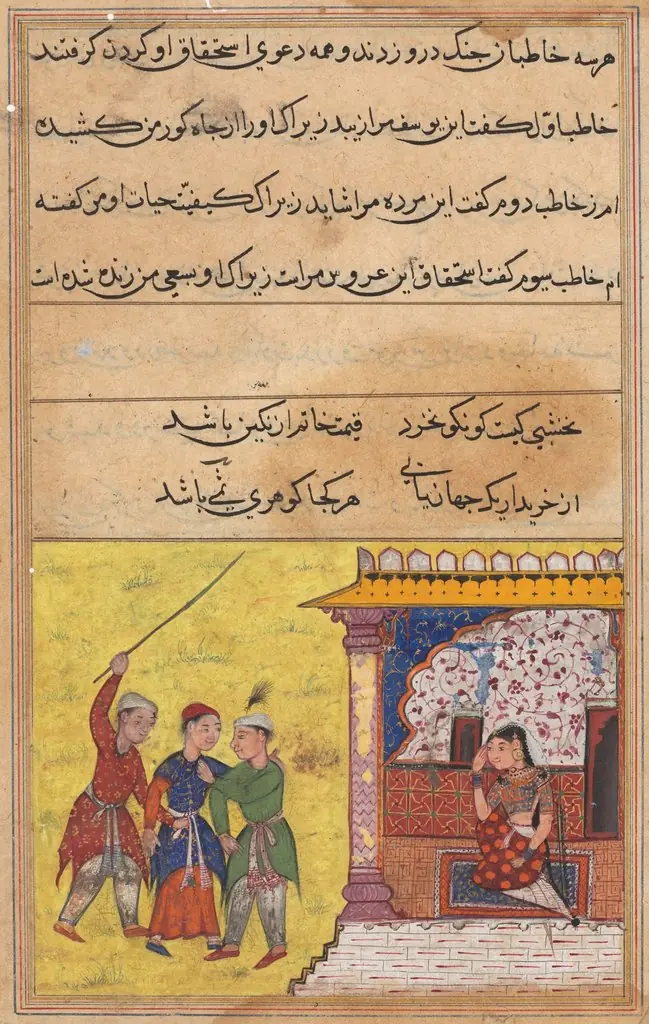 The three suitors again begin to quarrel among themselves for the hand of the devotee’s daughter, from a Tuti-nama (Tales of a Parrot): Twentieth Night
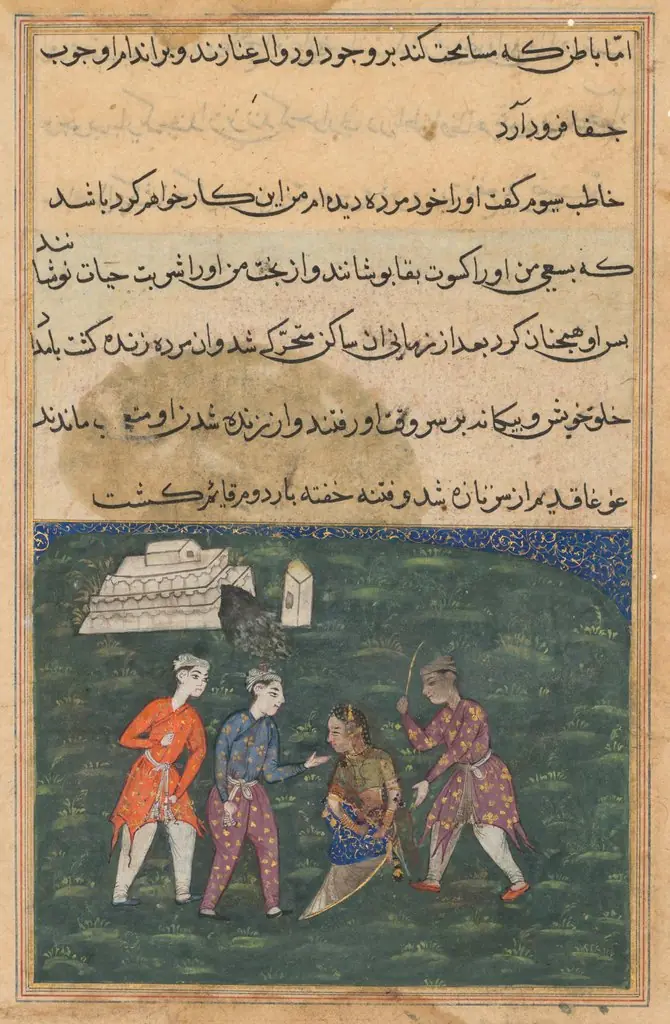 The third suitor strikes the devotee’s daughter and thus restores her to life, from a Tuti-nama (Tales of a Parrot): Twentieth Night
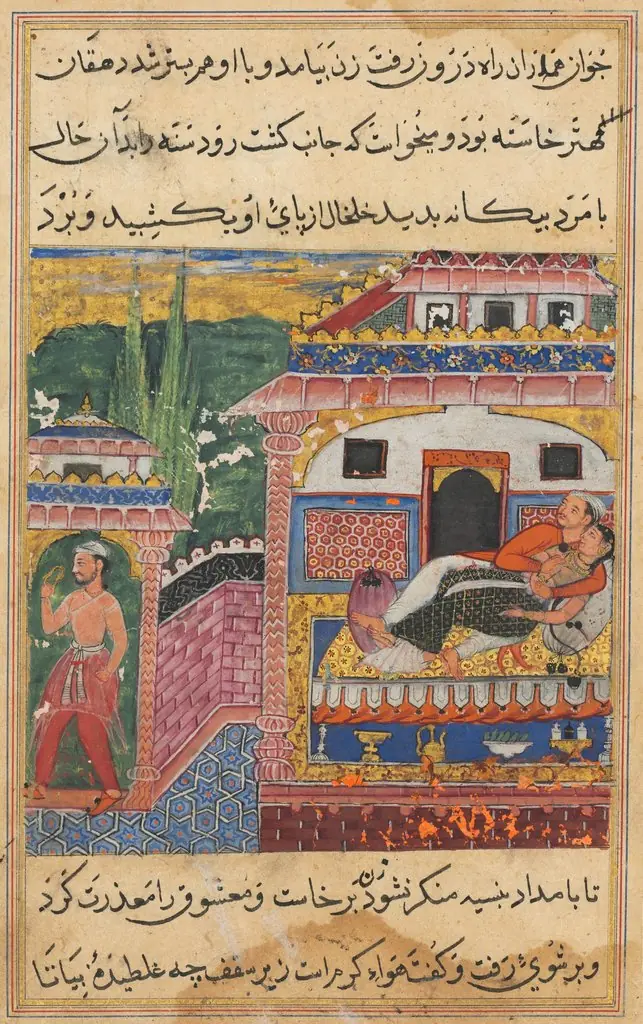 The farmer, father of the son with the deceitful wife, steals away with her anklet while she is in bed with her lover, from a Tuti-nama (Tales of a Parrot): Eighth Night