Artwork
The mendicant’s wife deceives him with a soldier, from a Tuti-nama (Tales of a Parrot): Fourth Night
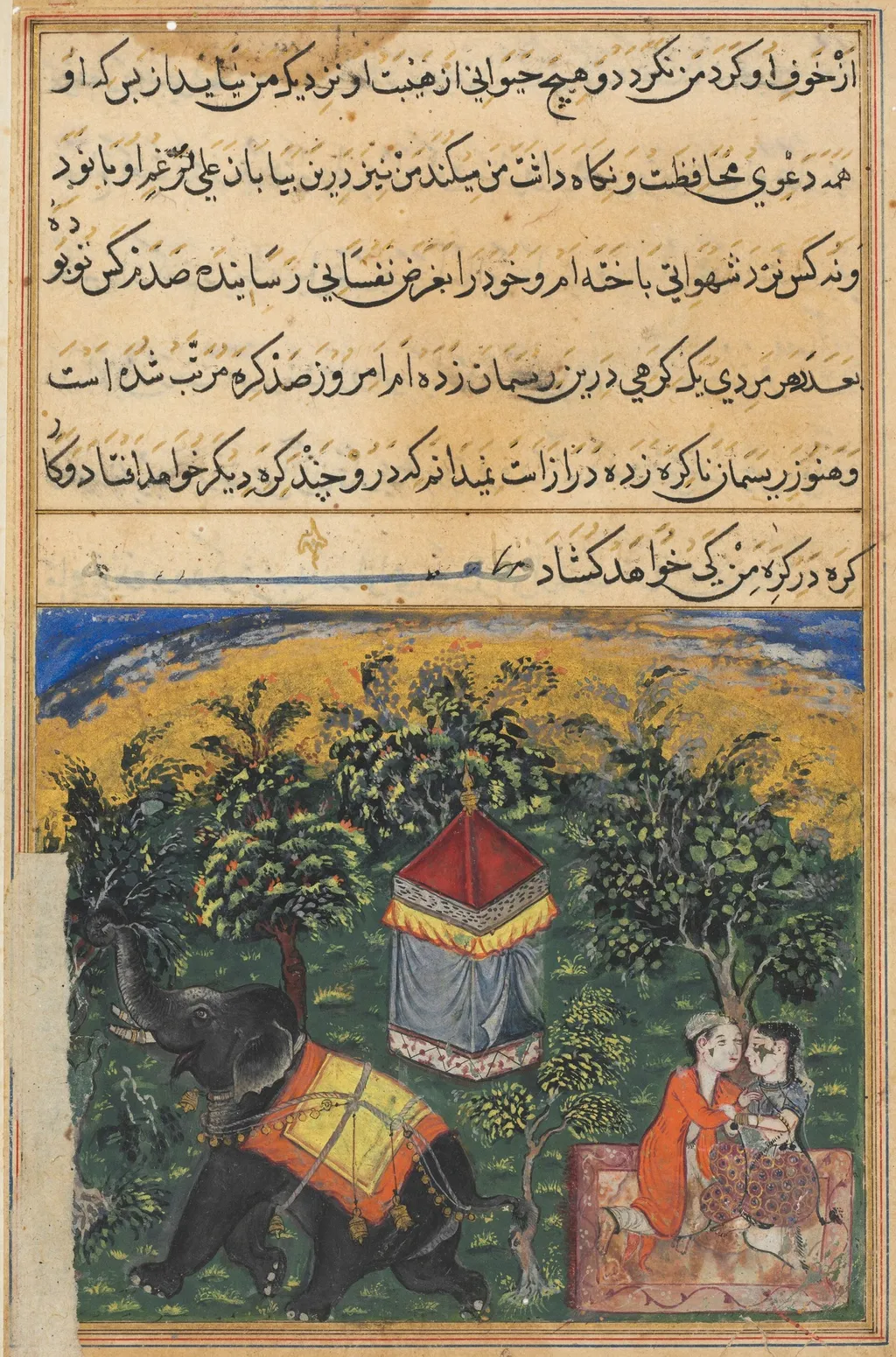
The mendicant’s wife deceives him with a soldier, from a Tuti-nama (Tales of a Parrot): Fourth Night is an unspecified painting. It dates from 1560 and is held in the collection of the Cleveland Museum of Art.
About this work
Overview
The painting illustrates a lively episode from the fourth night of a Persian narrative collection known as the Tuti‑nama, or Tales of a Parrot. Central to the composition is a woman in orange seated beneath a tree, while a soldier mounted on an elephant approaches, his red canopy and yellow shield prominent against a bright sky and verdant landscape.
Subject & Meaning
The scene depicts a mendicant’s wife who is being deceived by a soldier, a motif drawn from the moralistic storytelling tradition of the Tuti‑nama. The interaction between the seated woman, who holds a small object, and the approaching rider suggests themes of betrayal and social intrigue within the tale’s broader moral framework.
Technique & Style
Executed in vivid, saturated hues, the work employs intricate patterning on garments and architectural elements, characteristic of Persian miniature painting. The flowing Persian script above the image integrates text and image, while the use of bold outlines and delicate brushwork creates a sense of depth and movement across the sky, trees, and field.
History & Provenance
The painting is part of a manuscript illustrating the Tuti‑nama, a popular 15th‑century Persian literary work. It is now held in the collection of the Cleveland Museum of Art, where it is displayed alongside other examples of Persian miniature art, reflecting the museum’s focus on Asian decorative traditions.
Artist & collection

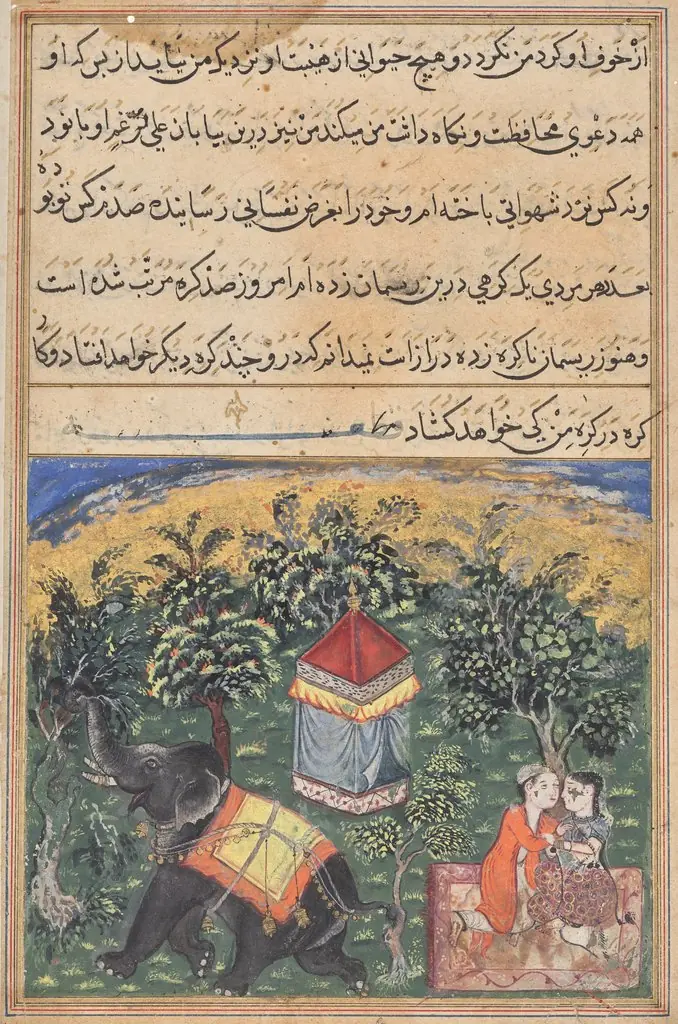 Page from Tales of a Parrot (Tuti-nama): text page
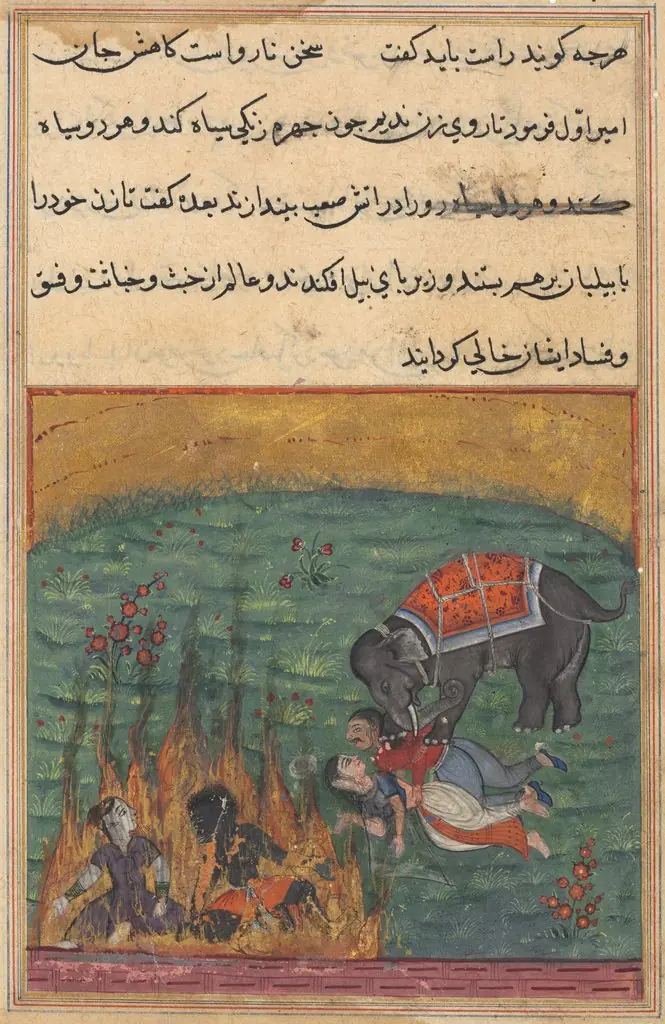 As punishment, the jester’s wife and the Zangi are thrown into fire and the emir’s wife and the mahout are trampled by an elephant, from a Tuti-nama (Tales of a Parrot), Twenty-second Night
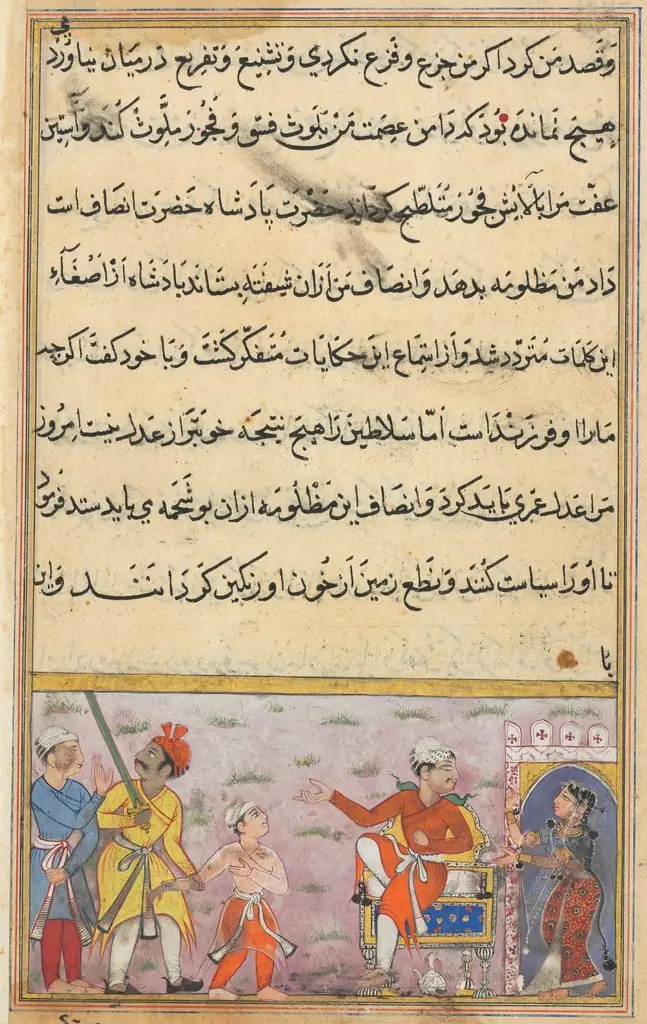 The prince being taken away for execution on the false complaint of the handmaiden, from a Tuti-nama (Tales of a Parrot): Eighth Night
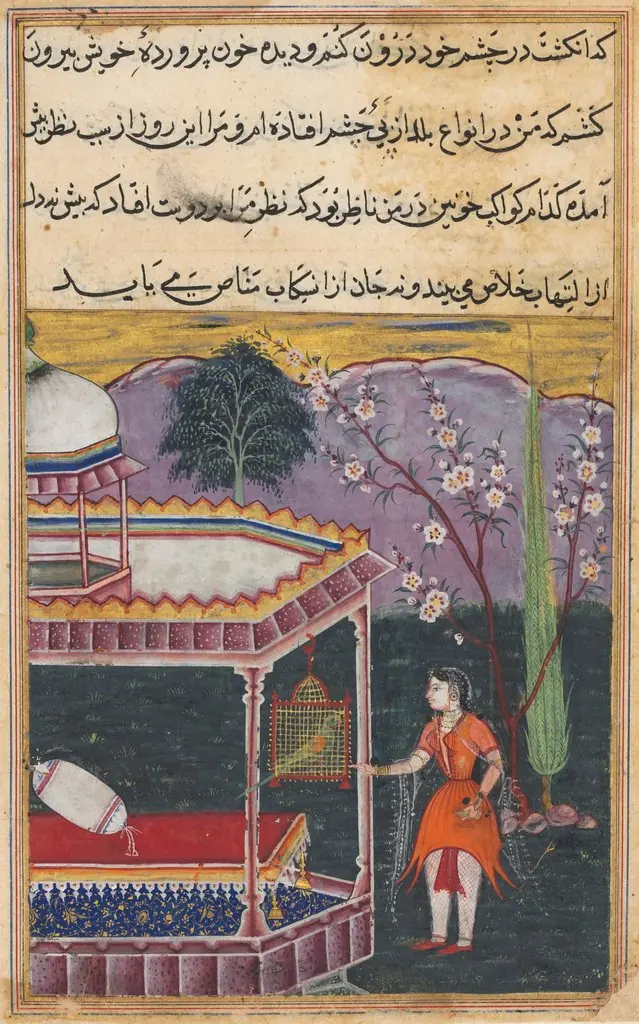 The Parrot Addresses Khujasta at the Beginning of the Eighth Night, from a Tuti-nama (Tales of a Parrot)
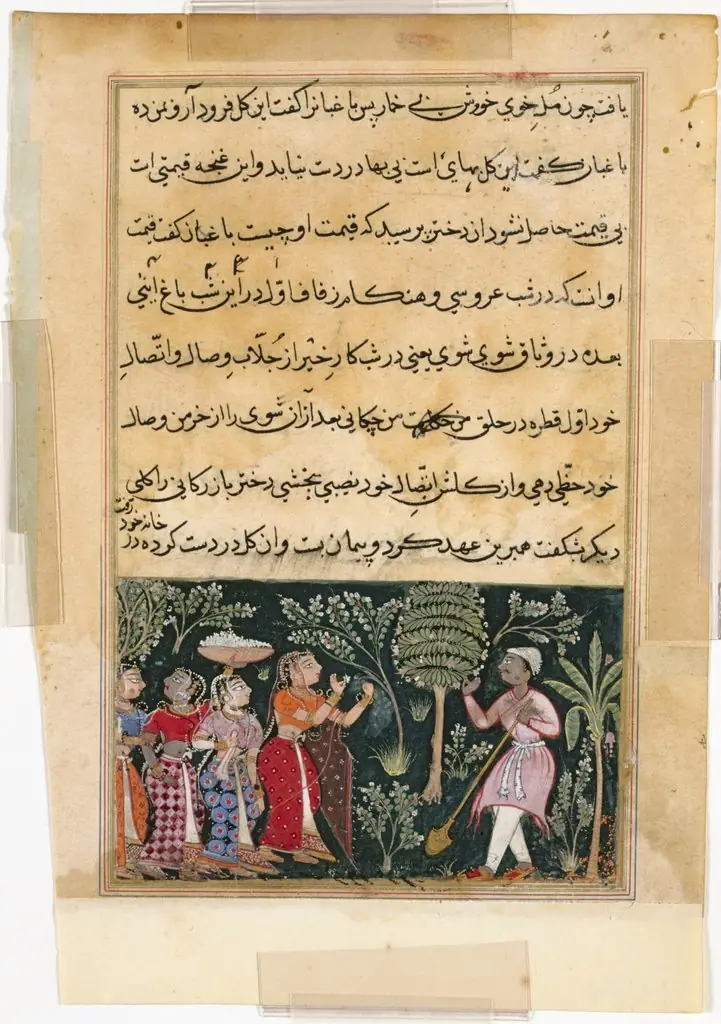 The daughter of the merchant of Mazanderan asks the gardener for the rose, from a Tuti-nama (Tales of a Parrot): Twelfth Night
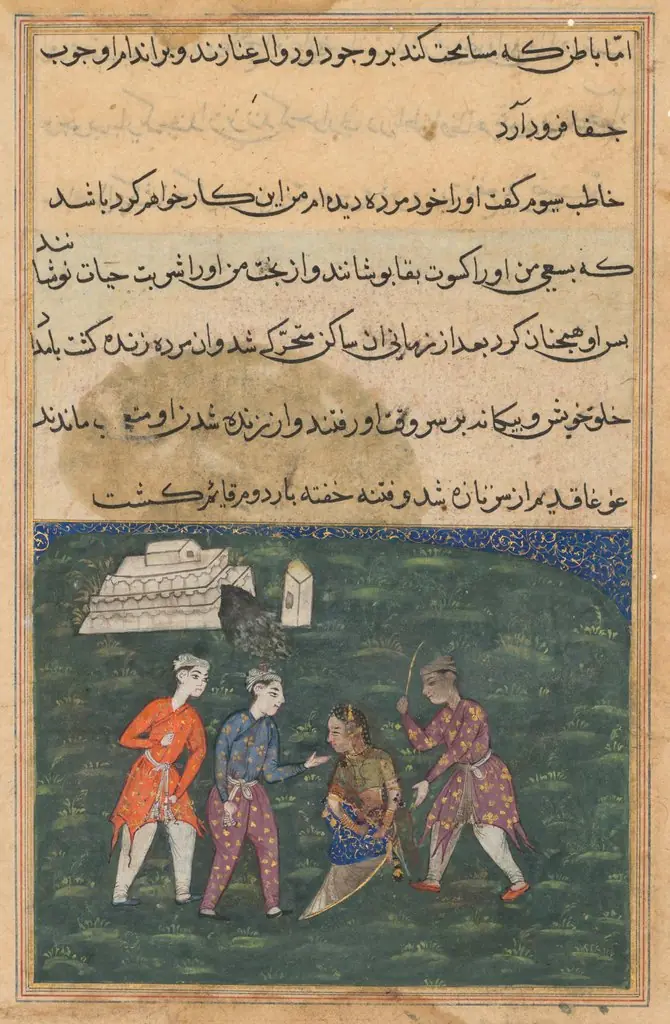 The third suitor strikes the devotee’s daughter and thus restores her to life, from a Tuti-nama (Tales of a Parrot): Twentieth Night
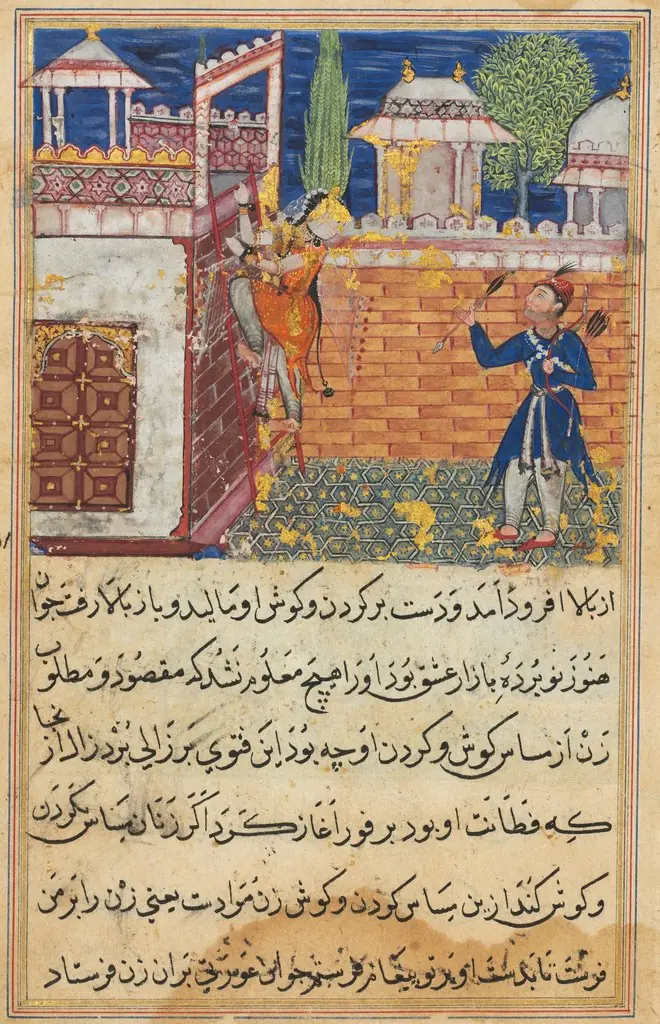 The deceitful wife returns to her terrace after caressing her lover, from a Tuti-nama (Tales of a Parrot): Eighth Night
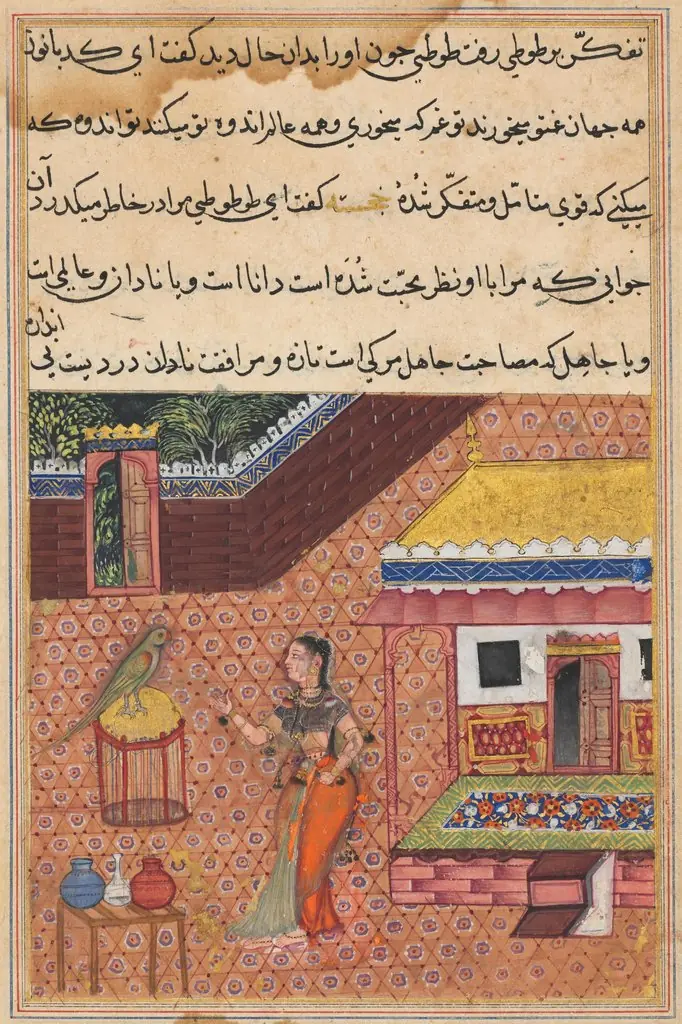 The parrot addresses Khujasta at the beginning of the thirty-fourth night, from a Tuti-nama (Tales of a Parrot)
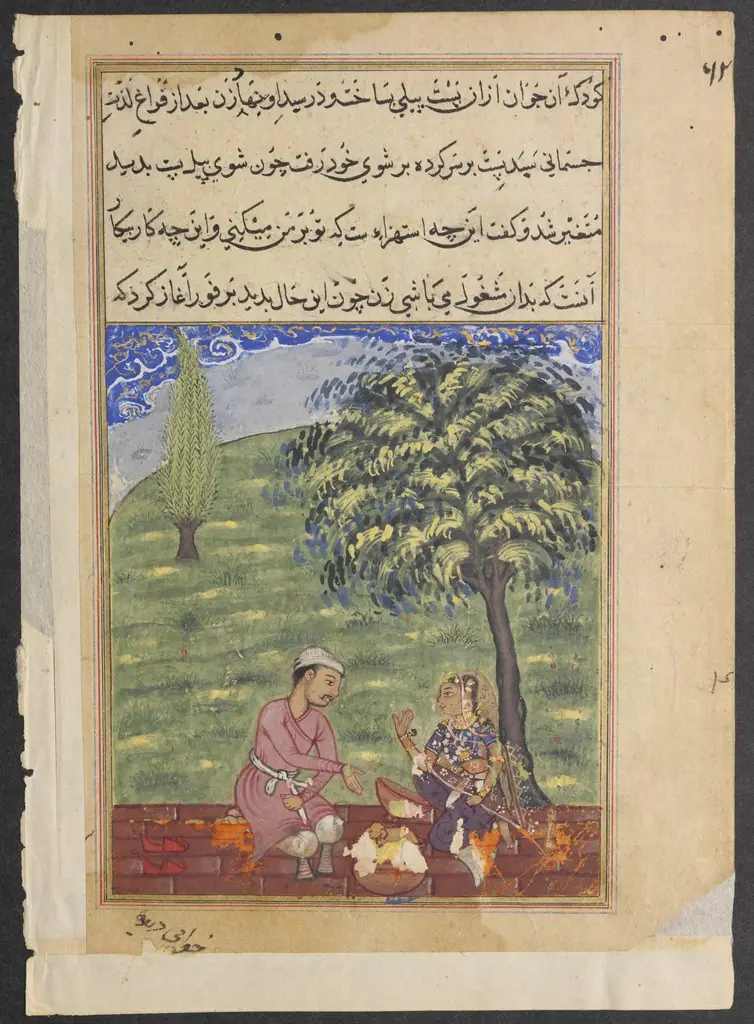 The unfaithful wife explaining away the presence of the dough elephant, from a Tuti-nama (Tales of a Parrot): Eighth Night