Artwork
The hunter throws away the baby parrots, who pretend to be dead, and captures the mother, from a Tuti-nama (Tales of a Parrot): Fifth Night
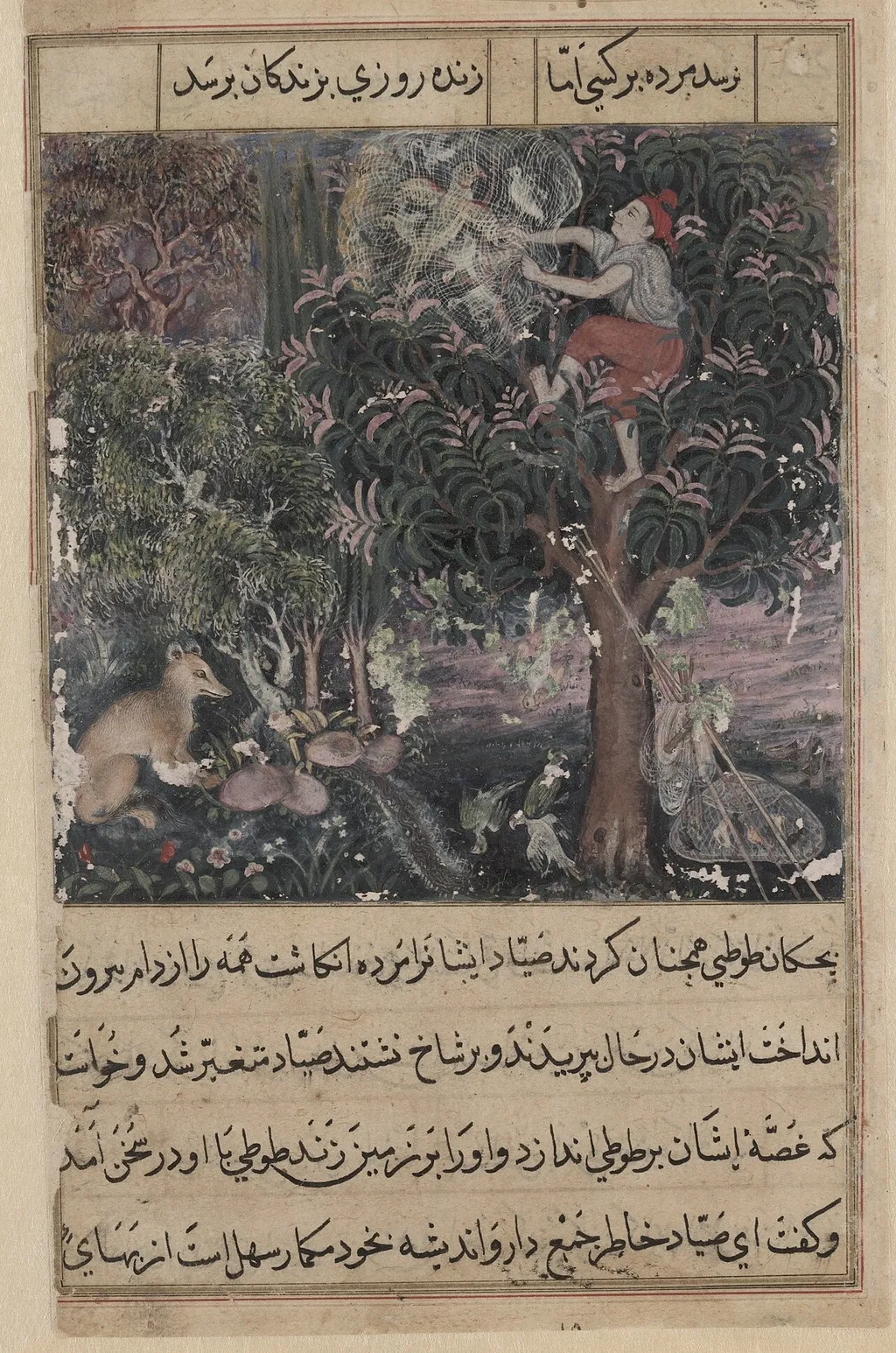
The hunter throws away the baby parrots, who pretend to be dead, and captures the mother, from a Tuti-nama (Tales of a Parrot): Fifth Night is an unspecified painting by the Mughal Painting artist Basawan. It dates from 1560 and is held in the collection of the Cleveland Museum of Art.
About this work
Overview
Created in 1560 by the Mughal painter Basawan, this work illustrates a narrative episode from the fifth night of the *Tuti‑nama* (Tales of a Parrot). The canvas is part of the Cleveland Museum of Art’s collection and depicts a forest clearing where a hunter interacts with a family of parrots.
Subject & Meaning
The composition shows a hunter climbing a tree, discarding the fledgling parrots that have feigned death, while seizing the adult female perched among the branches. A fox watches from the ground, underscoring the interplay of survival instincts among the characters. The scene reflects the moral lesson of the *Tuti‑nama*, in which animals assume human-like cunning and deception.
Technique & Style
Basawan employs a restrained palette of earthy greens, browns, and muted reds, punctuated by occasional yellow and white highlights that draw attention to the birds’ plumage. The figures are rendered with fine brushwork and delicate line, characteristic of Mughal court painting, while the layered foliage creates depth and a sense of natural enclosure.
History & Provenance
The painting entered the Cleveland Museum of Art through acquisition in the early twentieth century, joining a broader collection of South Asian art. Its attribution to Basawan rests on stylistic analysis and comparison with other documented works by the artist, who was active in the imperial workshop of Emperor Akbar.
Context
The *Tuti‑nama* was a popular illustrated manuscript that blended Persian literary tradition with Indian storytelling, often using animal protagonists to convey ethical teachings. Basawan’s illustration aligns with the manuscript’s visual program, where each night presents a new episode that explores themes of deceit, compassion, and the consequences of human actions.
Artist & collection
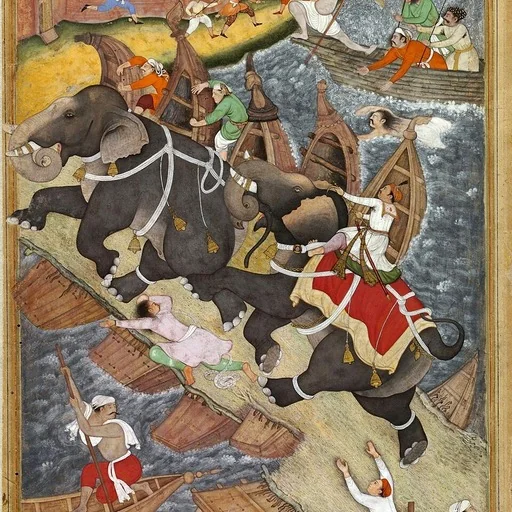
Artist
Basāwan, or Basāvan, was an Indian miniature painter in the Mughal style. He was known by his contemporaries as a skilled colorist and keen observer of human nature, and for his use of portraiture in the illustrations…

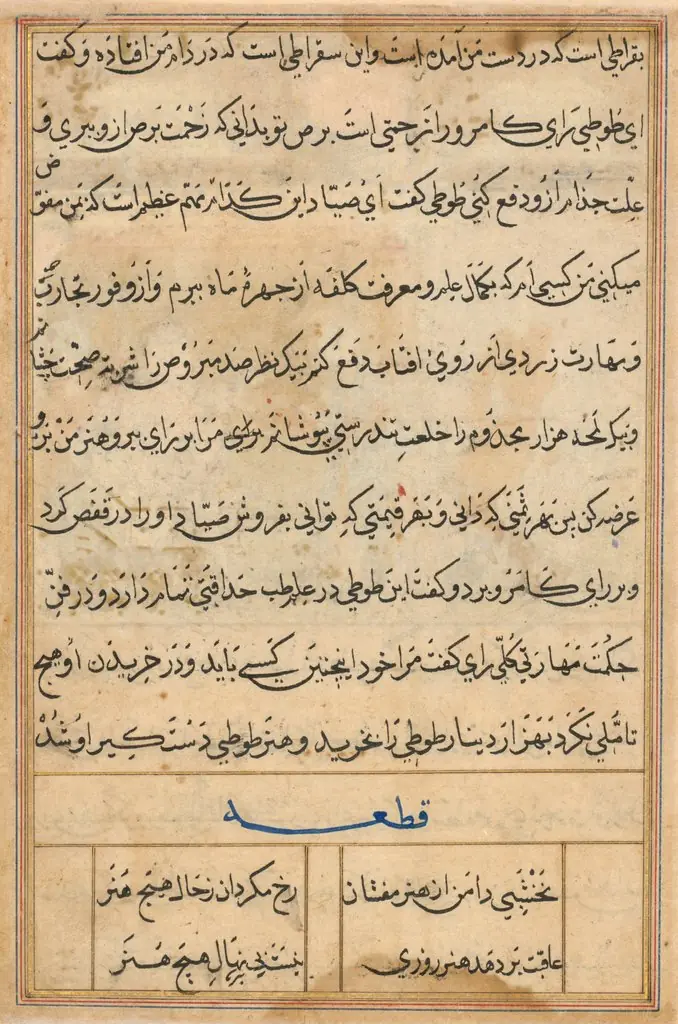 Page from Tales of a Parrot (Tuti-nama): text page
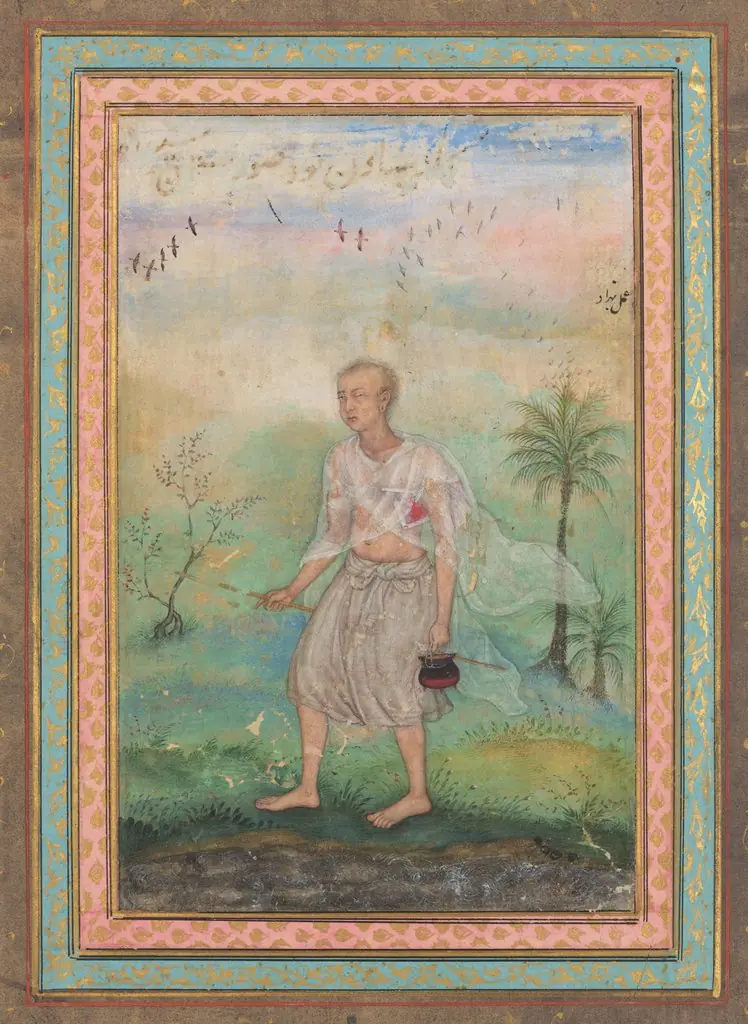 Jain Ascetic Walking Along a Riverbank
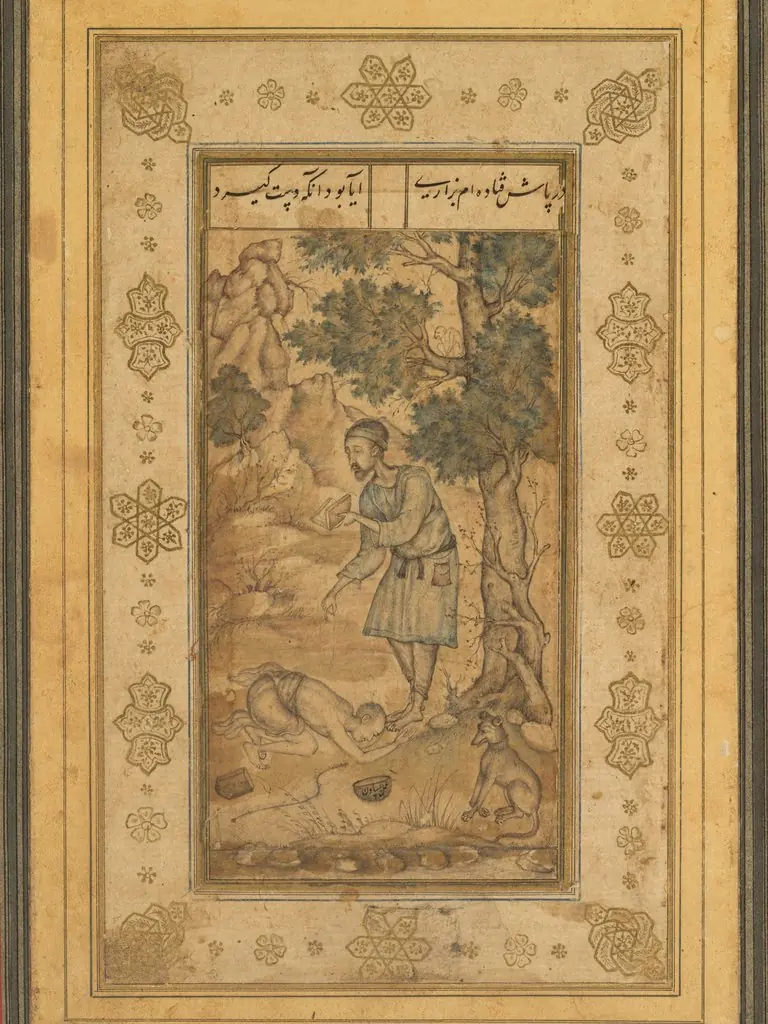 A mendicant bowing before a holy man, from the Prince Salim Album
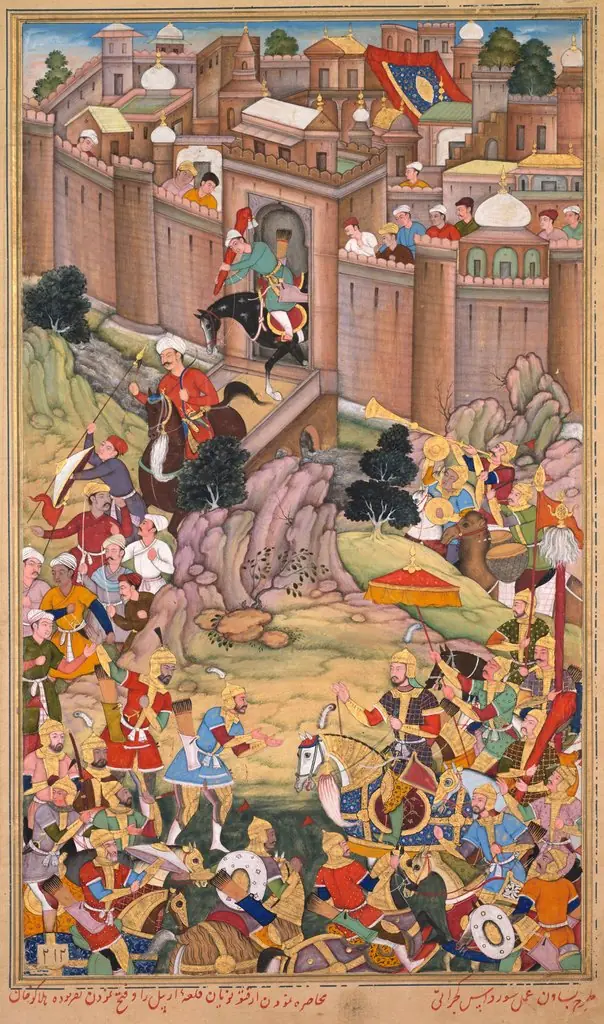 The siege of Arbela in the era of Hulagu Khan, from a Chingiz-nama (Book of Chingiz Khan) of the Jami al-tavarikh (Compendium of Chronicles) of Rashid al-Din (Persian, 1247–1318)
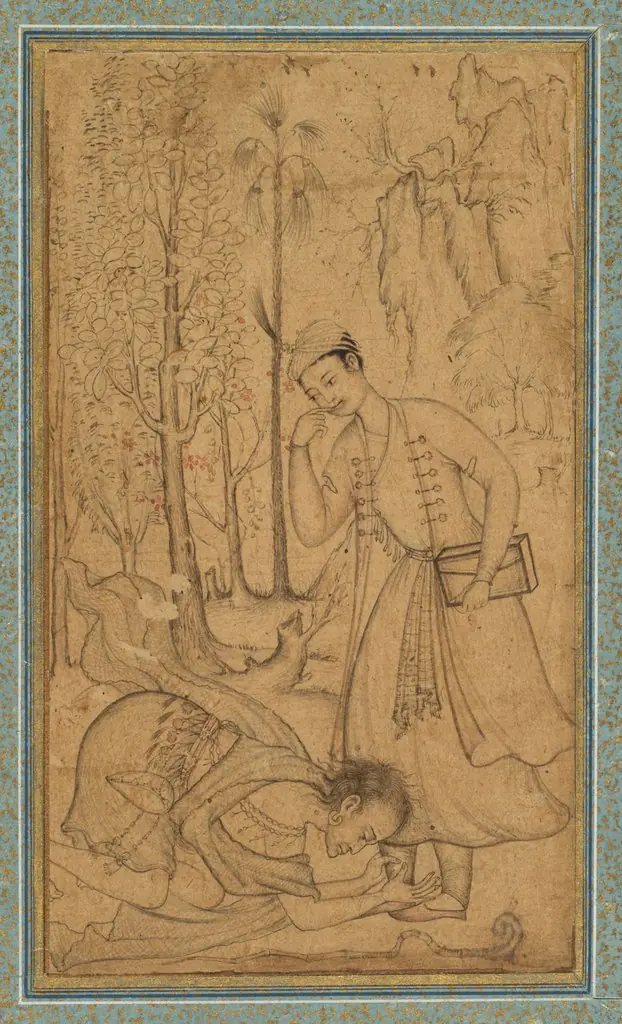 A holy man prostrating himself before a learned prince
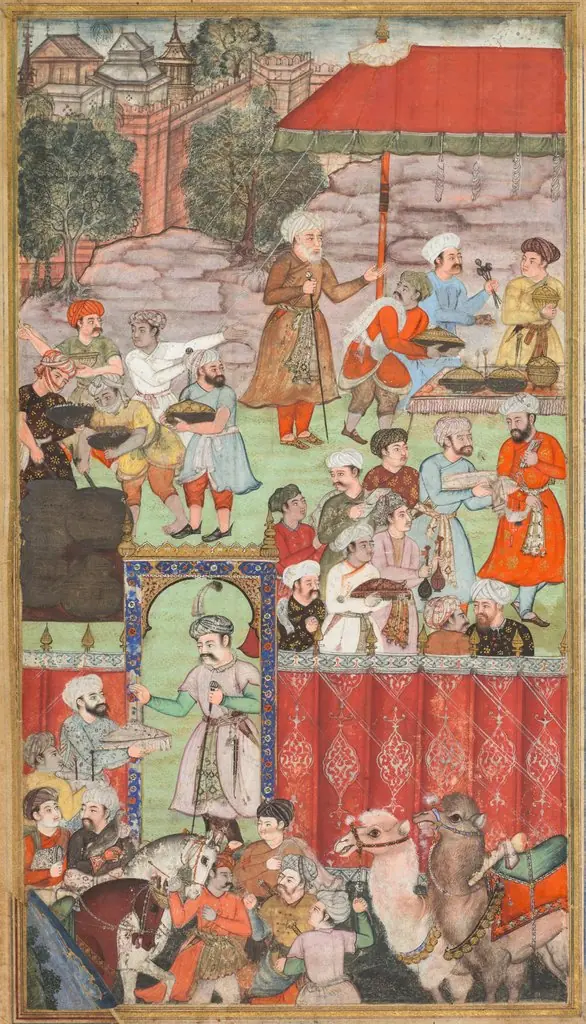 A feast for Babur hosted by his half-brother Jahangir Mirza in Ghazni in May 1505, from a Babur-nama (Memoirs of Babur)
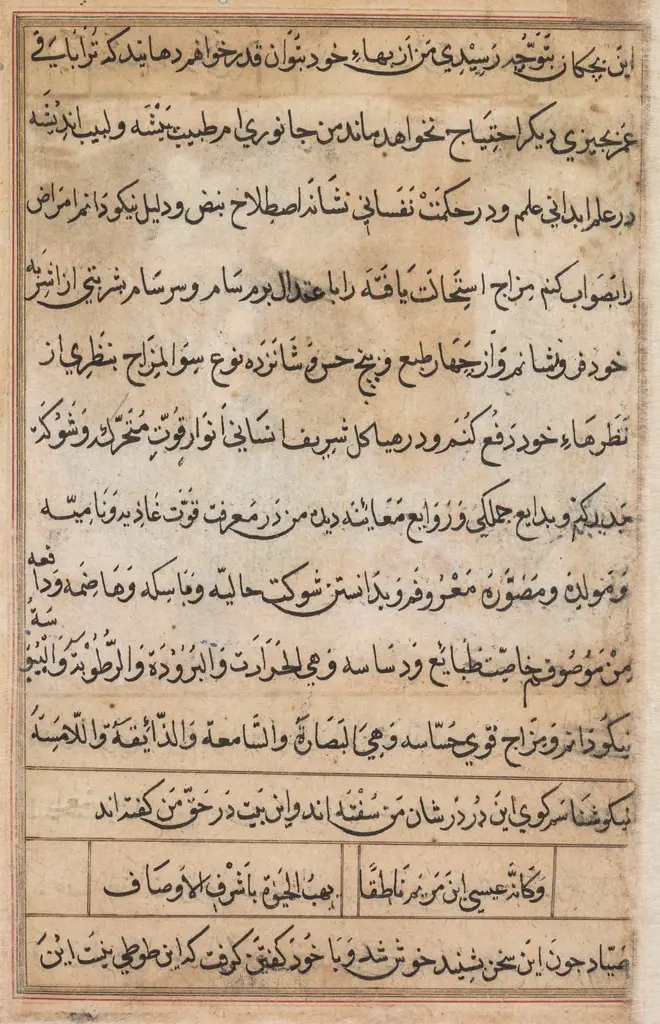 Page from Tales of a Parrot (Tuti-nama): text page
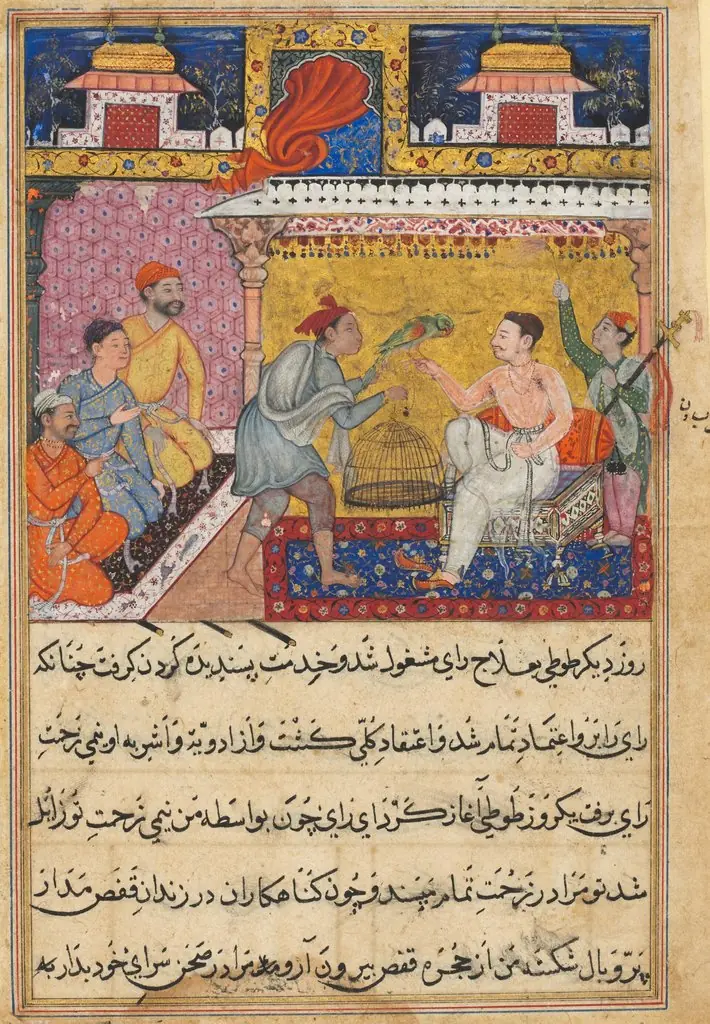 The hunter offers the mother parrot to the king of Kamarupa, from a Tuti-nama (Tales of a Parrot): Fifth Night
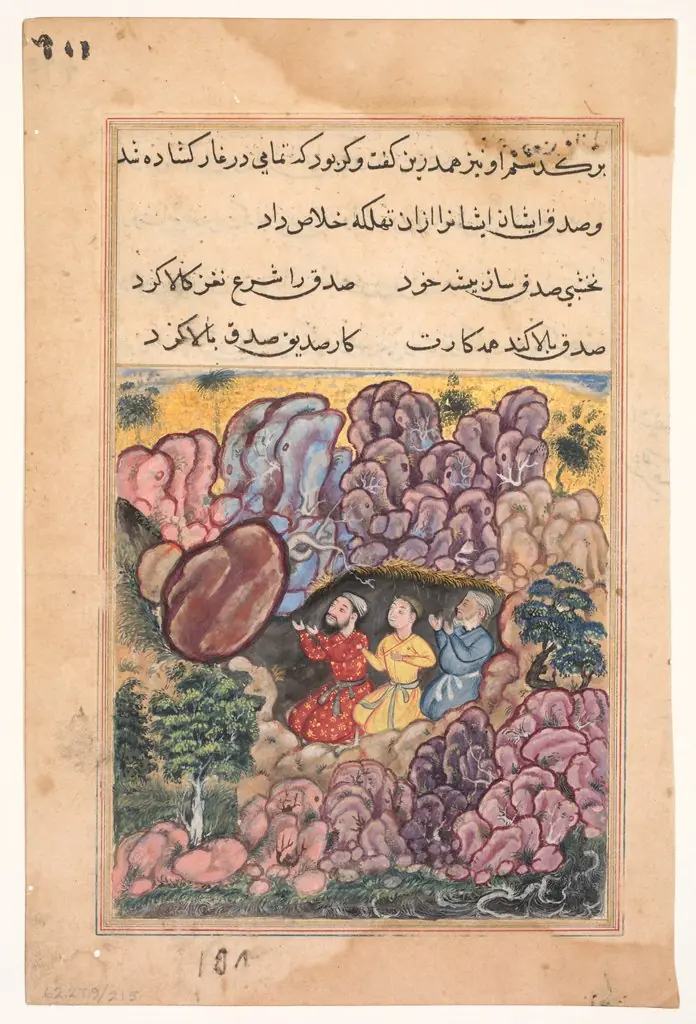 The tale of the three men trapped in a cave by a rolling boulder, from a Tuti-nama (Tales of a Parrot): Thirty-second Night
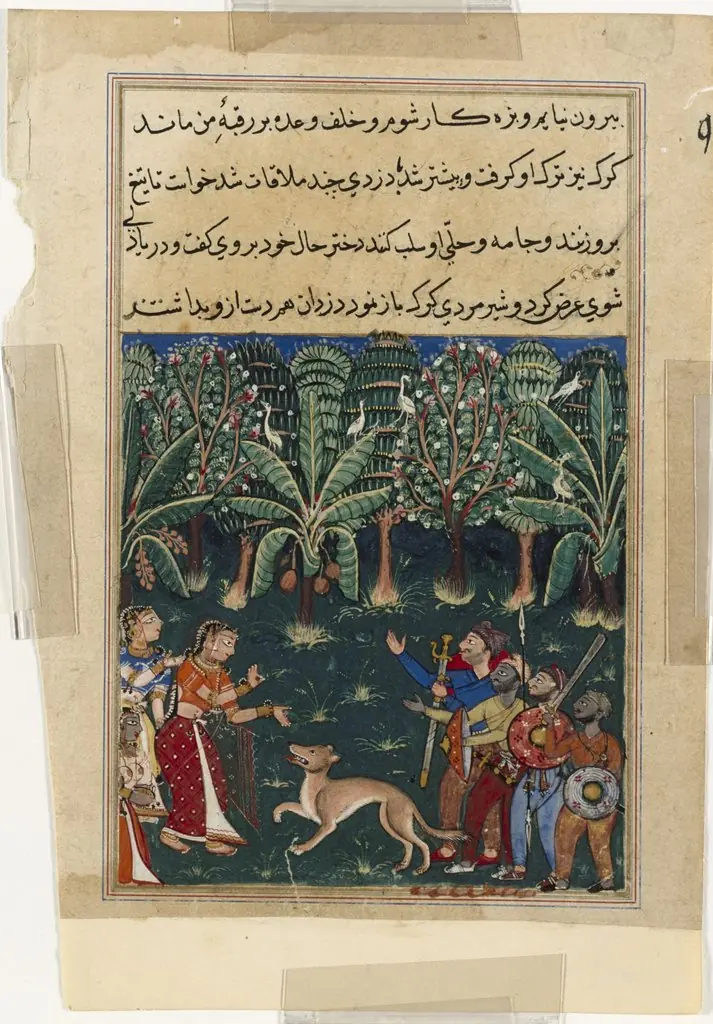 The merchant’s daughter encounters a wolf and bandits on her way to meet the gardener in order to keep her promise, from a Tuti-nama (Tales of a Parrot): Twelfth Night
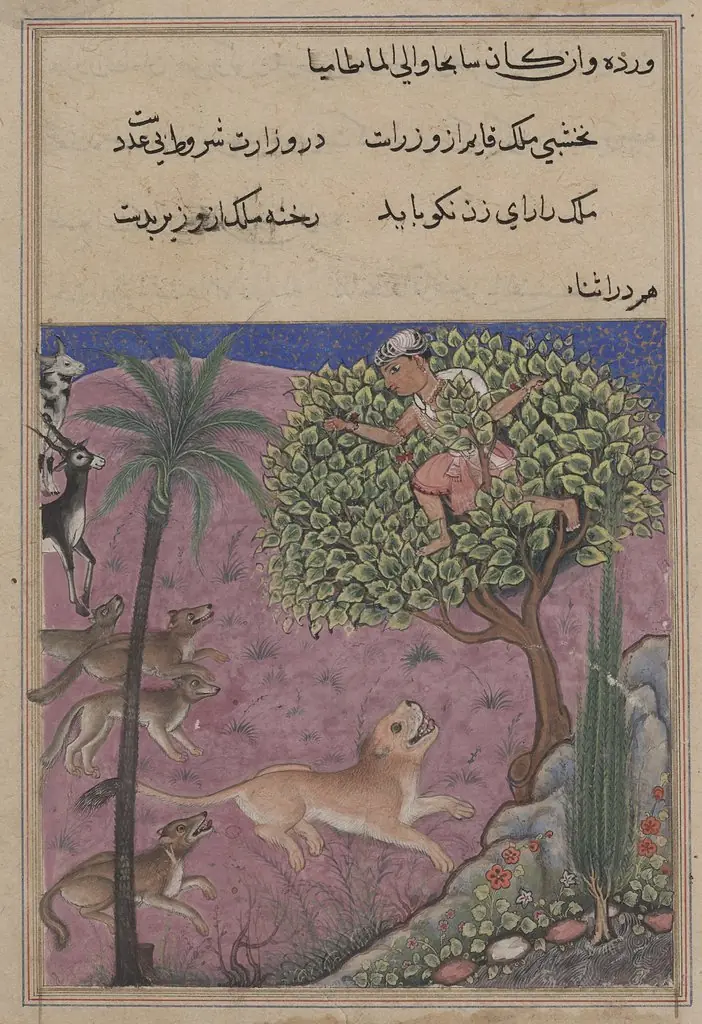 The wolf and the jackal, serving as viziers, instigate the lion who pursues the Brahman up a tree, from a Tuti-nama (Tales of a Parrot): Twenty-first Night
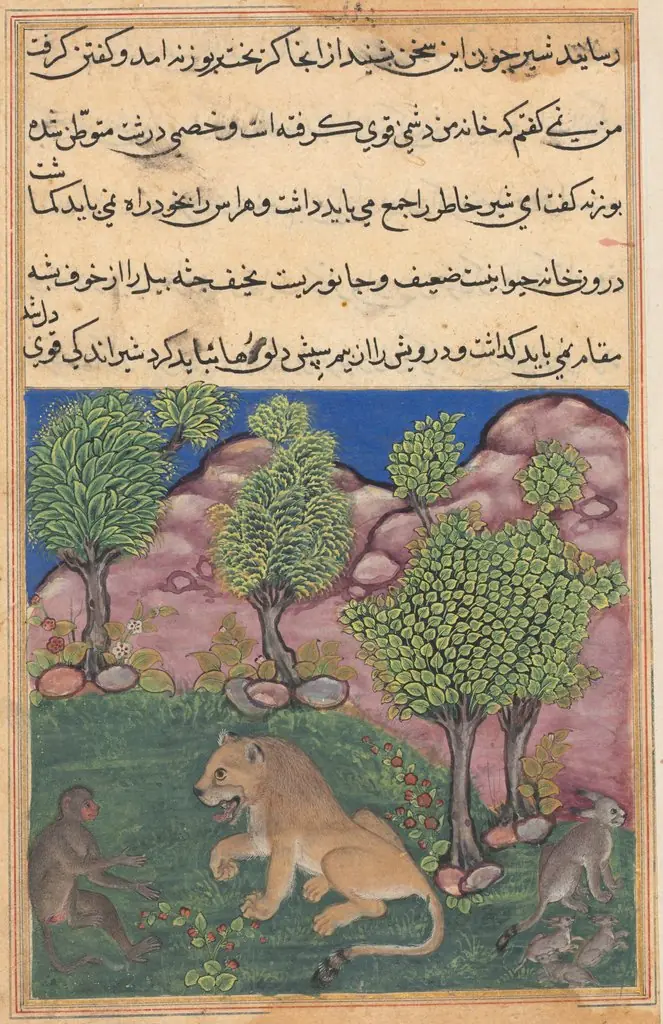 The monkey advises the suspicious lion to cast off fear and take possession of his territory, from a Tuti-nama (Tales of a Parrot): Twenty-ninth Night
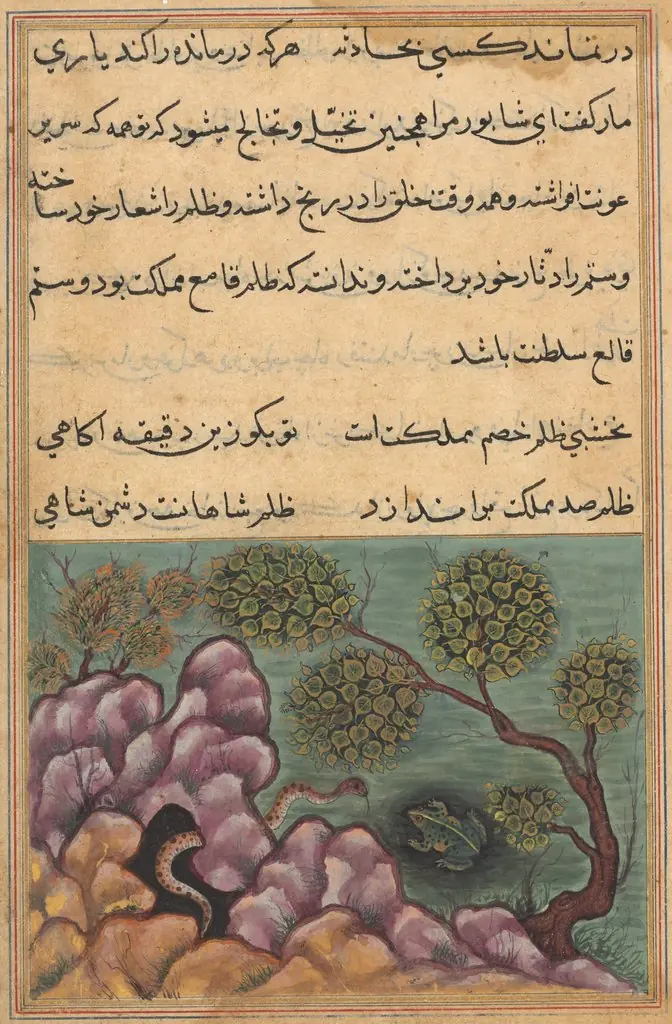 The dethroned frog Shapur seeks the help of the serpent, from a Tuti-nama (Tales of a Parrot): Twenth-sixth Night