Artwork
The Holy Trinity
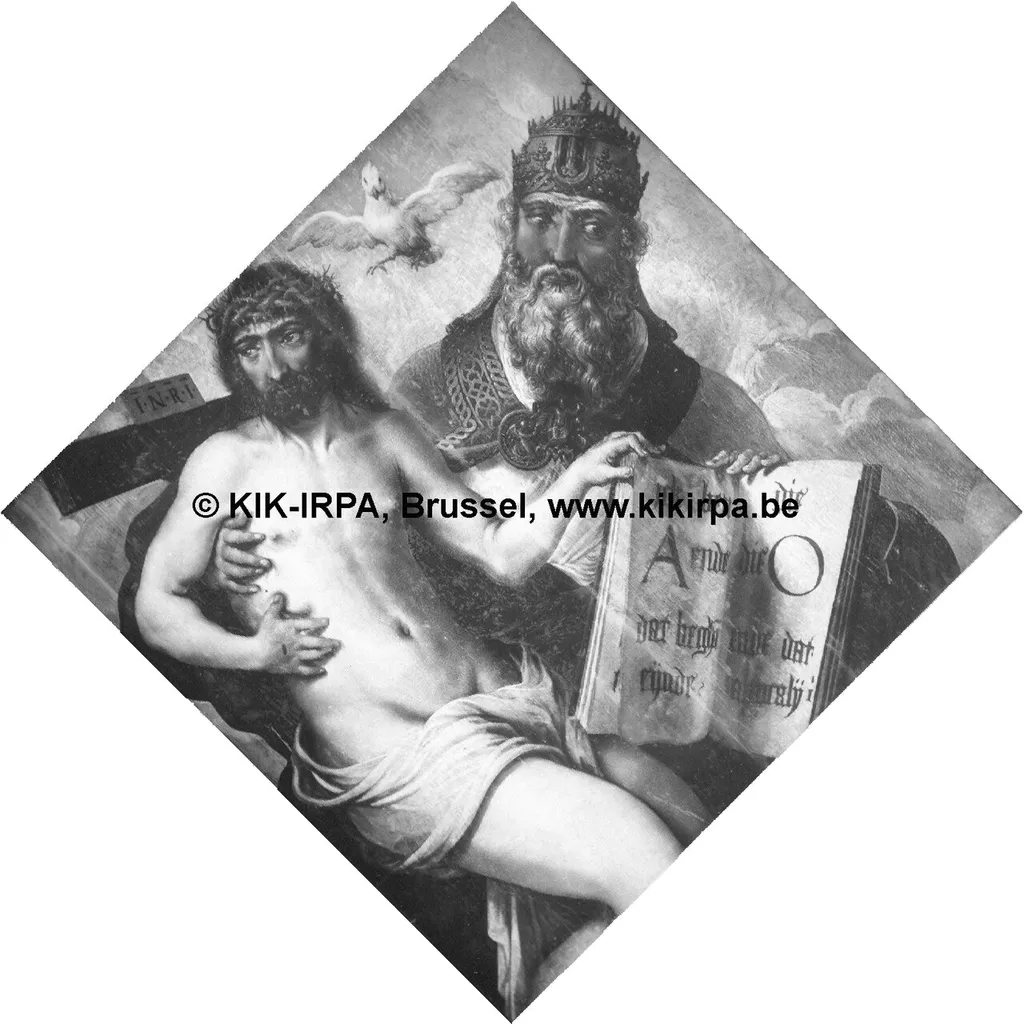
The Holy Trinity is an oil painting by the Mannerist artist Unknown. It dates from 1550 and is held in the collection of the Royal Museum of Fine Arts Antwerp.
About this work
Overview
He is shown with a crown of thorns, a cloth draped around his waist, a book in his left hand and his right hand placed over his heart.
The oil painting titled “The Holy Trinity” presents a three‑figure composition centered on a crucified Christ. He is shown with a crown of thorns, a cloth draped around his waist, a book in his left hand and his right hand placed over his heart. To Christ’s right stands a bearded figure in regal attire, crowned and holding a staff, while a dove appears in the background as a reference to the Holy Spirit.
Subject & Meaning
The work visualizes the Christian doctrine of the Trinity by uniting the incarnate Son with a heavenly authority figure and the Spirit symbolized by the dove. The book in Christ’s hand suggests the Gospel, and his hand over the heart conveys devotion. The crowned bearded man, likely representing God the Father, is rendered in sumptuous robes, emphasizing divine majesty.
Technique & Style
The artist employs chiaroscuro to model the figures, allowing light to emerge from darkness and create a three‑dimensional effect. Strong contrasts between illuminated flesh and shadowed surroundings give the scene dramatic intensity. The handling of oil paint demonstrates careful blending of tones to render the textures of cloth, flesh, and the ethereal dove.
Context
Within the tradition of Western religious painting, the composition follows established iconography for the Holy Trinity, yet the pronounced use of light and shadow reflects a Baroque sensibility. The inclusion of a staff and ornate crown aligns with contemporary depictions of divine authority, while the dove in the distance reinforces the theological link between the three persons of the Godhead.
Artist & collection

 Domestic Scene
 Giacomo and Cardinal Marco, investing Andrea, Abbot of San Zeno, with his Benefice
 The Nymph of Fontainebleau
 Portrait of a Woman
 Madonna and Child with Saints in the Enclosed Garden
 Venus and Minerva
 Family Group of Four on Sofa
 Wall painting from Room H of the Villa of P. Fannius Synistor at Boscoreale
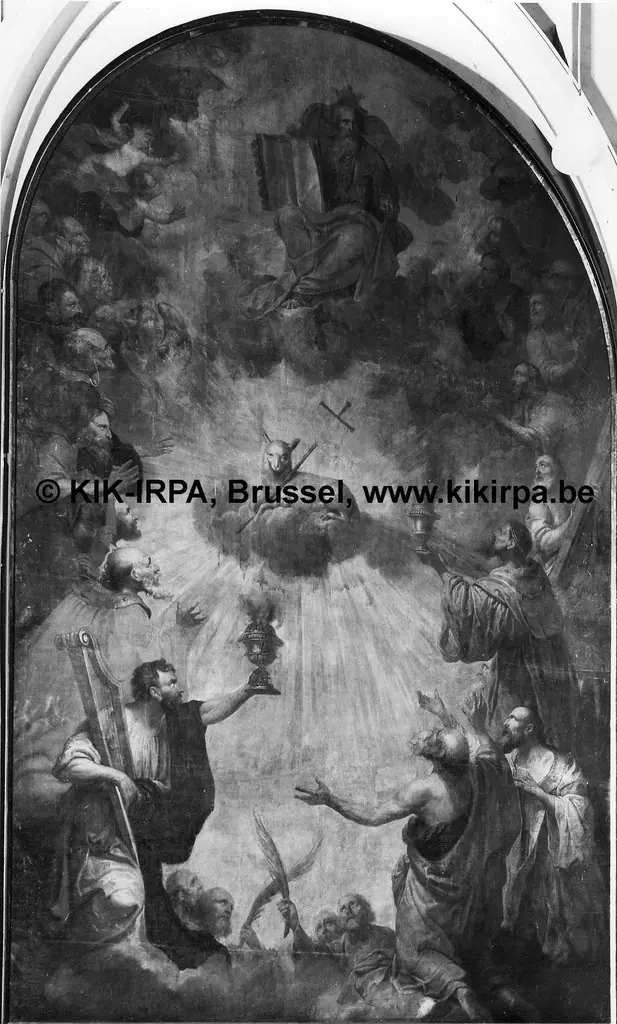 The Lamb of God worshipped by the elders of the Apocalypse
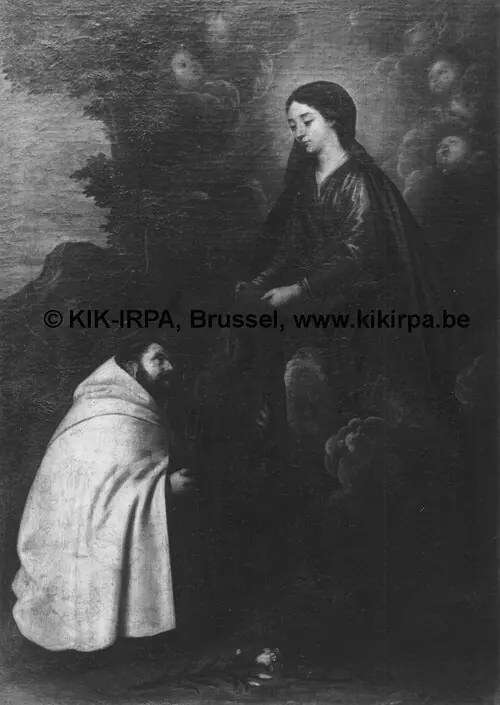 Mary with Scapulier
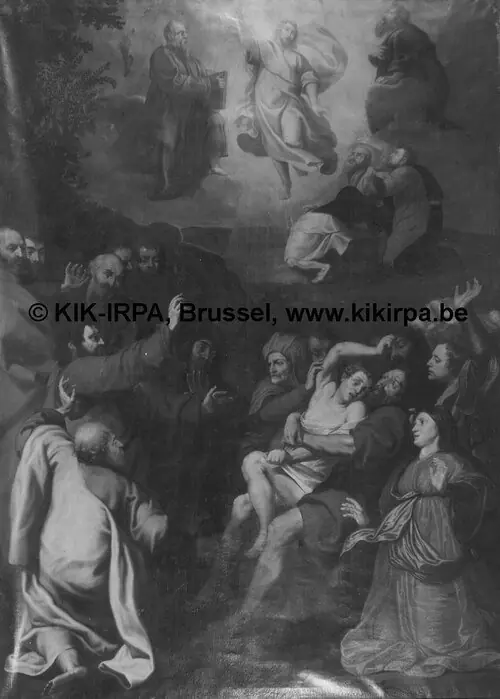 The transfiguration
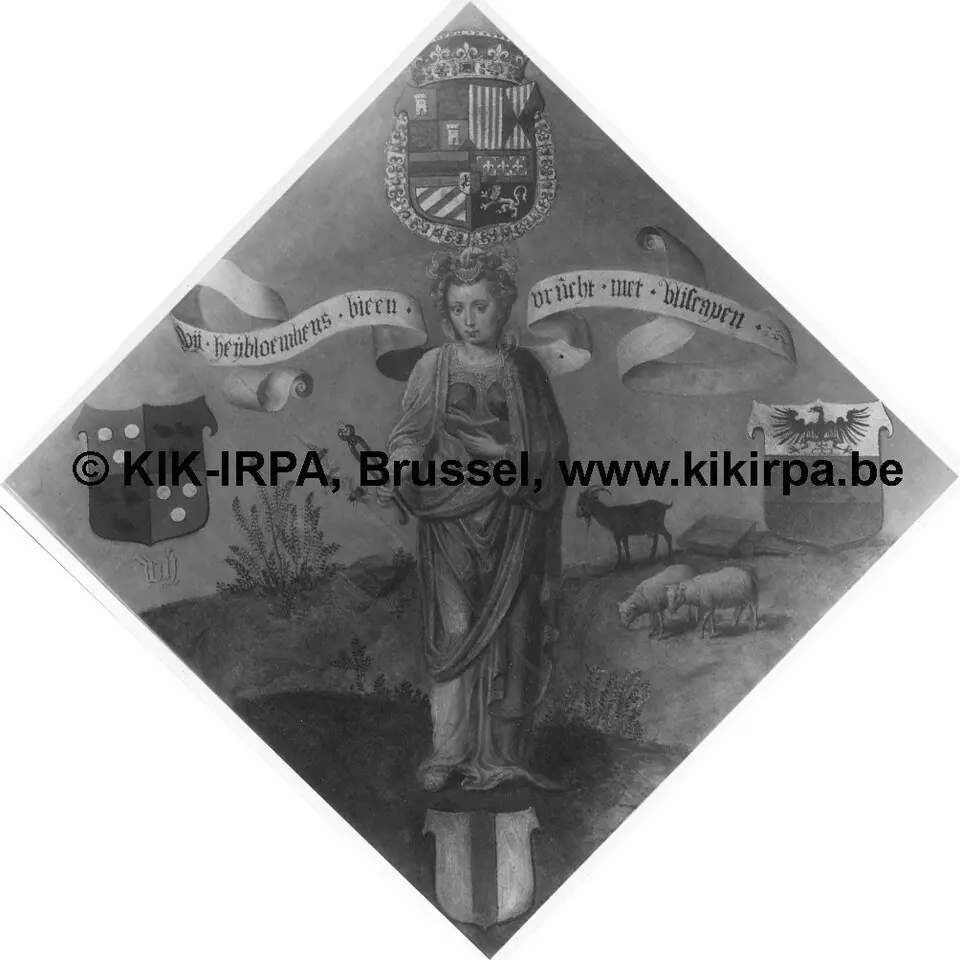 Blazon of the Turnhout Chamber of Rhetoric "Het Heibloemke"
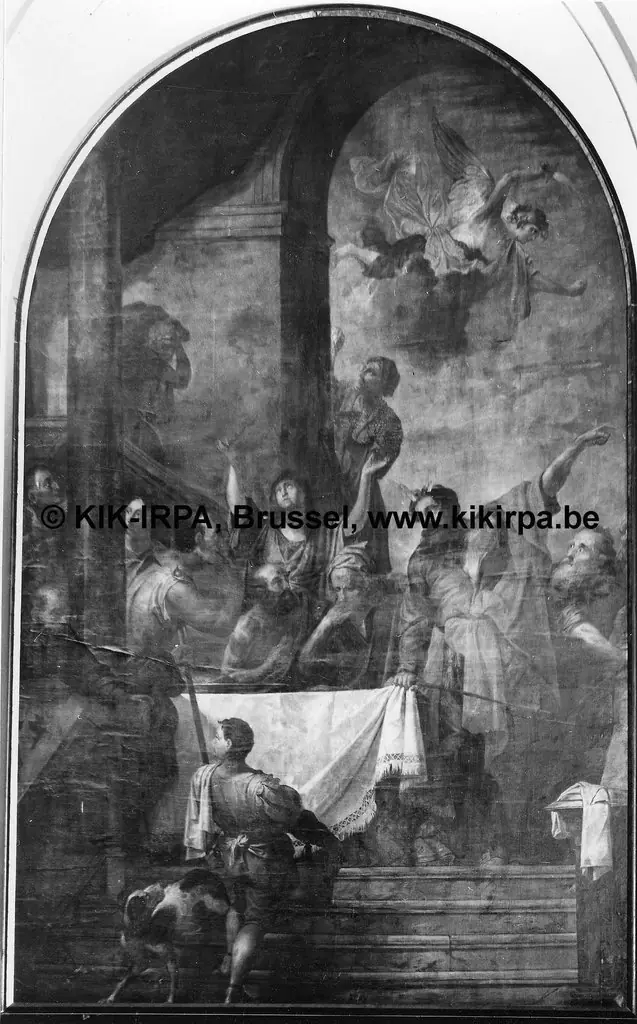 Easter in Egypt
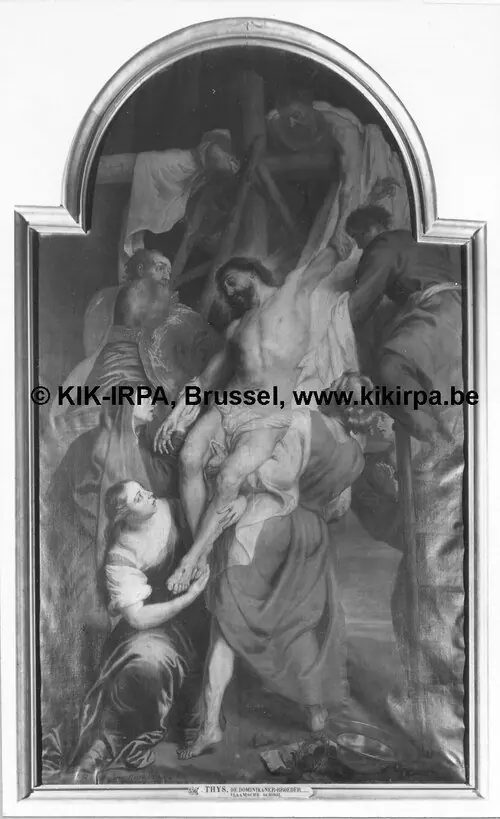 Descent from the Cross
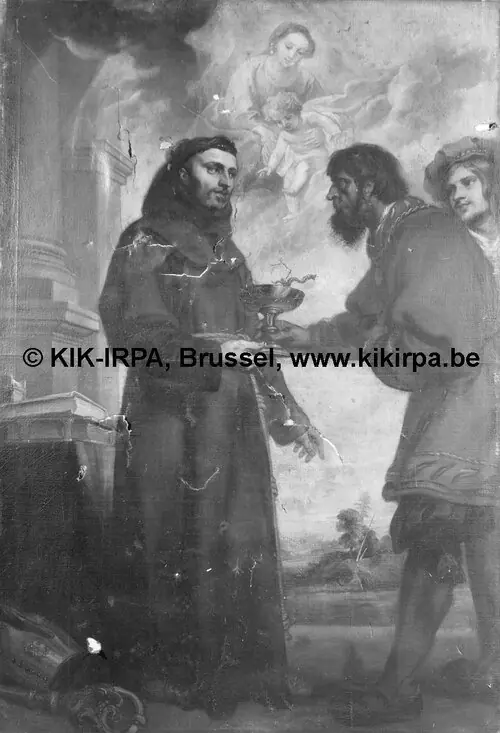 Saint James of the Marches and the Poisoned Cup
 The Sacristy
 Thierry of Alsace Brings the Holy Blood to Bruges
 Saint Francis of Assisi
 Force
Force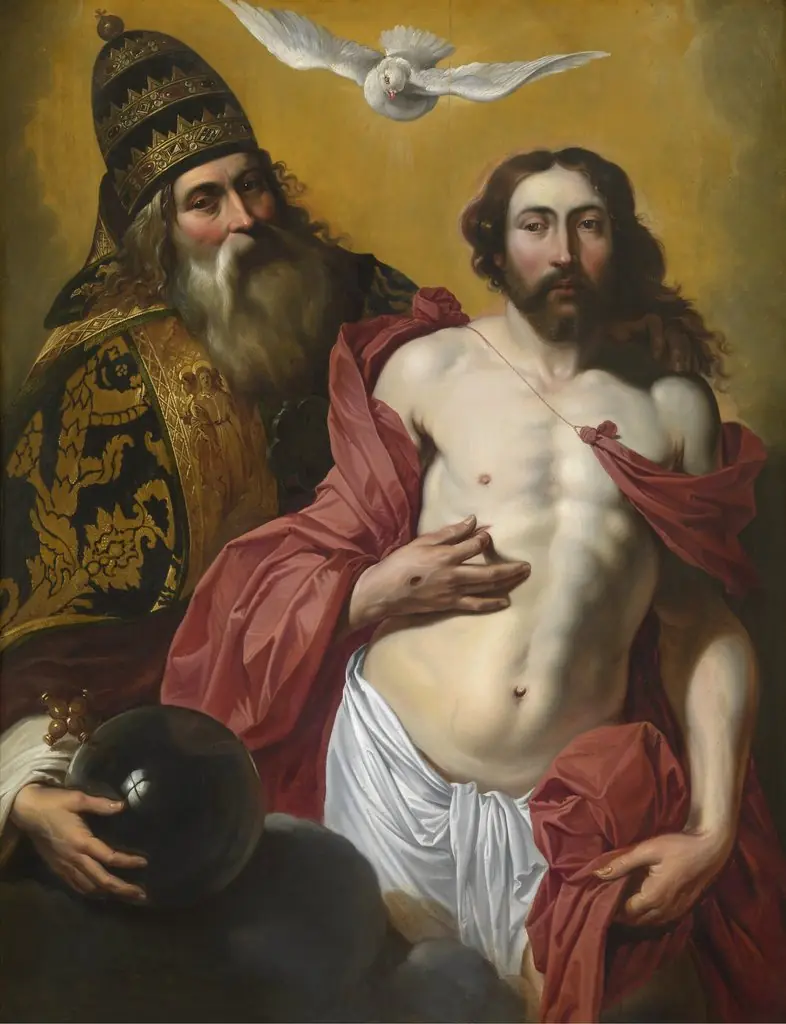 The Holy Trinity