Artwork
The Holy Trinity
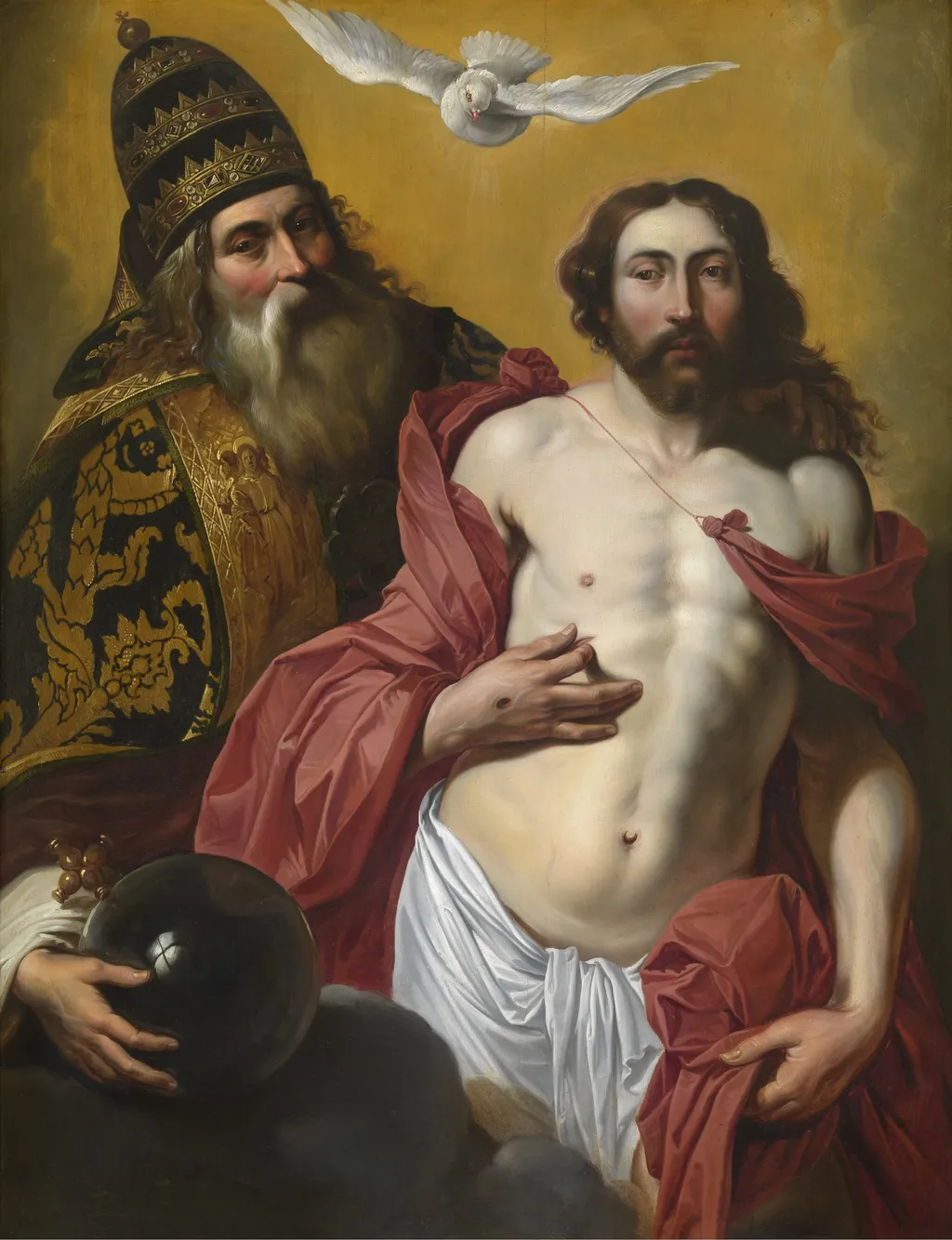
The Holy Trinity is an oil painting by Artus Wolffort. It dates from 1601 and is held in the collection of the Groeningemuseum.
About this work
Overview
Artus Wolffort’s oil painting *The Holy Trinity* was completed in 1601. Executed in the Flemish tradition, the work measures roughly a modest size and is now part of the collection at the Groeningemuseum in Bruges. Though Wolffort is chiefly remembered for larger history canvases, this piece illustrates his engagement with theological subjects during the early Baroque period.
Subject & Meaning
A bearded figure in a rich red robe, crowned with a jeweled gold hat, holds a black globe while supporting a second, long‑haired figure draped in red cloth.
The composition presents a symbolic representation of the Christian Trinity. A bearded figure in a rich red robe, crowned with a jeweled gold hat, holds a black globe while supporting a second, long‑haired figure draped in red cloth. The latter bears three tiny red spots on his side, alluding to the Holy Wounds, while two white birds with outstretched wings hover above, reinforcing the spiritual atmosphere.
Technique & Style
Wolffort employs a restrained chiaroscuro, allowing light to model the figures against a luminous gold background. The contrast between the deep shadows on the drapery and the bright highlights on the birds creates a sense of three‑dimensionality. The brushwork is smooth, especially in the rendering of flesh tones, while the detailed treatment of the jeweled hat demonstrates the artist’s skill in depicting material texture.
History & Provenance
After its creation in the early 17th century, the painting entered private collections before being acquired by the Groeningemuseum, where it has been on display since the early 20th century. Documentation traces its ownership through several Flemish families, confirming its continuous presence in the region and its attribution to Wolffort based on stylistic analysis and archival records.
Context
*The Holy Trinity* reflects the Counter‑Reformation emphasis on visualizing core doctrines for devotional purposes. In the Low Countries, artists like Wolffort responded to ecclesiastical commissions that demanded clear, didactic imagery. The inclusion of symbolic elements—such as the globe representing Christ’s dominion and the birds suggesting the Holy Spirit—aligns the work with contemporary theological iconography.
Own this work as a print
Artist & collection
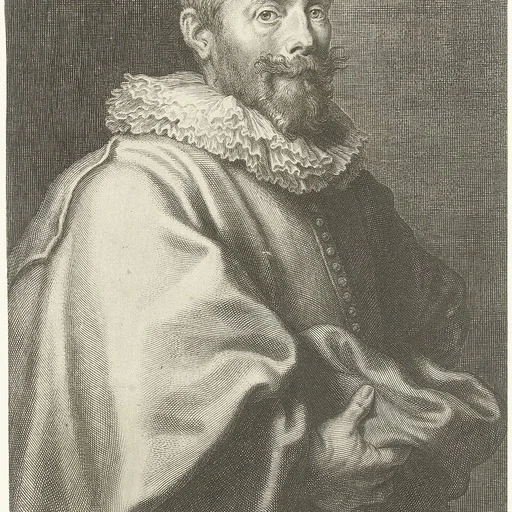
Artist
Artus Wolffort, Artus Wolffaert or Artus Wolffaerts (1581–1641) was a Flemish painter known mainly for his history paintings depicting religious and mythological scenes.