Artwork
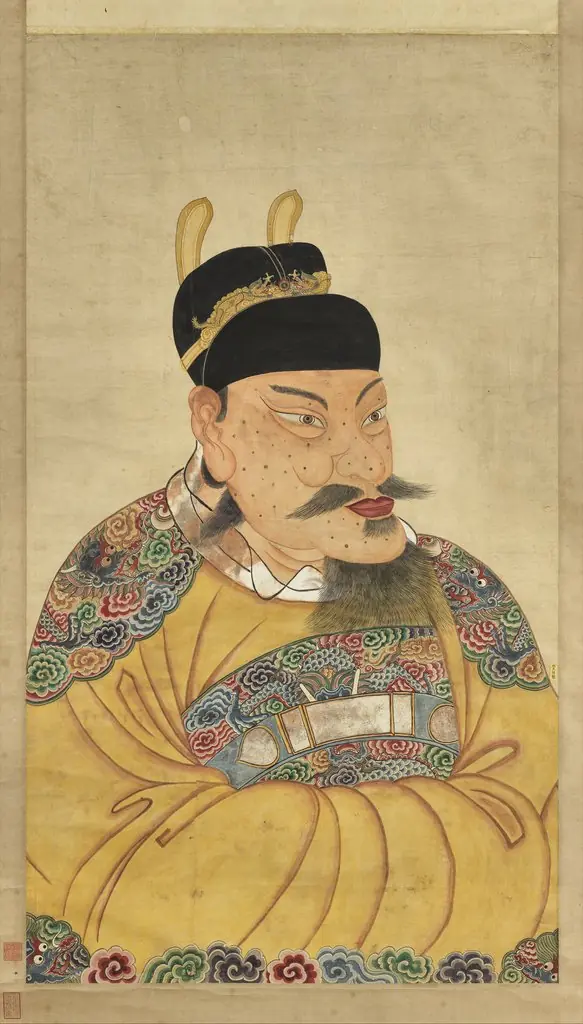
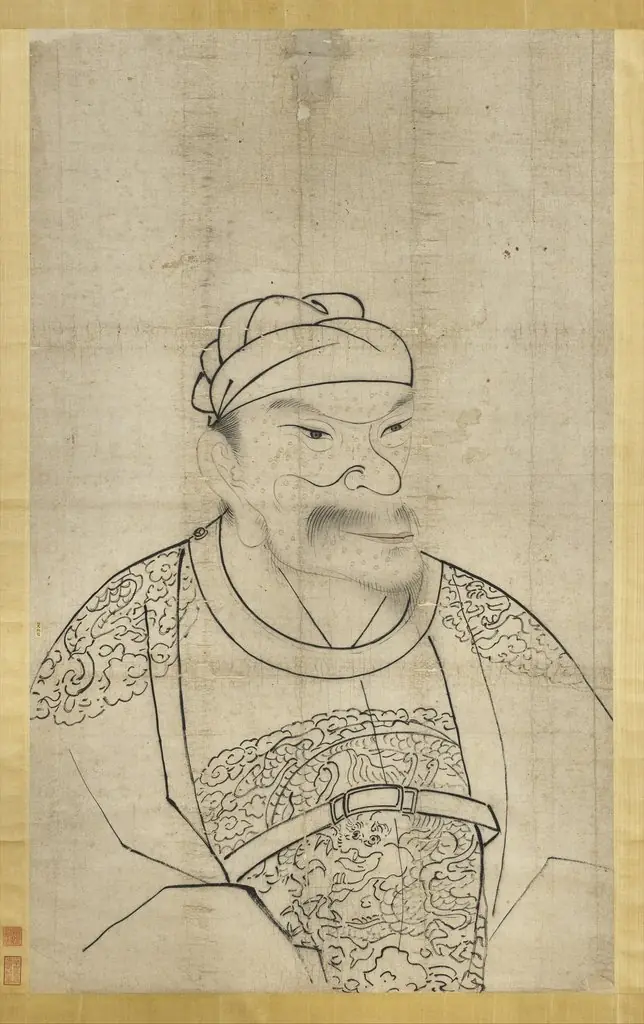
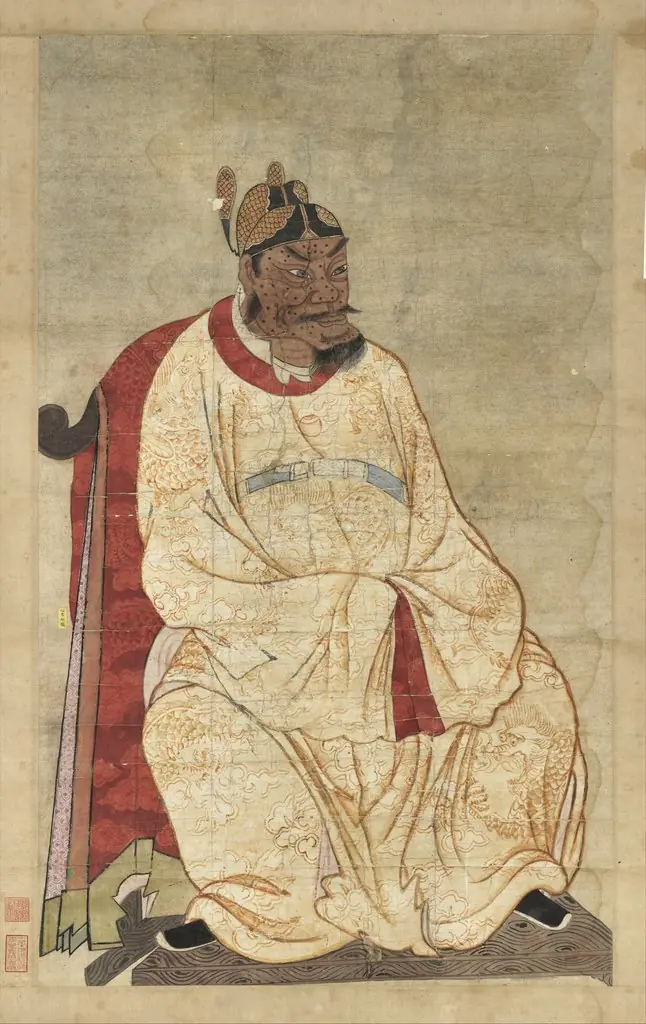
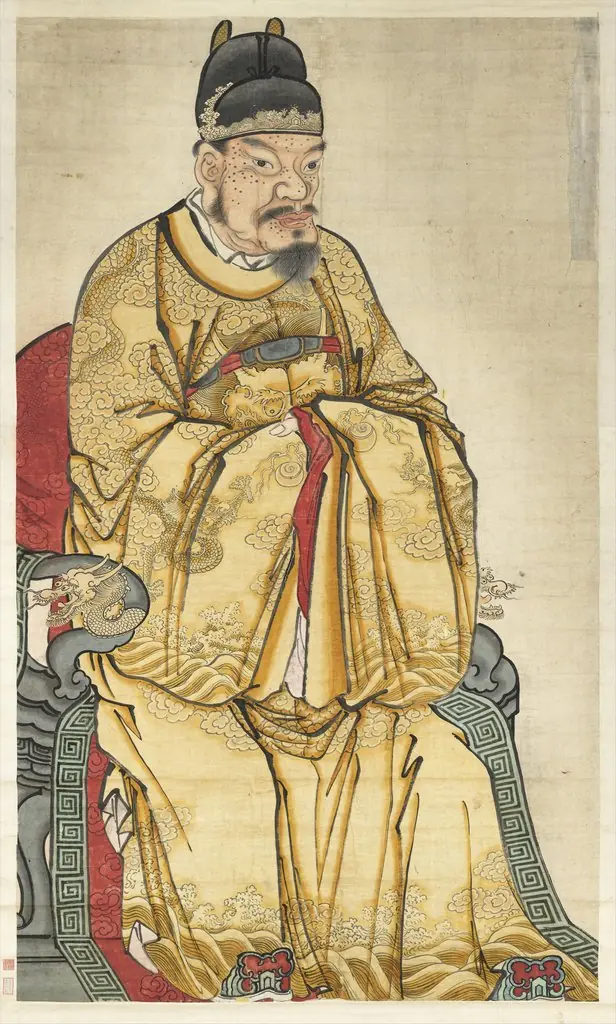
明太祖半身像(四) 軸
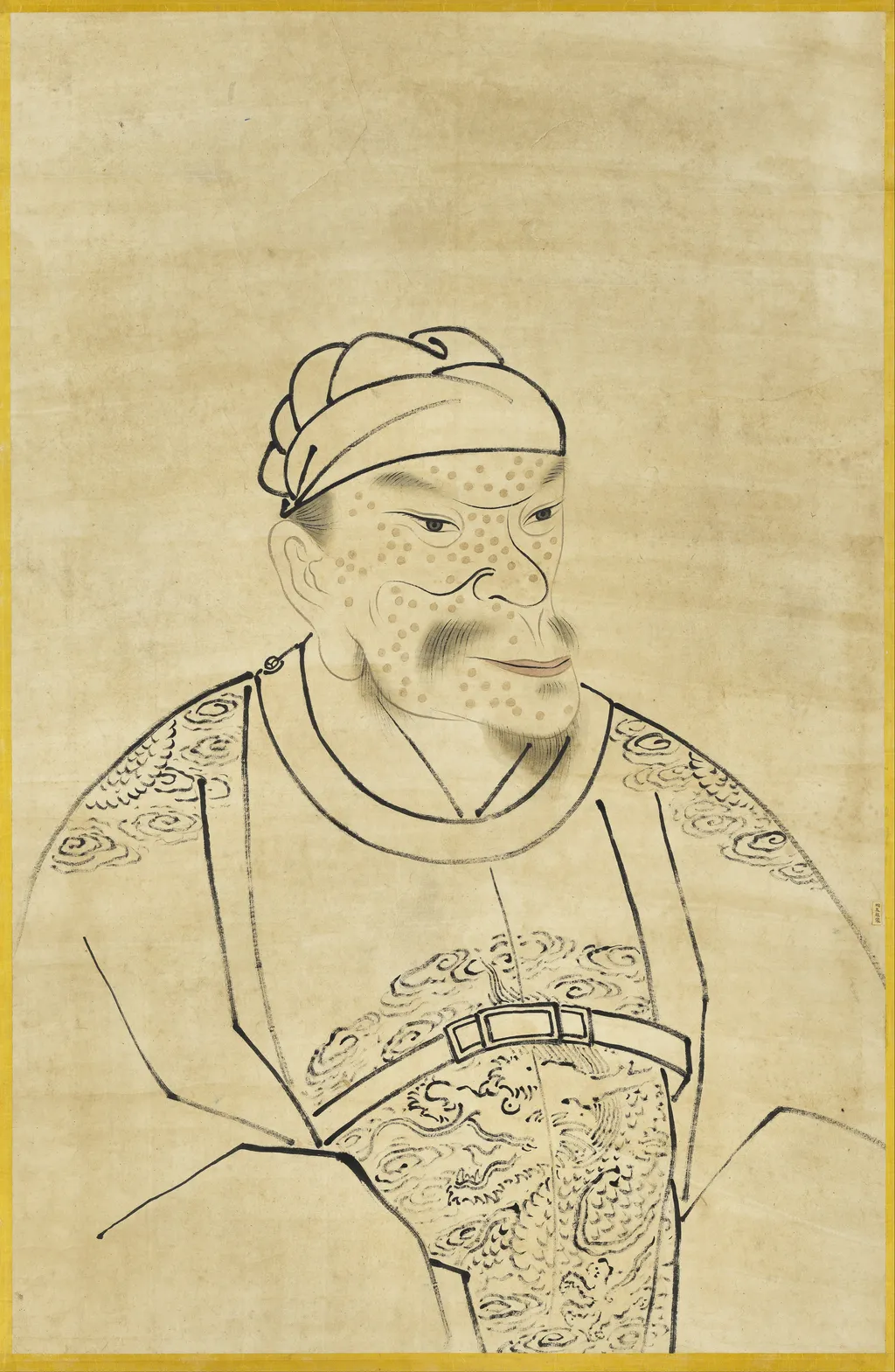
明太祖半身像(四) 軸 is an unspecified painting by Unknown. It is held in the collection of the National Palace Museum. The work is a half‑length portrait of a male figure, rendered on a silk scroll.
About this work
Overview
The work is a half‑length portrait of a male figure, rendered on a silk scroll. He wears a high‑collared robe with stylised wave‑like motifs, a headband, and a moustache, his gaze directed forward. The background consists of a warm, beige field that emphasizes the figure’s solemn expression. The painting is part of the collection of the National Palace Museum in Taipei.
Subject & Meaning
The sitter is identified as the founder of the Ming dynasty, known posthumously as the Hongwu Emperor. The portrait’s restrained demeanor and formal attire convey authority and Confucian ideals of rulership, while the decorative patterns on the robe suggest a connection to celestial or aquatic symbolism often associated with imperial power.
Technique & Style
Executed in ink and colour on silk, the painting employs fine brushwork for facial features and a more fluid, decorative hand for the robe’s patterned bands. The use of a muted, monochrome background creates a sense of depth without distracting from the figure, a characteristic approach in court portraiture of the early Ming period.
History & Provenance
The scroll originates from the early Ming era and has been preserved within the imperial collection before entering the National Palace Museum. Its survival reflects the careful archival practices of the Chinese court, and the piece was transferred to Taiwan as part of the museum’s holdings after 1949.
Context
Portraits of founding emperors were commissioned to legitise the new dynasty and to serve as visual models for later rulers. This half‑length format, focusing on the upper body and head, aligns with contemporary practices that emphasized the ruler’s moral presence over elaborate narrative settings.
Legacy
As a rare example of early Ming portraiture, the painting offers scholars insight into the visual language of imperial authority and the aesthetic preferences of the period. Its inclusion in the National Palace Museum’s collection makes it a reference point for studies of dynastic iconography and the transmission of courtly artistic conventions.
Artist & collection

 Domestic Scene
 Giacomo and Cardinal Marco, investing Andrea, Abbot of San Zeno, with his Benefice
 The Nymph of Fontainebleau
 Portrait of a Woman
 Madonna and Child with Saints in the Enclosed Garden
 Venus and Minerva
 Family Group of Four on Sofa
 Wall painting from Room H of the Villa of P. Fannius Synistor at Boscoreale