Artwork
明太祖坐像(六) 軸
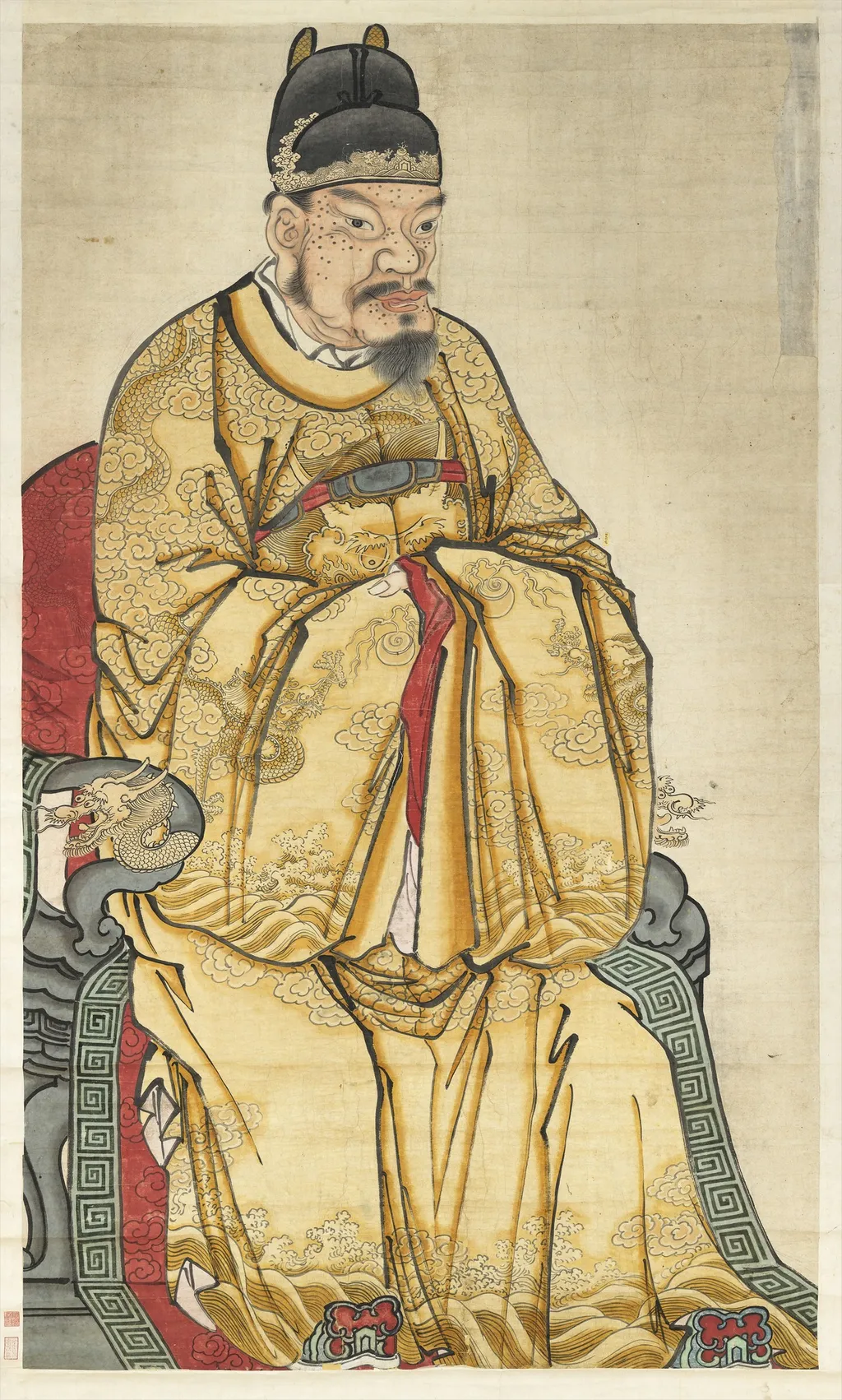
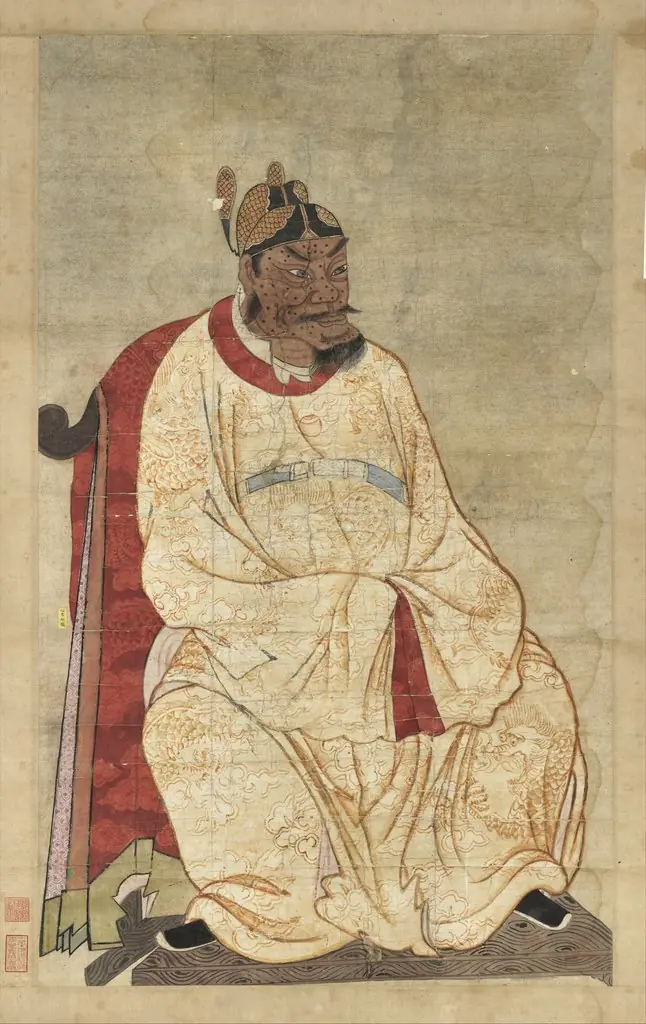
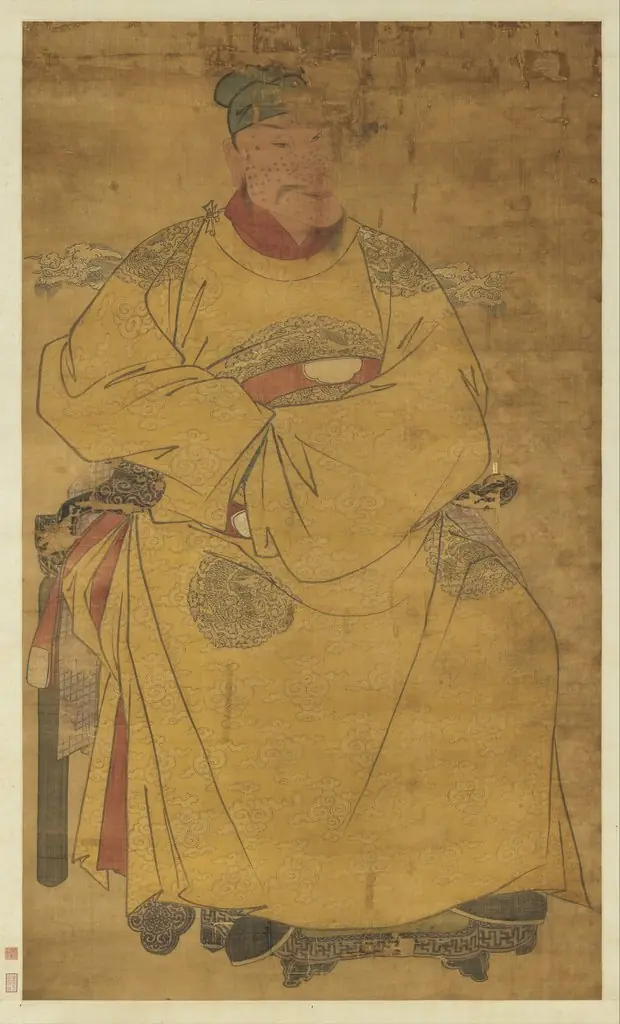
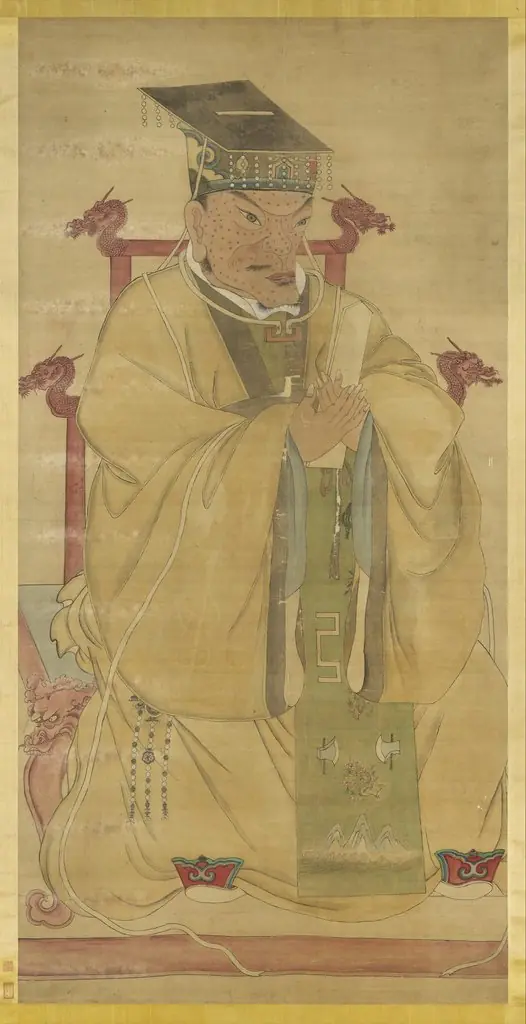
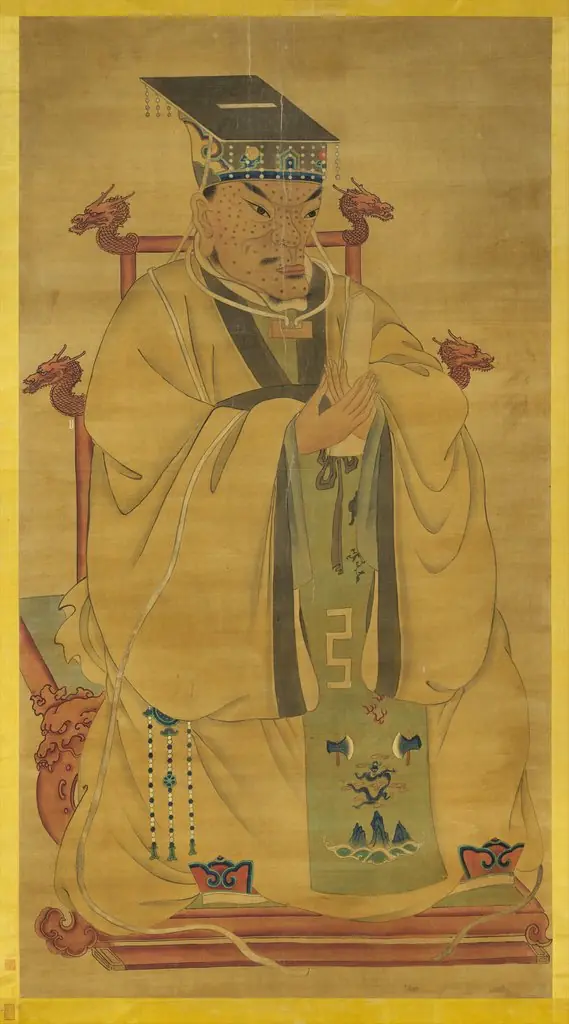
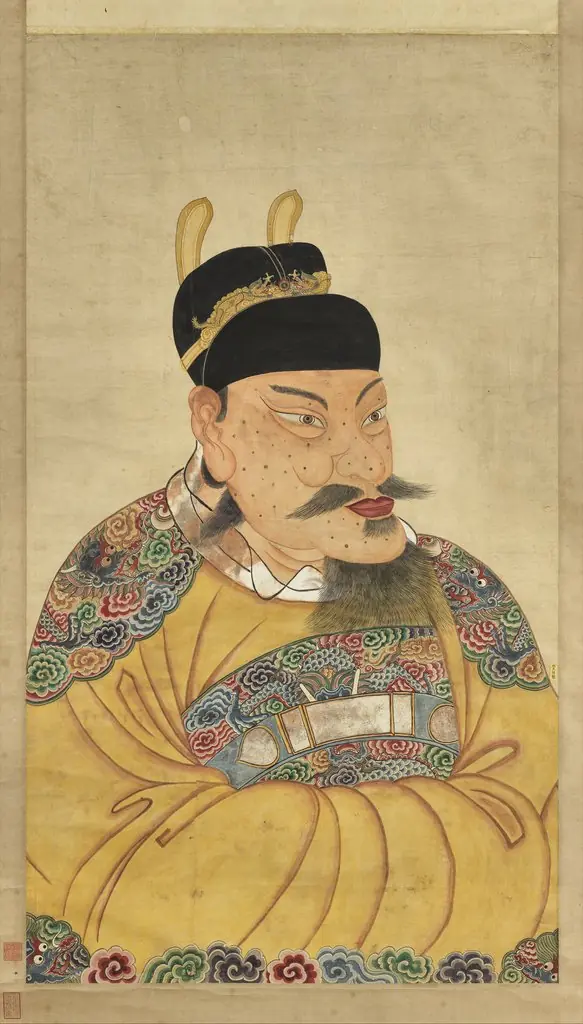
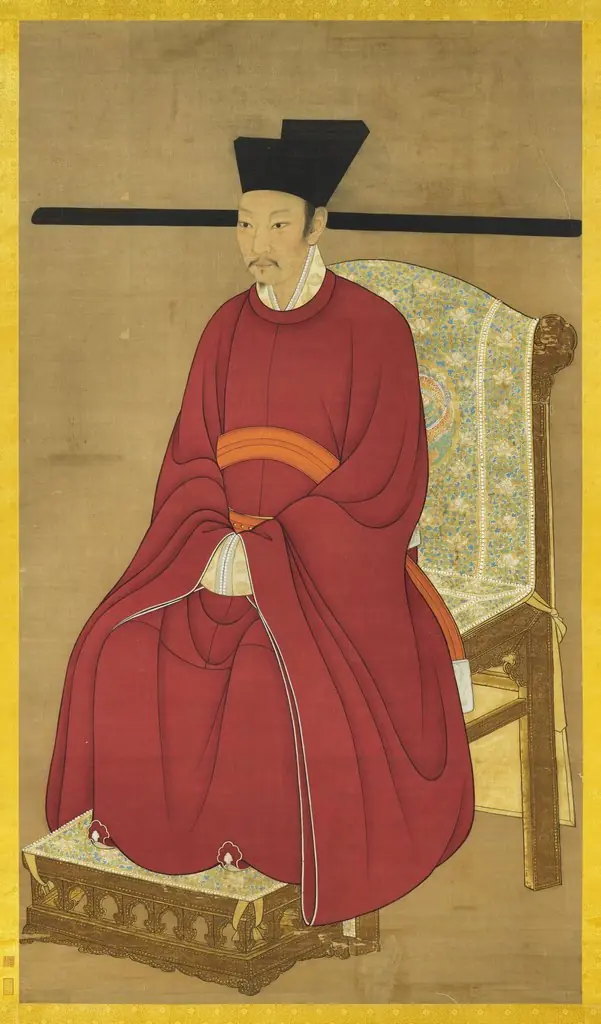
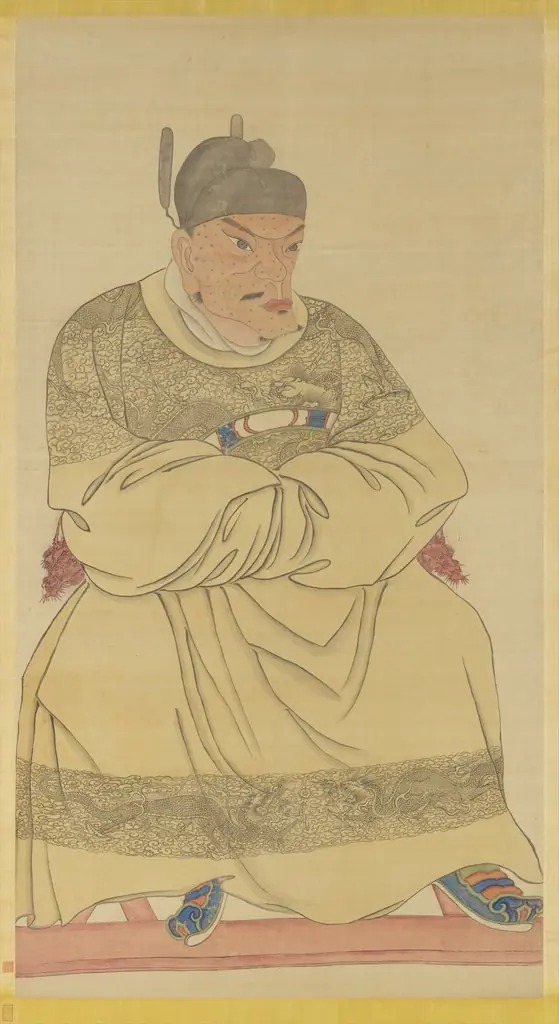
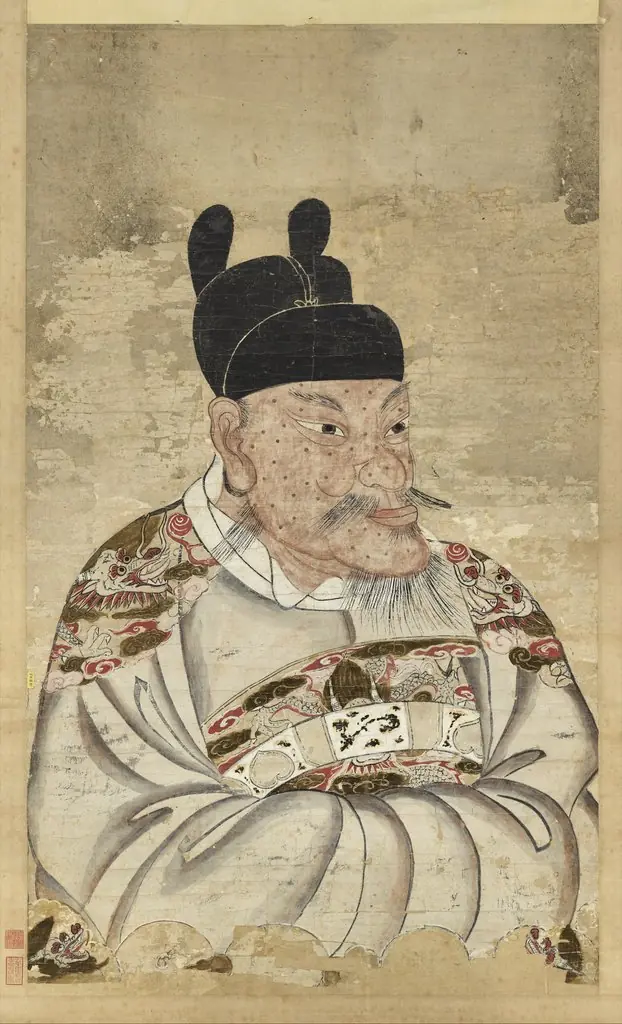
明太祖坐像(六) 軸 is an unspecified painting by Unknown. It is held in the collection of the National Palace Museum. This vertical scroll painting portrays the founding emperor of the Ming dynasty, Zhu Yuanzhang, seated formally on a ceremonial throne.
About this work
Overview
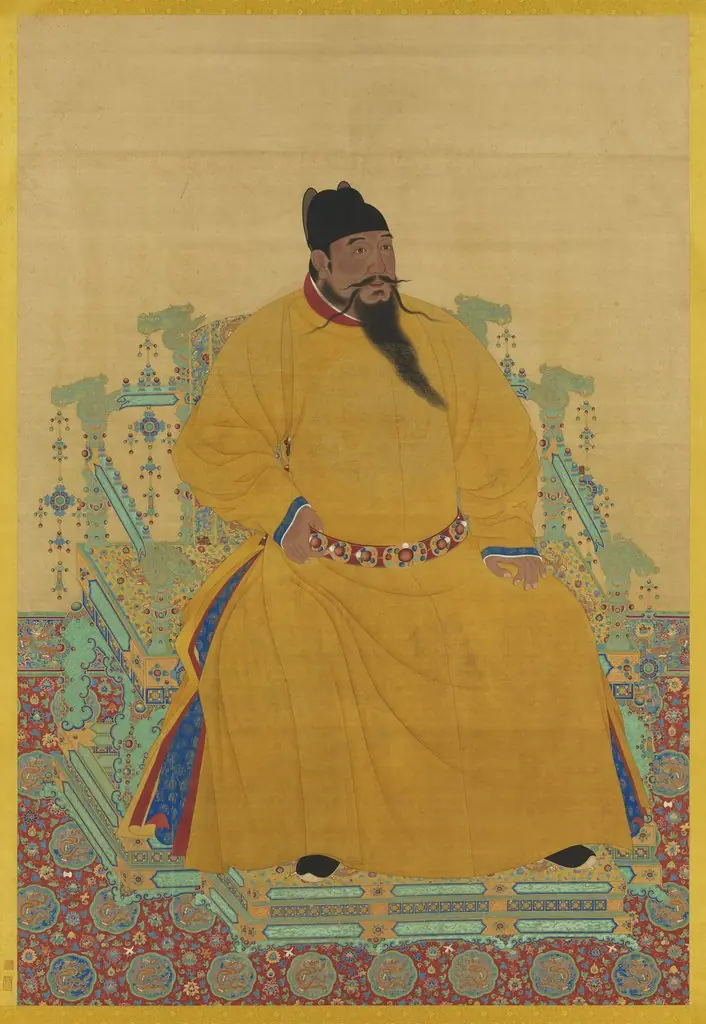
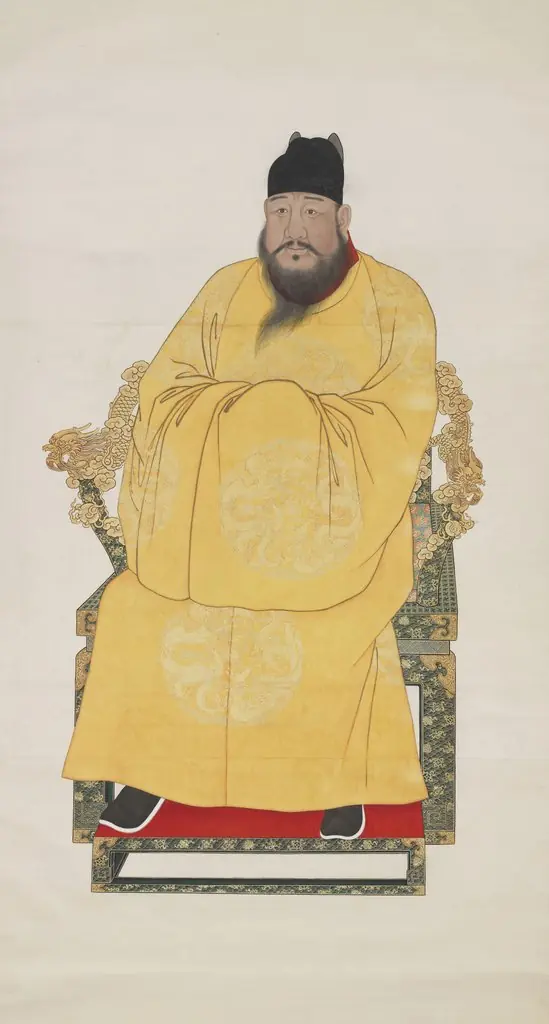
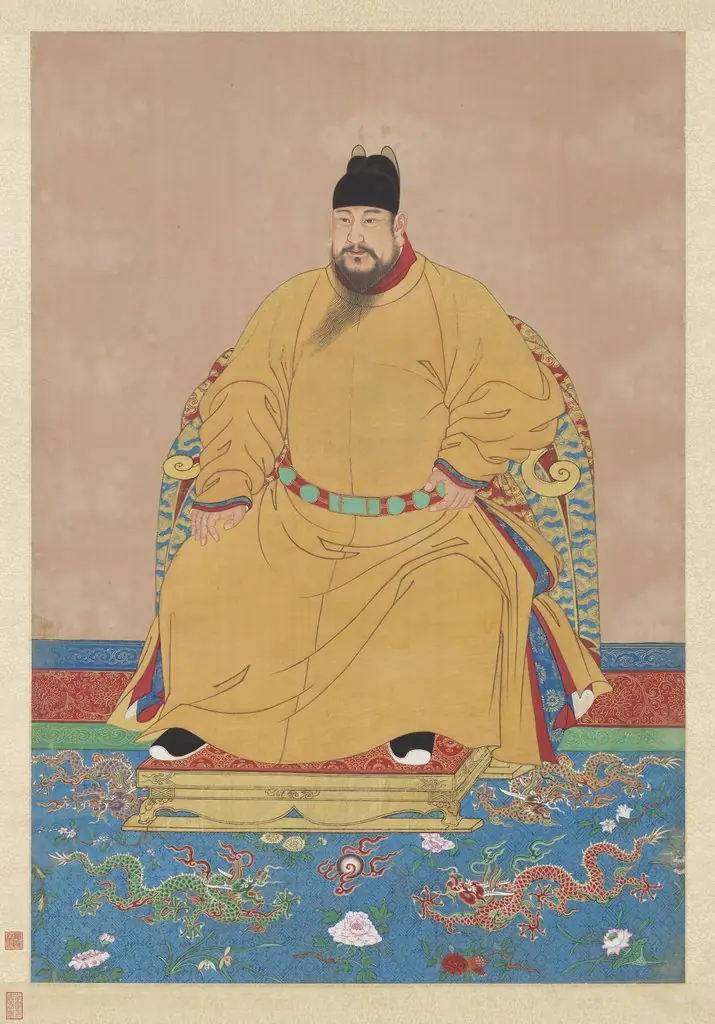
This vertical scroll painting portrays the founding emperor of the Ming dynasty, Zhu Yuanzhang, seated formally on a ceremonial throne. Rendered in courtly style, the portrait emphasizes imperial authority through rigid posture, rich textiles, and symbolic ornamentation. The background is muted, directing focus to the figure’s regalia and composed demeanor.
Subject & Meaning
The subject is Zhu Yuanzhang, the first Ming emperor, depicted in official regalia to affirm his legitimacy and divine mandate. His clasped hands and direct gaze convey solemn authority, while the dragon motif on the throne and yellow robe signify imperial status. Freckles and facial detail suggest an effort at individualized representation, unusual in formal imperial portraiture.
Technique & Style
Painted with fine brushwork and mineral pigments, the robe and throne display intricate patterns in red, green, and gold. The background is left in a soft beige, creating tonal contrast without distraction. Facial features are rendered with subtle modeling, balancing realism with ceremonial idealization typical of early Ming court art.
History & Provenance
Created during the early Ming period, likely in the imperial painting academy, this work was part of a series documenting the dynasty’s founders. It remained in the imperial collection until the fall of the Qing dynasty, after which it entered public institutional holdings, preserving its role as a historical record of Ming iconography.
Context
Imperial portraits like this were produced to reinforce political legitimacy and ancestral continuity. Unlike earlier dynasties, the Ming emphasized personal likeness in imperial images, reflecting Zhu Yuanzhang’s rise from peasant to emperor. Such portraits were displayed in ancestral temples and used in state rituals to assert dynastic authority.
Legacy
This portrait contributes to the visual canon of Ming imperial representation, influencing later court paintings and historical depictions. Its blend of individualized features with traditional symbolism marks a transitional phase in Chinese portraiture, where personal identity began to be acknowledged within rigid ceremonial frameworks.
Artist & collection

 Domestic Scene
 Giacomo and Cardinal Marco, investing Andrea, Abbot of San Zeno, with his Benefice
 The Nymph of Fontainebleau
 Portrait of a Woman
 Madonna and Child with Saints in the Enclosed Garden
 Venus and Minerva
 Family Group of Four on Sofa
 Wall painting from Room H of the Villa of P. Fannius Synistor at Boscoreale