Artwork
A lady
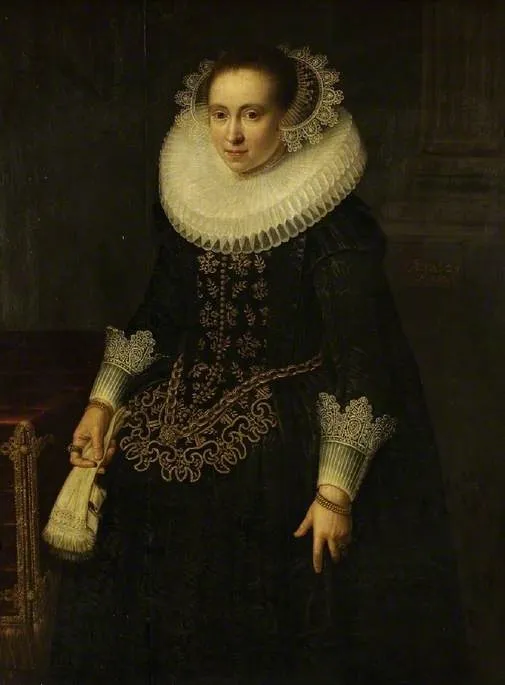
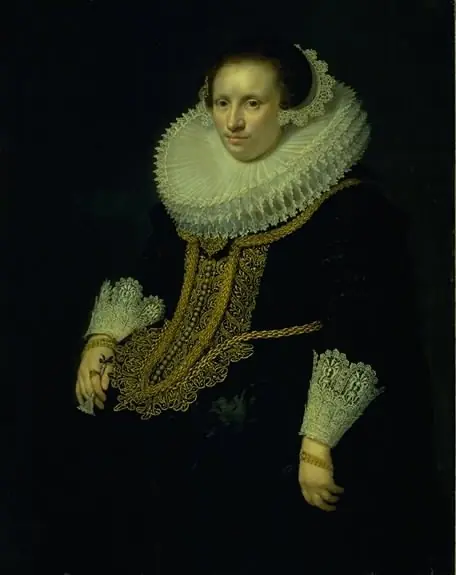
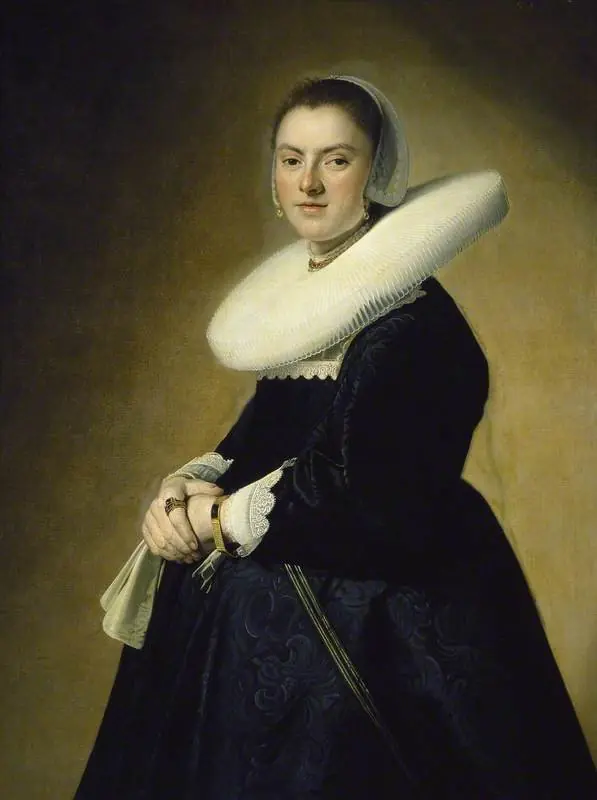
A lady is an oil painting by Unknown. It dates from 1625 and is held in the collection of the Fitzwilliam Museum. The work is an oil painting portraying a seated woman dressed in a black gown accented with gold embroidery.
About this work
The use of chiaroscuro, a technique that uses strong contrasts between light and dark to create a sense of volume, adds depth to the image.
This painting depicts a woman in a black dress with gold embroidery, standing in front of a dark background. She wears a white ruffled collar and holds a fan in her right hand. The woman's attire and the style of the painting suggest a formal portrait from the 17th century. The use of chiaroscuro, a technique that uses strong contrasts between light and dark to create a sense of volume, adds depth to the image.
Overview
The work is an oil painting portraying a seated woman dressed in a black gown accented with gold embroidery. She is set against a dark, undefined background, her white ruffled collar and fan in the right hand providing the primary highlights. The composition relies on strong light‑dark contrasts that model the figure’s form.
Subject & Meaning
The sitter appears as a genteel lady, her attire and accessories indicating a status of wealth and refinement. The fan, a common symbol of elegance in the period, and the meticulous rendering of the collar suggest an emphasis on decorum and fashion rather than narrative content.
Technique & Style
The artist employs chiaroscuro, using a focused light source to illuminate the face, hands, and embroidered details while the surrounding space recedes into shadow. This handling of light creates a three‑dimensional presence and underscores the texture of the fabric and gold thread.
History & Provenance
Stylistic elements such as the black dress with gold trim, the white ruff, and the dramatic lighting align the painting with portrait conventions of the 17th century. No specific documentation of the artist or ownership history is provided, leaving its precise origin uncertain.
Context
During the 1600s, portraiture often served to display social rank and personal virtue. The use of luxurious materials and controlled lighting reflects contemporary tastes for both realism and the moralizing undertones associated with modest yet opulent presentation.
Artist & collection

 Domestic Scene
 Giacomo and Cardinal Marco, investing Andrea, Abbot of San Zeno, with his Benefice
 The Nymph of Fontainebleau
 Portrait of a Woman
 Madonna and Child with Saints in the Enclosed Garden
 Venus and Minerva
 Family Group of Four on Sofa
 Wall painting from Room H of the Villa of P. Fannius Synistor at Boscoreale
 Portrait of a Lady
 Portrait of a Lady
 Portrait of a Lady
 Portrait of a woman
 Aeltje van der Graft
 Portrait of a Lady with a Ruff
 Portrait of a 22-Year-Old Woman
 Portrait of a Lady
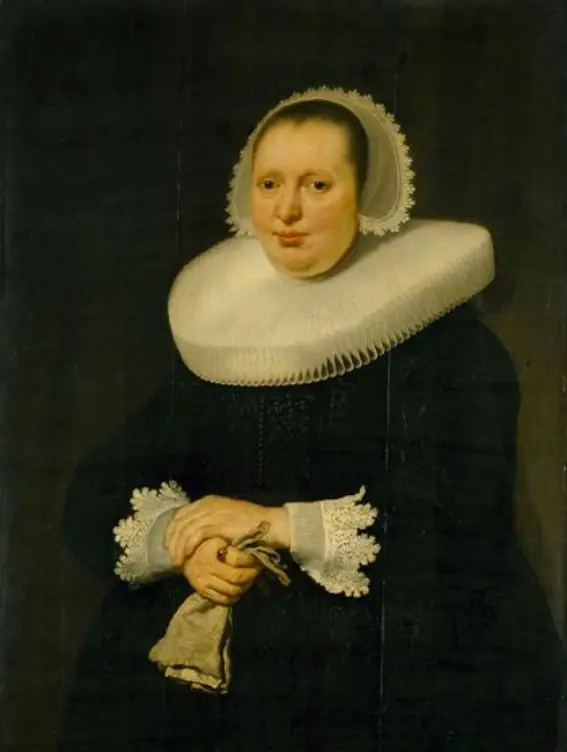 Portrait of Catharina Jansdr. Tengnagel, wife of Andries Bicker
 Untitled
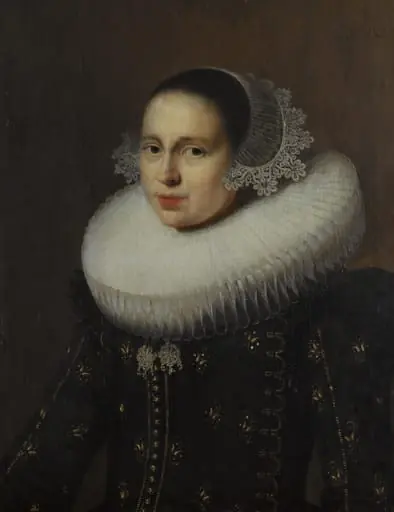 Portrait of Hendrickje Uylenburgh (1600-c. 1682)
 Portrait of a Lady