Artwork
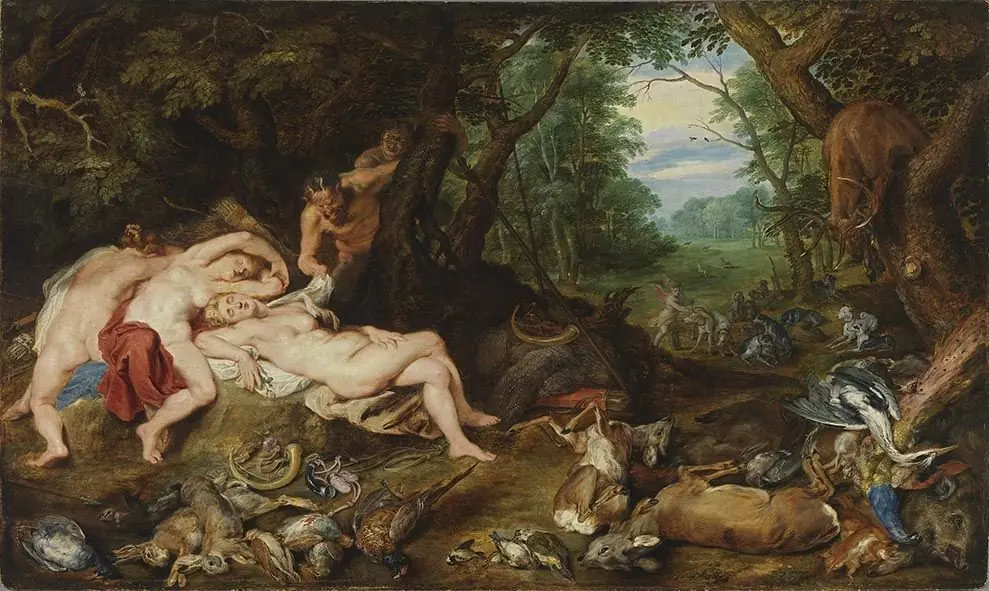
Sleeping Diana
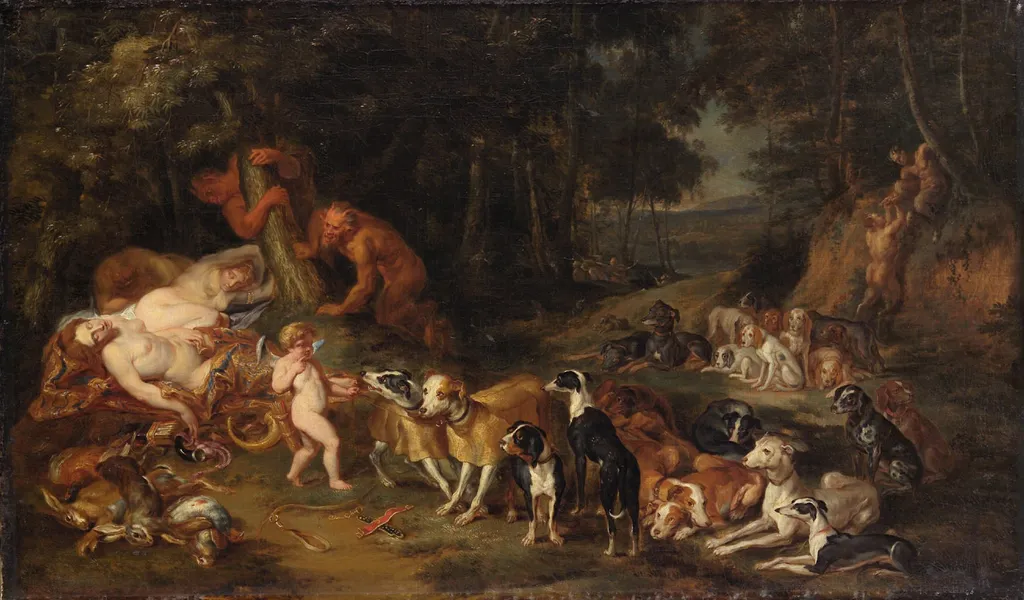
Sleeping Diana is an unspecified painting by the Flemish Baroque painting artist Unknown. It dates from 1650 and is held in the collection of the Kunsthistorisches Museum.
About this work
Overview
Painted in the mid-17th century, this work depicts a reclining woman asleep in a forest clearing, surrounded by attentive dogs and a small group of onlookers.
Painted in the mid-17th century, this work depicts a reclining woman asleep in a forest clearing, surrounded by attentive dogs and a small group of onlookers. The setting is naturalistic, with dense trees framing the scene in muted earth tones. The figures’ postures and gaze suggest quiet observation rather than disturbance, creating a calm, almost ritualistic atmosphere. The painting is held in the collection of the Kunsthistorisches Museum in Vienna.
Subject & Meaning
The figure is likely Diana, the Roman goddess of the hunt, rendered in a moment of vulnerable repose. Her stillness contrasts with the alert dogs, who guard her without aggression, and the curious human figures, who watch without intrusion. The scene evokes classical myth reimagined through a domestic, earthly lens—emphasizing serenity over divine power, and nature over spectacle.
Technique & Style
The artist employs soft modeling and restrained palette of browns, greens, and muted flesh tones to ground the scene in realism. Highlights on the dogs’ fur and the woman’s skin add subtle luminosity without theatricality. Brushwork is precise yet unobtrusive, favoring naturalism over idealization. The composition directs attention to the central figure through spatial depth and the directional gaze of surrounding figures.
History & Provenance
Created during the Baroque period, the painting entered the Habsburg collection before 1700 and has remained in imperial holdings since. It was cataloged in Vienna’s imperial galleries by the late 17th century and has been publicly displayed in the Kunsthistorisches Museum since its founding in 1891. No significant alterations or reattributions are recorded in its documented history.
Context
This work reflects a 17th-century European interest in mythological subjects rendered with psychological nuance and natural settings. Unlike grander Baroque depictions of Diana as huntress, this painting focuses on quiet intimacy, aligning with contemporary tastes for tender, humanized myth. Similar themes appear in Dutch and Flemish genre scenes, suggesting cross-regional influences in the treatment of classical figures.
Legacy
The painting stands as an example of how classical mythology was adapted into intimate, observational narratives during the Baroque era. It influenced later depictions of mythological rest and naturalism in 18th-century European art. While not widely reproduced, its quiet composition continues to be studied for its understated emotional tone and careful handling of light and space.
Artist & collection

 Domestic Scene
 Giacomo and Cardinal Marco, investing Andrea, Abbot of San Zeno, with his Benefice
 The Nymph of Fontainebleau
 Portrait of a Woman
 Madonna and Child with Saints in the Enclosed Garden
 Venus and Minerva
 Family Group of Four on Sofa
 Wall painting from Room H of the Villa of P. Fannius Synistor at Boscoreale
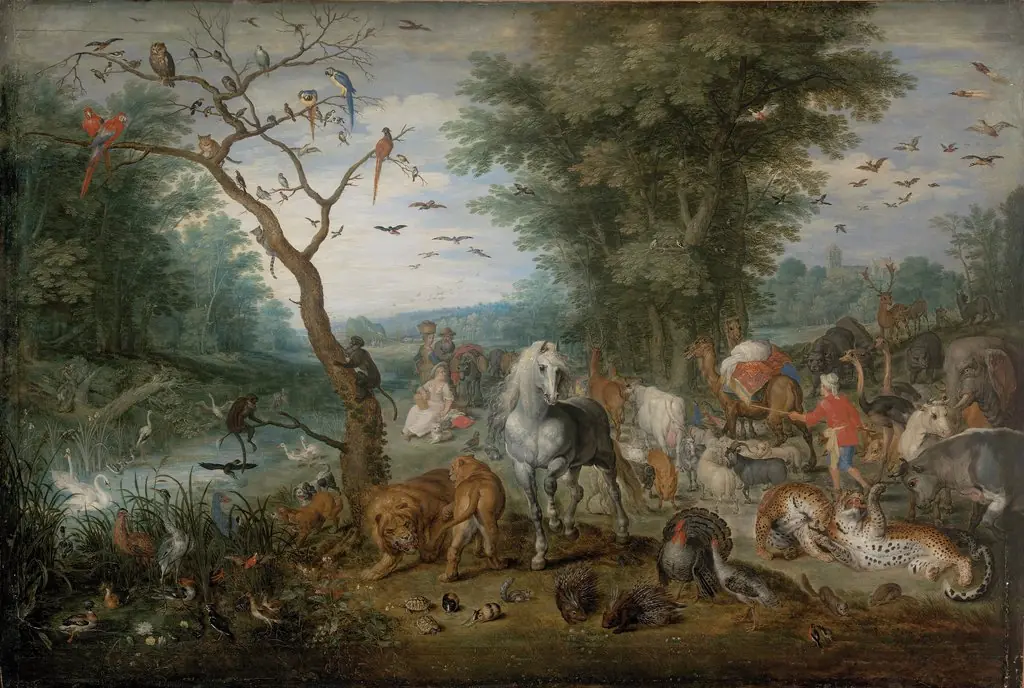 Paradise Landscape with Animals
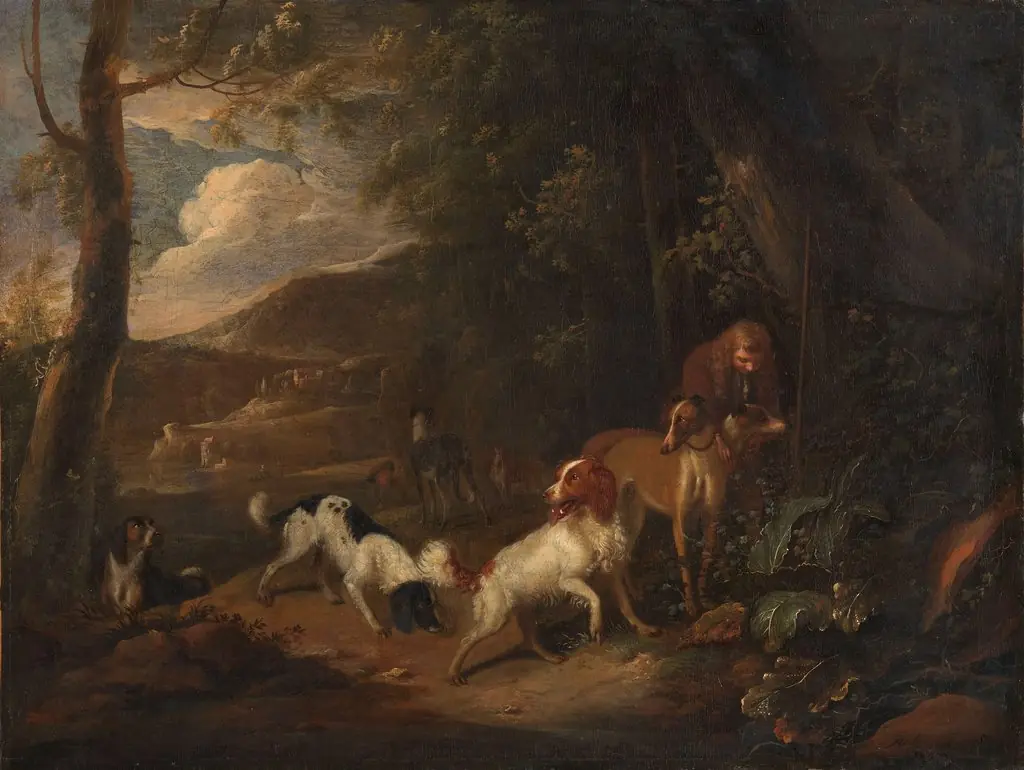 Hunter with hounds at the edge of a wood
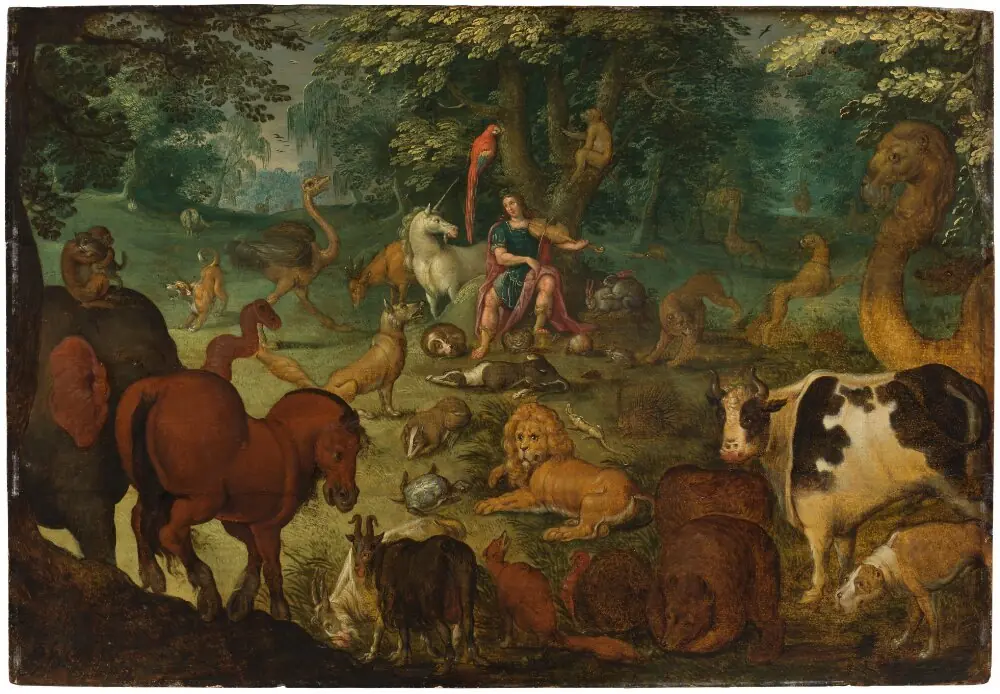 Orpheus Charming the Beasts
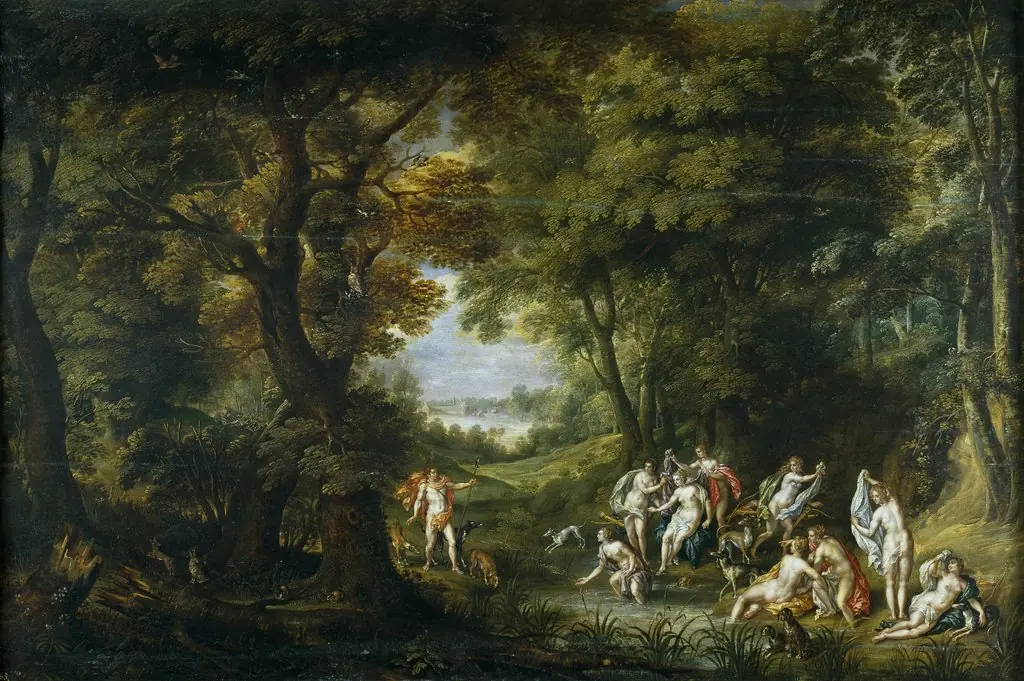 Landscape with Diana and Acteon
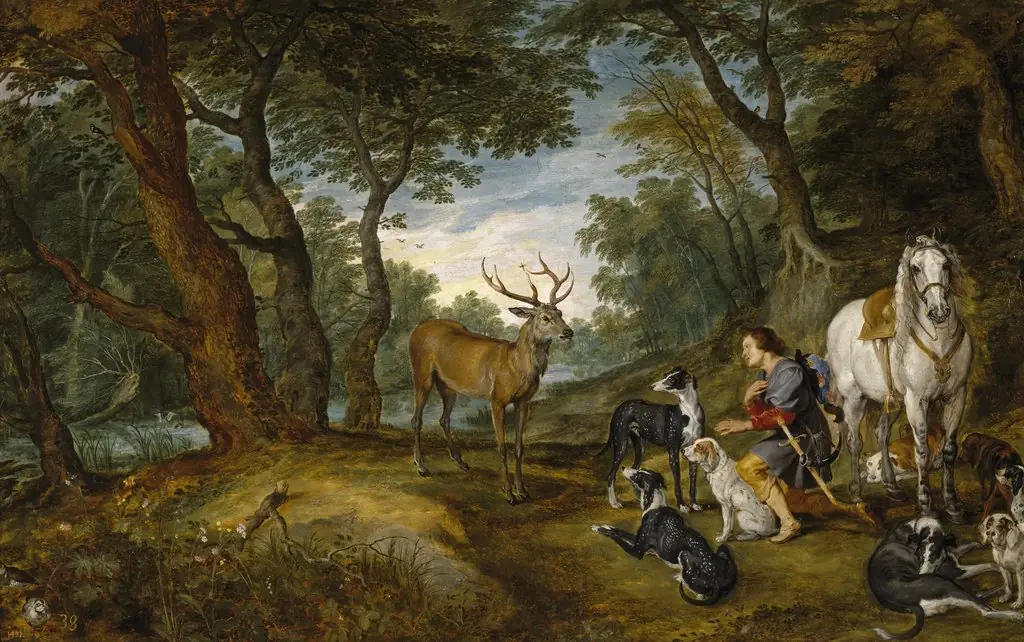 The Vision of St Hubert
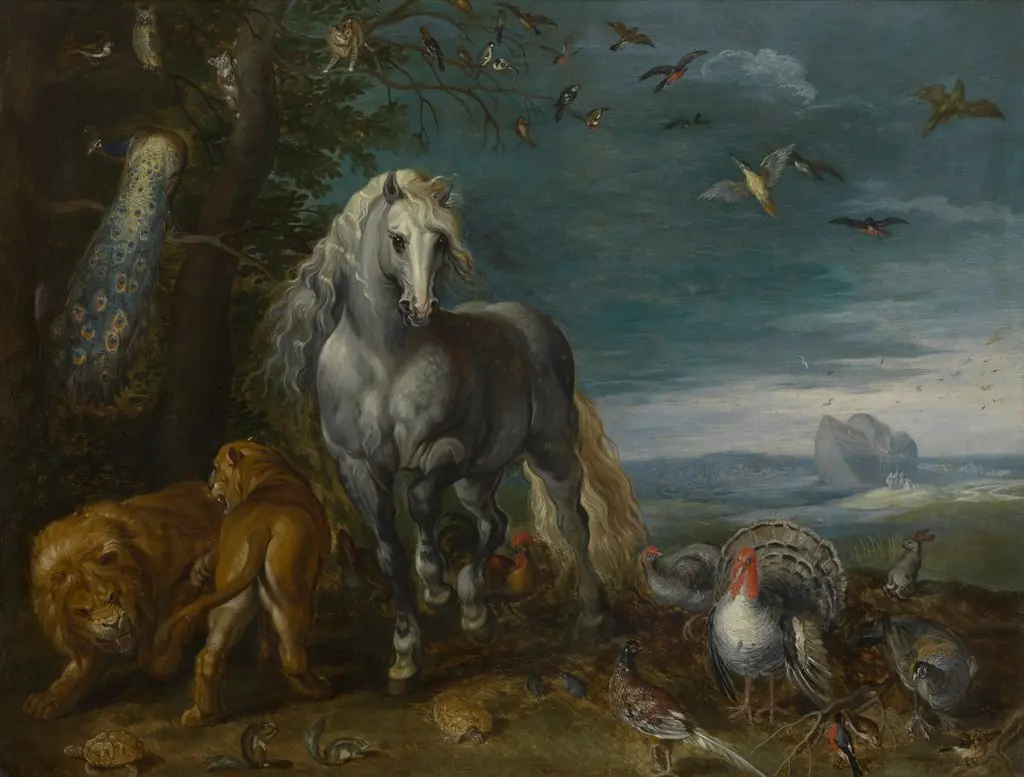 Noach's Ark
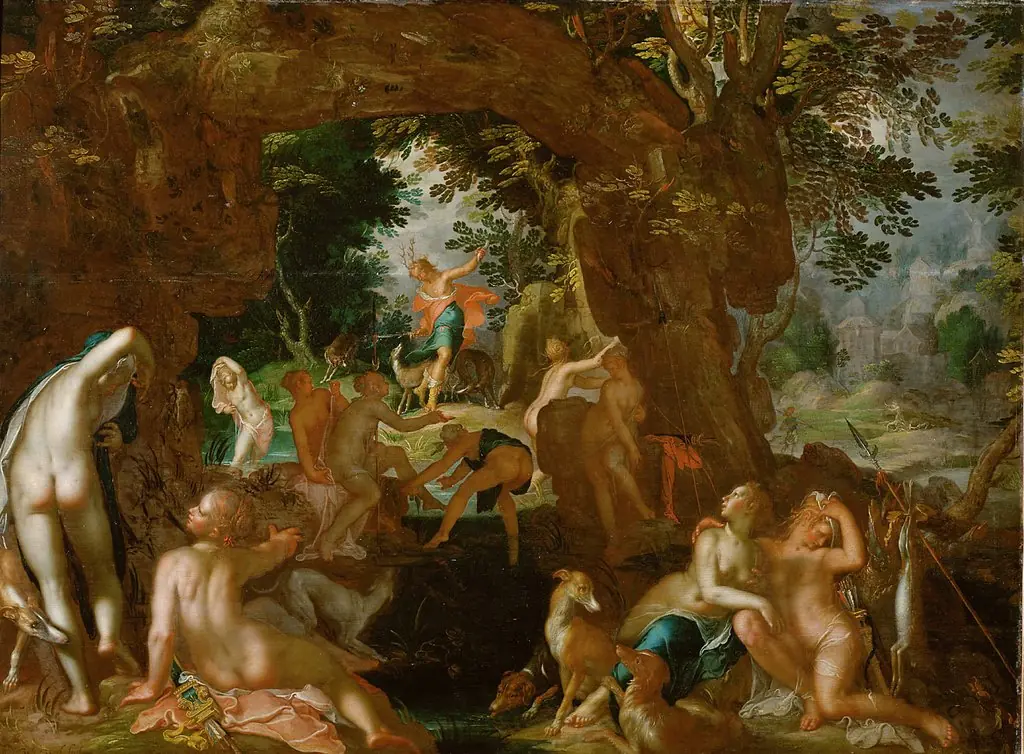 Actaeon is changed into a stag and killed by his own dogs
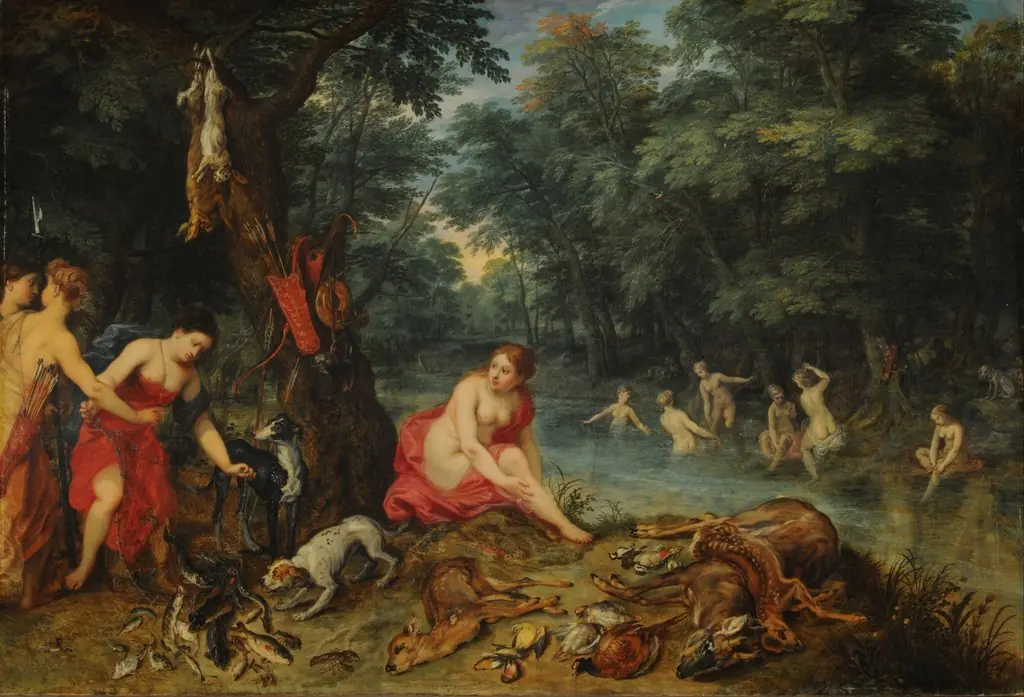 Nymphs bathing
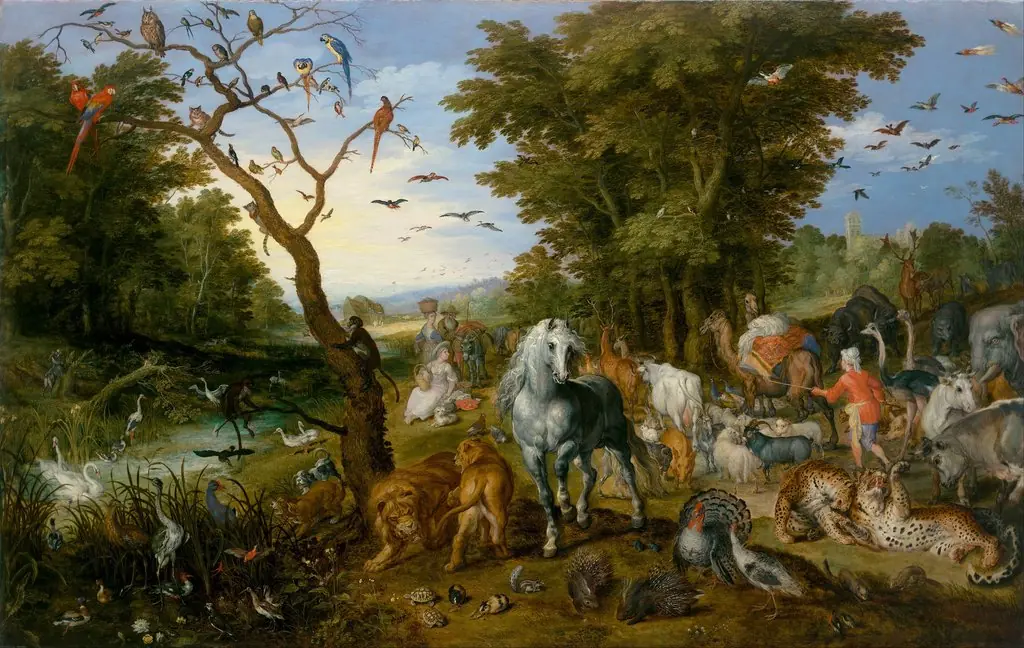 The Entry of the Animals into Noah's Ark
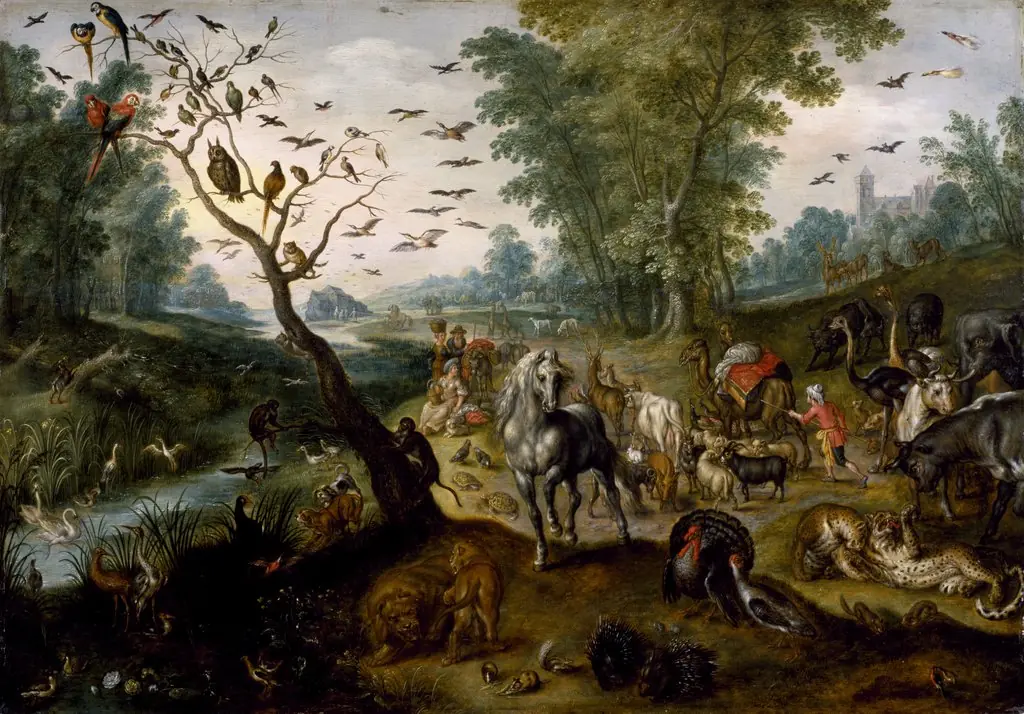 Noah's Family Assembling Animals before the Ark
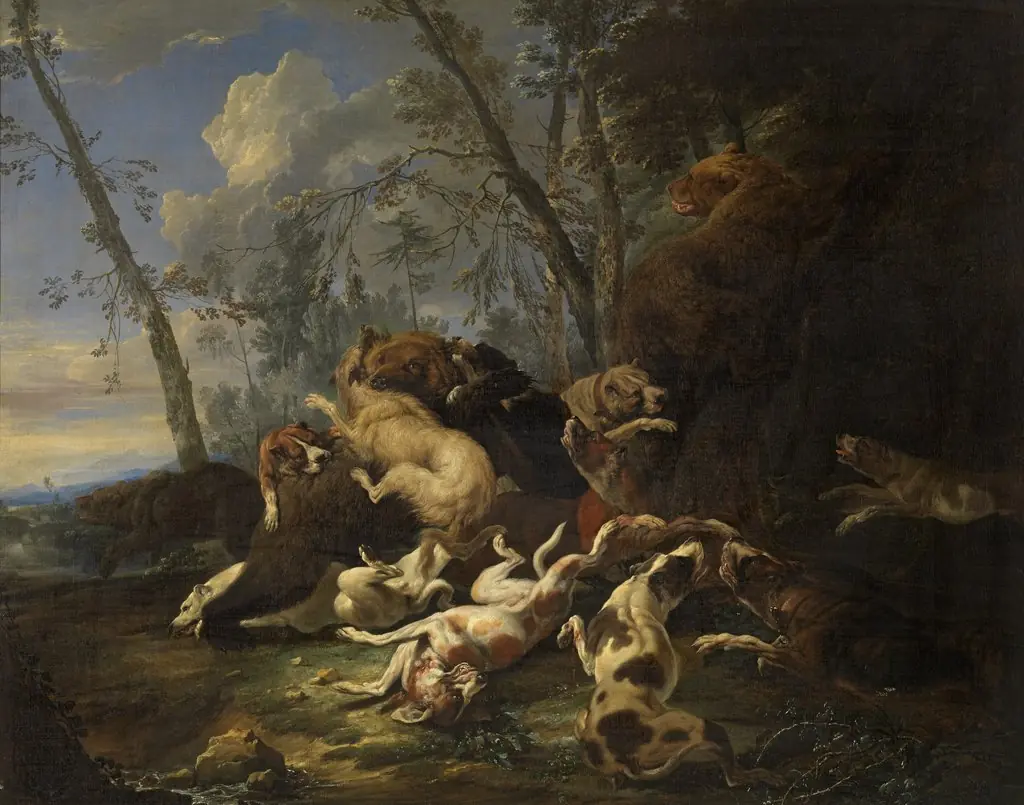 Bear Hunt
 Diana and the sleeping nymphs