Artwork
Orpheus Charming the Beasts
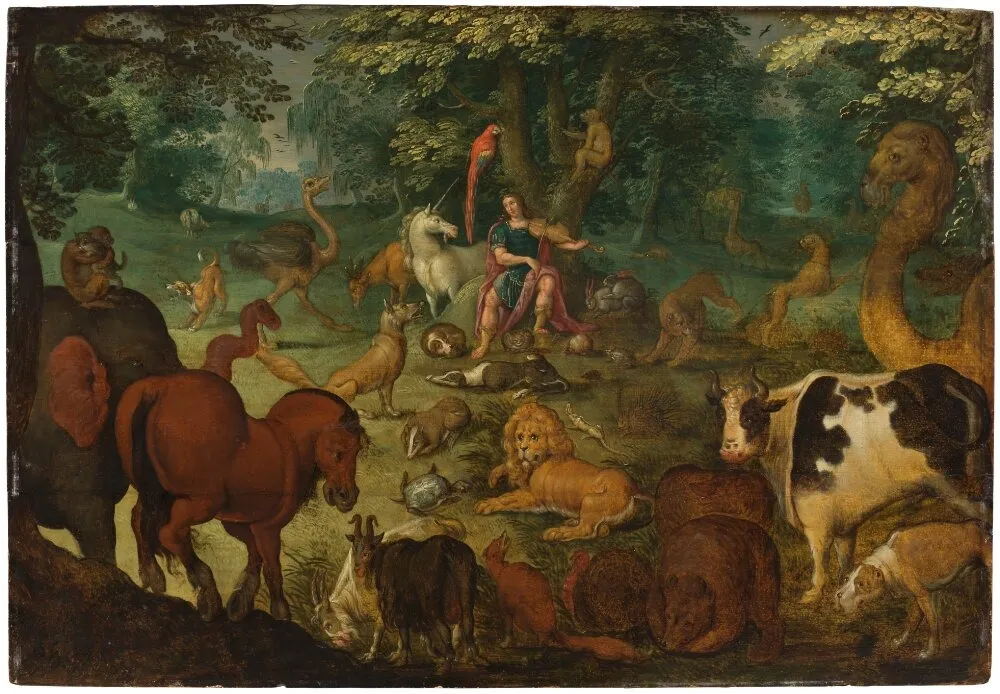
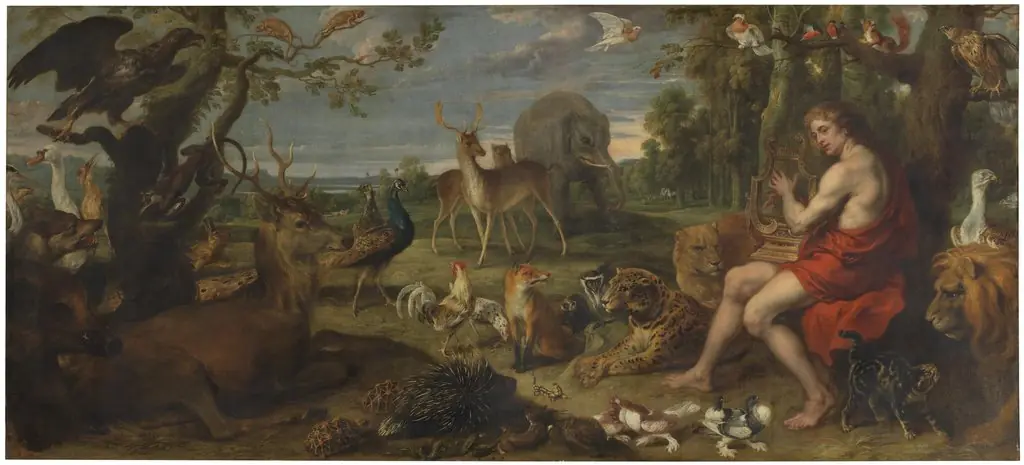
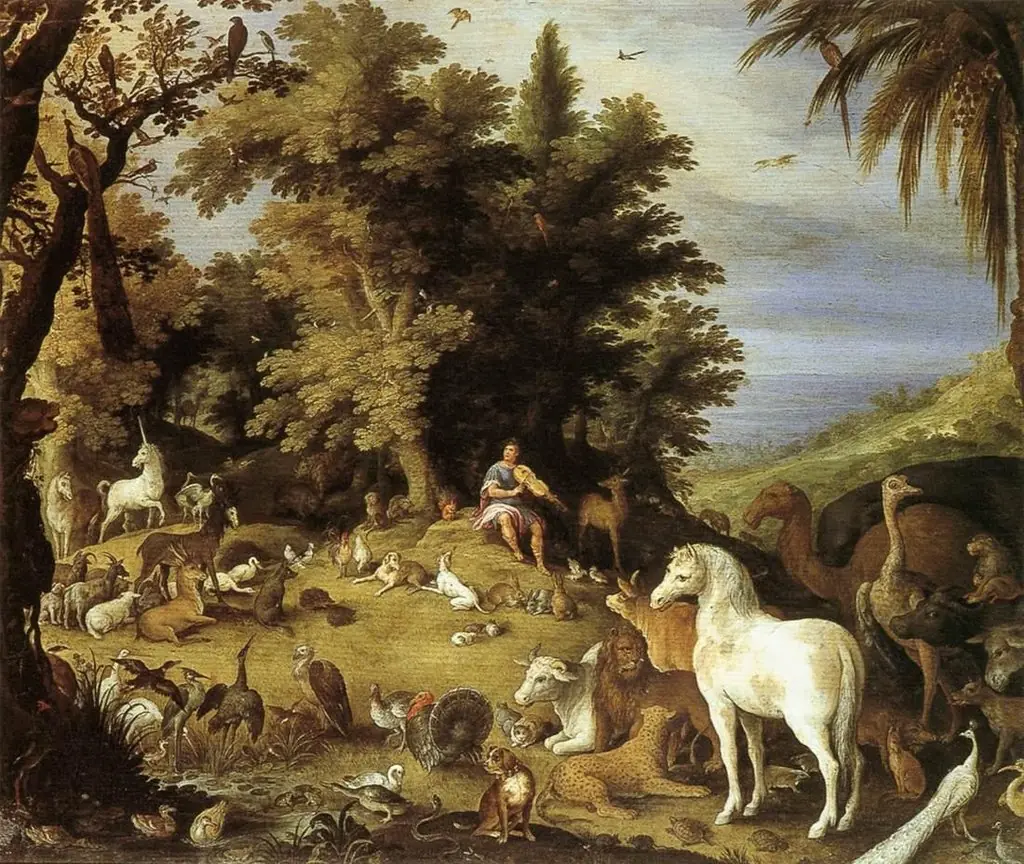
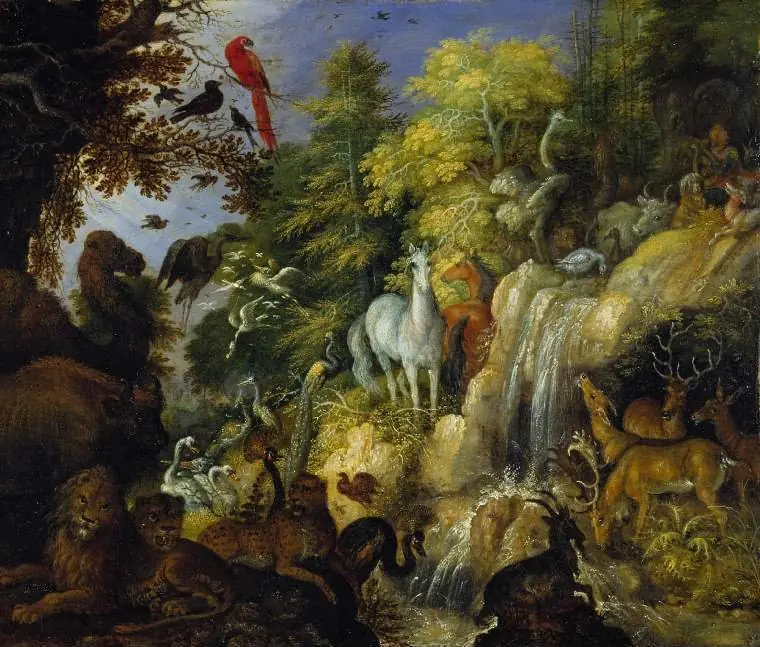
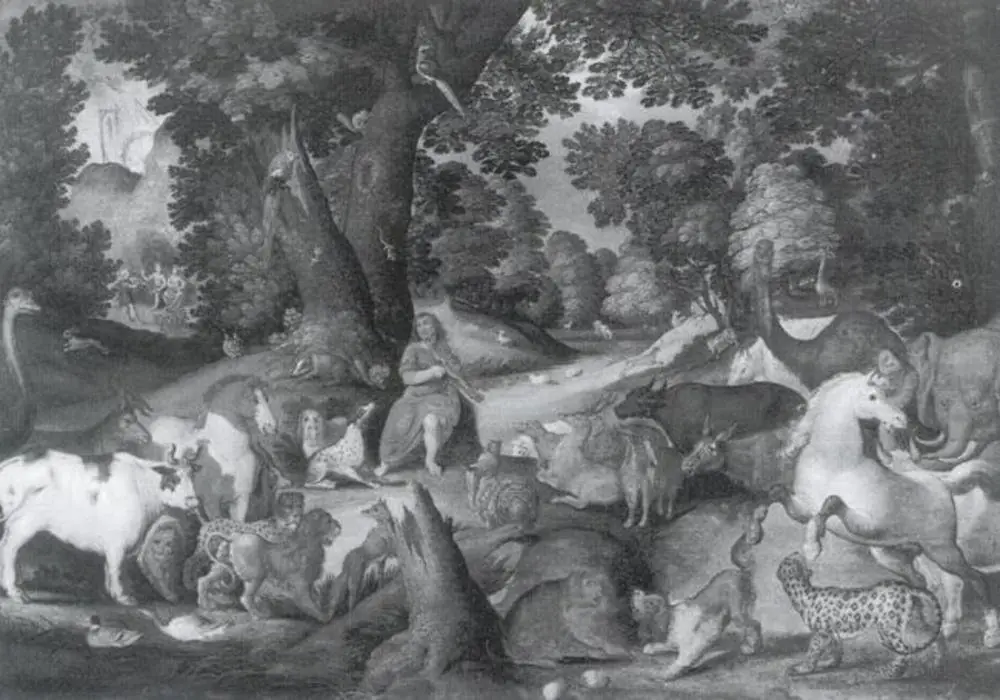
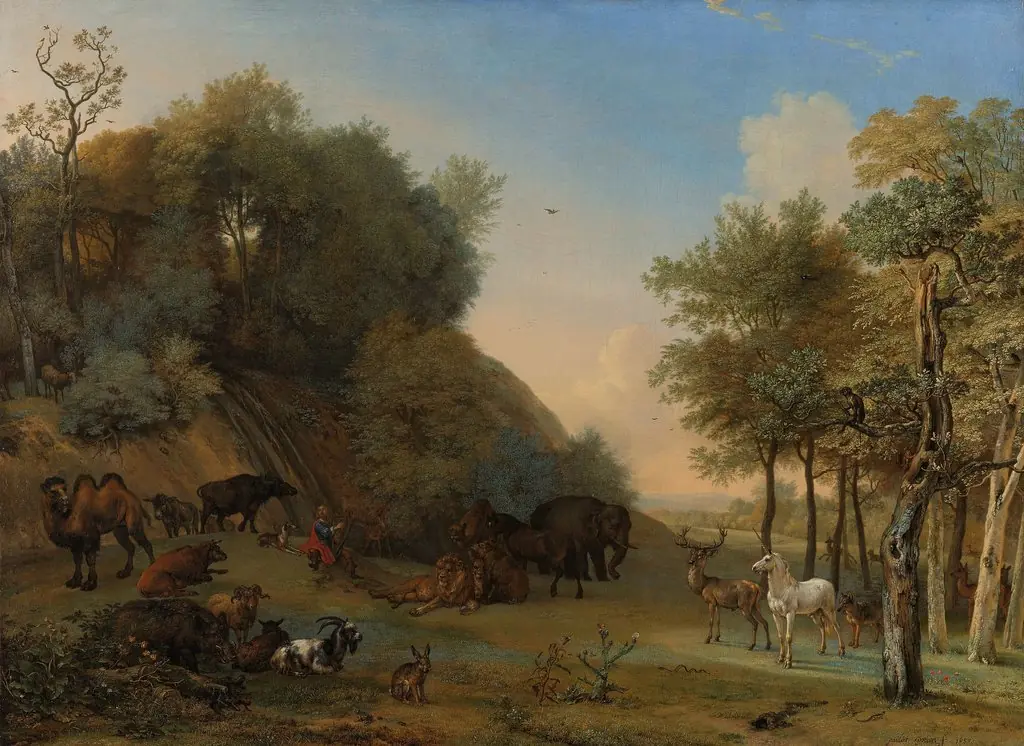
Orpheus Charming the Beasts is an oil painting by Unknown. It dates from 1655 and is held in the collection of the Nationalmuseum. Painted in 1655, this oil-on-canvas work depicts the mythological figure Orpheus seated on a stone amid a dense woodland.
About this work
If you like this painting, you might also like the work of the artist who painted it.
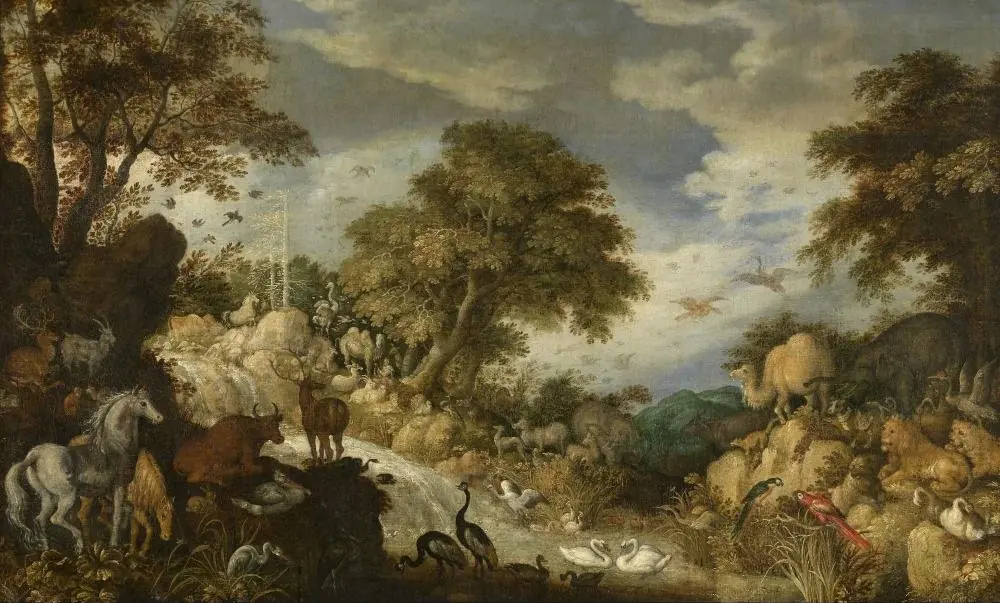
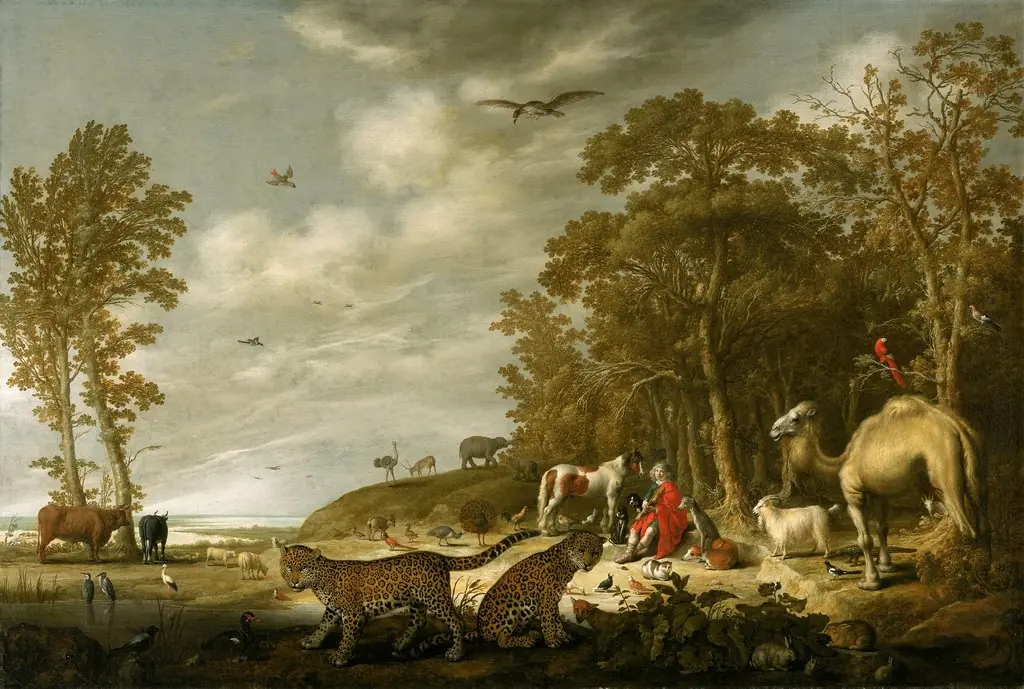
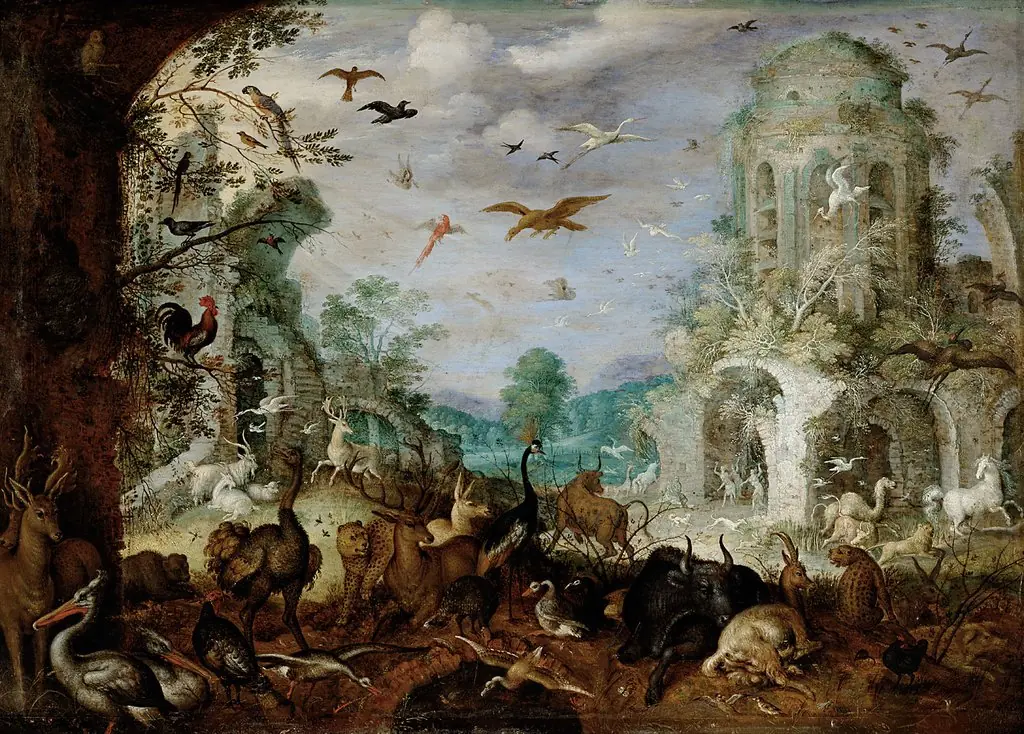
This painting shows a man sitting on a rock in a forest, surrounded by animals. He's wearing a green tunic and red cape, and he's holding a lyre. The animals around him include a unicorn, a lion, a cow, and many others. They're all looking at him, and some are even touching him gently.
The painting is very detailed, with lots of textures and colors. The trees and grass are green, and the sky is blue. The animals are all different colors, and they look very realistic. The man's clothing is also very detailed, with intricate folds and patterns.
The painting is called "Orpheus Charming the Beasts," and it's from 1655. It's held at the Nationalmuseum. If you like this painting, you might also like the work of the artist who painted it.
Overview
Painted in 1655, this oil-on-canvas work depicts the mythological figure Orpheus seated on a stone amid a dense woodland. Surrounded by a variety of animals, he plays a lyre, drawing them close in quiet reverence. The scene is rendered with meticulous attention to texture and color, emphasizing the naturalism of both flora and fauna. The painting resides in the Nationalmuseum, reflecting 17th-century interest in classical themes through detailed, lifelike representation.
Subject & Meaning
Orpheus, the legendary musician of Greek myth, is shown here in the moment his song tames wild creatures. The presence of a unicorn alongside lions, cattle, and smaller beasts underscores the power of harmony over instinct. The animals’ gentle postures—some nuzzling, others still—suggest a suspension of natural hierarchy, symbolizing the civilizing force of art and music in a world otherwise governed by predation.
Technique & Style
The artist employs fine brushwork to render fur, fabric, and foliage with striking realism. The green tunic and crimson cape of Orpheus contrast subtly against the lush greens and blues of the forest, while the animals vary in hue and texture to enhance their individuality. Light falls naturally across the scene, modeling forms without theatricality, aligning the work with the quiet realism of mid-17th-century Nordic painting traditions.
History & Provenance
Created in 1655, the painting entered the collection of the Nationalmuseum in Sweden, where it remains today. Its origins are tied to a period when Scandinavian courts embraced classical mythology as a vehicle for moral and aesthetic ideals. Though the artist’s identity is not definitively recorded, the style suggests influence from Dutch and Flemish traditions, common among Nordic painters of the era.
Context
In mid-17th-century Northern Europe, mythological subjects like Orpheus were frequently invoked to convey ideals of order, reason, and the power of the arts. This painting aligns with broader trends in courtly decoration, where nature and myth merged to reflect humanist values. Unlike Baroque drama elsewhere, this work favors calm observation over spectacle, mirroring Nordic sensibilities of restraint and natural harmony.
Legacy
The painting endures as a quiet testament to the enduring appeal of Orpheus’s myth in visual culture. Its emphasis on stillness and detail distinguishes it from more theatrical interpretations, offering a contemplative vision of music’s unifying force. While not widely reproduced, it continues to inform scholarly discussions on how classical narratives were adapted in Northern European art during the early modern period.
Artist & collection

 Domestic Scene
 Giacomo and Cardinal Marco, investing Andrea, Abbot of San Zeno, with his Benefice
 The Nymph of Fontainebleau
 Portrait of a Woman
 Madonna and Child with Saints in the Enclosed Garden
 Venus and Minerva
 Family Group of Four on Sofa
 Wall painting from Room H of the Villa of P. Fannius Synistor at Boscoreale