Artwork
Kalpa Sutra
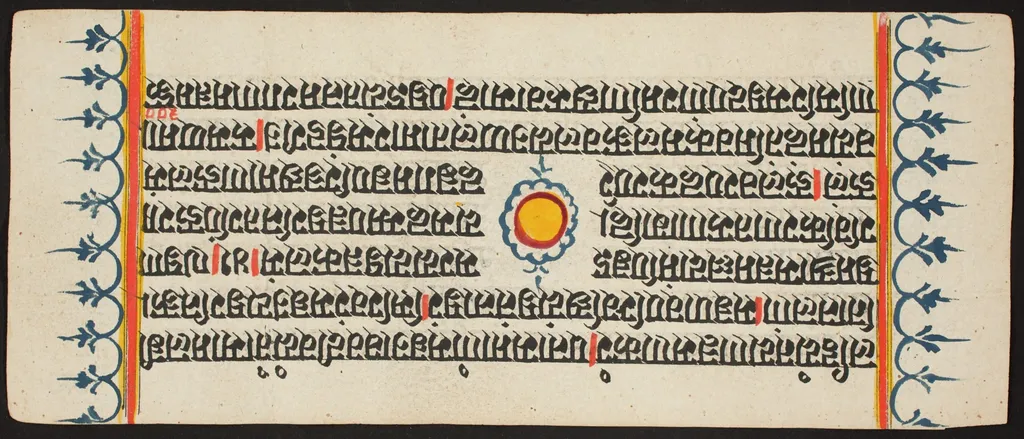
Kalpa Sutra is an unspecified painting by Unknown. It is held in the collection of the Detroit Institute of Arts.
About this work
Overview
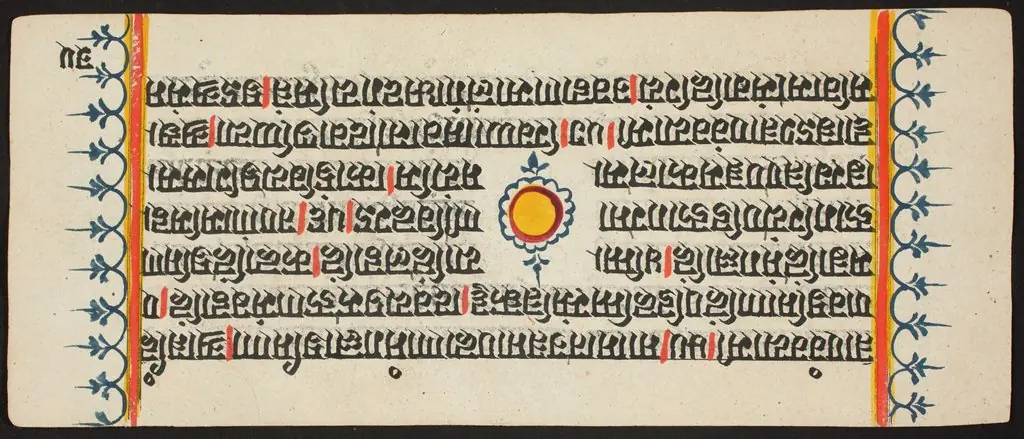
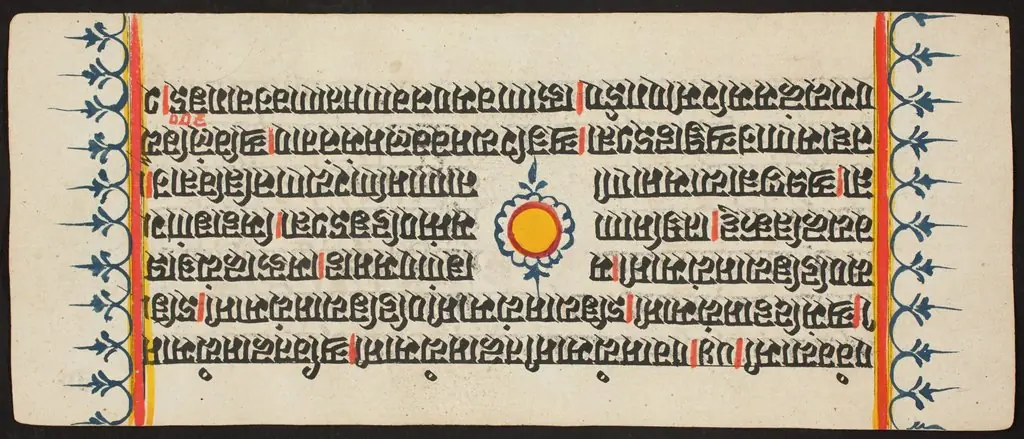
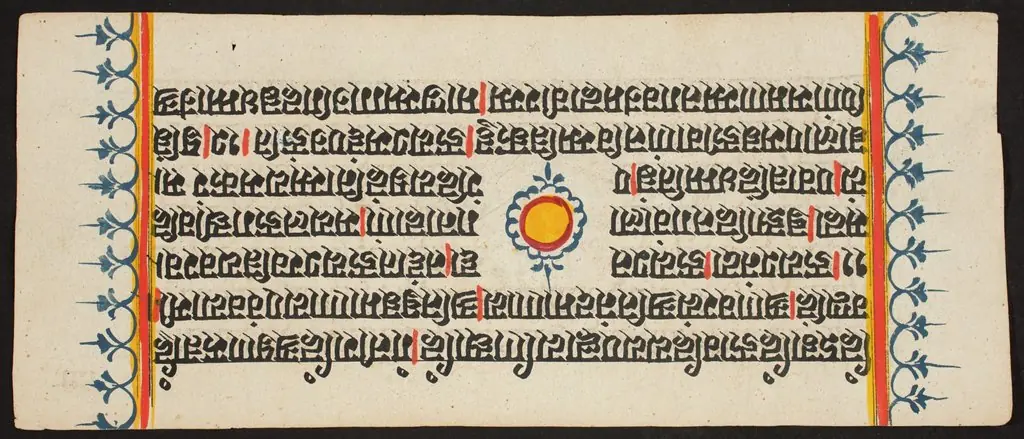
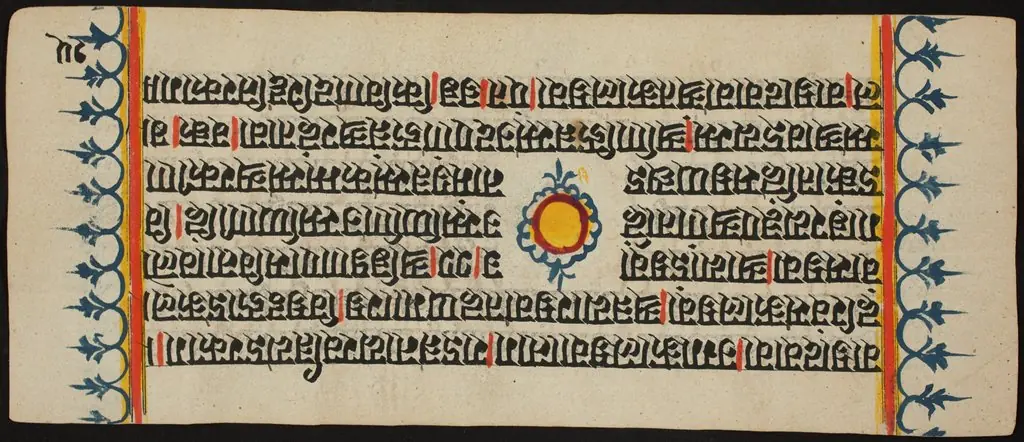
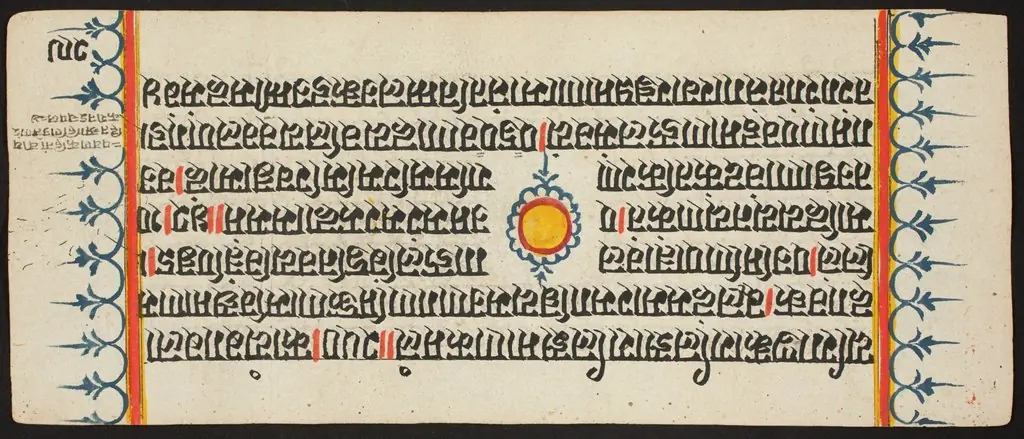
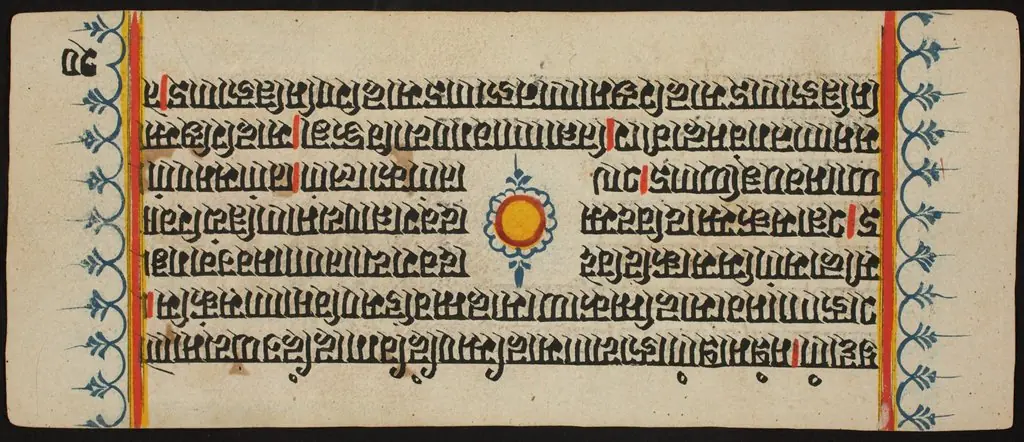
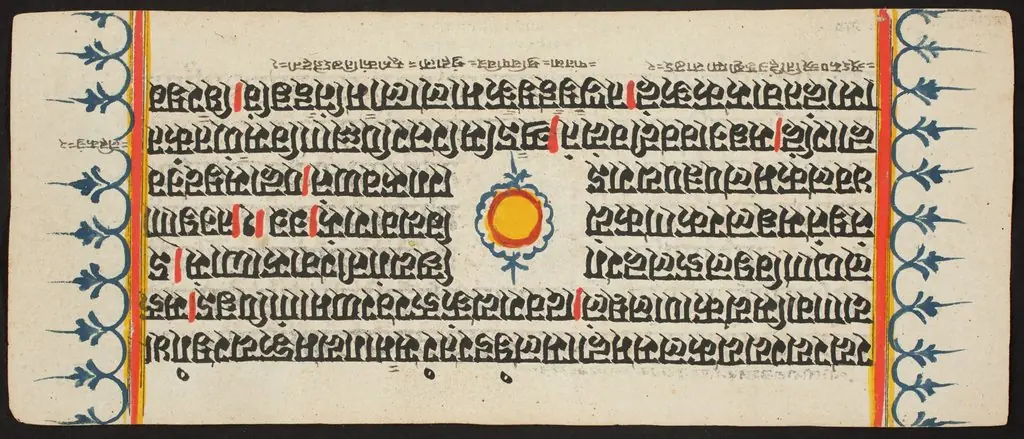
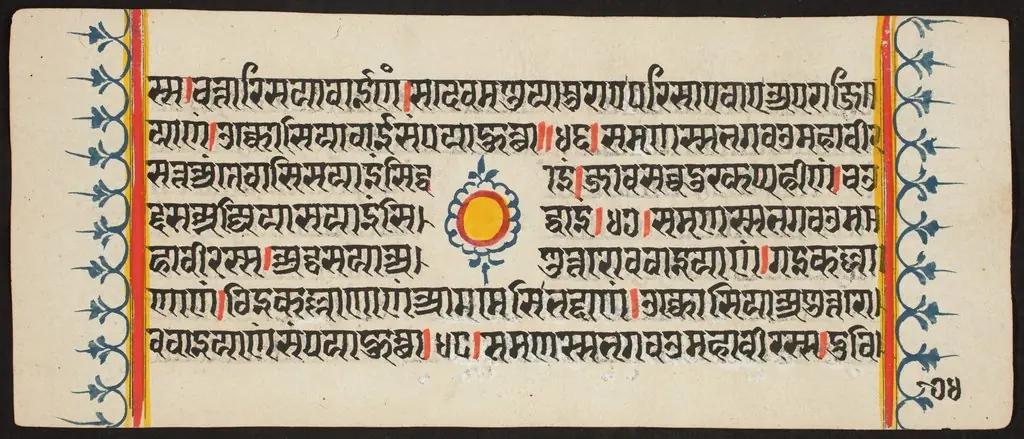
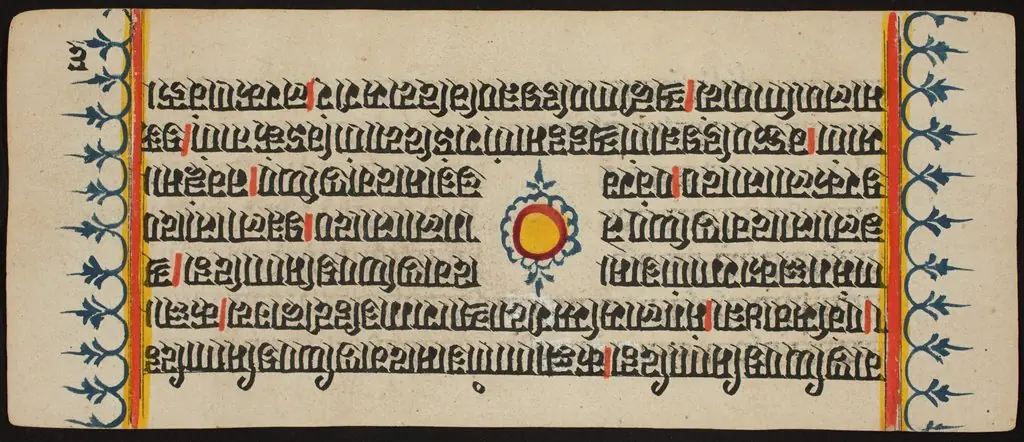
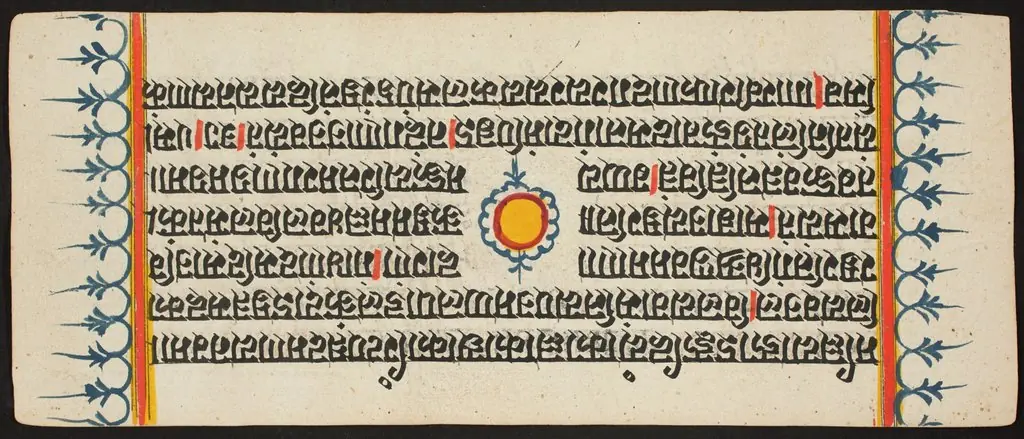
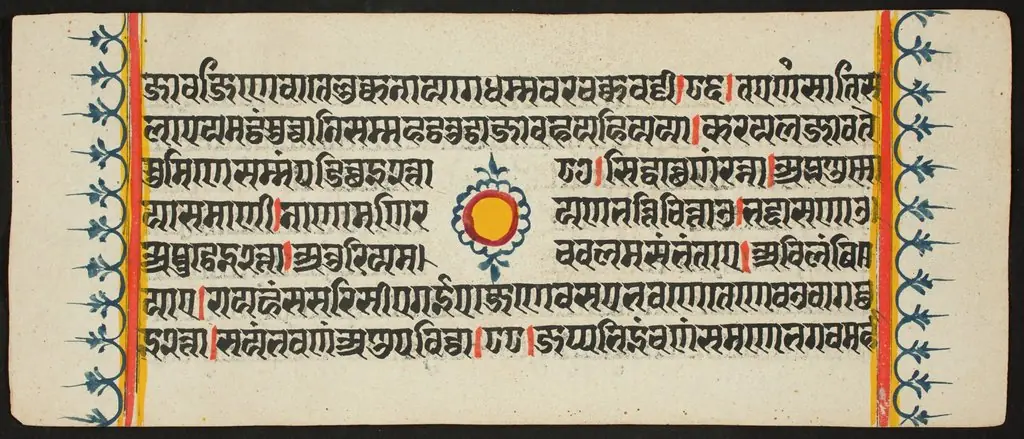
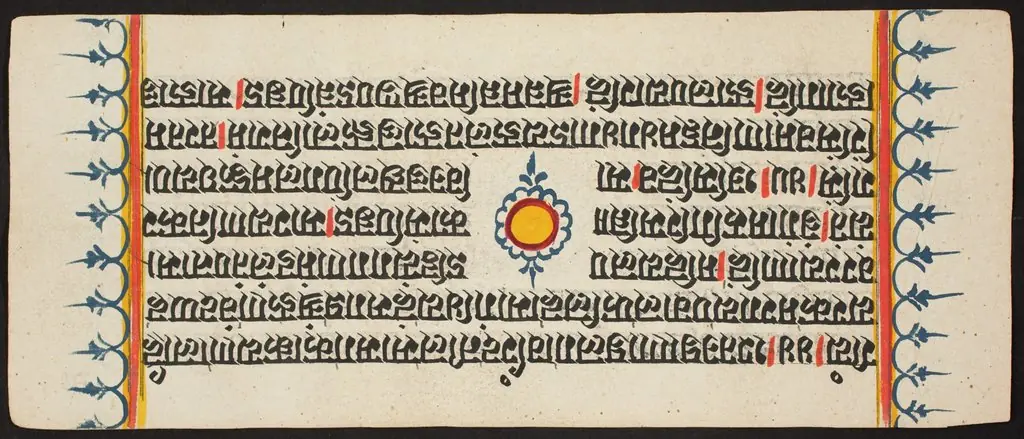
The Kalpa Sutra is a painted manuscript page originating from the Jain tradition, likely produced in western India during the 15th century.
The Kalpa Sutra is a painted manuscript page originating from the Jain tradition, likely produced in western India during the 15th century. It belongs to a series of illustrated religious texts used in ritual recitation. The composition centers on a circular emblem, framed by bold black calligraphy and surrounded by ornamental swirls. The palette is restrained—beige, black, and gold—with minimal color accents, emphasizing spiritual focus over decorative excess.
Subject & Meaning
This page illustrates passages from the Kalpa Sutra, a sacred Jain text detailing the lives of the Tirthankaras, particularly Mahavira. The central yellow circle with a red border represents the cosmic symbol of the Jain universe or a meditative mandala. The inscribed script, written in Prakrit using the Gujarati script, contains liturgical verses meant to be chanted. The design guides contemplation, aligning visual form with devotional practice.
Technique & Style
Executed in tempera and gold on paper, the painting employs fine brushwork and precise line control. The black ink script is rendered in a dense, angular script typical of western Indian manuscript traditions. Geometric precision and rhythmic repetition in the borders reflect a disciplined aesthetic rooted in monastic craftsmanship. The limited color scheme enhances legibility and reinforces the text’s sacred function, avoiding distraction from its spiritual content.
History & Provenance
The painting was created in a Jain monastic workshop, possibly in Gujarat or Rajasthan, and used in temple rituals or scholarly study. It entered the collection of the Detroit Institute of Arts in the 20th century, acquired through donations from collectors of South Asian art. Its preservation reflects early 20th-century interest in non-Western religious manuscripts, though its exact journey from India to Detroit remains partially undocumented.
Context
Jain manuscript painting flourished between the 12th and 16th centuries, particularly in regions with strong merchant patronage. These texts were not merely religious but also cultural artifacts, binding communities through shared ritual. The Kalpa Sutra’s visual language—structured, textual, and symbolic—mirrors Jain principles of non-violence, order, and ascetic clarity, distinguishing it from more narrative-driven Hindu or Buddhist illustrated texts.
Legacy
The Kalpa Sutra page remains a key example of Jain manuscript art, studied for its calligraphic discipline and symbolic economy. It contributes to broader scholarly understanding of how religious texts were visually encoded in pre-modern India. Its presence in Western collections has helped elevate awareness of Jain artistic traditions, though it continues to be interpreted primarily within its original liturgical context rather than as a standalone aesthetic object.
Artist & collection

 Domestic Scene
 Giacomo and Cardinal Marco, investing Andrea, Abbot of San Zeno, with his Benefice
 The Nymph of Fontainebleau
 Portrait of a Woman
 Madonna and Child with Saints in the Enclosed Garden
 Venus and Minerva
 Family Group of Four on Sofa
 Wall painting from Room H of the Villa of P. Fannius Synistor at Boscoreale