Artwork
Portrait of Semyon Kh. Stavrakov (1763/64-1819)
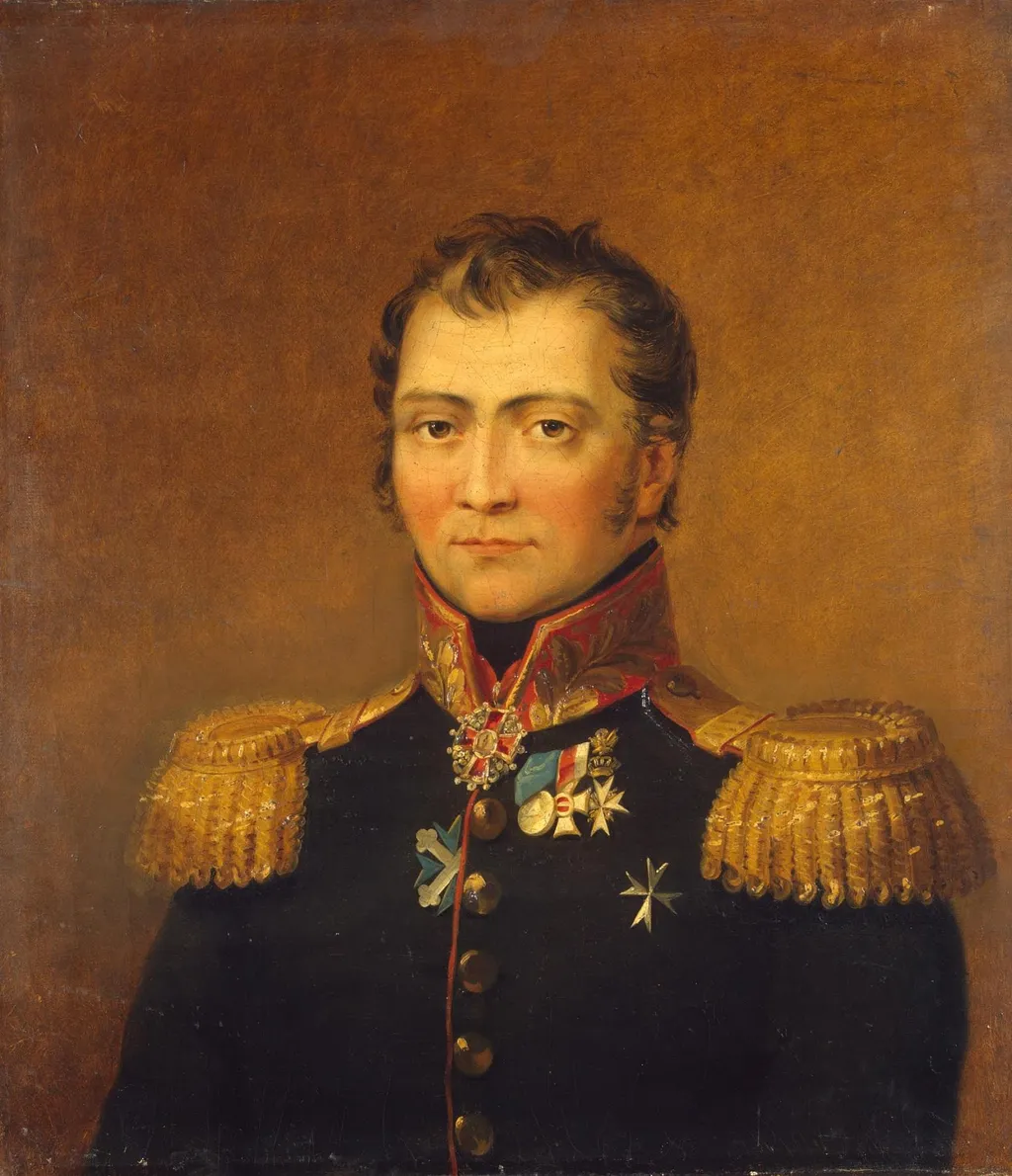
Portrait of Semyon Kh. Stavrakov (1763/64-1819) is an oil painting by Unknown. It dates from 1823 and is held in the collection of the Hermitage Museum. This oil painting depicts Semyon Kh.
About this work
Overview
The composition isolates the subject against a muted brown background, directing attention to his facial expression and regalia.
This oil painting depicts Semyon Kh. Stavrakov, a Russian military officer active in the late 18th and early 19th centuries. Rendered with formal precision, the portrait emphasizes his rank through detailed uniform elements. The composition isolates the subject against a muted brown background, directing attention to his facial expression and regalia. The work reflects conventions of aristocratic and military portraiture in imperial Russia during the Napoleonic era.
Subject & Meaning
Stavrakov is portrayed in full military dress, his gold epaulettes and multiple medals indicating high rank and distinguished service. The red collar and orderly hair suggest discipline and status. His serious gaze and upright posture convey authority and solemnity, typical of official portraiture meant to affirm social position. The image functions as a visual record of military achievement rather than a personal revelation.
Technique & Style
The artist employed smooth brushwork to render fabric textures and metallic details with clarity. The lighting is even, avoiding dramatic shadows to maintain a dignified, frontal presence. Background simplicity enhances the subject’s prominence, a common tactic in Russian imperial portraiture. Color is restrained, with gold and red accents providing contrast without excess, reinforcing the subject’s institutional identity.
History & Provenance
Painted between 1763 and 1819, the portrait likely originated in a state or military context, possibly commissioned to honor Stavrakov’s service. Its early 19th-century date aligns with Russia’s heightened emphasis on military hierarchy following the Napoleonic Wars. While its exact provenance is undocumented, its style and subject suggest it may have been held in state collections or private aristocratic circles before entering public ownership.
Context
During this period, Russian elites used portraiture to assert status within a rigid social order. Military officers, especially those who served in major conflicts, were frequently depicted in full regalia to underscore loyalty and valor. This portrait fits within a broader tradition of state-sponsored imagery designed to reinforce imperial authority and the prestige of service.
Legacy
The portrait remains a representative example of early 19th-century Russian military portraiture. It contributes to the historical record of officers who shaped Russia’s military identity during a transformative era. Though not widely known outside institutional collections, it continues to serve as a reference for understanding visual culture and social hierarchy in imperial Russia.
Artist & collection

 Domestic Scene
 Giacomo and Cardinal Marco, investing Andrea, Abbot of San Zeno, with his Benefice
 The Nymph of Fontainebleau
 Portrait of a Woman
 Madonna and Child with Saints in the Enclosed Garden
 Venus and Minerva
 Family Group of Four on Sofa
 Wall painting from Room H of the Villa of P. Fannius Synistor at Boscoreale
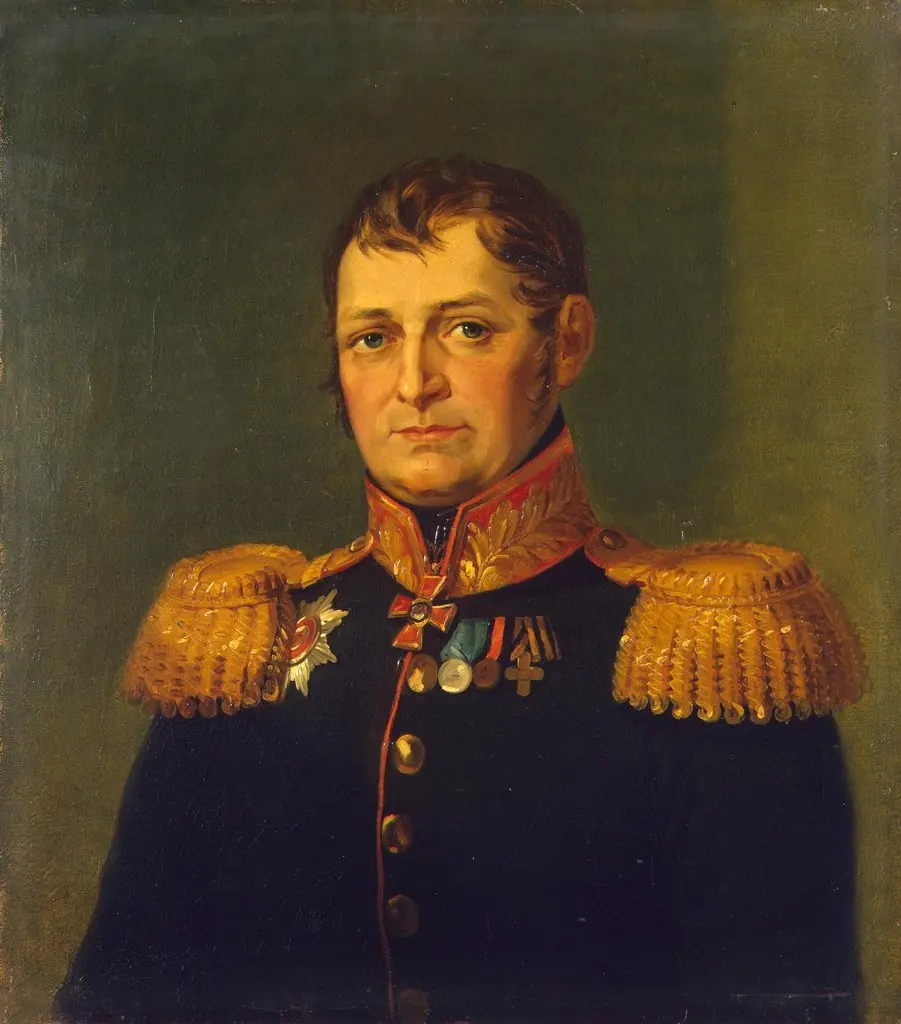 Portrait of Timofey I. Zbiyevsky (1767-1828)
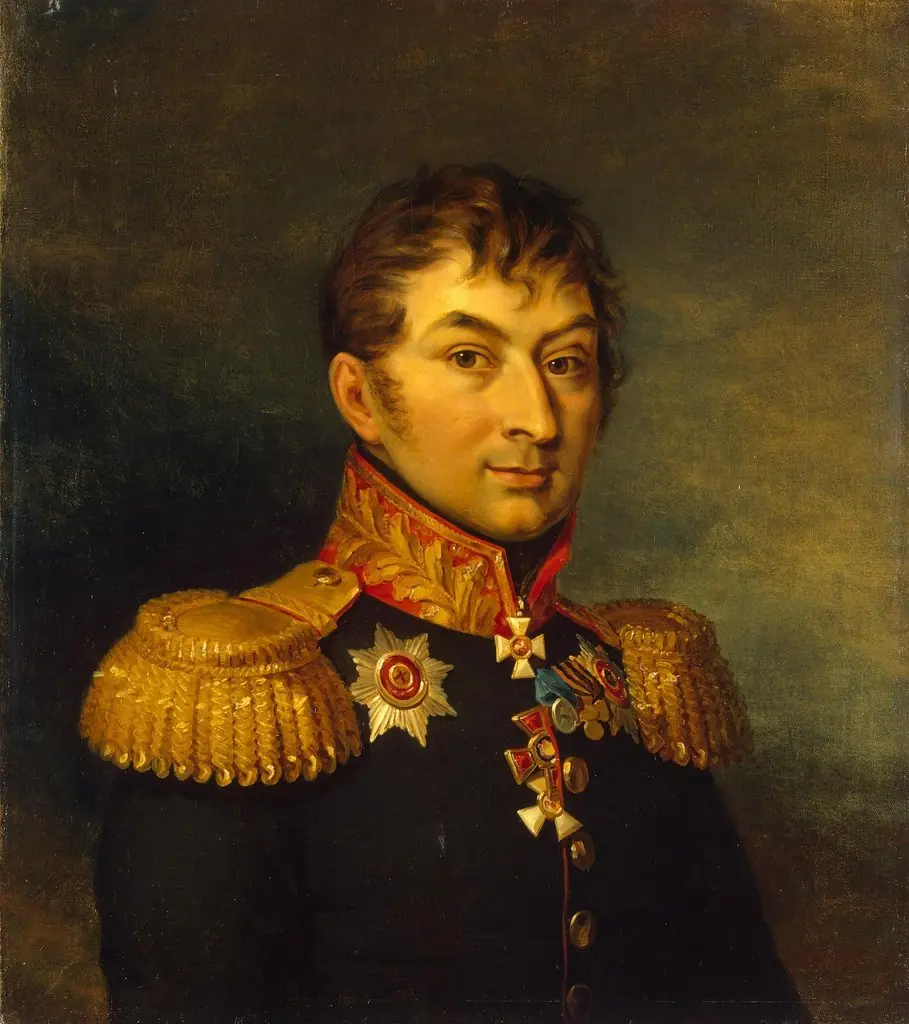 Portrait of Ivan D. Panchulidzev (1759-1815) (1st)
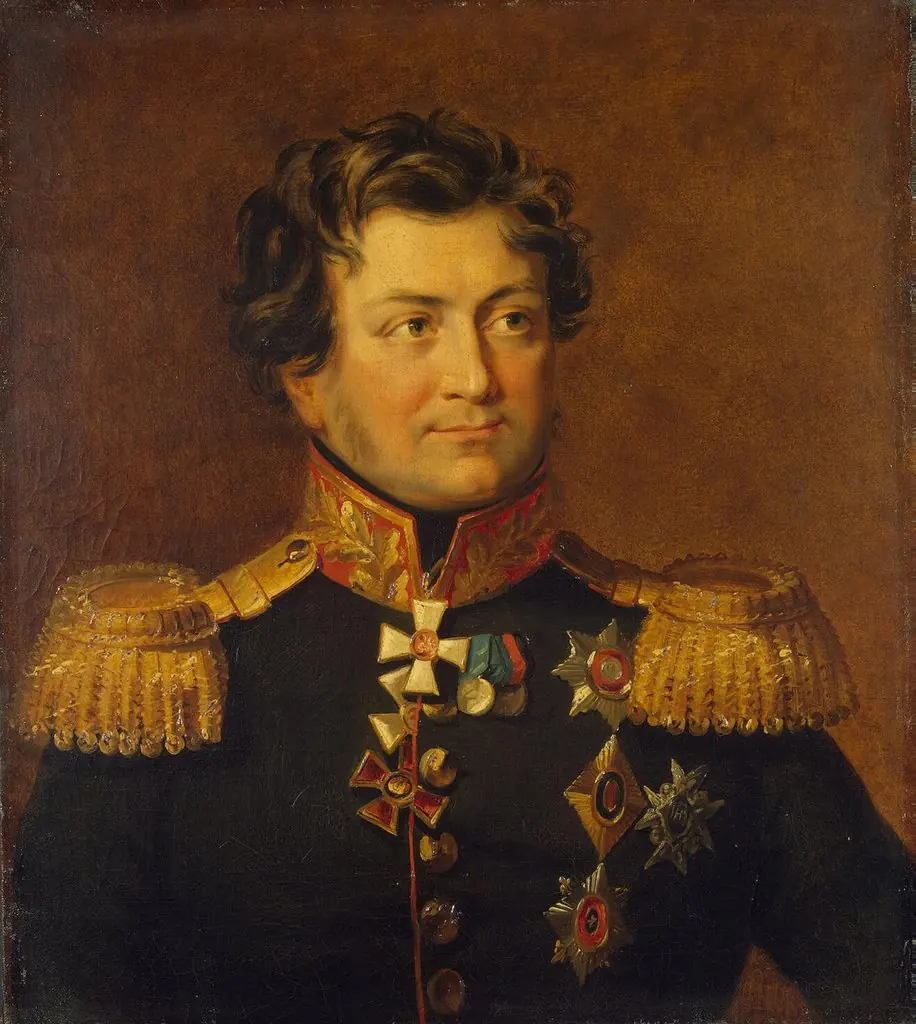 Portrait of Alexander Ya. Rudzevich (1775-1829)
 Portrait of Nikolai D. Myakinin (1787-1814)
 Portrait of Pavel A. Filisov (1769-1821)
 Portrait of Matvey Ye. Khrapovitsky (1784-1847) (replica of the 1821 portrait)
 Portrait of Alexander B. Fock (1763-1825)
 Portrait of Dmitry P. Lyapunov (1775-1821)
 Portrait of Alexander P. Urusov (1768-1835)