Artwork
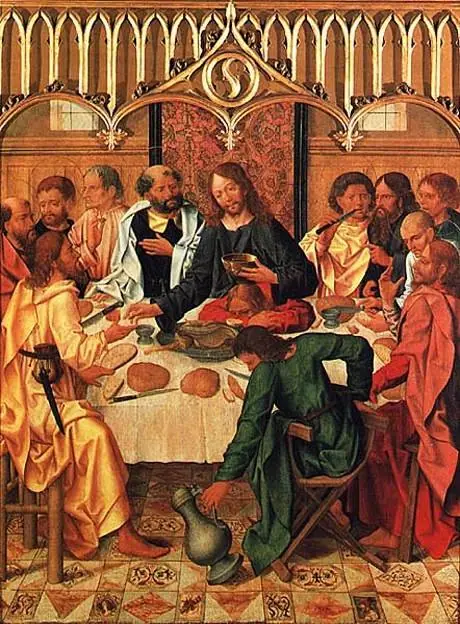
Panels from the High Altar of the Charterhouse of Saint-Honoré, Thuison-les-Abbeville: The Last Supper
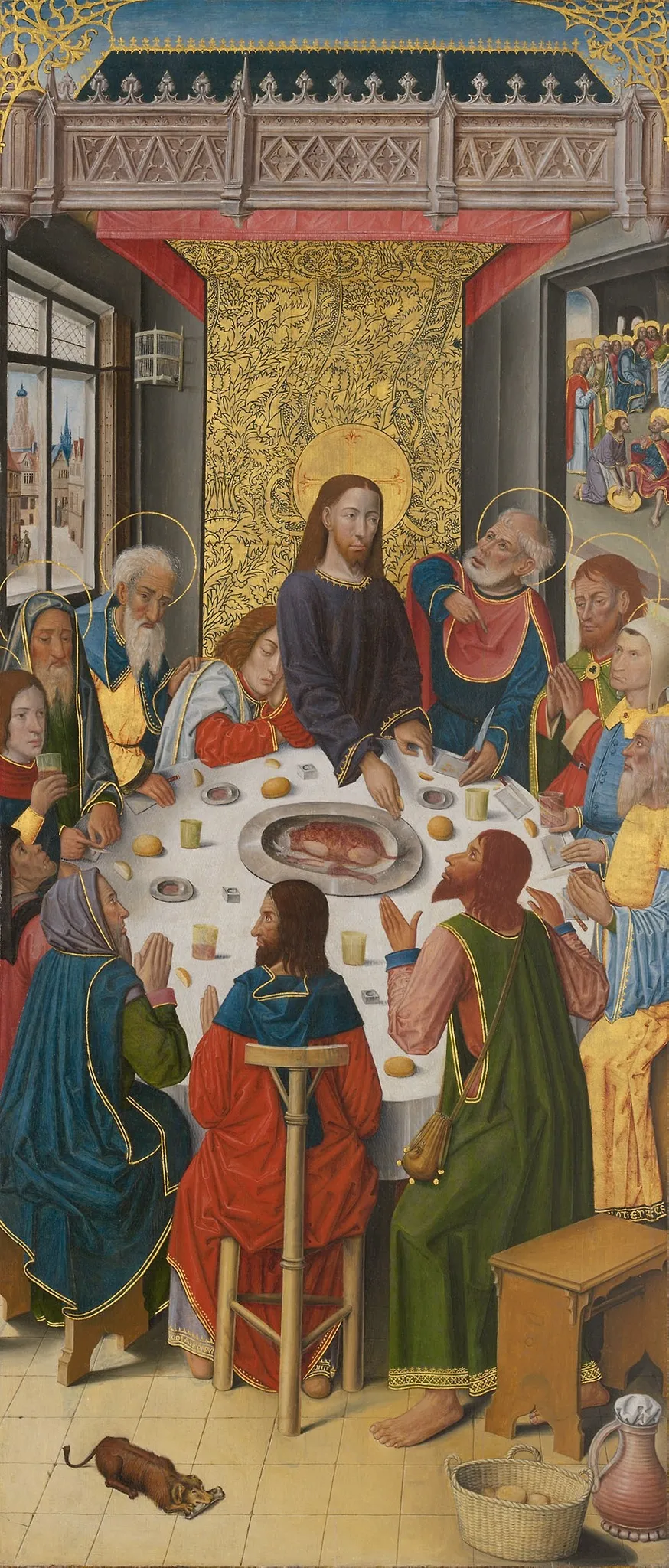
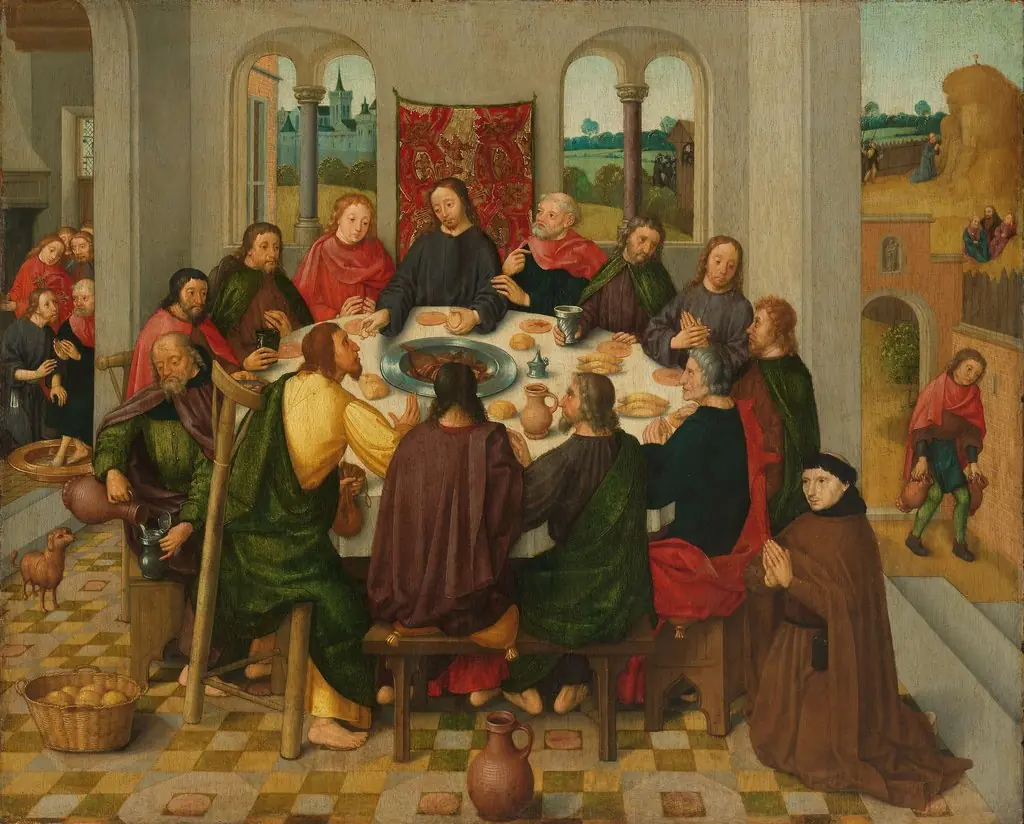
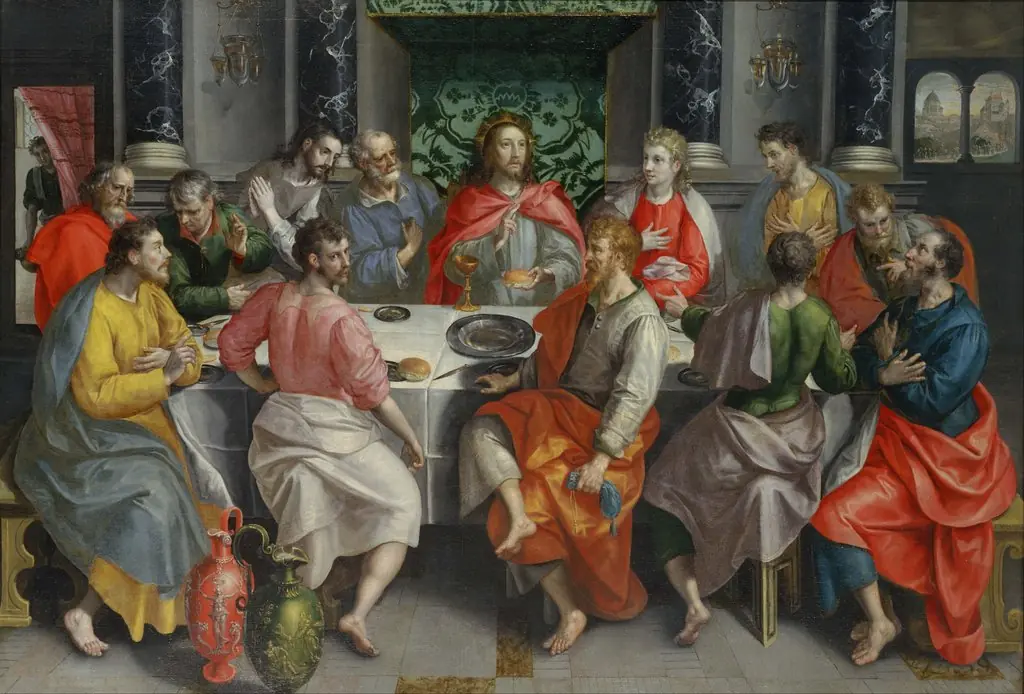
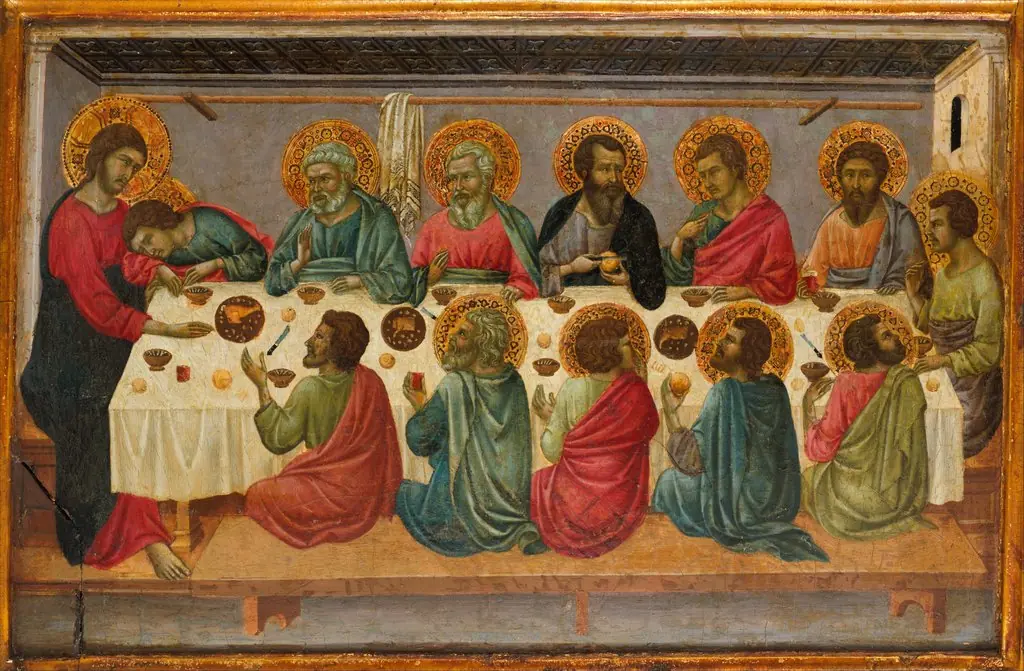
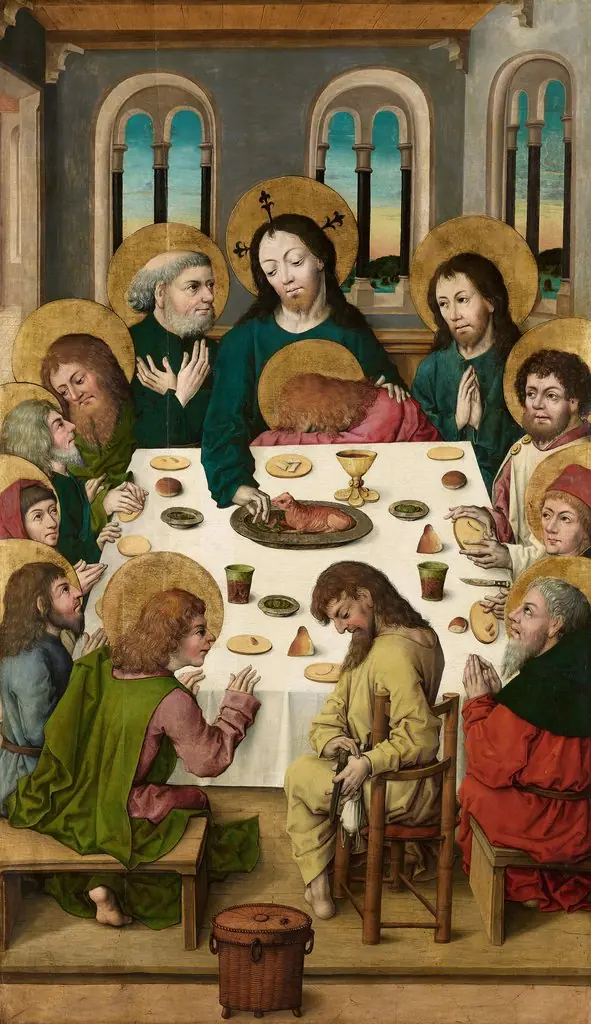
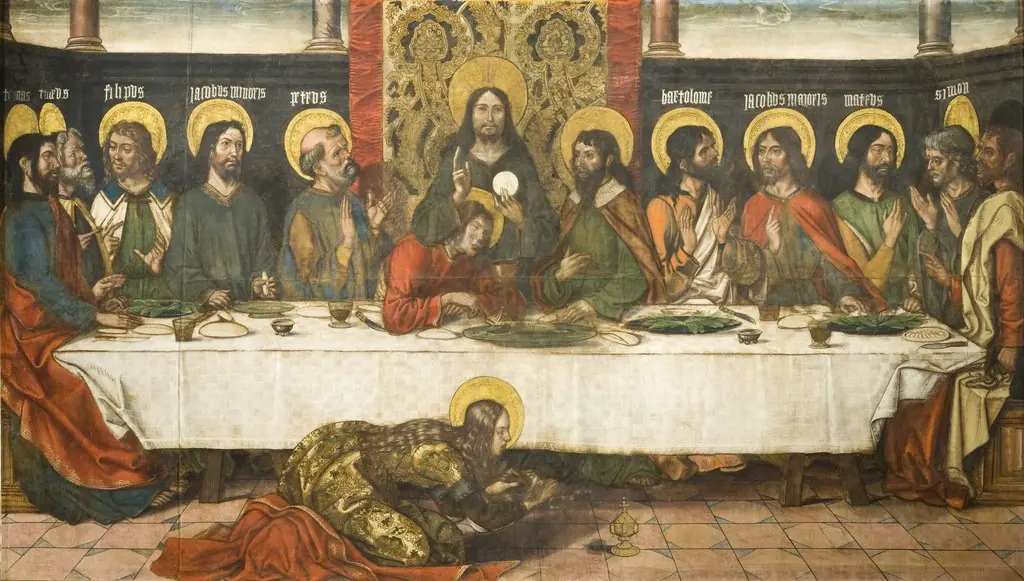
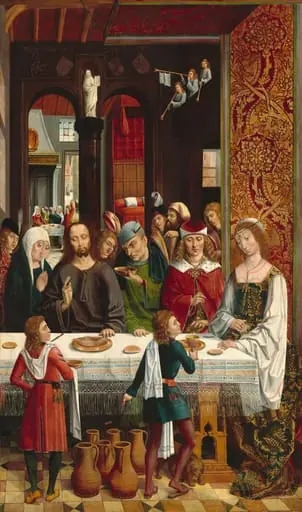
Panels from the High Altar of the Charterhouse of Saint-Honoré, Thuison-les-Abbeville: The Last Supper is an oil painting by the Northern Renaissance artist Unknown. It dates from 1496 and is held in the collection of the Art Institute of Chicago. The panel, executed in oil, depicts a seated group of figures gathered around a long table within an opulently decorated interior.
About this work
Overview
The setting includes gilded walls, a red ceiling, and an open balcony, with a modest spread of bread, meat, fruit, plates, cups and a basket on the table.
The panel, executed in oil, depicts a seated group of figures gathered around a long table within an opulently decorated interior. A central figure, distinguished by a blue robe and a golden halo, raises a piece of bread while his companions listen attentively. The setting includes gilded walls, a red ceiling, and an open balcony, with a modest spread of bread, meat, fruit, plates, cups and a basket on the table.
Subject & Meaning
The composition represents the biblical scene of the Last Supper, focusing on the moment of Christ’s blessing of the bread. The presence of halos on several figures underscores their sanctity, while the varied robes and gestures convey the narrative’s emotional and theological emphasis on communion and sacrifice.
Technique & Style
Rendered in oil paint, the work combines detailed figural modeling with a richly textured architectural backdrop. The use of luminous gold and deep reds creates a sense of depth, while the careful rendering of light on the figures and objects highlights the central act of the bread offering.
History & Provenance
Originally part of the high altar in the Charterhouse of Saint‑Honoré at Thuison‑les‑Abbeville, the panel formed one component of a larger altarpiece. Its removal from the monastic setting dates to the secularization of religious houses, after which it entered private and museum collections.
Context
The depiction aligns with the Counter‑Reformation’s emphasis on clear, didactic religious imagery. By situating the sacred event within an elaborate, yet accessible interior, the artist reinforced the devotional function of the altar and the communal nature of the Eucharist.
Legacy
As a surviving fragment of a monastic high altar, the panel offers insight into 17th‑century French ecclesiastical art and the visual strategies employed to convey theological narratives within liturgical spaces.
Artist & collection

 Domestic Scene
 Giacomo and Cardinal Marco, investing Andrea, Abbot of San Zeno, with his Benefice
 The Nymph of Fontainebleau
 Portrait of a Woman
 Madonna and Child with Saints in the Enclosed Garden
 Venus and Minerva
 Family Group of Four on Sofa
 Wall painting from Room H of the Villa of P. Fannius Synistor at Boscoreale