Artwork
Adam and Eve in Paradise
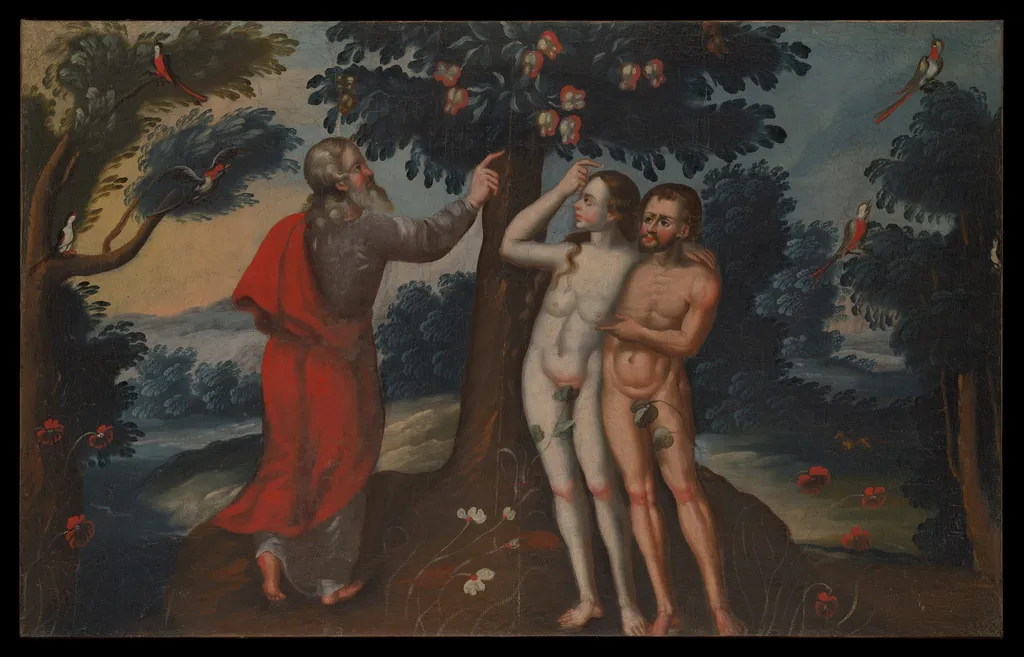
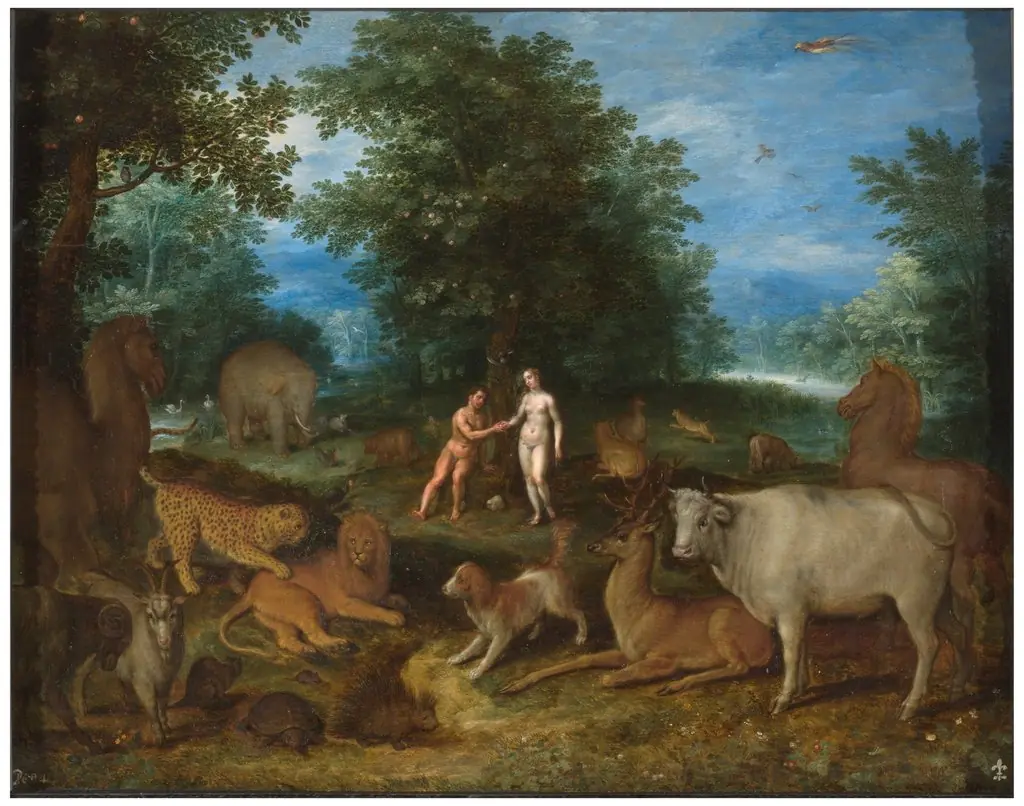
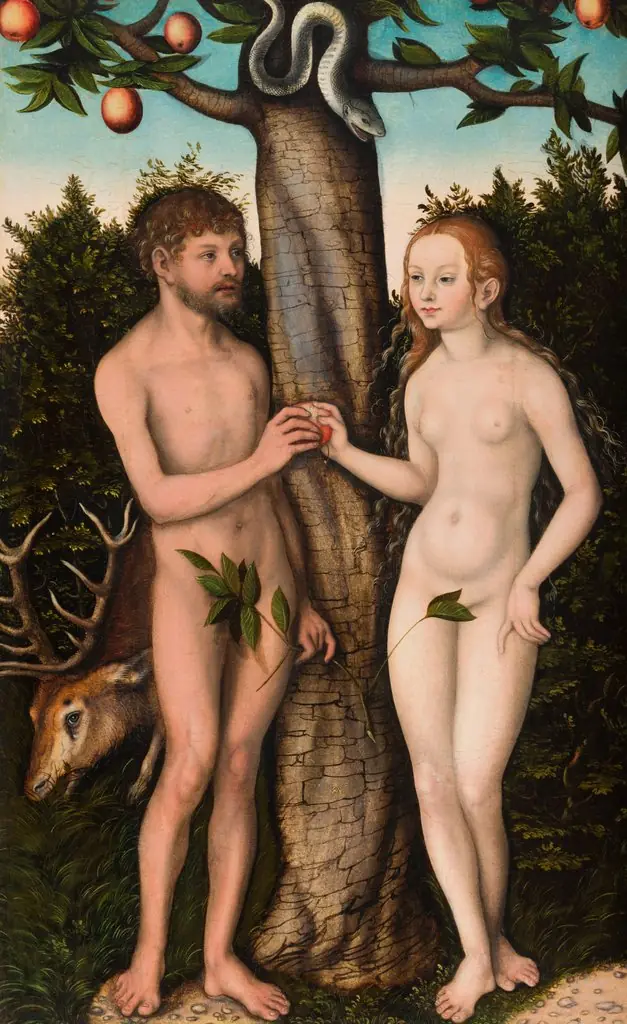
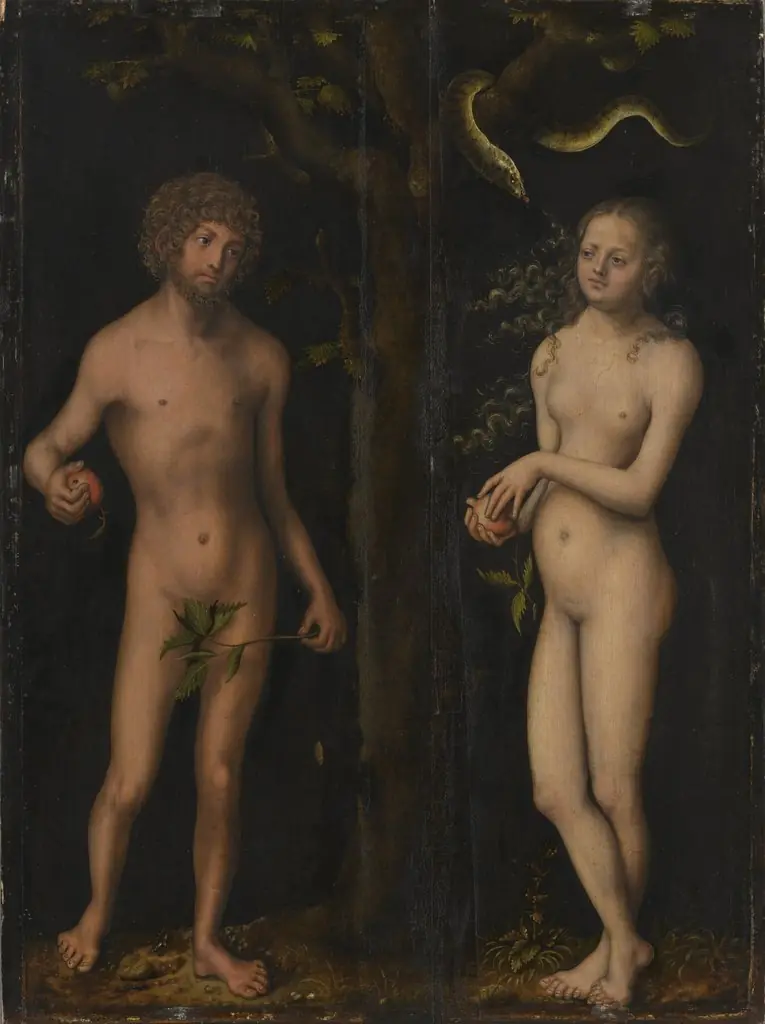
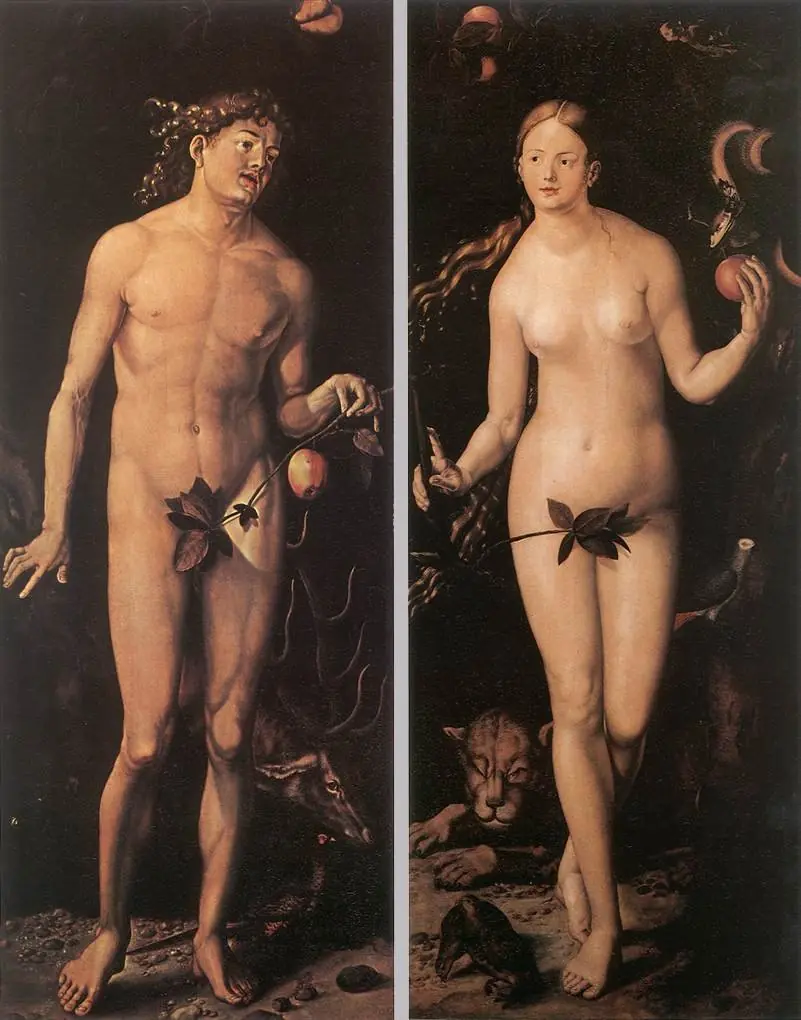
Adam and Eve in Paradise is an oil painting. It dates from 1750 and is held in the collection of the Metropolitan Museum of Art. The oil painting depicts a garden scene with three figures beneath a fruit‑bearing tree.
About this work
Overview
The oil painting depicts a garden scene with three figures beneath a fruit‑bearing tree. An elderly man in a vivid red robe gestures upward toward the tree, while a youthful man and woman stand naked beneath its branches, the woman reaching for the small red fruit. Birds occupy the foliage, and a gentle landscape of rolling hills and a pale sky forms the backdrop.
Subject & Meaning
The composition references the biblical narrative of the first humans in Eden, emphasizing the moment of temptation. The older figure, likely representing a divine or prophetic presence, points to the forbidden fruit, while the younger pair embody innocence and curiosity, the woman's outstretched hand suggesting the act of transgression.
Technique & Style
The artist employs chiaroscuro, contrasting deep shadows on the figures with a lighter, atmospheric background to create volume and spatial separation. The red robe and fruit serve as focal color accents, while the subtle modeling of flesh through gradated tones enhances the three‑dimensional effect.
History & Provenance
Created in oil on canvas, the work’s provenance is not detailed in the source material, and no specific date or artist is recorded. Consequently, its exhibition history and ownership trail remain undocumented, limiting scholarly attribution.
Context
The painting aligns with a long tradition of visualizing the Genesis story, echoing motifs found in Renaissance and Baroque interpretations. Its emphasis on light and shadow reflects broader artistic interests in dramatizing moral narratives through naturalistic rendering.
Artist & collection