Artwork
Border from a Farhang-i Jahangiri Manuscript
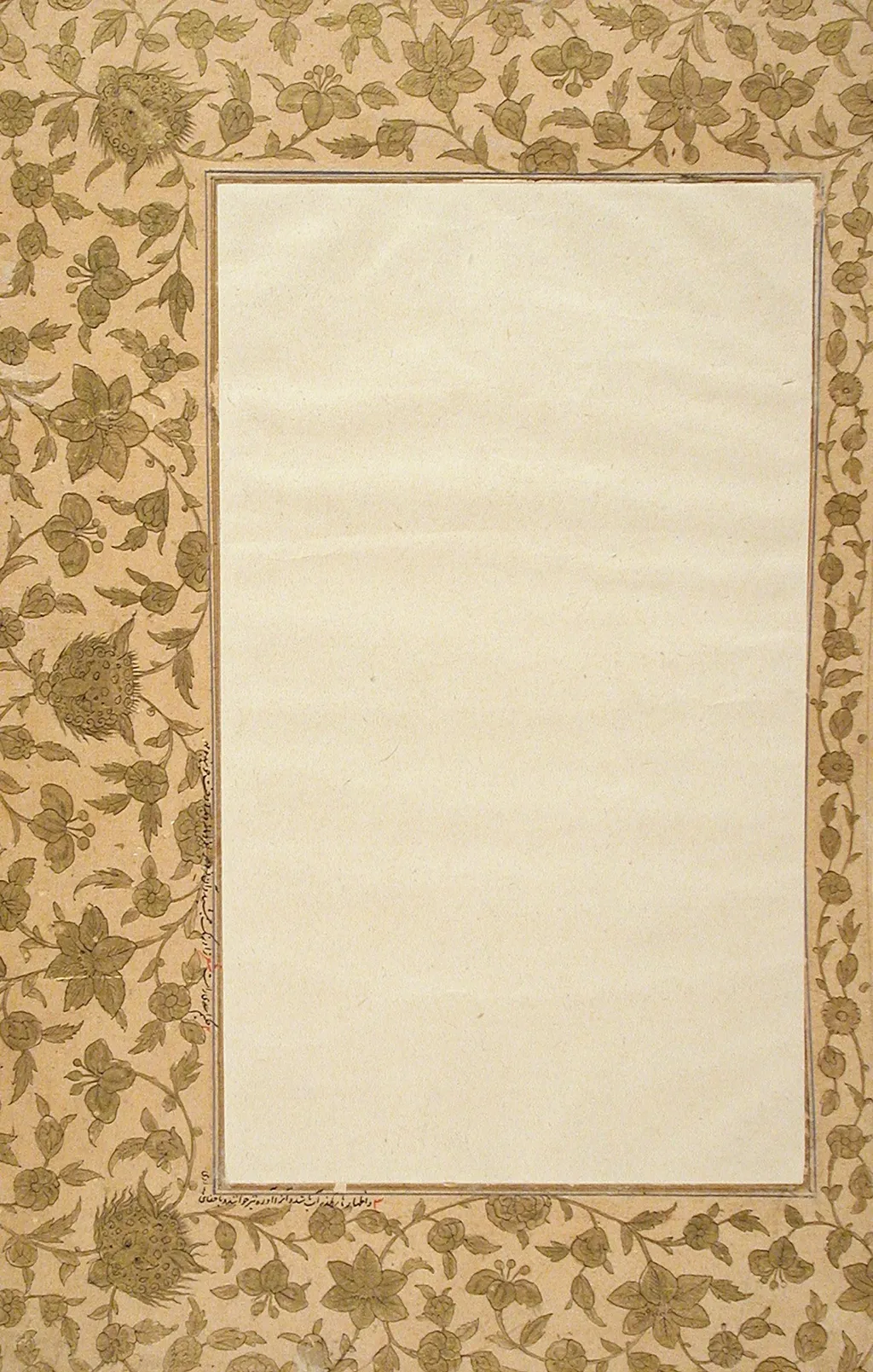
Border from a Farhang-i Jahangiri Manuscript is an unspecified painting by the Mughal Painting artist Unknown. It dates from 1608 and is held in the collection of the Los Angeles County Museum of Art.
About this work
You can learn more about this kind of art at the museum: Los Angeles County Museum of Art.
The painting is called Border from a Farhang-i Jahangiri Manuscript.
It was made in 1608.
The Los Angeles County Museum of Art has this work, and that's where you can find it, which is interesting because it shows how art from different times and places is collected and shared today, giving us a glimpse into the past.
You can learn more about this kind of art at the museum: Los Angeles County Museum of Art.
Overview
This painted border dates to 1608 and originates from the Farhang-i Jahangiri, a Persian dictionary commissioned by the Mughal emperor Jahangir. Designed as a decorative frame, it was likely intended to encircle textual entries in the manuscript. Its current home at the Los Angeles County Museum of Art reflects the global circulation of Islamicate manuscripts, preserved outside their original cultural context.
Subject & Meaning
The border features intricate floral and geometric patterns typical of Mughal manuscript decoration. These motifs serve no narrative function but elevate the manuscript’s prestige through visual harmony and craftsmanship. Such borders symbolized order and refinement, aligning with the imperial project of codifying language and knowledge under Jahangir’s patronage.
Technique & Style
Executed in opaque watercolor and gold on paper, the border demonstrates the precision of Mughal miniature painting. Delicate lines define scrolling vines and symmetrical motifs, while gold leaf adds luminosity. The composition avoids figuration, focusing instead on rhythmic repetition and balanced ornamentation characteristic of courtly book arts.
History & Provenance
Created in the early 17th century for a royal Persian-language dictionary, the border was part of a larger manuscript now dispersed across institutions. Its presence in Los Angeles suggests acquisition through 20th-century collections, possibly via dealers or donors with ties to South Asian art. The work’s survival reflects the fragmentary nature of manuscript history.
Context
The Farhang-i Jahangiri was compiled under imperial supervision to standardize Persian vocabulary, reflecting Jahangir’s interest in scholarship and linguistic control. Decorative borders like this one were standard in elite manuscripts, reinforcing the text’s authority through aesthetic luxury. Similar borders appear in other Mughal codices, indicating standardized workshop practices.
Legacy
Though detached from its original manuscript, this border remains a testament to the sophistication of Mughal book arts. It contributes to scholarly understanding of how visual design supported textual authority in early modern South Asia. Its display in a Western museum invites cross-cultural dialogue about the preservation and interpretation of Islamicate heritage.
Artist & collection

 Domestic Scene
 Giacomo and Cardinal Marco, investing Andrea, Abbot of San Zeno, with his Benefice
 The Nymph of Fontainebleau
 Portrait of a Woman
 Madonna and Child with Saints in the Enclosed Garden
 Venus and Minerva
 Family Group of Four on Sofa
 Wall painting from Room H of the Villa of P. Fannius Synistor at Boscoreale
 Sheet with Flower and Diamond Pattern
 Architectural Plan (verso)
 Fragment of an Arch (tracing from recto) (verso)
 Endpaper
 Femeie în picioare
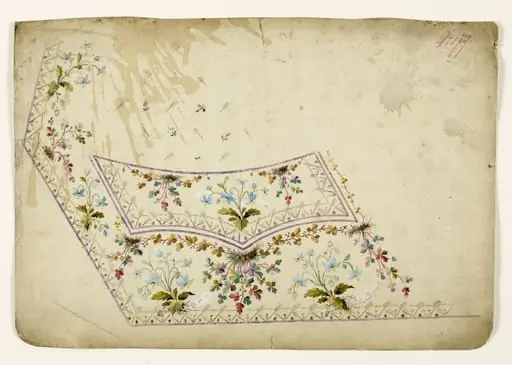 Composition avec bouquets de fleurs sauvages et guirlandes de feuilles d'automne, projets de broderies de gilet, XVIIIème siècle
 Icoana de factură catolică îl reprezintă pe sfântul Teodor Tiron (306 d. Hr) sărbătorit pe 17 februarie.Sf. Teodor înveșmântat ca oștean: coif cu pene, armura și mantie roșie. În dreapta ține un coif cu stânga sulița. În planul doi o biserică catolică. Pe fondul alb, de o parte și alta a sfântului câte tulpină cu o floare roșie. Cromatica: predomină roșul(inclusiv ca desen) albastru, bleu, negru, maro, auriu, verde deschis, verde închis, fond alb.Ramă îngustă, patru stinghiii îmbinate oblic la colțuri.
 S8 - Peisaj la Sulina (Casă, gard și copac)
 Several Line Borders (verso)
 Compoziție cu ruine și păsări