Artwork
Icoana de factură catolică îl reprezintă pe sfântul Teodor Tiron (306 d. Hr) sărbătorit pe 17 februarie.Sf. Teodor înveșmântat ca oștean: coif cu pene, armura și mantie roșie. În dreapta ține un coif cu stânga sulița. În planul doi o biserică catolică. Pe fondul alb, de o parte și alta a sfântului câte tulpină cu o floare roșie. Cromatica: predomină roșul(inclusiv ca desen) albastru, bleu, negru, maro, auriu, verde deschis, verde închis, fond alb.Ramă îngustă, patru stinghiii îmbinate oblic la colțuri.
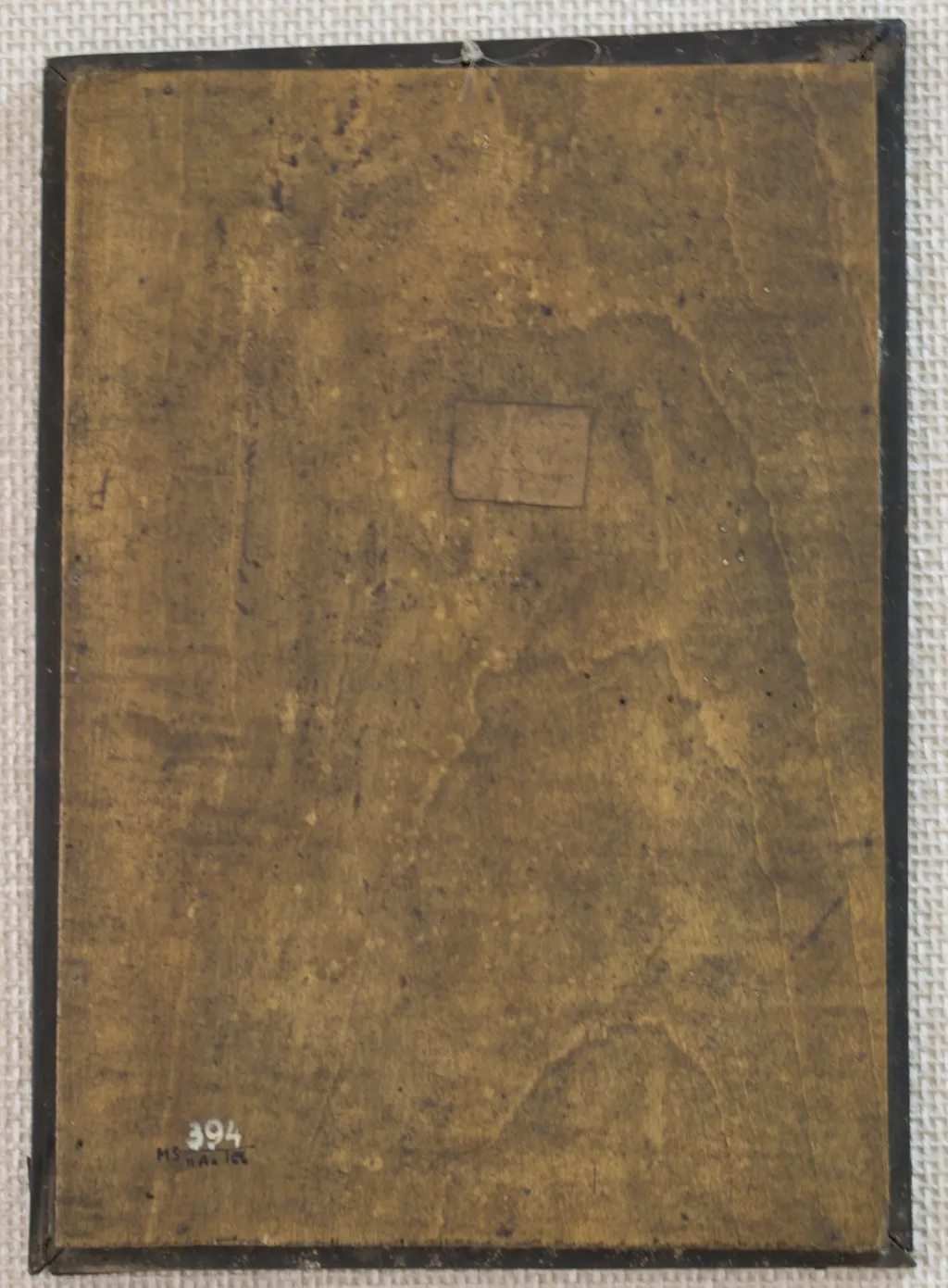
Icoana de factură catolică îl reprezintă pe sfântul Teodor Tiron (306 d. Hr) sărbătorit pe 17 februarie.Sf. Teodor înveșmântat ca oștean: coif cu pene, armura și mantie roșie. În dreapta ține un coif cu stânga sulița. În planul doi o biserică catolică. Pe fondul alb, de o parte și alta a sfântului câte tulpină cu o floare roșie. Cromatica: predomină roșul(inclusiv ca desen) albastru, bleu, negru, maro, auriu, verde deschis, verde închis, fond alb.Ramă îngustă, patru stinghiii îmbinate oblic la colțuri. is a drawing by Unknown. It dates from 1850 and is held in the collection of the "Dimitrie Gusti" National Village Museum. The work is a devotional image of Saint Theodore Tiron, a martyr commemorated on February 17.
About this work
Overview
The work is a devotional image of Saint Theodore Tiron, a martyr commemorated on February 17. He is depicted in military attire, complete with a feathered helmet, armor and a red mantle, holding a helmet in his right hand and a spear in his left. Behind him, a modest Catholic church appears in the background.
Subject & Meaning
Saint Theodore is presented as a soldier‑saint, emphasizing his role as a protector and martyr. The inclusion of the church underscores his veneration within the Catholic tradition, while the red mantle and weaponry highlight his bravery and sacrifice.
Technique & Style
The drawing is rendered on yellowed paper that shows signs of aging: a rough surface, dark smudges and occasional pinholes. The composition relies on a limited palette dominated by reds, blues, blacks, browns, golds and greens, set against a white background. Fine stippling creates tonal variation, and a narrow dark frame with four oblique nails secures the sheet.
History & Provenance
The piece appears to be a hand‑drawn devotional image, likely produced for private or parish use. Its material condition—yellowed, weathered paper and the simple framing—suggests it originated in a period when such images were circulated for personal veneration rather than public display.
Artist & collection
Museum
"Dimitrie Gusti" National Village Museum
Continue through works from the same source collection.
 Domestic Scene
 Giacomo and Cardinal Marco, investing Andrea, Abbot of San Zeno, with his Benefice
 The Nymph of Fontainebleau
 Portrait of a Woman
 Madonna and Child with Saints in the Enclosed Garden
 Venus and Minerva
 Family Group of Four on Sofa
 Wall painting from Room H of the Villa of P. Fannius Synistor at Boscoreale
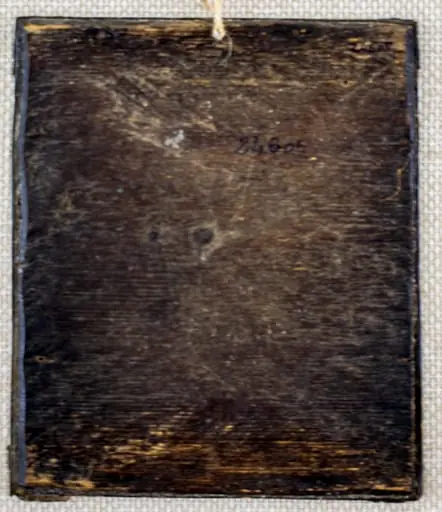 Icoana este pictată pe dosul unei bucăți de sticlă dreptunghiulară, în ax vertical; Sf. Dumitru, izvorâtorul de mir, care se prăznuiește pe 26 octombrie, este unul din sfinții reprezentați ca războinici, deși din viața lui nu se deduc fapte de arme. Semnificația este cea a războiului nevăzut cu patimile.În concepția populară Sf. Dimitrie este cel care dezleagă iarna, corespondentul Sf. Gheorghe care leagă iarna și dezleagă primăvara. Reprezentările lor sunt deasemenea asemănătoare, fie călare, Sf. Gheorghe pe cal alb și Sf. Dimitrie pe cal roșu. Aici Sf. Dimitrie 3/4, este redat ușor din semiprofil, în picioare, în mâna dreaptă cu o suliță iar în stânga avînd o cruce. Mantie roșie, lungă, cămașă verde închis, zale.Chipul este realizat în manieră naivă, expresiv.Părul lung, negru este revărsat pe umeri. Câmp bleu, cu un chenar din flori mari, roșii cu frunze în aceeași nuanță de verde pe care zugravul a mai utilizat-o. Inscripția este pe fond alb, într-un chenar dreptunghiular plasat în spatele aureolei. Pictura are caracteristicile specifice picturii niculene:stângăcia, simplitatea și primitivismul desenului; compoziția sumară, culorile intense. Rama- 4 șipci de brad profilate, culoarea lemnului natur.
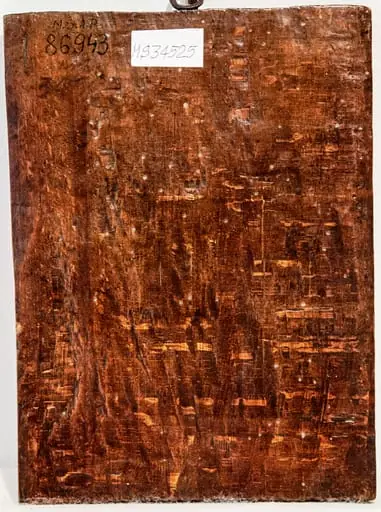 Maniera naivă. Sfântul este redat 3/4, din ușor semiprofil, binecuvântînd cu un gest stângaci cu mâna dreaptă, în stânga ținând cartea sfântă.Este redat cu capul descoperit, părul și barba cărunte, trăsăturile feței expresive, ușor stângace, cu atenție acordată unor detalii(ex. albul ochilor) Înveșmântat simplu, cu sacos roșu peste stiharul bleumarin, epitrahil verde cu cruci negre. În jurul capului are aureolă trasată cu un instrument!. Fondul sugerează cerul albastru separat cu o linie închisă de o porțiune roșie cu elemente vegetale?, porțiunea de jos sugerând pământul. Scrisul este dezordonat, studiat parcă. În stânga se află inscripționat anul, iar în dreapta io inscripție cu litere chirilice care ar putea aminti despre "GORGE AL BOINII DIN BROȘTENI?)(posibil comanditarul) Chenar dintr-o linie albă, subțire. Icoana a fost restaurată.
 Icoamare
 Icoai"(a
 Peisaj
 Femeie în picioare
 Ten Bamboo Studio Painting and Calligraphy Handbook (Shizhuzhai shuhua pu): Orchids
 Sfântul Nicolae
 Buna gro
 Marină