Artwork
A Woman Charms Snakes in the Wilderness: Asavari Ragini, from a Ragamala
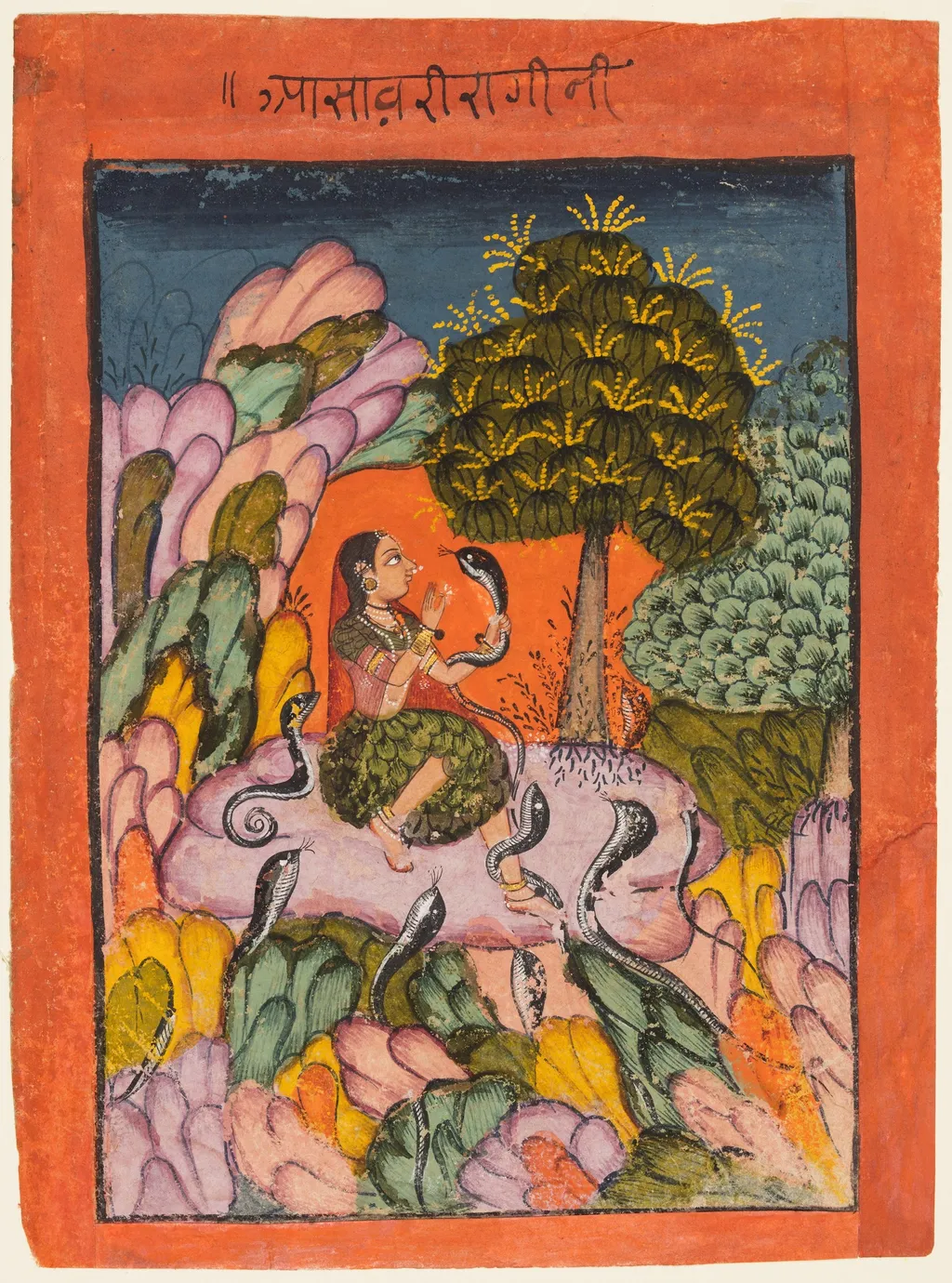
A Woman Charms Snakes in the Wilderness: Asavari Ragini, from a Ragamala is an unspecified painting. It dates from 1712 and is held in the collection of the Cleveland Museum of Art. The work portrays a solitary female figure seated on a rock amid a wild landscape, encircled by numerous snakes.
About this work
Overview
The work portrays a solitary female figure seated on a rock amid a wild landscape, encircled by numerous snakes. She is dressed in a green skirt and a red upper garment, complemented by ornamental jewelry, and holds a snake in her right hand while other serpents coil around the scene. A solitary tree, shrubbery and a deep blue sky complete the backdrop.
Subject & Meaning
The composition juxtaposes the woman’s vibrant attire with the surrounding reptiles, suggesting an allegorical link between femininity and the natural world.
The composition juxtaposes the woman’s vibrant attire with the surrounding reptiles, suggesting an allegorical link between femininity and the natural world. The presence of snakes may allude to protective or transformative powers, a motif common in Indian visual traditions where serpents symbolize both danger and divine guardianship. The figure’s calm demeanor implies mastery over the creatures rather than fear.
Technique & Style
Rendered with a bright palette, the painting employs saturated greens, reds, yellows and blues to emphasize vitality. The figures are outlined with clear contours, while the snakes are depicted with sinuous, flowing lines that contrast with the more static rock and foliage. The overall visual language reflects the stylized narrative approach typical of ragamala illustrations, where music and myth intertwine.
History & Provenance
The piece is part of the collection at the Cleveland Museum of Art. It originates from a ragamala series, a set of visual representations linked to Indian musical modes. The museum acquired the work as part of its holdings of South Asian art, preserving its cultural context within the broader narrative of devotional and courtly painting traditions.
Artist & collection

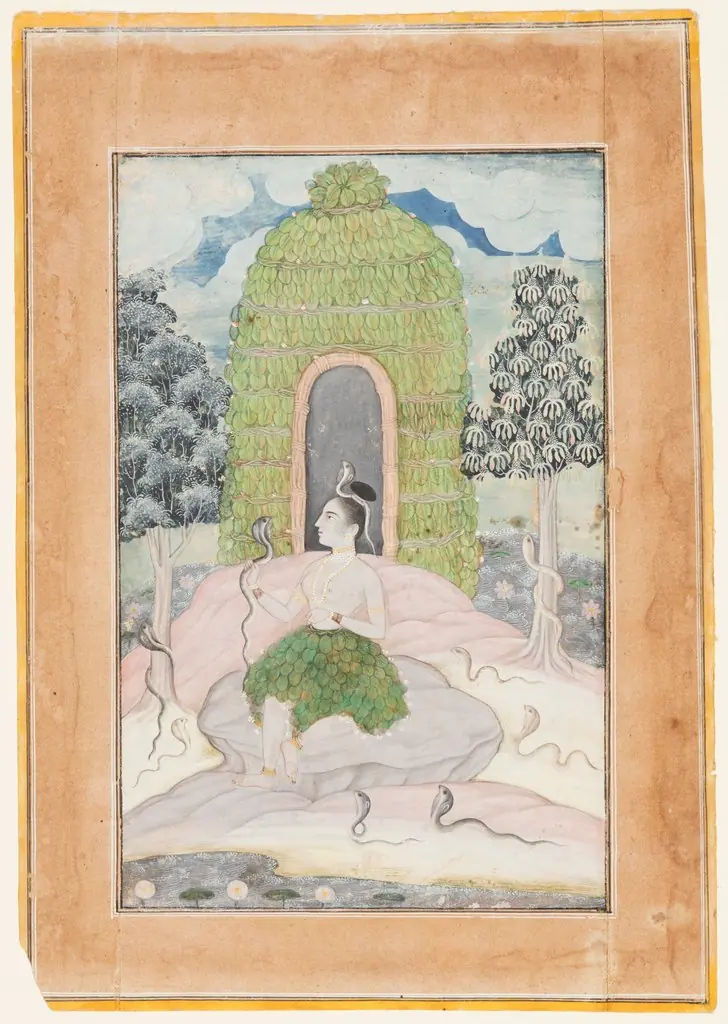 Ascetic Princess with Snakes in a Wilderness: Asavari Ragini, from a Ragamala
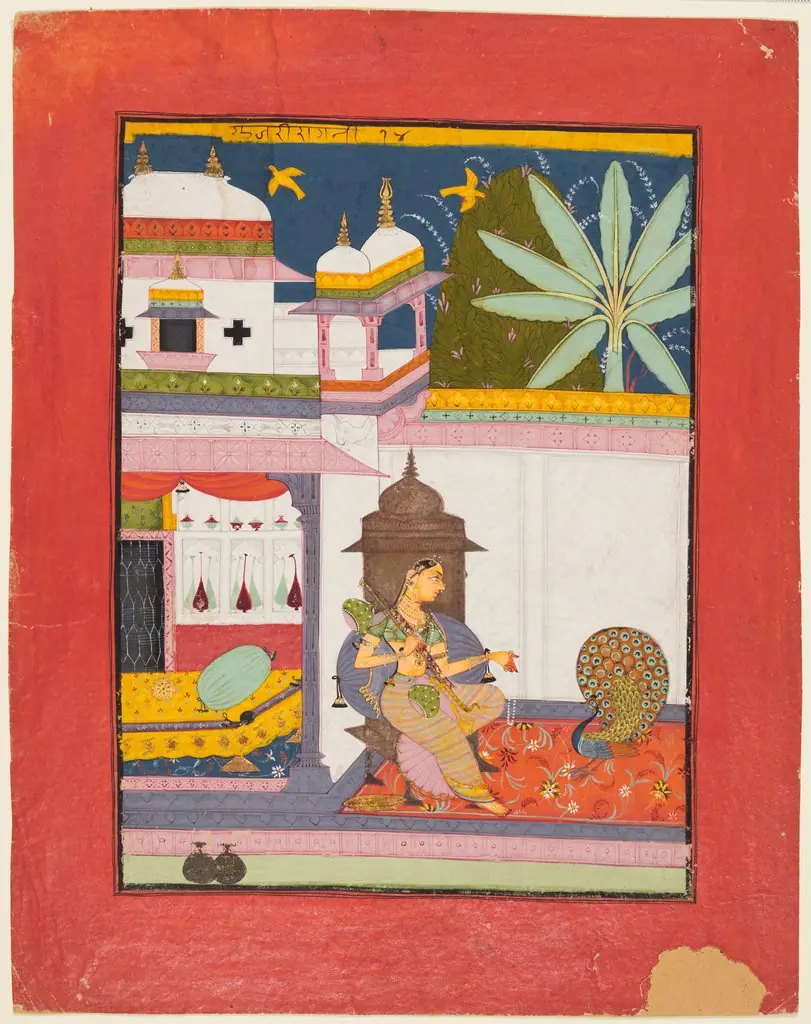 Woman Addressing a Peacock: Gujari Ragini of Megh, from a Ragamala
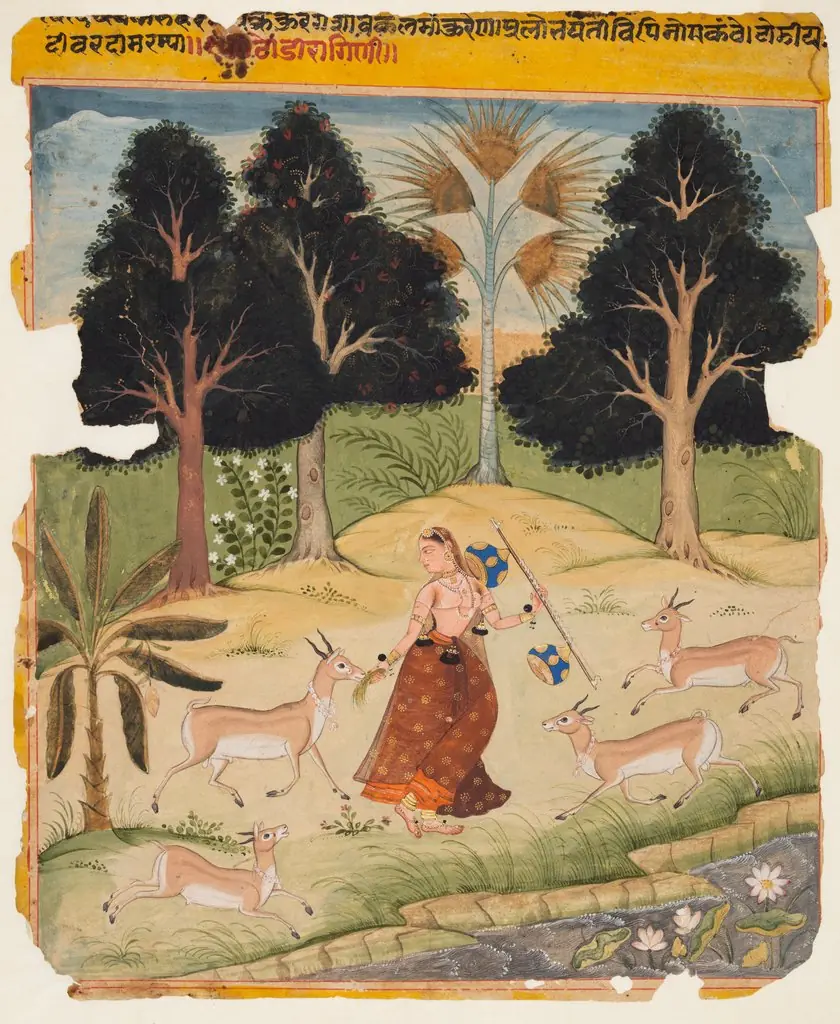 Woman Feeding Deer: Todi Ragini, from a Ragamala
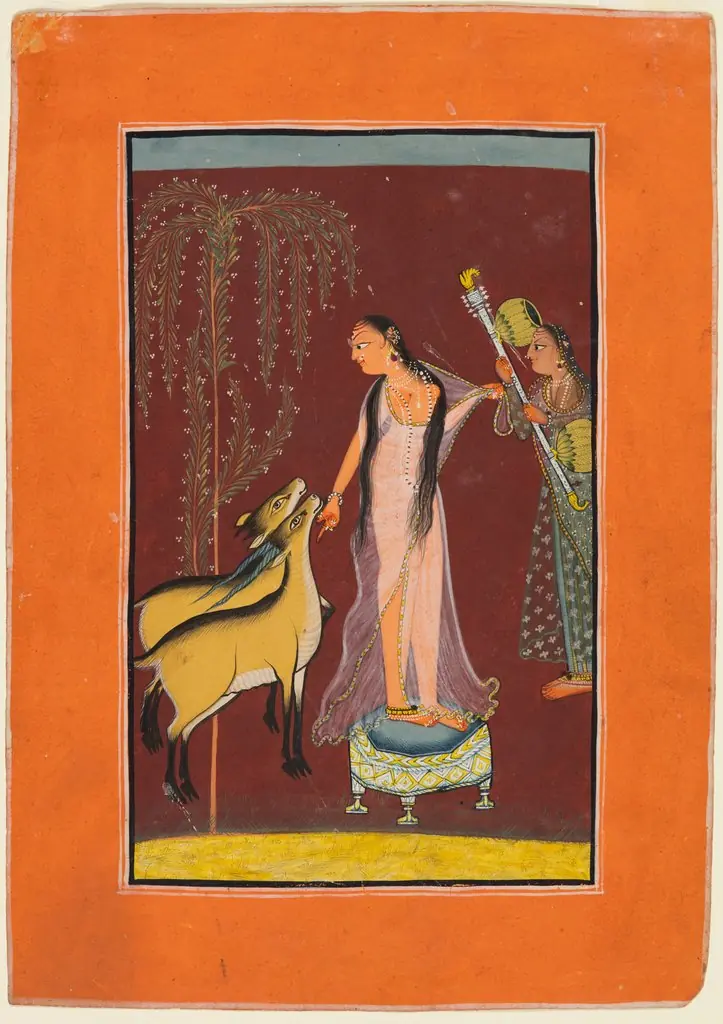 A Lady with Attendant and a Pair of Deer: Probably Gujari Ragini of Dipak, from a Pahari Ragamala
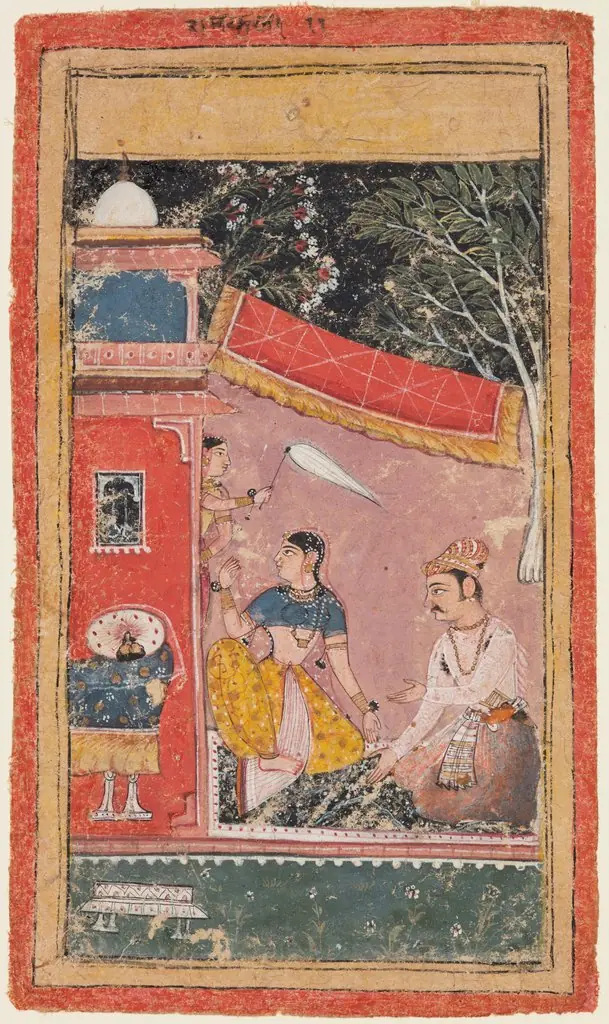 Lovers on a Terrace: Ramakali Ragini of Hindol, from a Bundi Ragamala