Artwork
Jean Louis de Nogaret de La Valette (1554-1642), French admiral
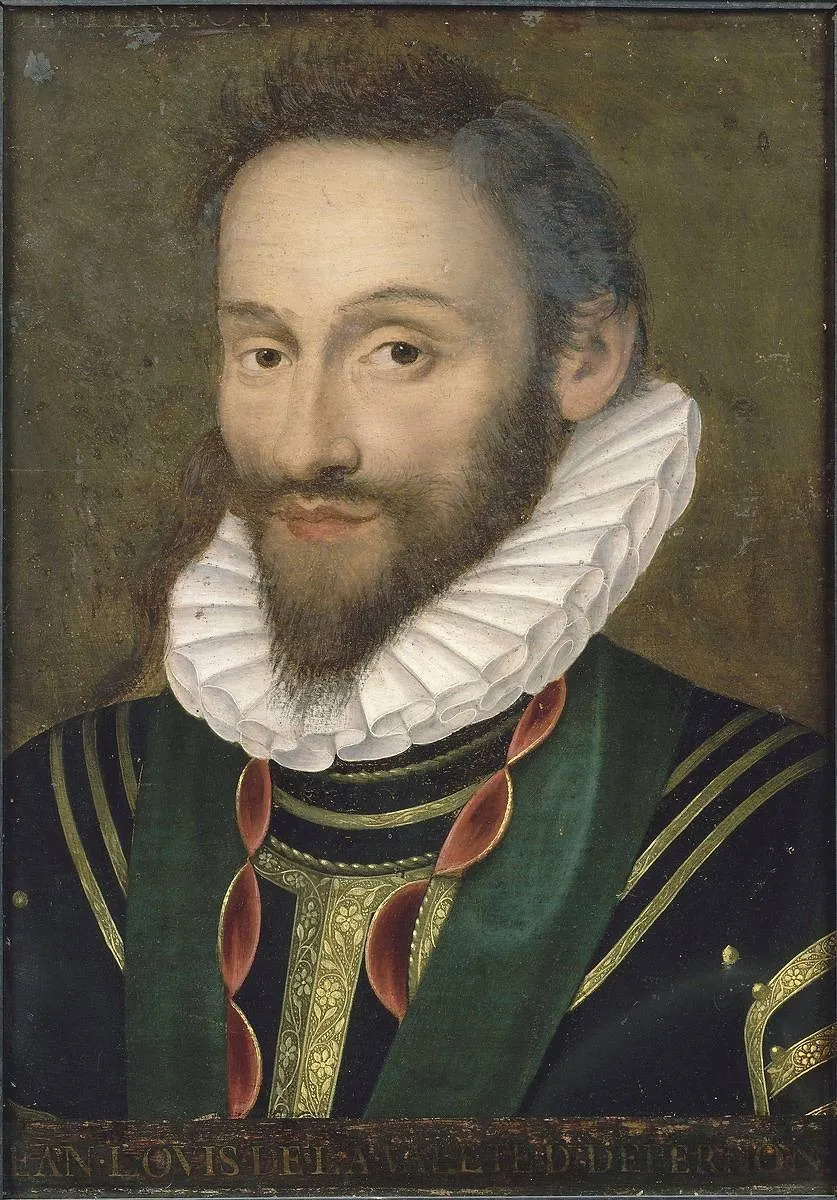
Jean Louis de Nogaret de La Valette (1554-1642), French admiral is an oil painting by the Early Baroque Italian artist Unknown. It dates from 1597 and is held in the collection of the Palace of Versailles. The oil painting depicts Jean Louis de Nogaret de La Valette (1554–1642), a French admiral, rendered in a half‑length portrait.
About this work
Overview
The oil painting depicts Jean Louis de Nogaret de La Valette (1554–1642), a French admiral, rendered in a half‑length portrait. He is presented with dark hair and a neatly trimmed beard, dressed in a green and black ensemble accented with gold embroidery. A white ruffled collar frames his neck, and the figure stands before a subdued brown backdrop that emphasizes the detailed costume.
Subject & Meaning
The work serves as a formal representation of Nogaret de La Valette’s status and military rank, highlighting his authority through the elaborate attire and composed demeanor. The inclusion of the gold‑trimmed garments and the crisp ruff signals his noble standing, while the restrained background focuses attention on the individual’s personal attributes rather than narrative elements.
Technique & Style
Executed in oil on canvas, the portrait employs a muted palette that balances the rich greens and blacks of the clothing with the warm brown of the background. Fine brushwork renders the intricate patterns on the fabric and the texture of the ruff, while subtle glazing creates depth in the facial features, achieving a realistic yet dignified likeness.
History & Provenance
The painting’s provenance traces to collections of French aristocratic portraiture, though specific ownership records are limited. It likely remained within noble circles before entering public or institutional holdings in the 19th or early 20th century, aligning with the broader acquisition trends of French military portraits.
Context
Created during the late Renaissance to early Baroque period, the portrait reflects contemporary conventions for depicting high‑ranking officials. The emphasis on elaborate dress and a neutral background aligns with the period’s focus on individual prestige and the emerging interest in realistic, psychologically nuanced portraiture.
Legacy
While not widely reproduced, the portrait contributes to the visual documentation of French naval leadership in the early modern era. It offers scholars a reference for costume, insignia, and the aesthetic standards applied to military elites in late‑16th‑century France.
Artist & collection

 Domestic Scene
 Giacomo and Cardinal Marco, investing Andrea, Abbot of San Zeno, with his Benefice
 The Nymph of Fontainebleau
 Portrait of a Woman
 Madonna and Child with Saints in the Enclosed Garden
 Venus and Minerva
 Family Group of Four on Sofa
 Wall painting from Room H of the Villa of P. Fannius Synistor at Boscoreale
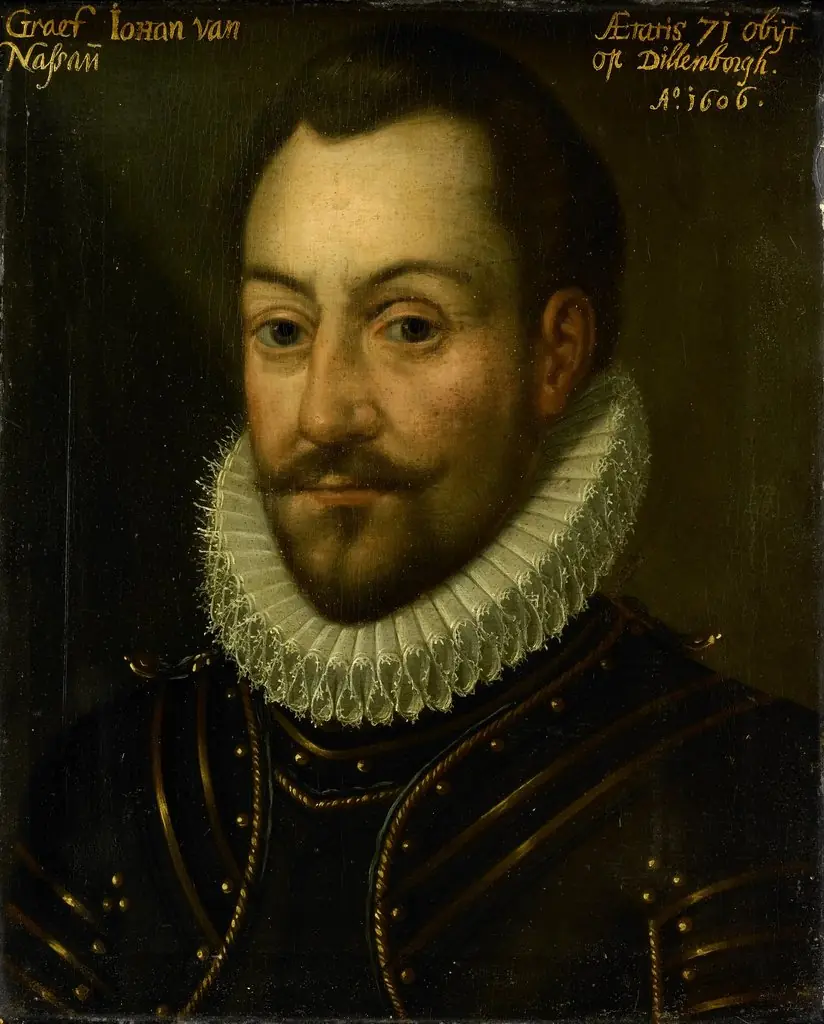 Portrait of an unknown count or officer, possibly Jan the Elder (1535-1606), Count of Nassau
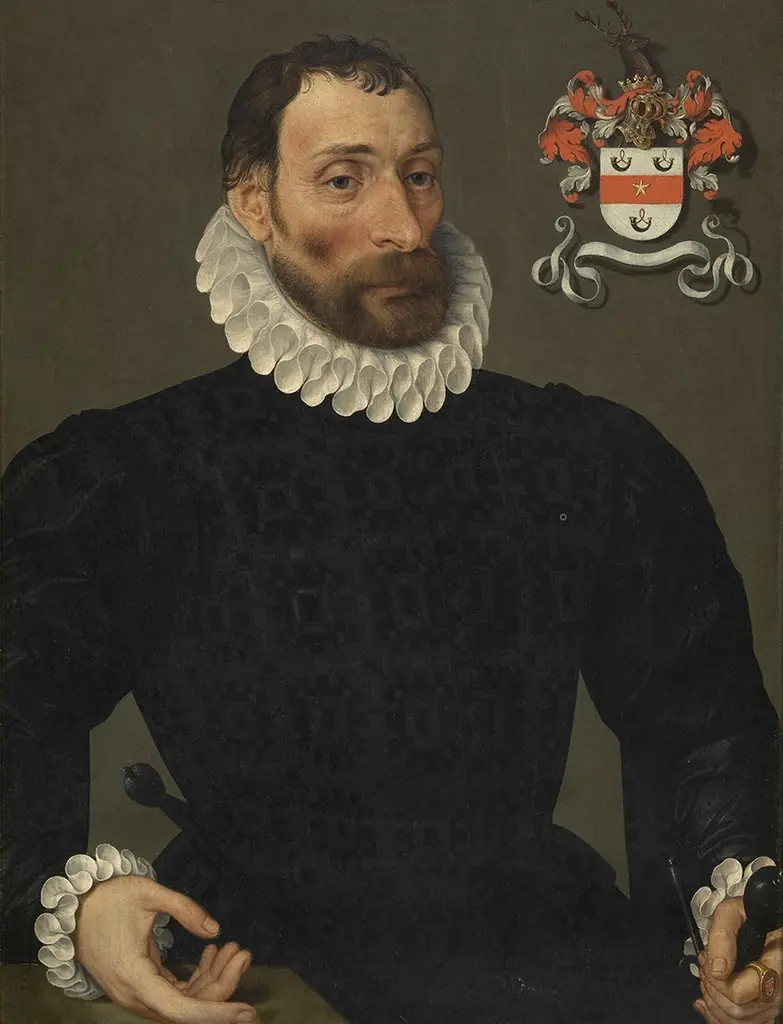 Portrait of Jan Wyts
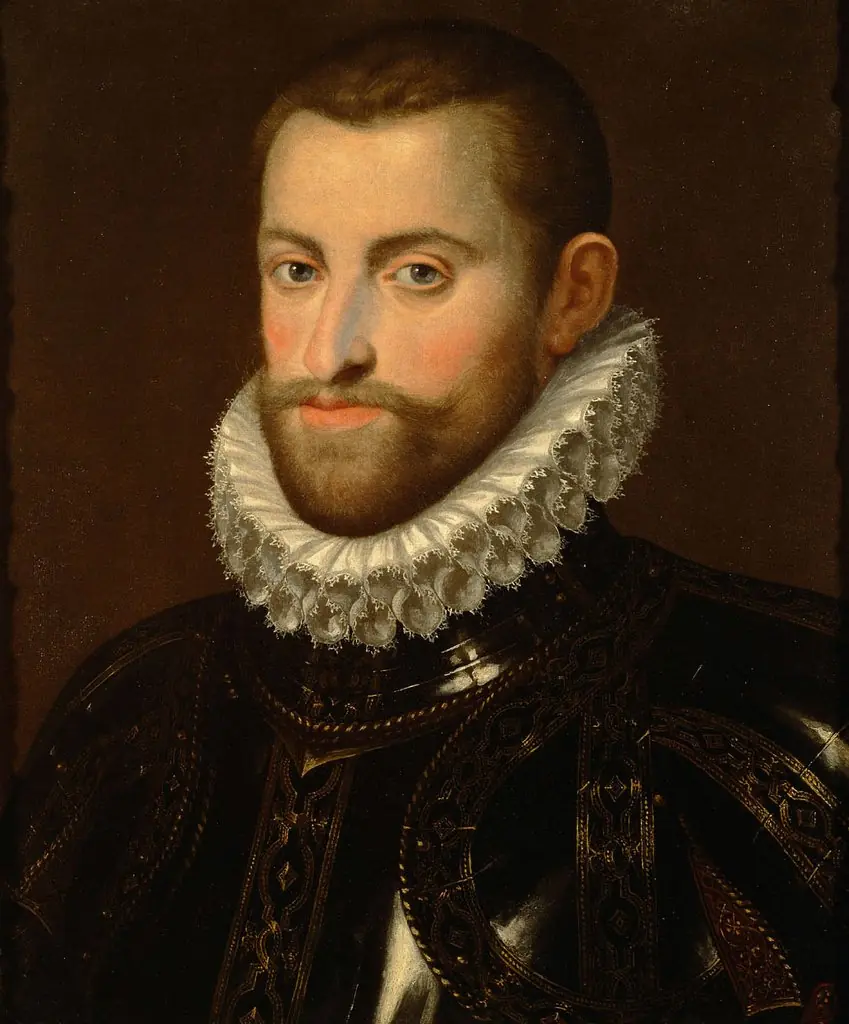 Erzherzog Ernst im Harnisch, Brustbild
 Wilhelm I. von Nassau-Oranien (Kopie nach)
 Portrait of a Man with a High Hat
 Louis Ier de Bourbon, prince de Condé (1530-1569)
 Portrait of a Man Aged 31
 Emperor Rudolf II in Armour
 Portrait of Anthony of Bourbon (1518–1562), King of Navarre
 Untitled