Artwork
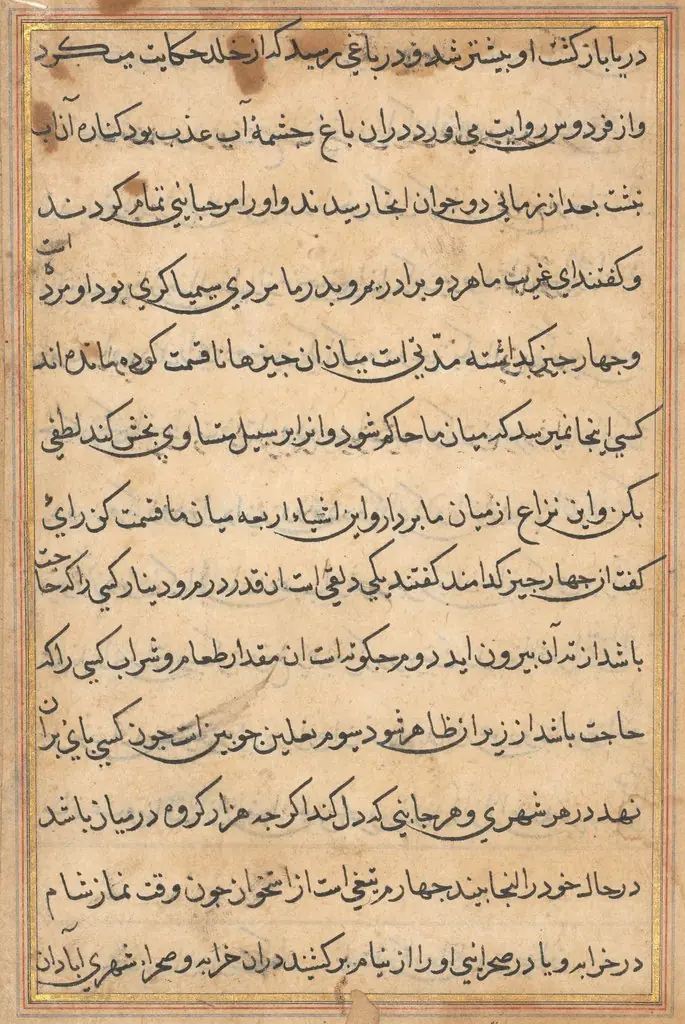
Page from Tales of a Parrot (Tuti-nama): text page
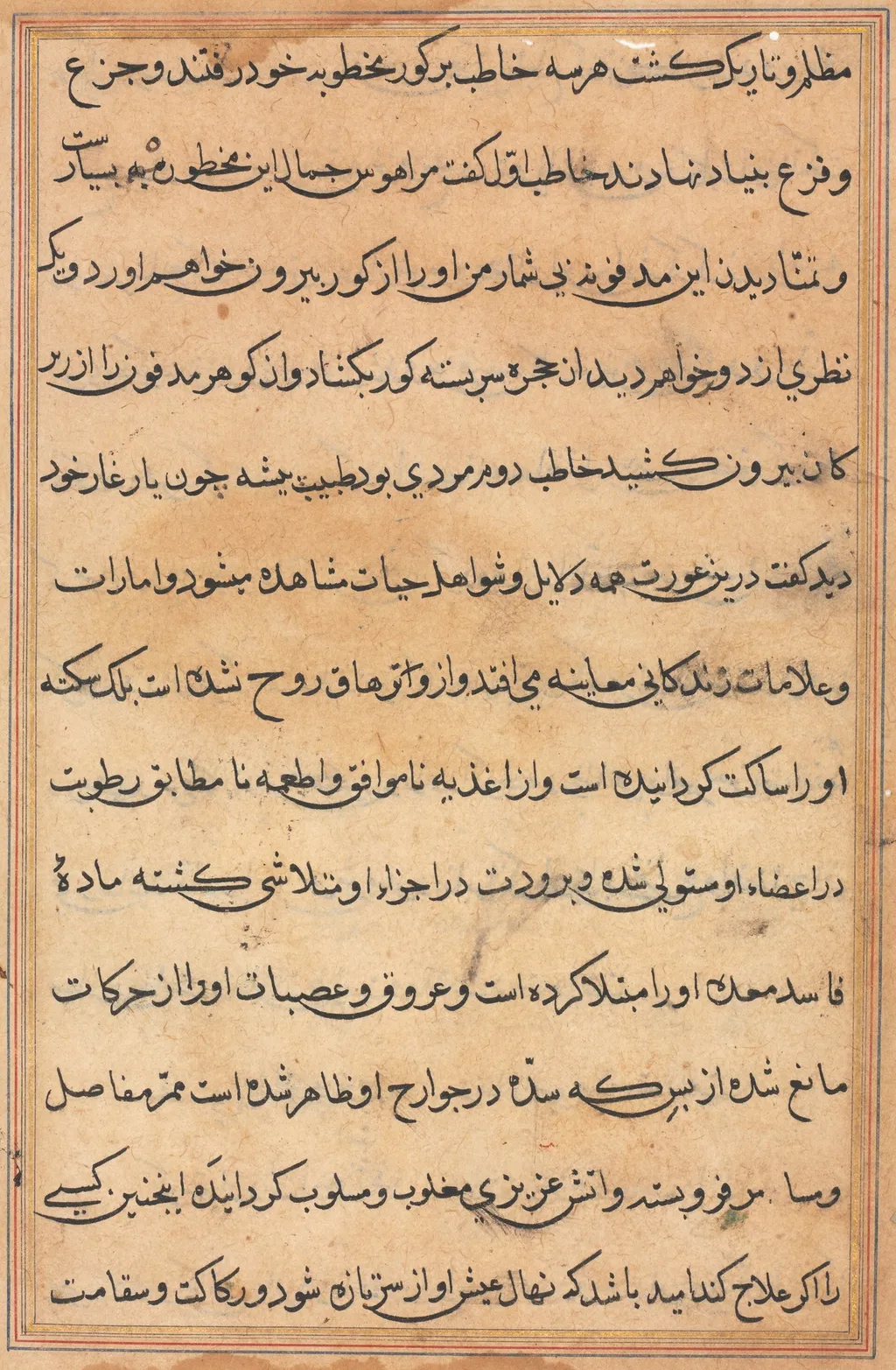
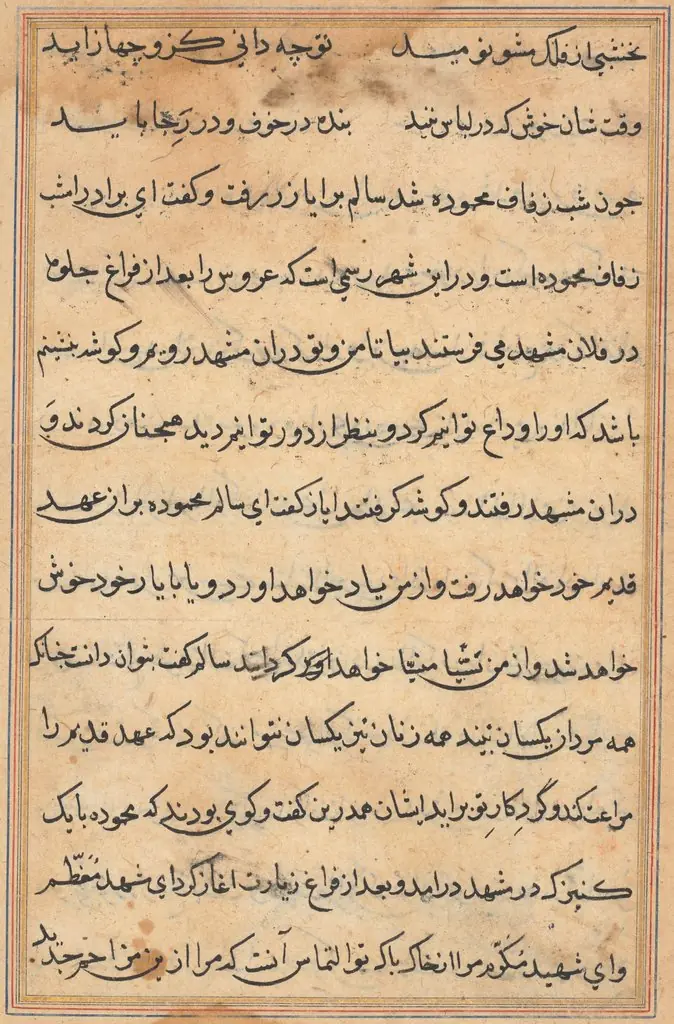
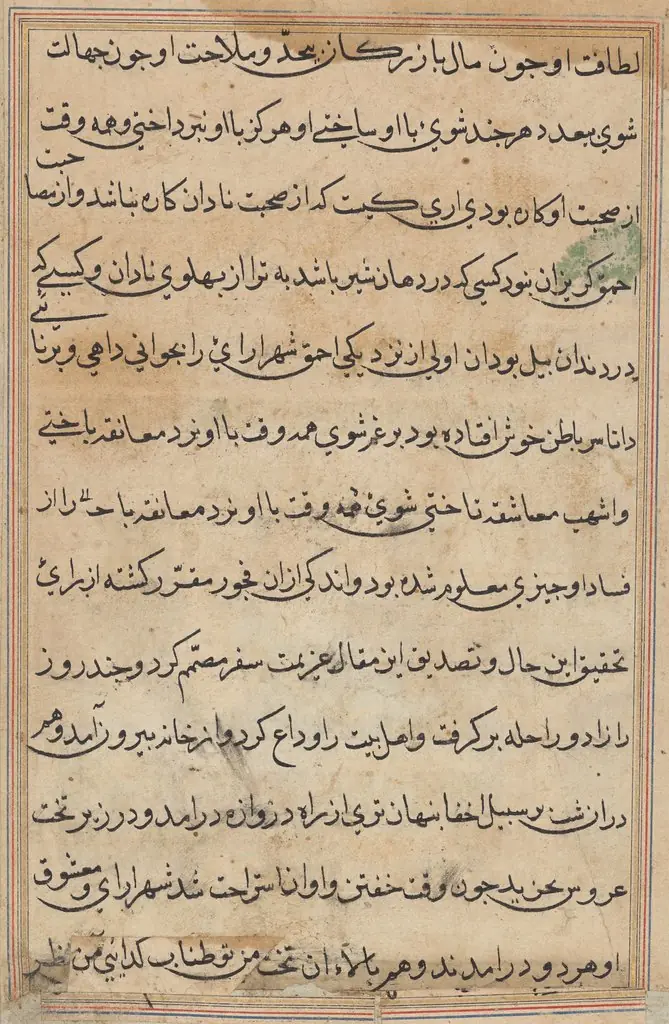
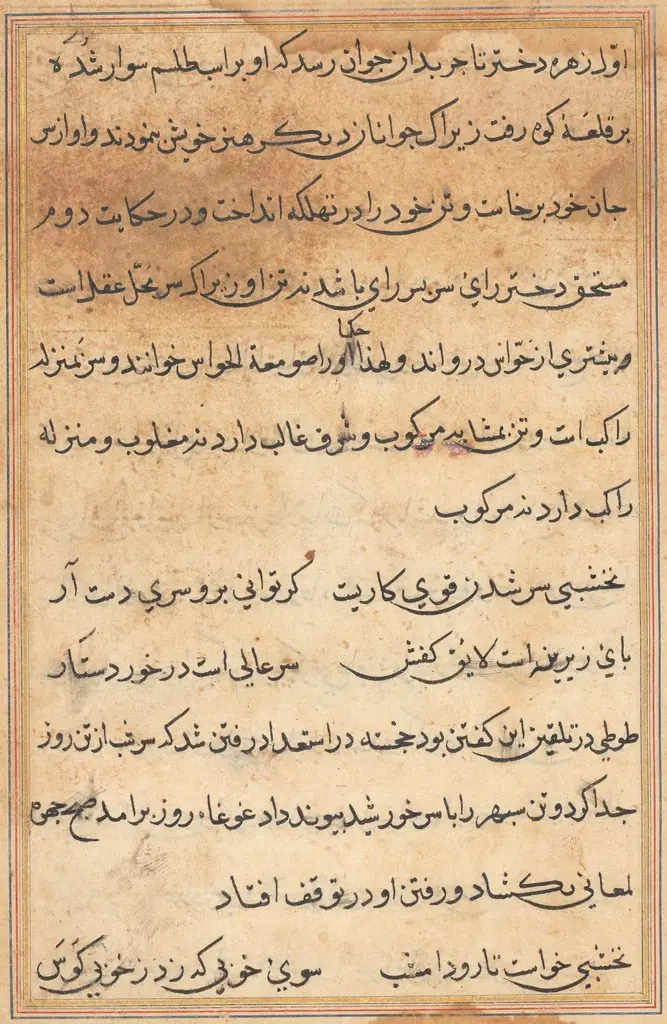
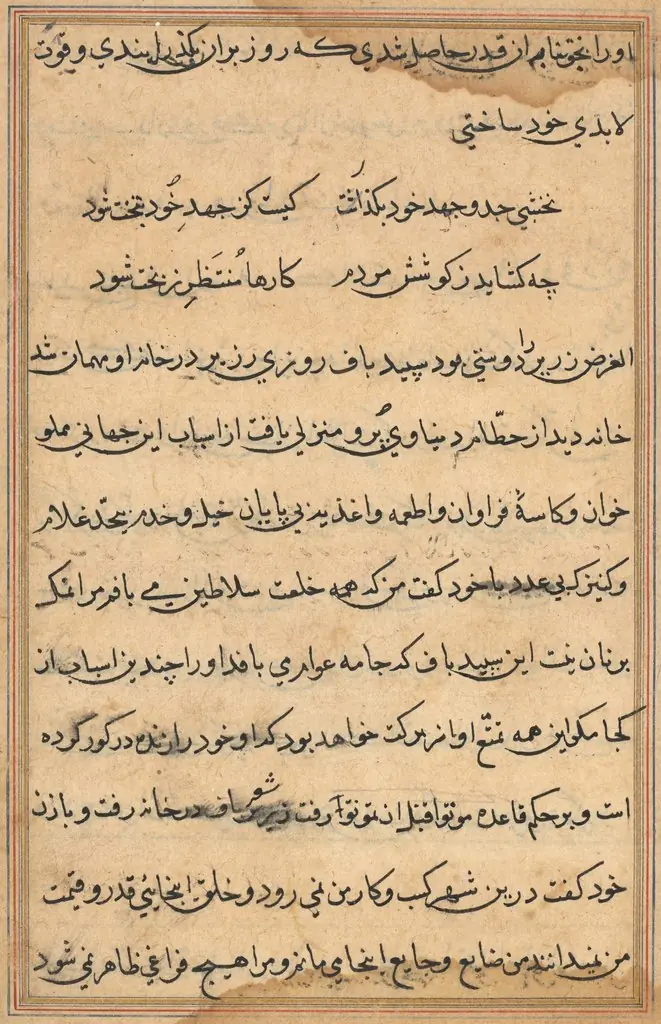
Page from Tales of a Parrot (Tuti-nama): text page is an unspecified painting. It dates from 1560 and is held in the collection of the Cleveland Museum of Art. This manuscript leaf belongs to the Persian illustrated work *Tales of a Parrot* (Tuti‑nama).
About this work
Overview
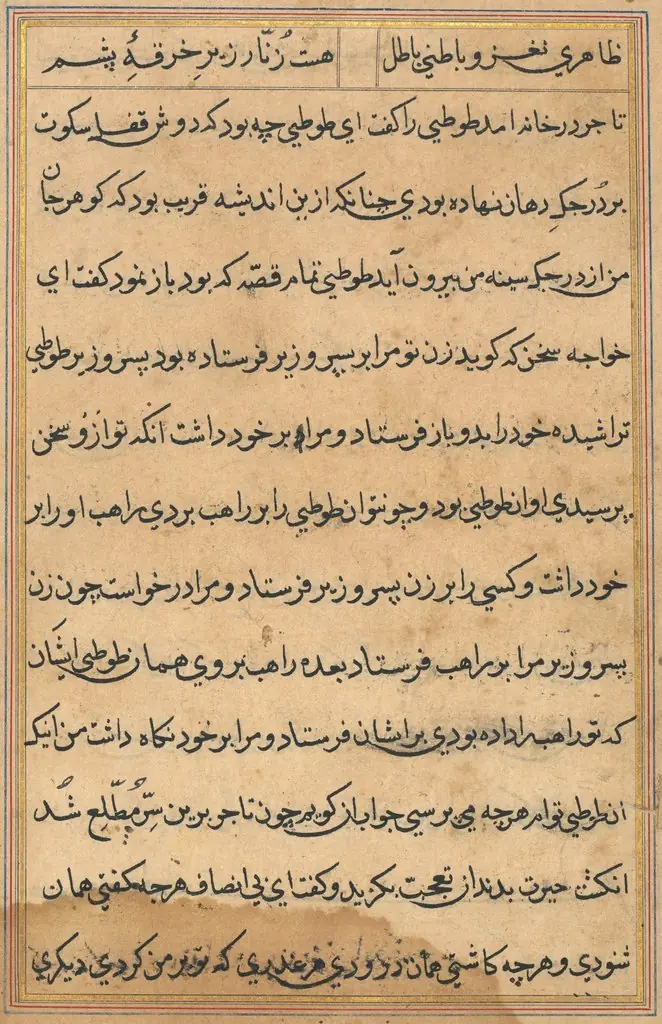
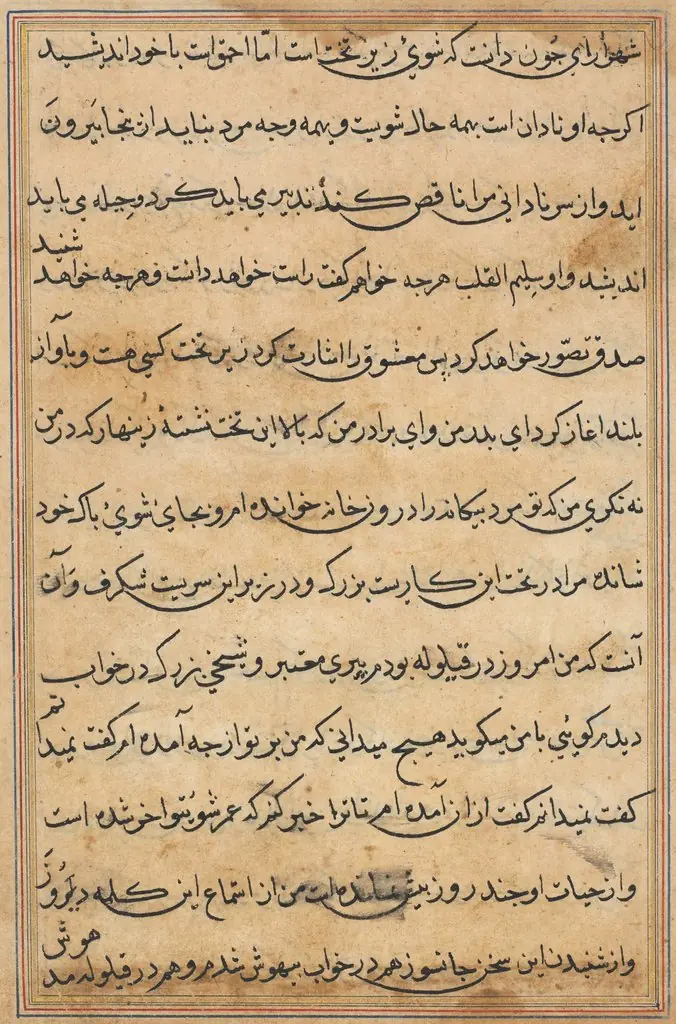
This manuscript leaf belongs to the Persian illustrated work *Tales of a Parrot* (Tuti‑nama). The page is densely filled with black calligraphic script, bordered by a narrow red line. The paper, now yellowed and bearing faint crease marks, reflects the material culture of early 17th‑century Mughal court book production, where text and decoration were integrated on a single folio.
Subject & Meaning
The written portion recounts a moral tale featuring a parrot, a common device in Persian literature for conveying ethical instruction. The story was selected for Prince Salim, the heir apparent, suggesting its role as a didactic text intended to shape the future emperor’s values through allegorical narrative.
Technique & Style
The page showcases fine black ink on a slightly textured paper, with the script arranged in tight, uniform rows.
The page showcases fine black ink on a slightly textured paper, with the script arranged in tight, uniform rows. A thin red border frames the text, providing a subtle visual contrast. The calligraphy follows the elegant Persian Nastaʿlīq style, emphasizing fluidity and legibility, while the paper’s aged appearance indicates traditional preparation methods involving animal glue and natural pigments.
History & Provenance
Commissioned for Prince Salim, who ascended the throne as Emperor Jahangir in 1605, the manuscript reflects the Mughal patronage of Persian literary arts. The folio eventually entered the collection of the Cleveland Museum of Art, where it is displayed alongside other pages from the same volume, illustrating the continuity of the work’s preservation and scholarly interest.
Artist & collection

 Page from Tales of a Parrot (Tuti-nama): text page
 Page from Tales of a Parrot (Tuti-nama): text page
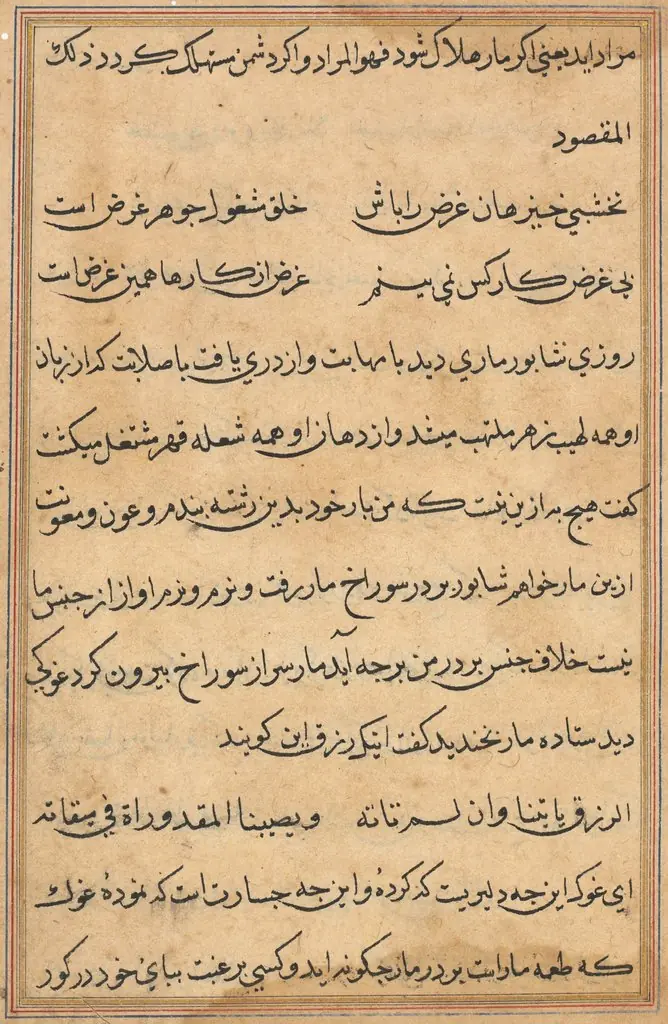 Page from Tales of a Parrot (Tuti-nama): text page
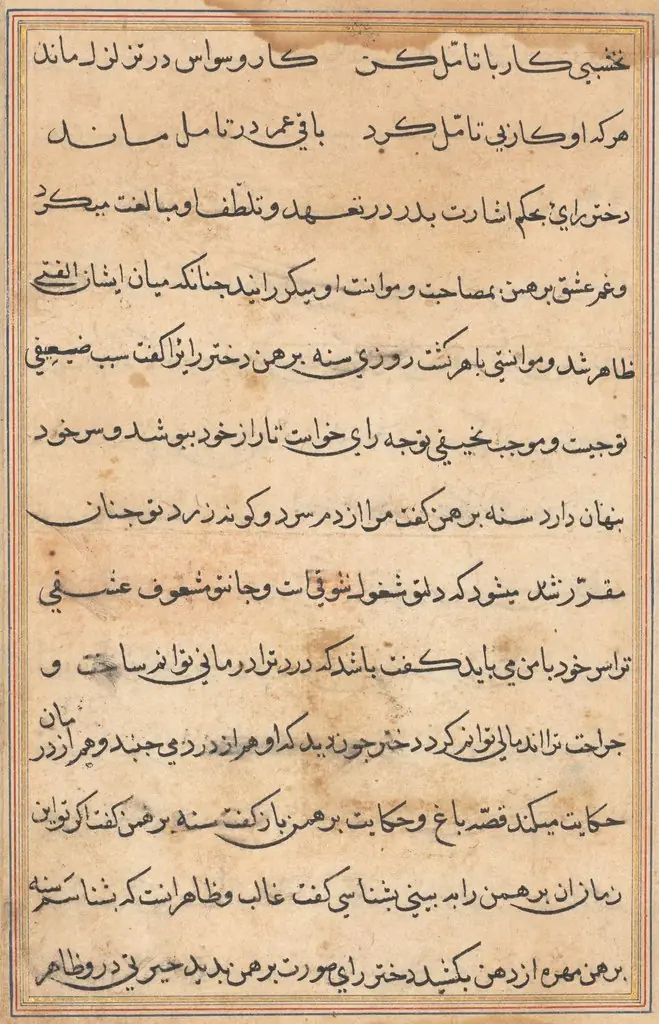 Page from Tales of a Parrot (Tuti-nama): text page
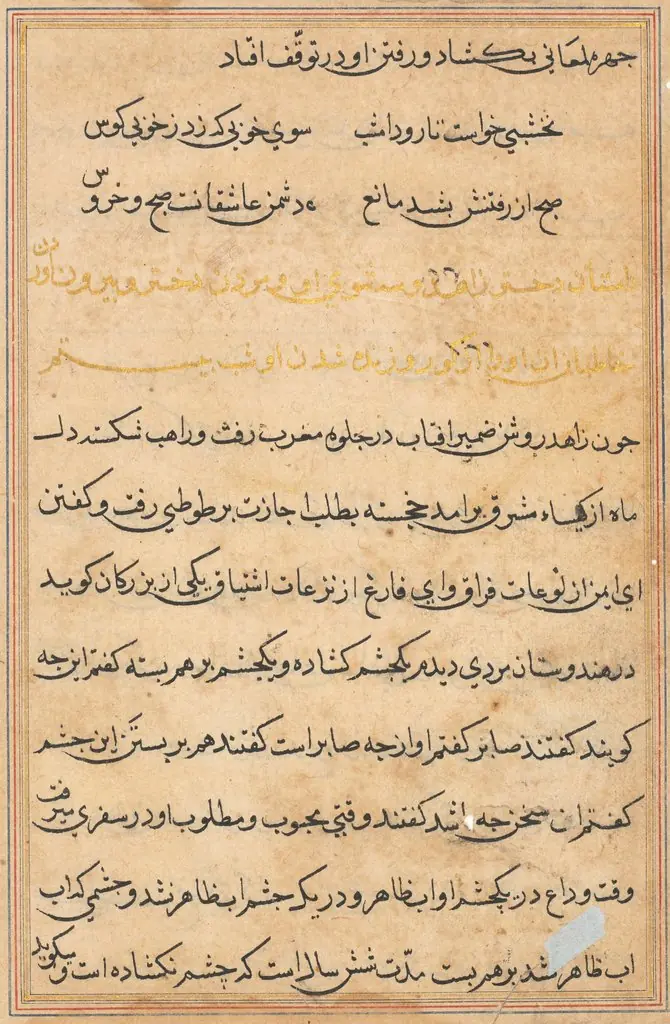 Page from Tales of a Parrot (Tuti-nama): text page
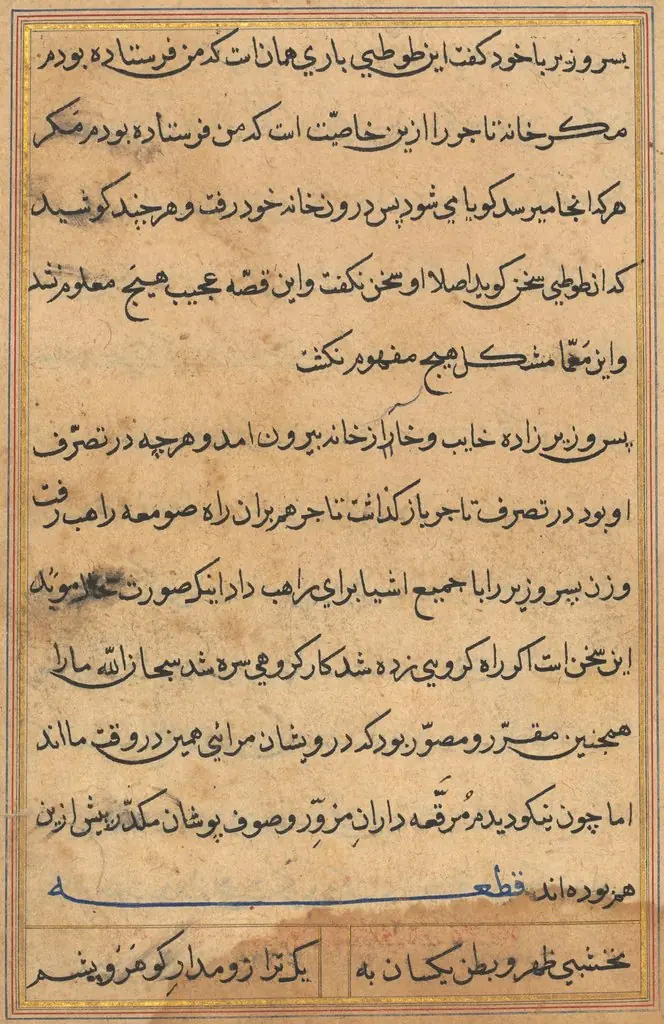 Page from Tales of a Parrot (Tuti-nama): text page