Artwork
Page from Tales of a Parrot (Tuti-nama): text page
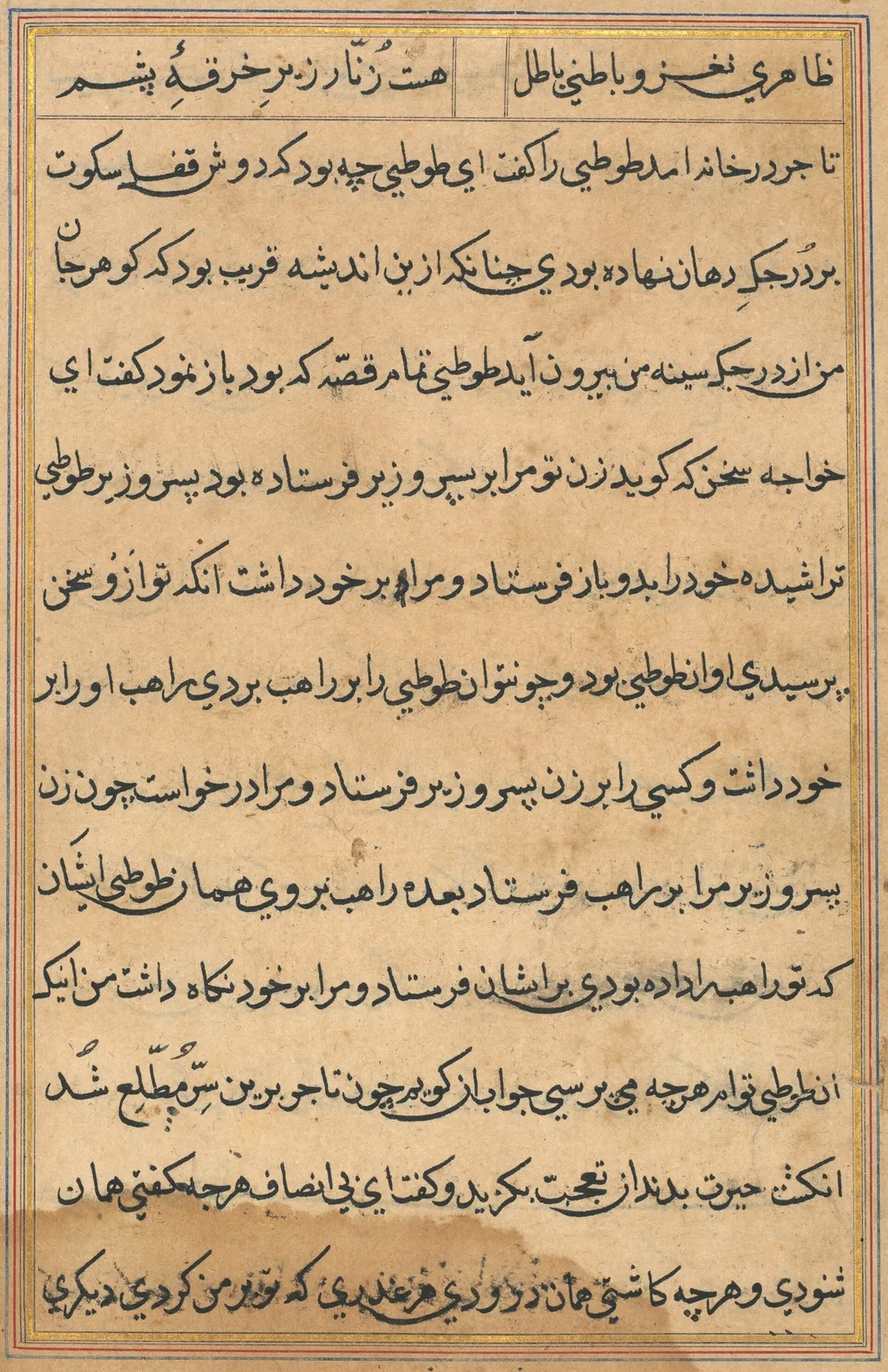
Page from Tales of a Parrot (Tuti-nama): text page is an unspecified painting. It dates from 1560 and is held in the collection of the Cleveland Museum of Art. This object is a single folio from the illustrated manuscript known as *Tales of a Parrot* (Tuti‑nama).
About this work
Overview
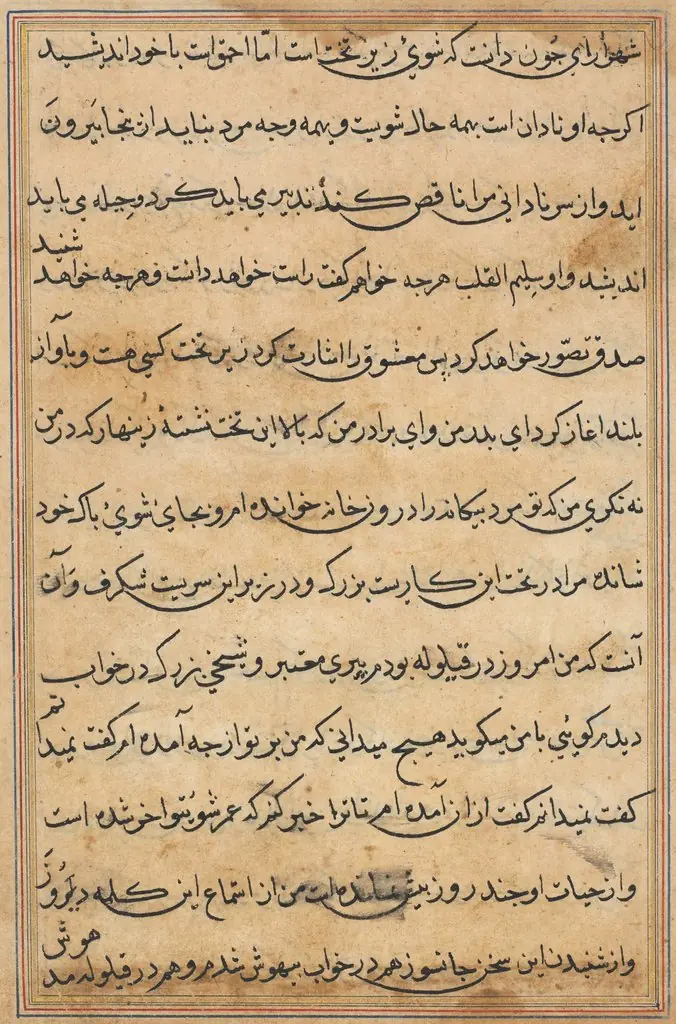
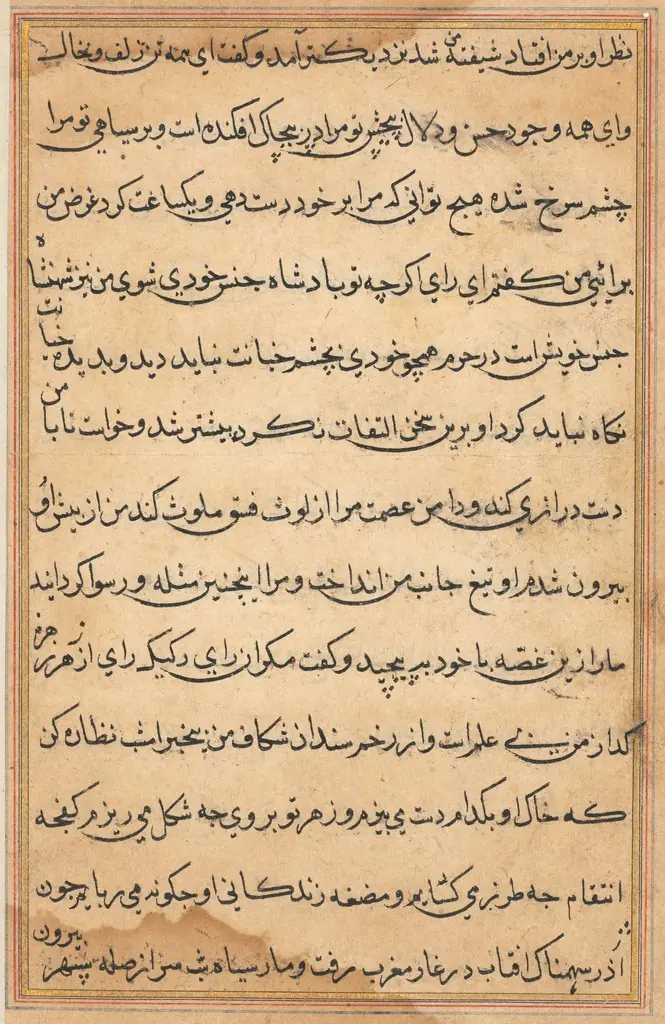
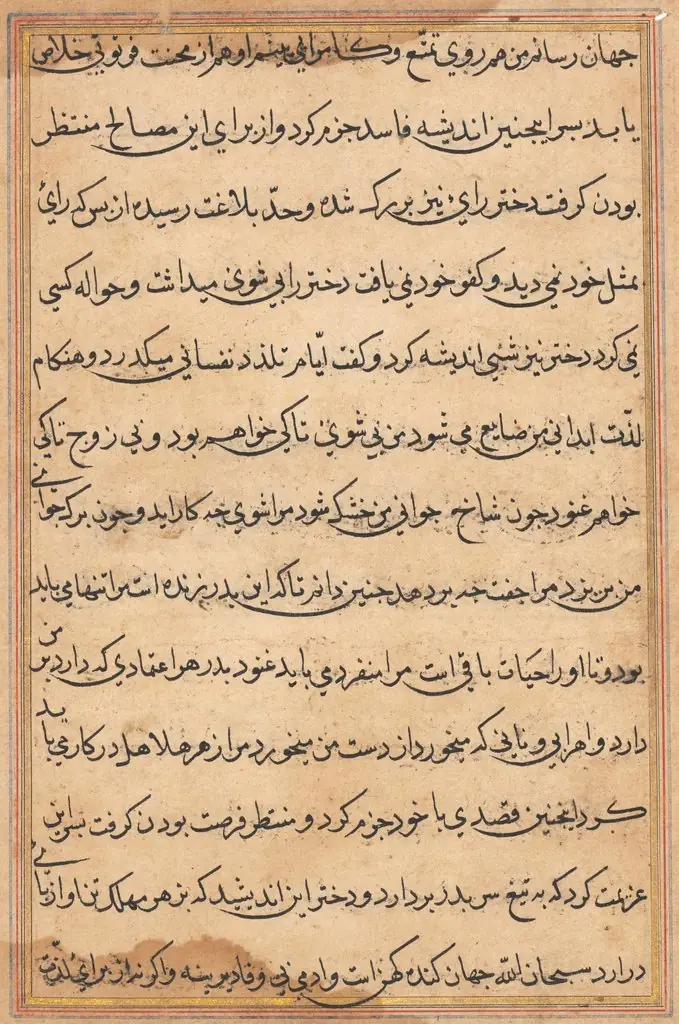
This object is a single folio from the illustrated manuscript known as *Tales of a Parrot* (Tuti‑nama). The page functions as a textual sheet rather than a full illustration, presenting the narrative in dense black calligraphy set against a warm, slightly yellowed paper surface.
Subject & Meaning
The script conveys a segment of the Persian fable tradition, recounting moral or romantic episodes typical of the *Tuti‑nama* genre. The text’s content, though not illustrated here, would have been paired with visual scenes elsewhere in the codex, guiding the reader through the story’s progression.
Technique & Style
The calligraphy is executed in nastaʿlīq, a Persian script that blends fluid cursive lines with angular accents, allowing for compact, elegant text blocks. Ink application is smooth and controlled, with subtle variations in darkness that suggest careful brushwork. A thin golden border outlines the page, adding a decorative yet restrained frame.
History & Provenance
The manuscript originates from the Persianate world, where nastaʿlīq was the dominant script for literary works from the 14th to 18th centuries. The specific folio’s later ownership trail is not detailed, but similar pages have entered museum collections through acquisitions of Persian book arts in the early 20th century.
Context
During the period when the *Tuti‑nama* was produced, manuscript production combined literary prestige with visual splendor. Textual pages like this one were often interleaved with miniature paintings, creating a dialogue between word and image that enhanced the reader’s experience.
Legacy
Pages such as this illustrate the high level of calligraphic skill in Persian manuscript culture and inform contemporary studies of script development, book design, and the transmission of literary narratives across the Islamic world.
Artist & collection

 Page from Tales of a Parrot (Tuti-nama): text page
 Page from Tales of a Parrot (Tuti-nama): text page
 Page from Tales of a Parrot (Tuti-nama): text page
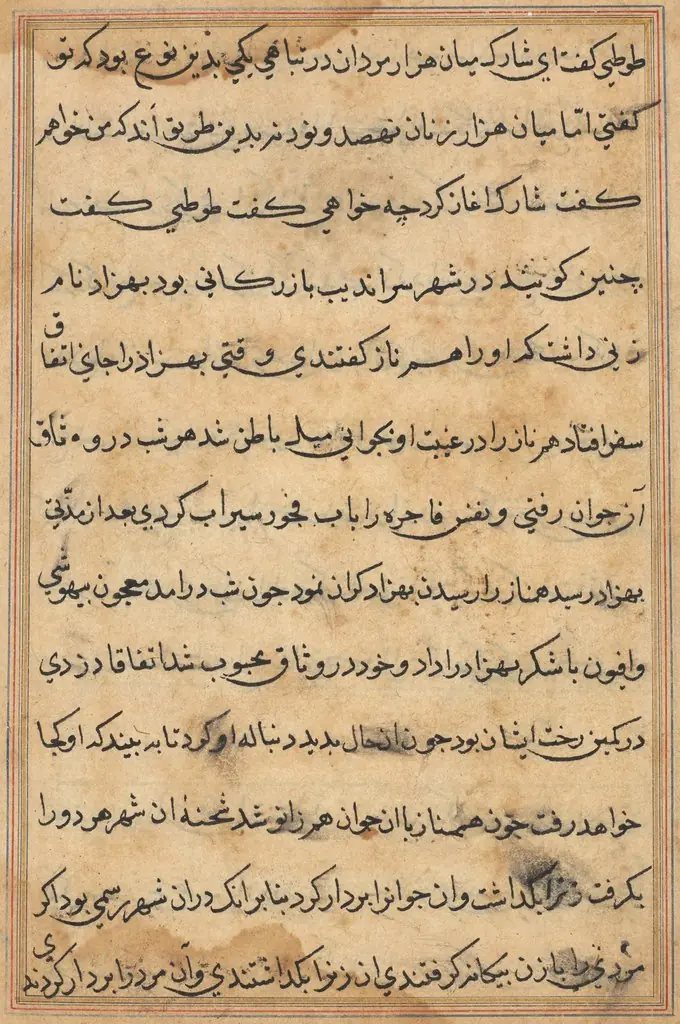 Page from Tales of a Parrot (Tuti-nama): text page
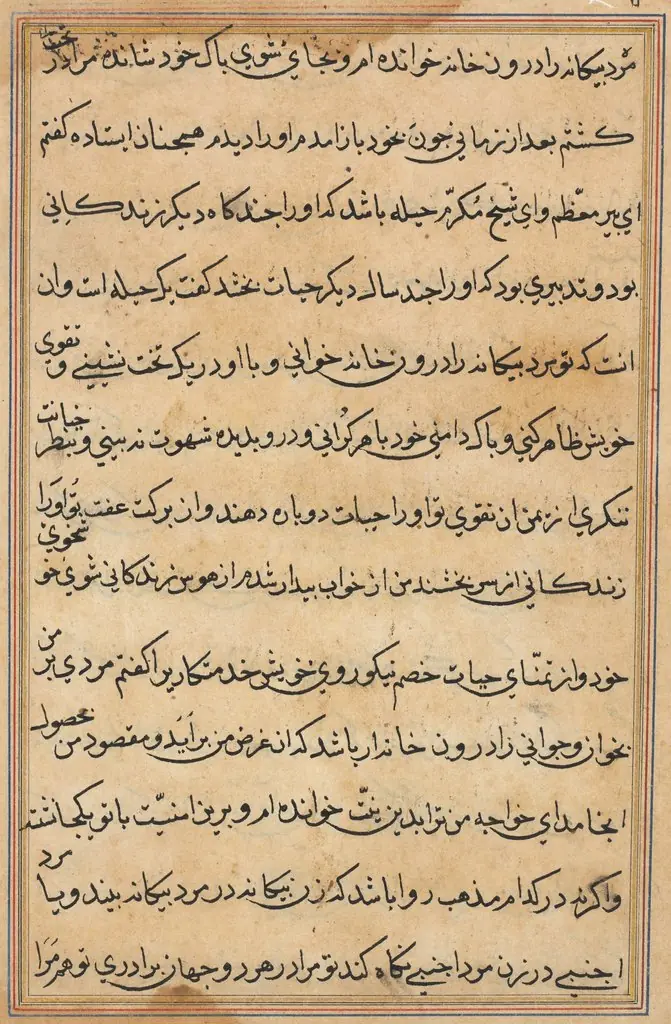 Page from Tales of a Parrot (Tuti-nama): text page
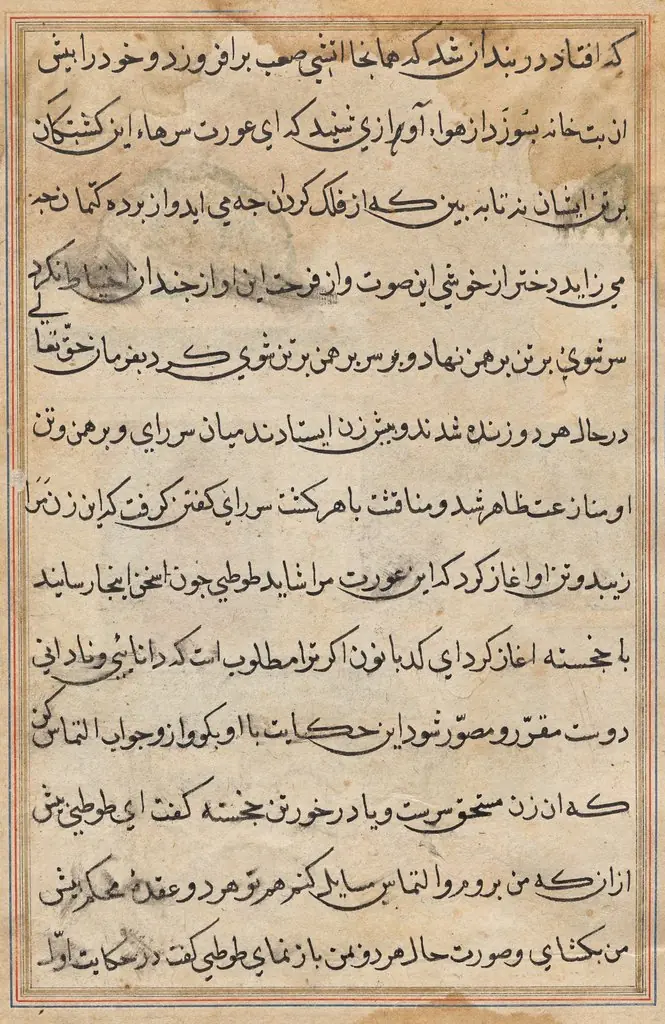 Page from Tales of a Parrot (Tuti-nama): text page
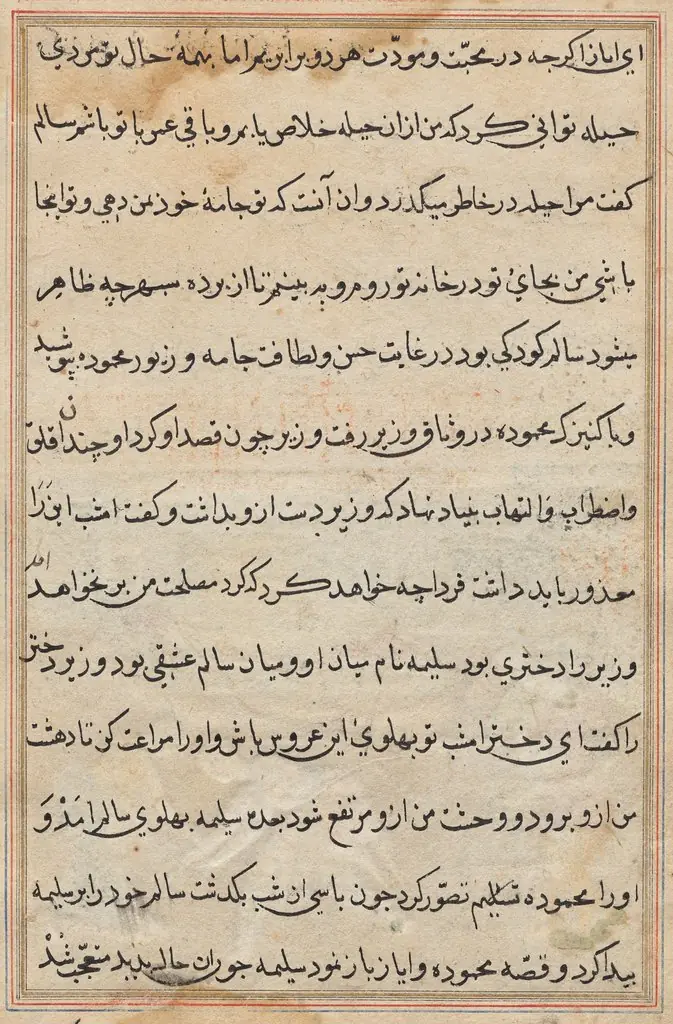 Page from Tales of a Parrot (Tuti-nama): text page
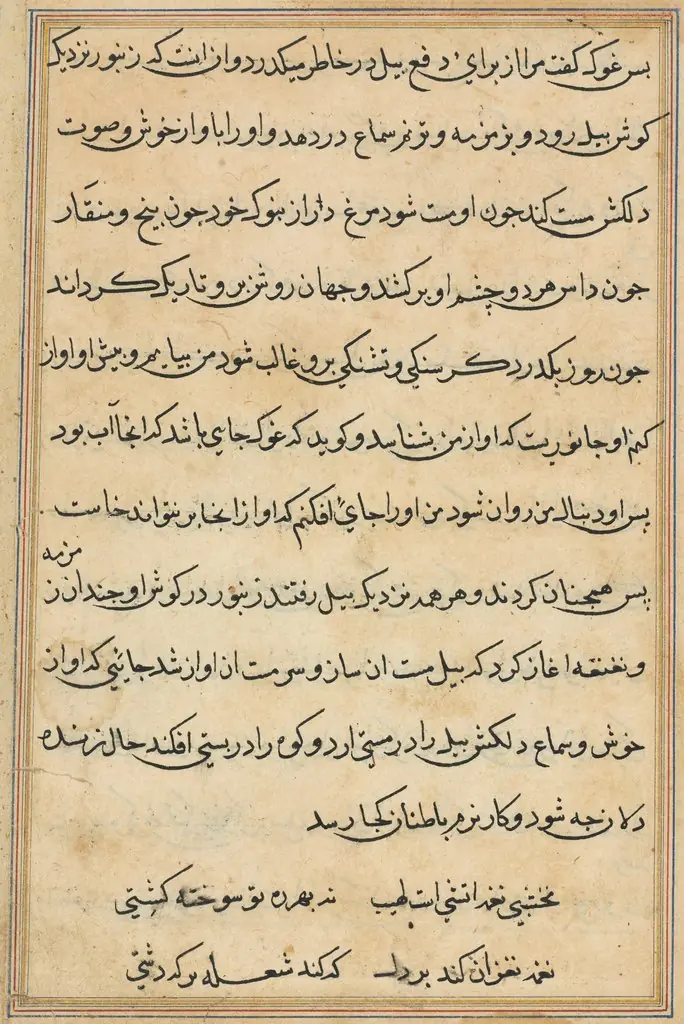 Page from Tales of a Parrot (Tuti-nama): text page
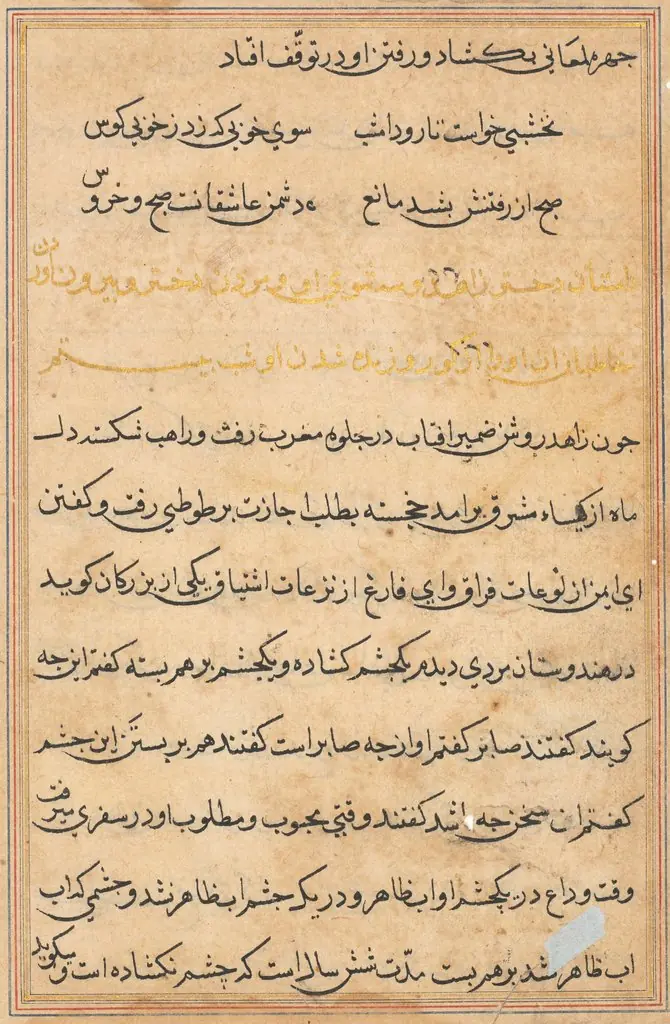 Page from Tales of a Parrot (Tuti-nama): text page
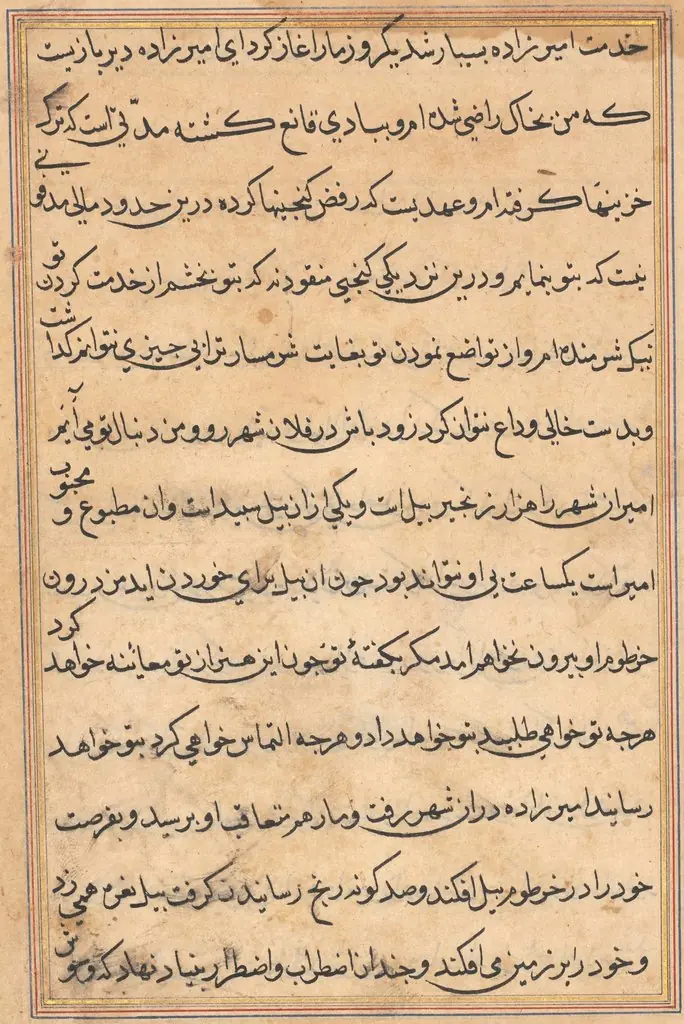 Page from Tales of a Parrot (Tuti-nama): text page
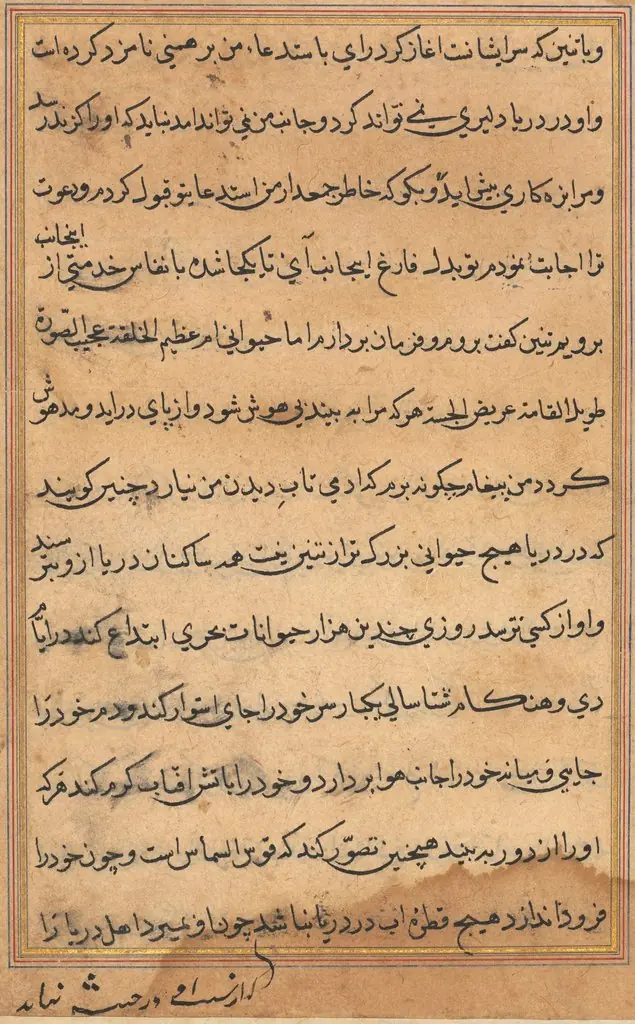 Page from Tales of a Parrot (Tuti-nama): text page