Artwork
Illuminated page (verso), from a Panj Ganj (Five Treasures) of Abd al- Rahman Jami (Persian, 1414–1492) with two Persian masnavis: Yusuf va Zulaykha (Joseph and Zulaykha) and Khirad-nama-i Iskandari (Alexander’s Book of Wisdom)
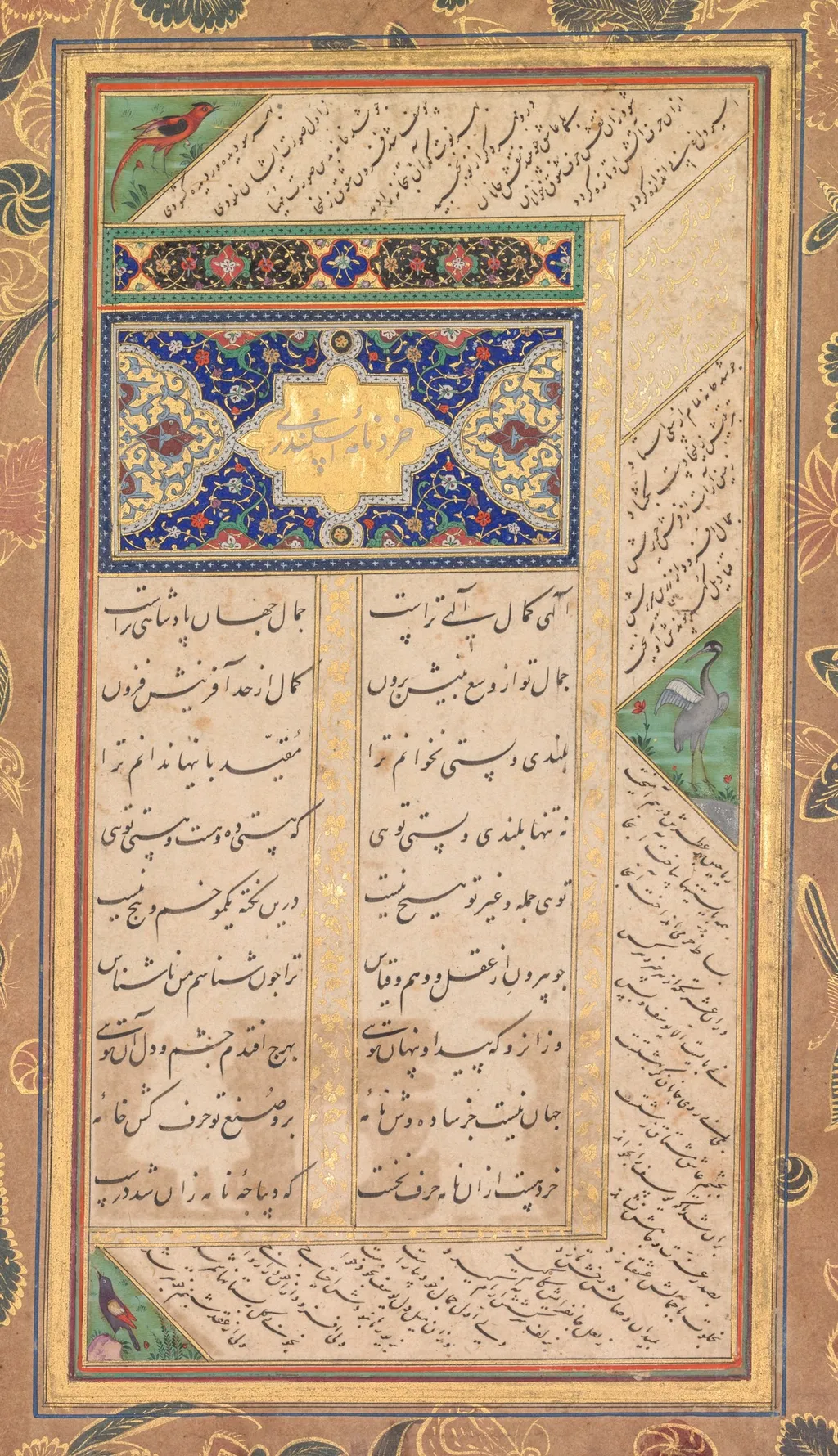
Illuminated page (verso), from a Panj Ganj (Five Treasures) of Abd al- Rahman Jami (Persian, 1414–1492) with two Persian masnavis: Yusuf va Zulaykha (Joseph and Zulaykha) and Khirad-nama-i Iskandari (Alexander’s Book of Wisdom) is an unspecified painting. It dates from 1605 and is held in the collection of the Cleveland Museum of Art.
About this work
Overview
This illuminated folio belongs to a Panj Ganj, a manuscript that compiles two Persian masnavis: the love story of Yusuf and Zulaykha and the philosophical narrative Khirad‑nama‑i Iskandari. Executed in the late 15th‑century Persian tradition, the page combines calligraphic text with elaborate decorative elements, reflecting the high status of the volume.
Subject & Meaning
The two poems presented in the manuscript explore themes of divine love and moral wisdom. Yusuf and Zulaykha recount the biblical Joseph’s encounter with the seductive queen, while the Alexander text offers reflections on governance and knowledge, both serving as moral exemplars for the reader.
Technique & Style
The page features a flowing Nastaʿlīq script, with selected passages highlighted in gold ink. A striking blue and gold border crowns the top, populated by interlacing floral motifs and geometric patterns typical of Timurid manuscript decoration. The intricate gilding and vivid pigments underscore the manuscript’s luxury.
History & Provenance
Created sometime after 1492, the folio reflects the artistic output of the Persian cultural sphere during the late Timurid period. It entered the collection of the Cleveland Museum of Art, where it is conserved and displayed as part of the museum’s Islamic art holdings.
Context
Manuscripts such as this Panj Ganj were often commissioned by elite patrons for private study or courtly entertainment. The combination of poetic narrative and lavish illumination illustrates the convergence of literary and visual arts in Persian court culture.
Artist & collection

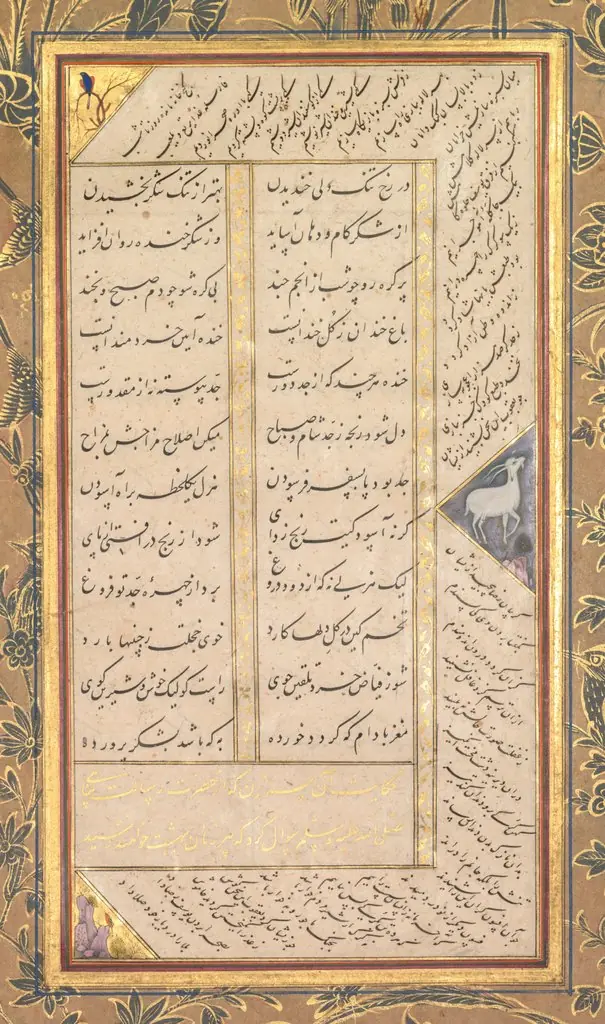 Page from a Panj Ganj (Five Treasures) of Abd al-Rahman Jami (Persian, 1414–1492), with two Persian masnavis: Yusuf va Zulaykha (Joseph and Zulaykha) and Subhat al-abrar (Rosary of the Righteous) (verso)
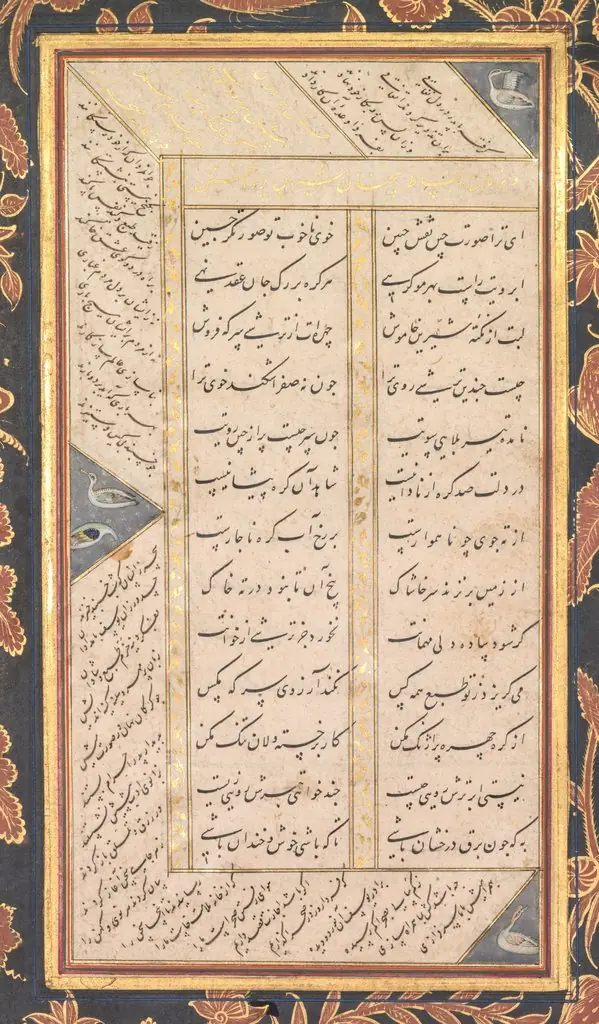 Folio B: Folio from the "Five Treasures" (Panj Ganj) of Jami (recto)
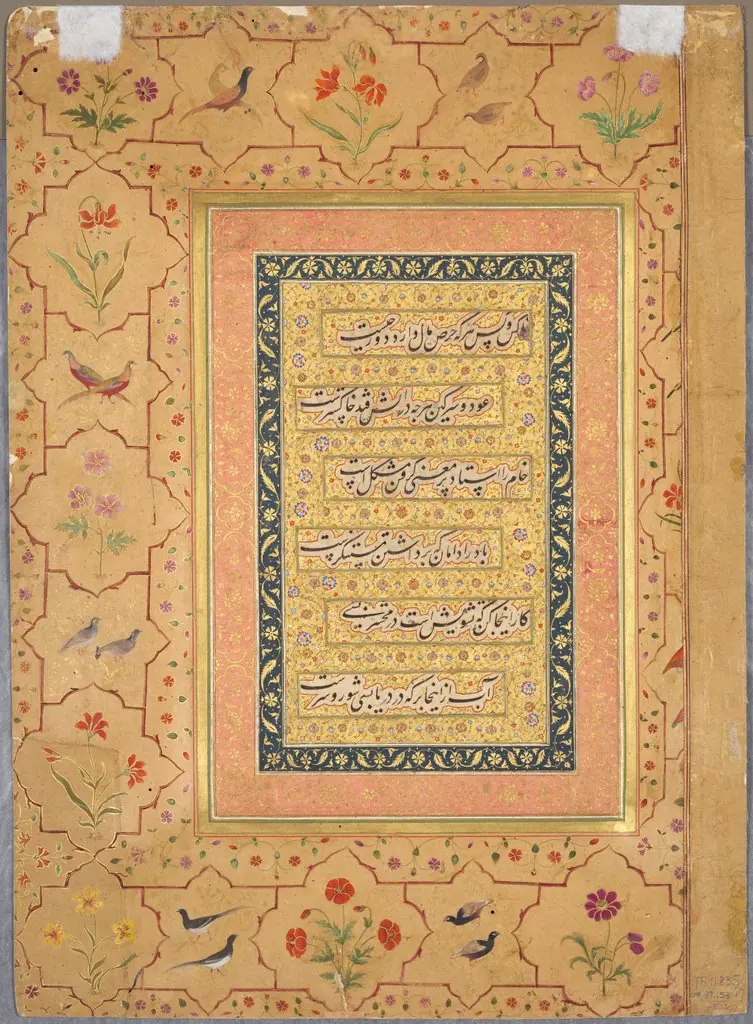 Page from the Late Shah Jahan Album: Calligraphy Framed by an Ornamental Border with Poppies and Pairs of Birds (verso)
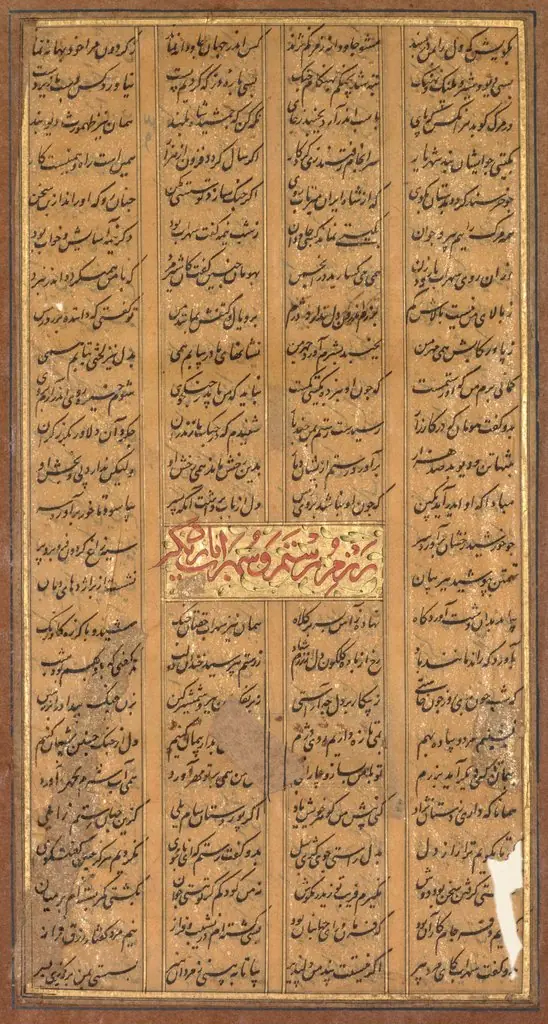 Text of Rustam and Suhrab, from the Shah-nama of Firdausi (Persian, c. 934–1020) (verso)
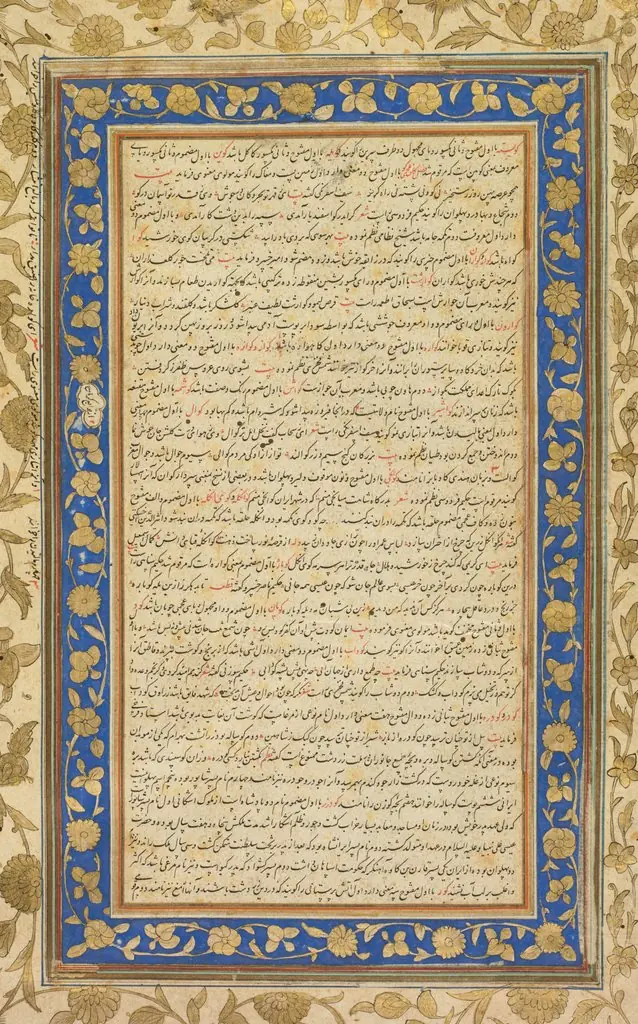 From the Farhang-i Jahangiri (Persian-language Dictionary) compiled by Mir Jamal al-Din Husayn Inju of Shiraz (Persian, d. 1626)
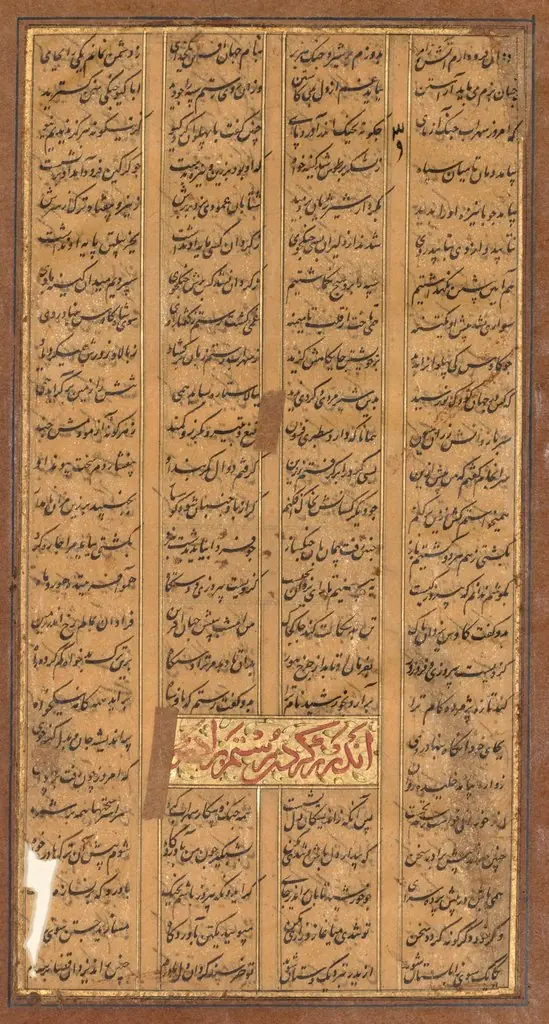 Text of Rustam and Suhrab, from the Shah-nama of Firdausi (Persian, c. 934–1020) (recto)