Artwork
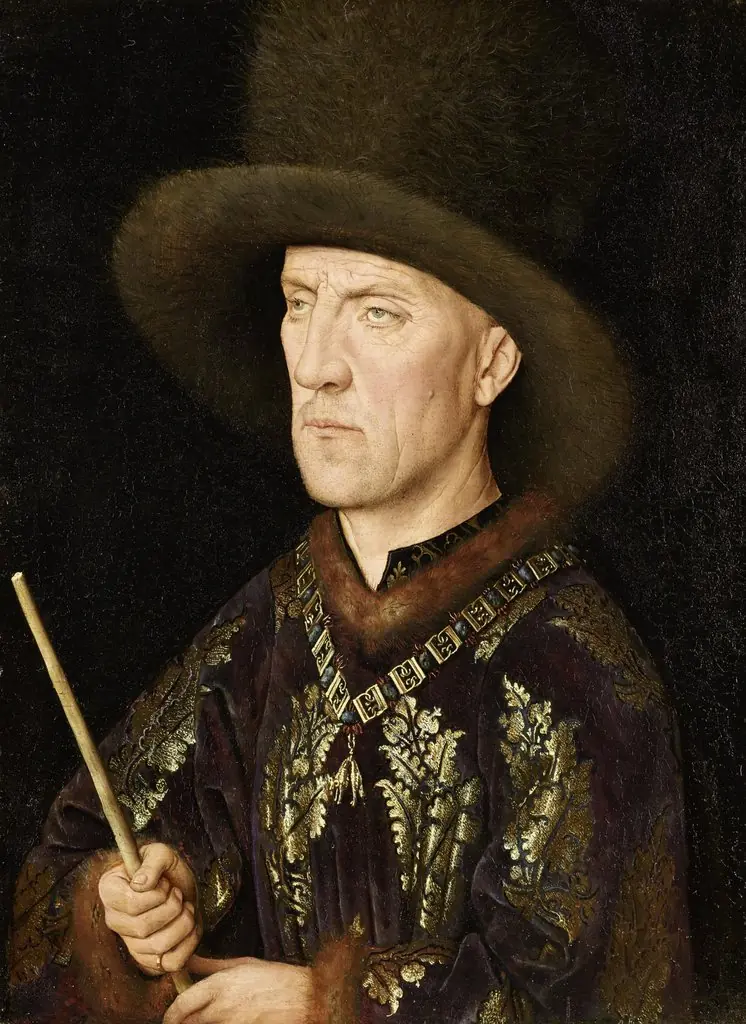
Philip the Good portrait
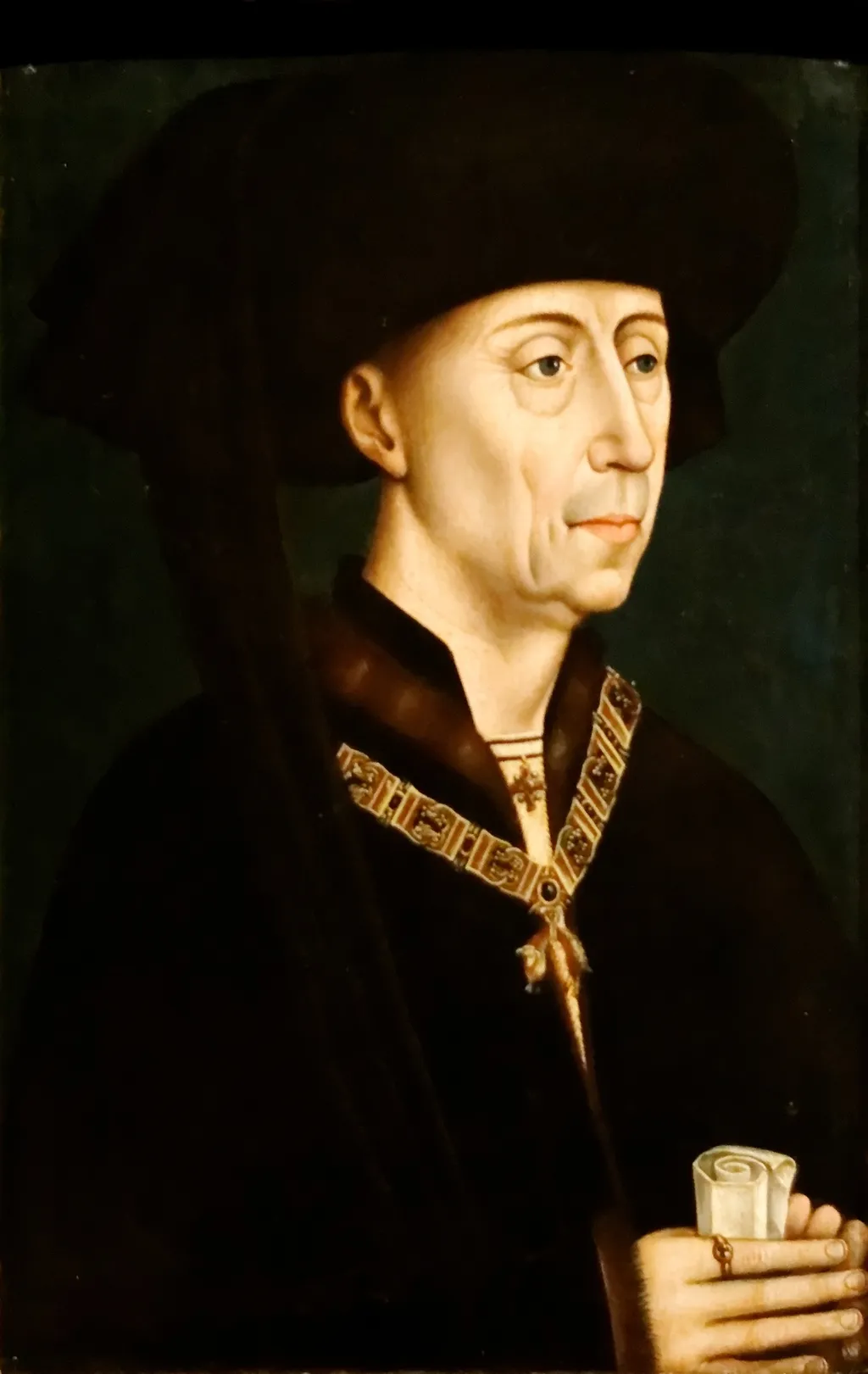
Philip the Good portrait is a wood painting by the Northern Renaissance artist Unknown. It dates from 1500 and is held in the collection of the Kunsthistorisches Museum.
About this work
Overview
The work is a painted portrait on wood depicting a dignified male figure dressed in a dark, gold‑trimmed robe and an ornamental chain of office. He holds a rolled document in one hand, his pale face and short beard rendered with a serious expression against a stark, dark background.
Subject & Meaning
The sitter is identified as Philip the Good, Duke of Burgundy, whose attire and insignia convey his political authority and status. The inclusion of a scroll suggests his role in governance or legal matters, emphasizing his function as a ruler and patron.
Technique & Style
The artist employs chiaroscuro, using strong contrasts of light and shadow to model the fabric’s texture and to make the figure’s face emerge from the deep background. The medium of wood panel allows for fine detail in the gold trim and the delicate rendering of the beard.
History & Provenance
The portrait dates to the mid‑15th century, created during Philip the Good’s reign (1419‑1467). It has remained in European collections, passing through several noble inventories before entering a museum collection in the early 20th century.
Context
Philip the Good’s court was a center of artistic patronage, fostering the development of Netherlandish painting. This portrait reflects the period’s emphasis on individual likeness and the visual representation of power within the Burgundian state.
Artist & collection

 Domestic Scene
 Giacomo and Cardinal Marco, investing Andrea, Abbot of San Zeno, with his Benefice
 The Nymph of Fontainebleau
 Portrait of a Woman
 Madonna and Child with Saints in the Enclosed Garden
 Venus and Minerva
 Family Group of Four on Sofa
 Wall painting from Room H of the Villa of P. Fannius Synistor at Boscoreale
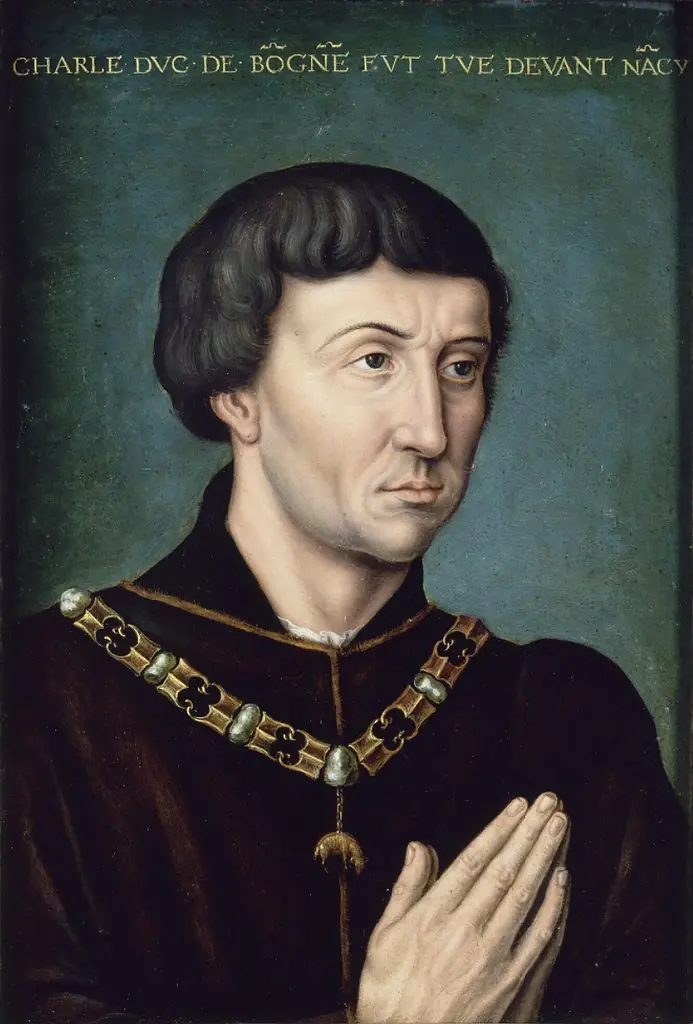 Portrait of Charles the Bold, Duke of Burgundy (1433-1477)
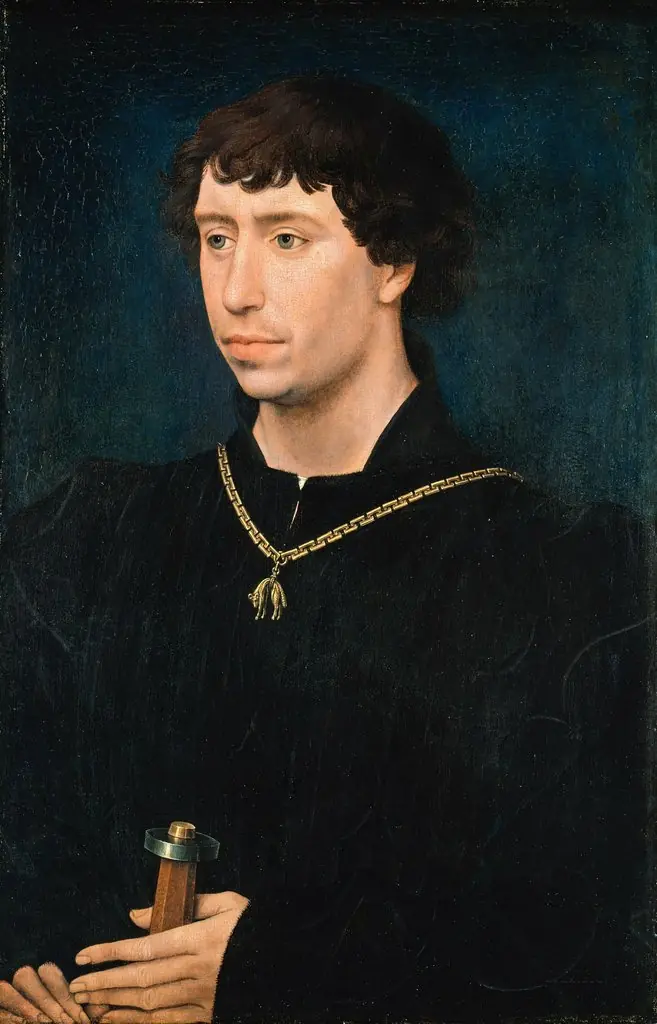 Portrait of Charles the Bold
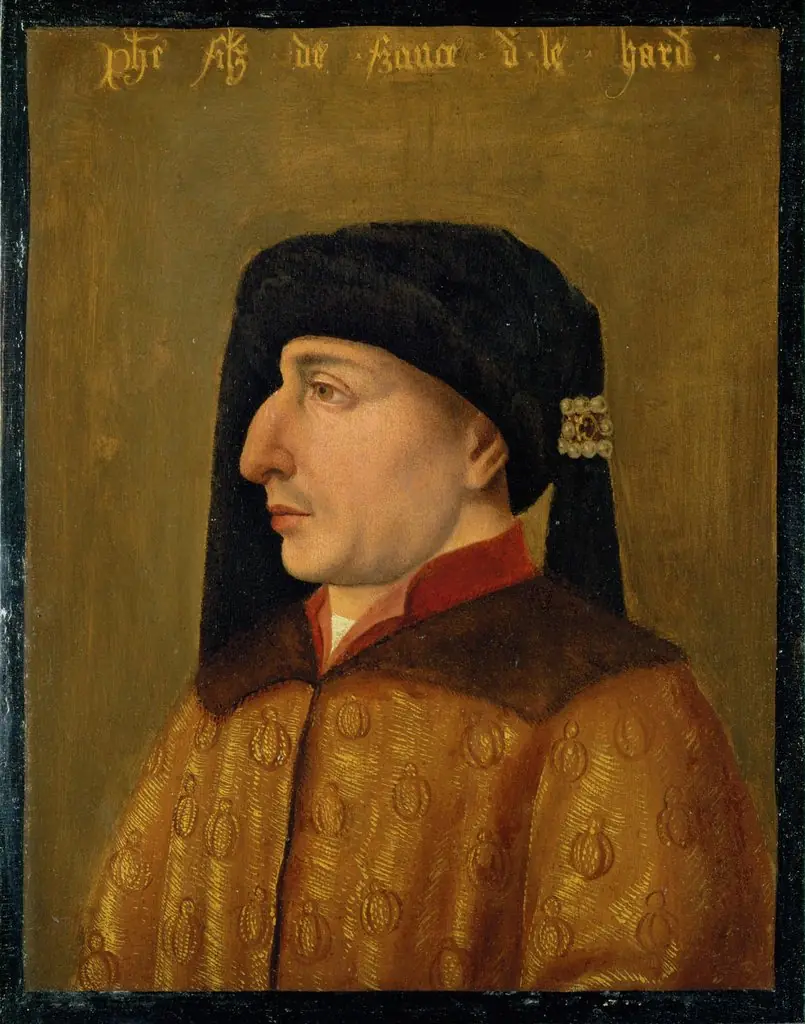 Herzog Philipp der Kühne (1342-1404) von Burgund im Profil
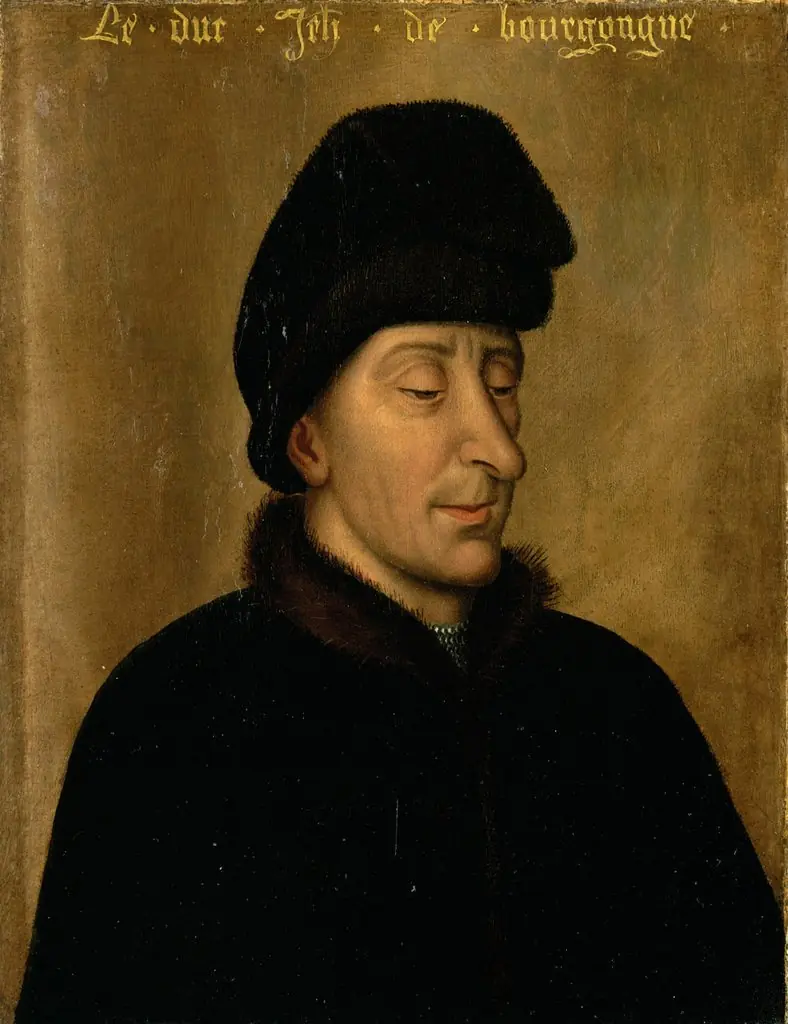 Herzog Johann Ohnefurcht von Burgund (1371-1419)
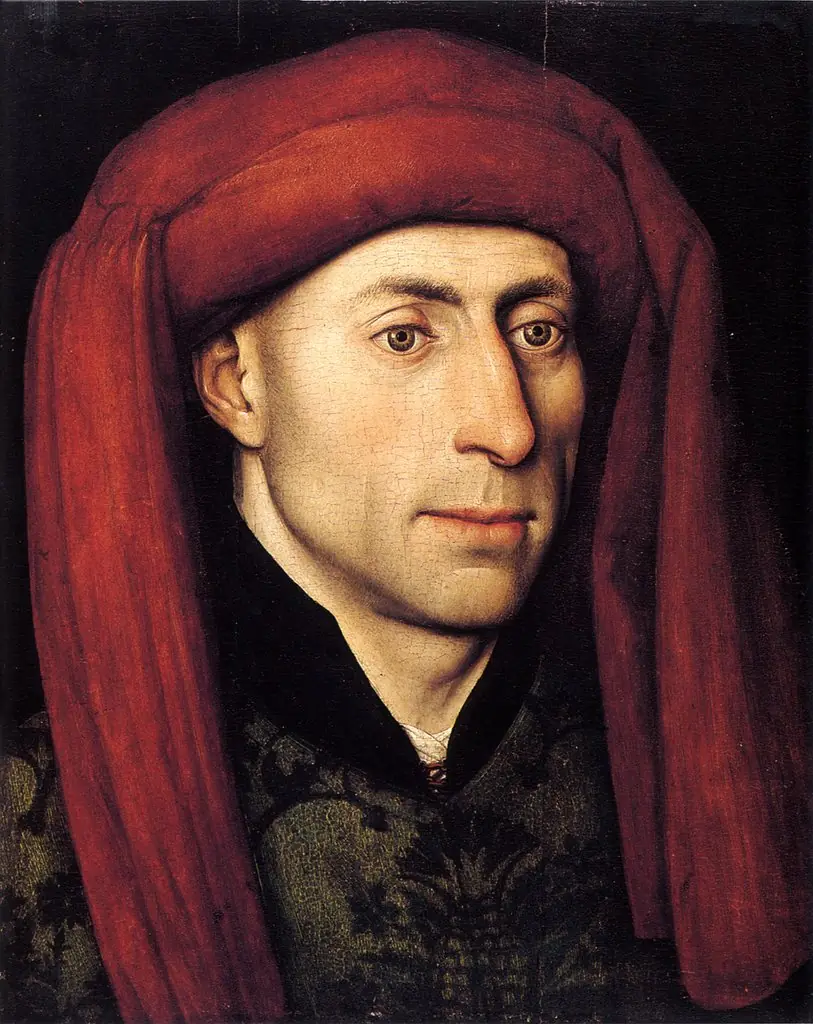 Portrait of an unknown man
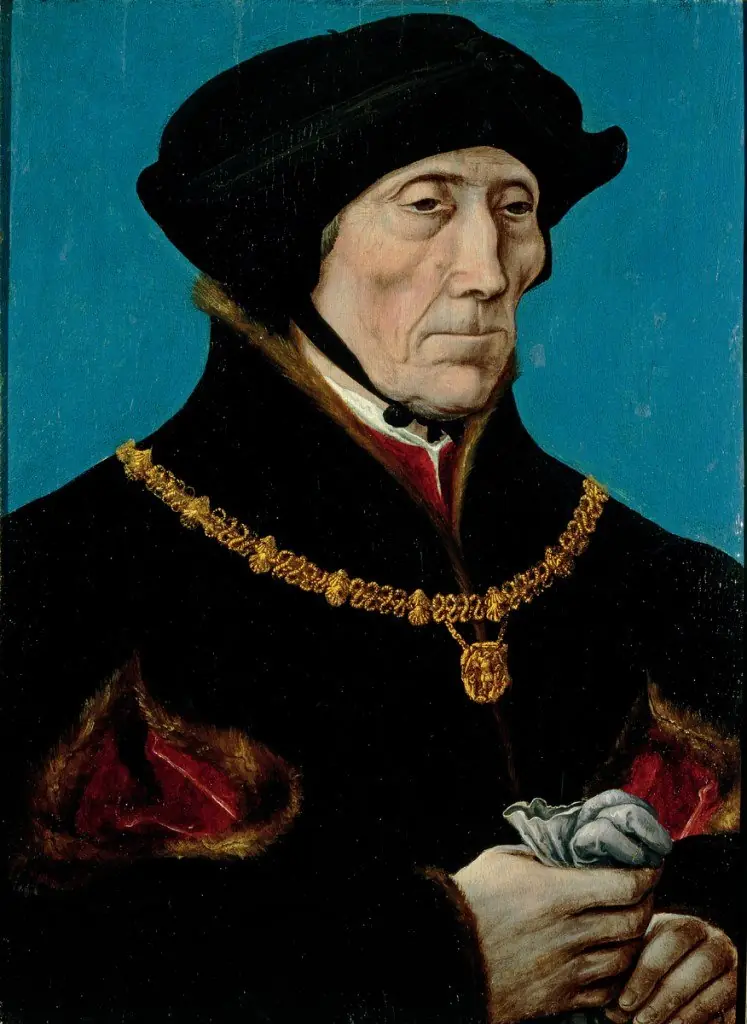 Guillaume de Montmorency
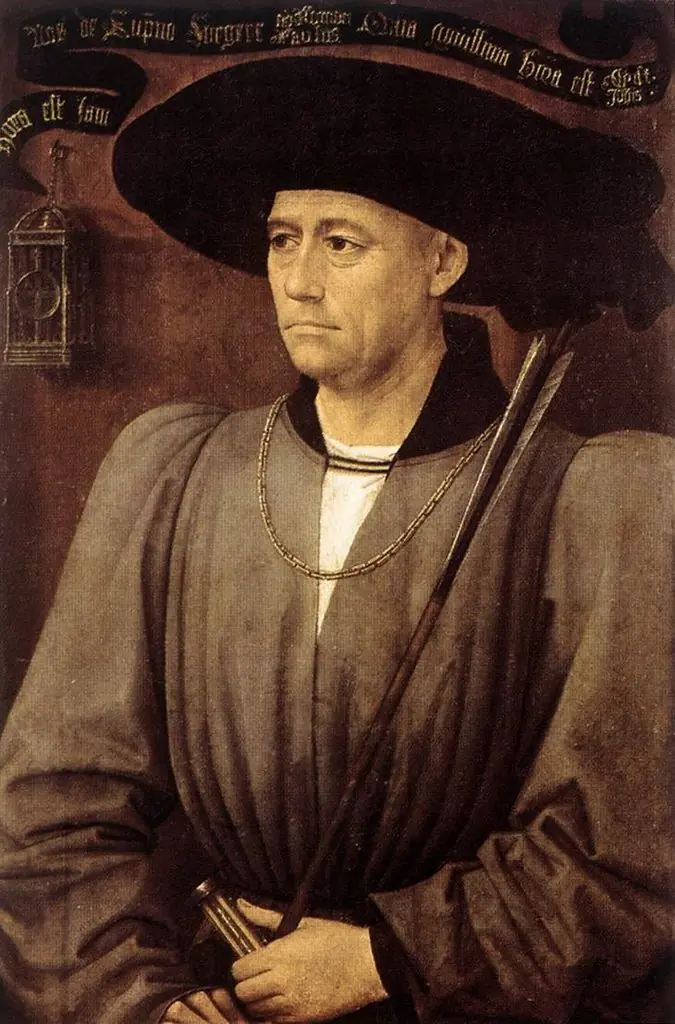 Portrait of a Tournament Judge
 Portrait of Baudouin de Lannoy