Artwork
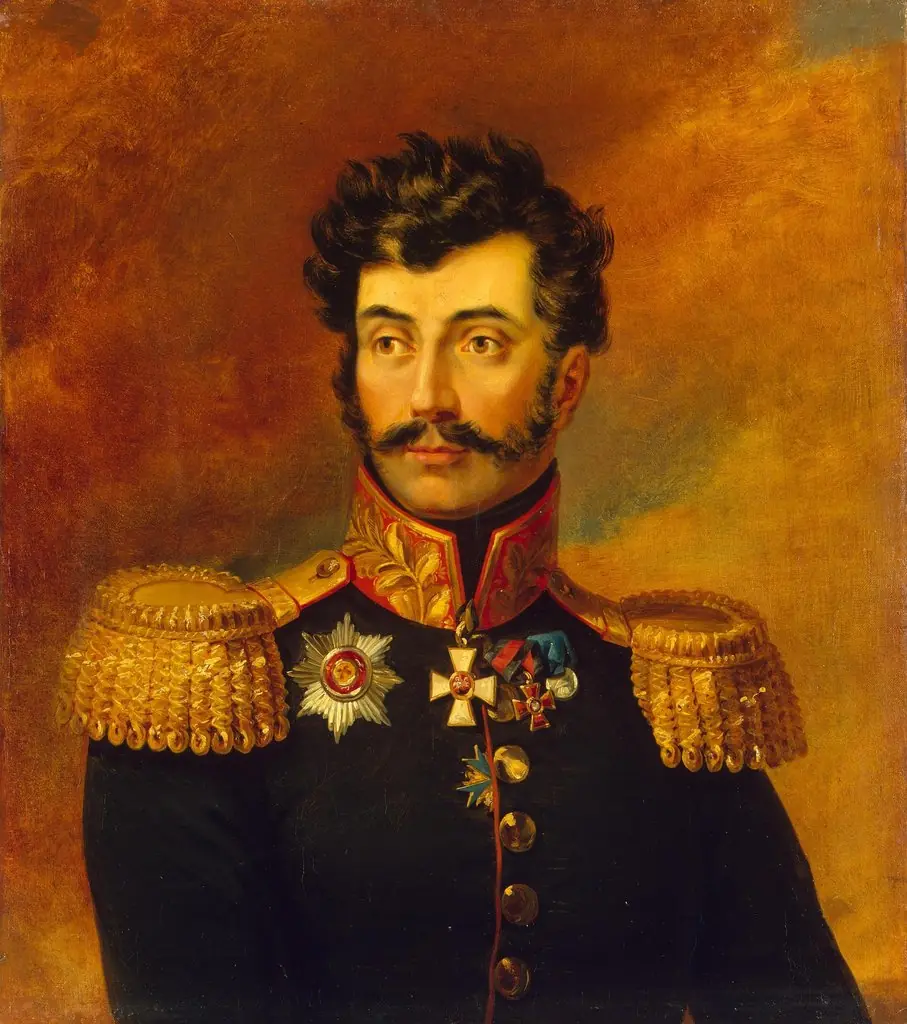
Portrait of Dmitry D. Shepelev (1771-1841)
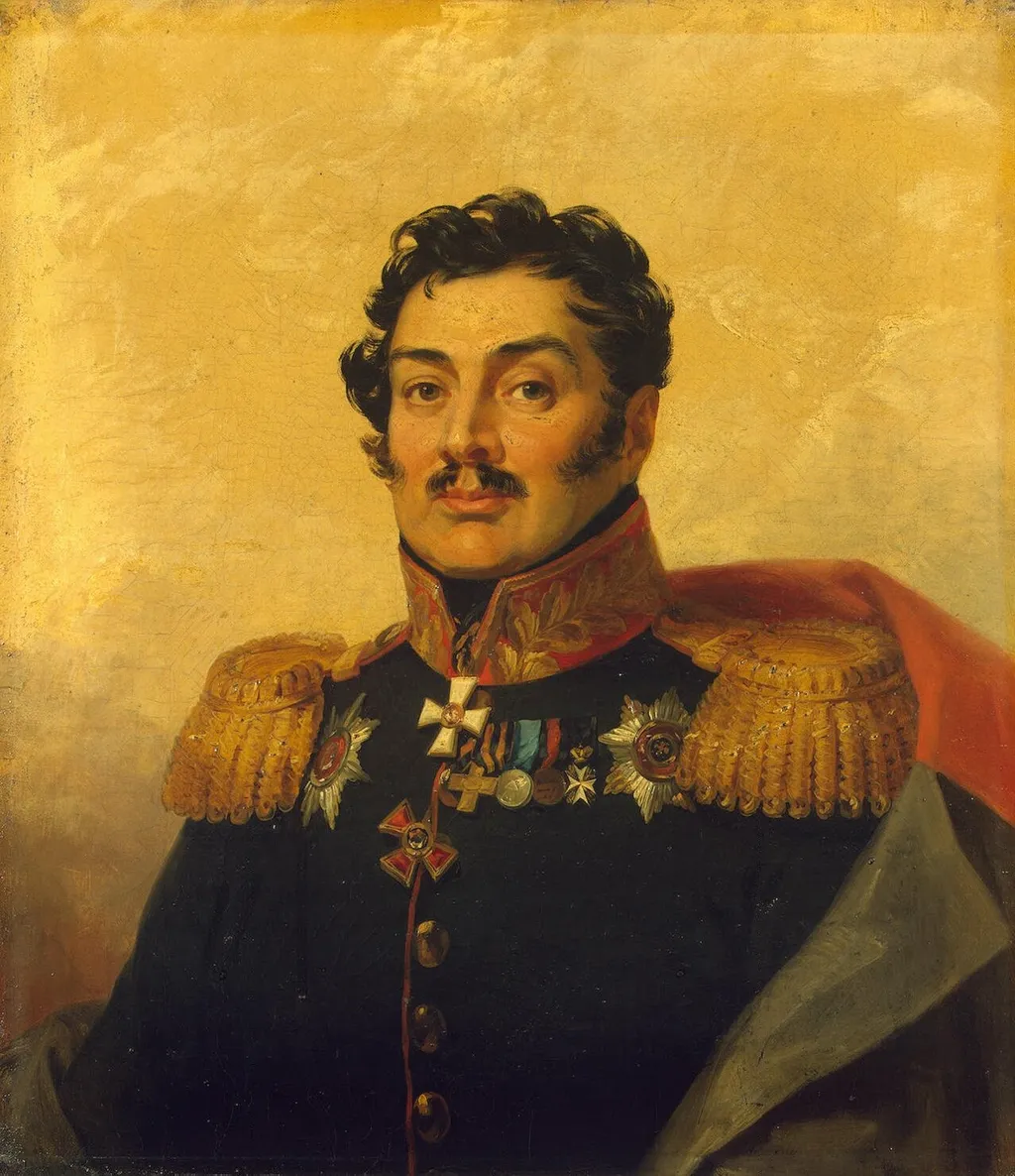
Portrait of Dmitry D. Shepelev (1771-1841) is an oil painting by Unknown. It dates from 1824 and is held in the collection of the Hermitage Museum. This oil painting depicts Dmitry D.
About this work
Overview
This oil painting depicts Dmitry D. Shepelev, a Russian military officer active in the late 18th and early 19th centuries. Rendered in a realistic style, the portrait captures him in full uniform, standing against a warm, muted background. The composition focuses on his composed demeanor and precise attire, with lighting used to model form and draw attention to his facial expression and insignia.
Subject & Meaning
Shepelev is portrayed as a disciplined military figure, his medals and gold epaulets signaling rank and service. His direct gaze and stern expression convey authority and resolve, typical of official portraiture in post-Enlightenment Russia. The absence of symbolic props or landscape suggests an emphasis on personal identity and institutional role rather than narrative or allegory.
Technique & Style
The artist employed chiaroscuro to define the volume of the uniform and the contours of the face, using subtle gradations of light and shadow. Fine brushwork renders the texture of fabric, metal medals, and curly hair with precision. The warm background contrasts with the darker tones of the jacket, enhancing the subject’s presence without distracting from the details of his attire.
History & Provenance
Painted during Shepelev’s lifetime, the work likely originated as a commissioned piece, possibly for family or state use. Its survival through the 19th and 20th centuries indicates continued recognition of his status. While specific ownership records are not widely documented, the painting’s condition suggests careful preservation within institutional or private collections.
Context
Similar portraits of officers were common in state and aristocratic circles, serving both as personal memorials and affirmations of loyalty to the crown.
Created in the early 1800s, the portrait reflects the Russian Empire’s emphasis on military hierarchy and visual representation of service. Similar portraits of officers were common in state and aristocratic circles, serving both as personal memorials and affirmations of loyalty to the crown. The style aligns with academic traditions of the period, prioritizing clarity and dignity over emotional expression.
Legacy
The portrait remains a representative example of Russian military portraiture from the Napoleonic era. It contributes to the visual record of officers who served during a transformative period in Russian history. Though not widely exhibited, it holds value as a historical document, illustrating the aesthetics and values of elite military identity in early 19th-century Russia.
Artist & collection

 Domestic Scene
 Giacomo and Cardinal Marco, investing Andrea, Abbot of San Zeno, with his Benefice
 The Nymph of Fontainebleau
 Portrait of a Woman
 Madonna and Child with Saints in the Enclosed Garden
 Venus and Minerva
 Family Group of Four on Sofa
 Wall painting from Room H of the Villa of P. Fannius Synistor at Boscoreale
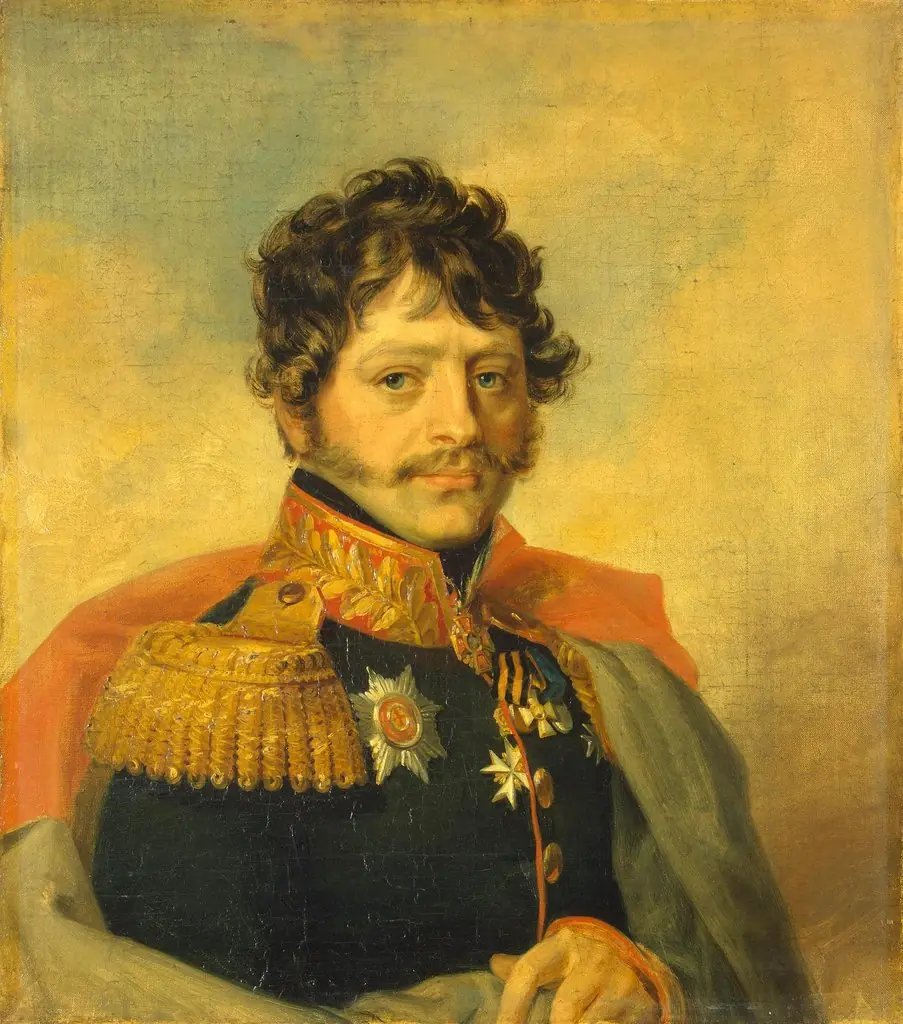 Portrait of Ivan A. Argamakov (1775-1821) (2nd)
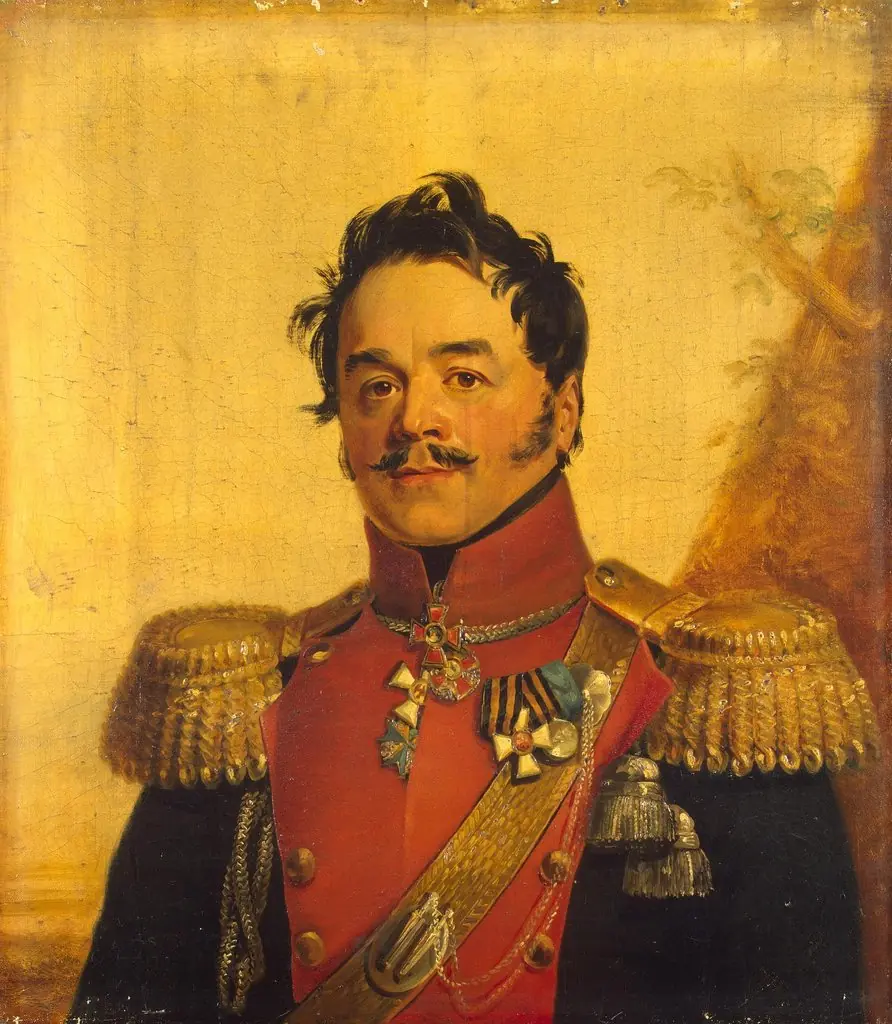 Portrait of Nikolai G. Shcherbatov (1777-1845)
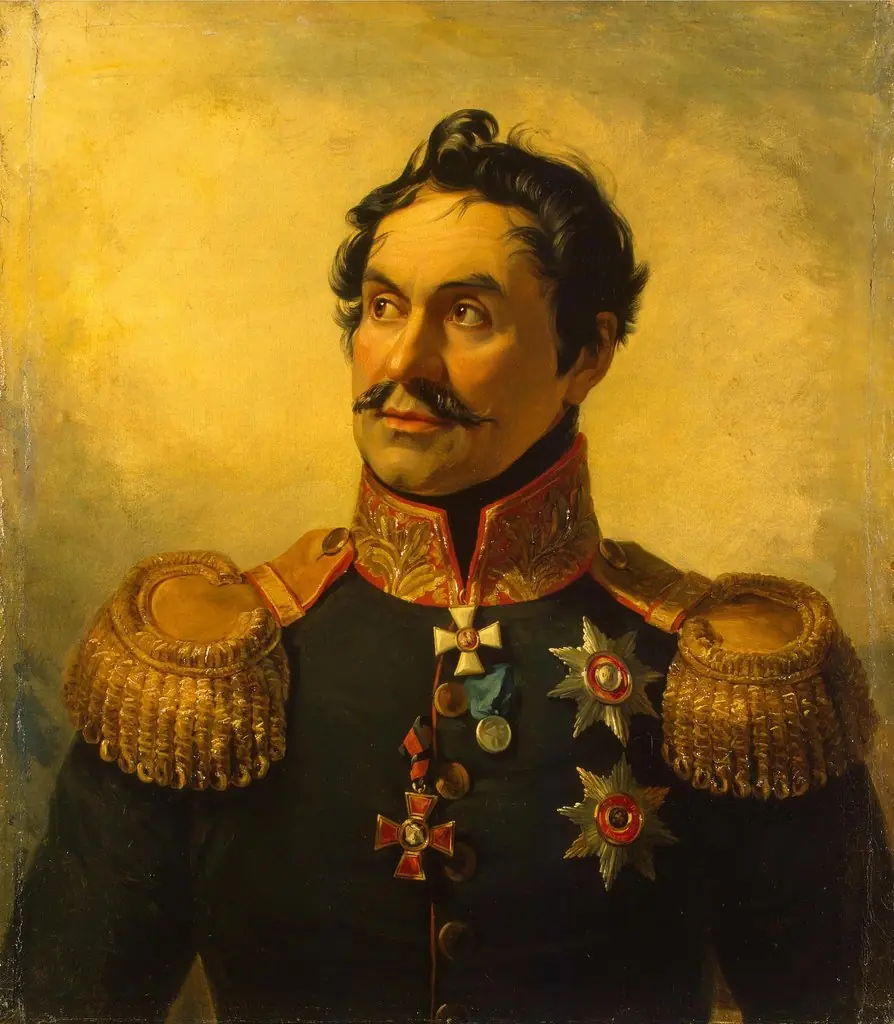 Portrait of Yefim I. Chaplits (1768-1825)
 Portrait of Osip V. Ilovaisky (1775-1839) (10th)
 Portrait of Mikhail F. Naumov (1757-1823)
 Portrait of Timofey D. Grekov (1770-1831)
 Portrait of Pyotr I. Balabin (1776-1856)
 Portrait of Roman I. Bagration (1778-1834)