Artwork
Curtain of the Tabernacle, one of six illustrated leaves from the Postilla Litteralis (Literal Commentary) of Nicholas of Lyra
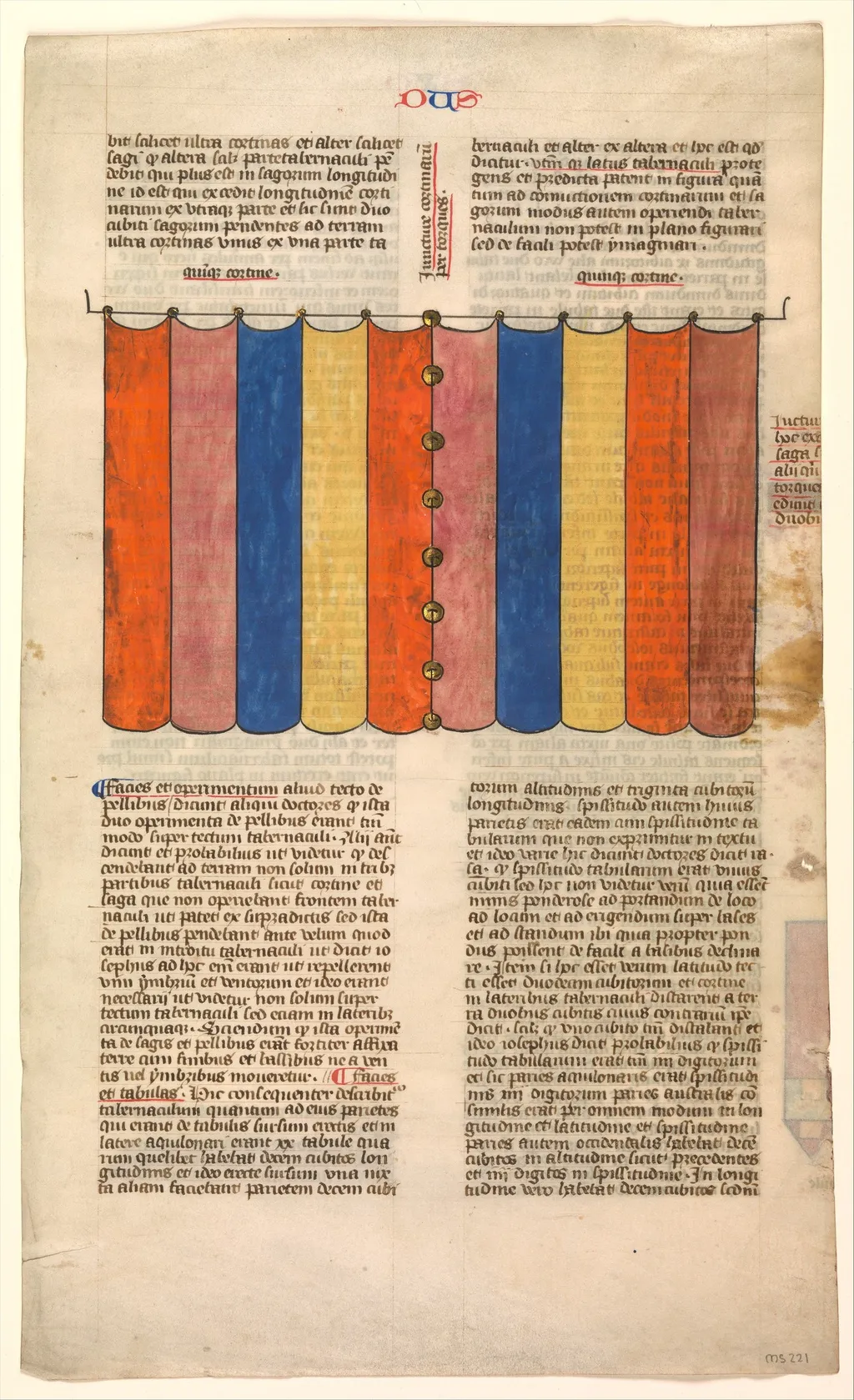
Curtain of the Tabernacle, one of six illustrated leaves from the Postilla Litteralis (Literal Commentary) of Nicholas of Lyra is an unspecified painting. It dates from 1360 and is held in the collection of the Metropolitan Museum of Art. The work is an illuminated illustration from the Postilla Litteralis, a biblical commentary compiled by Nicholas of Lyra.
About this work
Overview
The work is an illuminated illustration from the Postilla Litteralis, a biblical commentary compiled by Nicholas of Lyra. It depicts a series of tall, richly colored draperies—reds, blues, yellows, and greens—suspended from a rod and held by gold rings. The decorative surface is overlaid with dense black Latin script arranged in orderly columns, integrating text and image in a single folio.
Subject & Meaning
The draperies represent the curtains of the Old Testament Tabernacle, the portable sanctuary used by the Israelites. Their vivid hues and orderly presentation emphasize the sacred enclosure and its role as a visual barrier between the holy space and the surrounding world, reinforcing the theological focus of Lyra’s commentary.
Technique & Style
Executed as a painted miniature on parchment, the illustration employs a limited palette of bright pigments applied in flat, decorative washes. Gold leaf or pigment outlines the supporting rings, while the surrounding script is rendered in a tight, humanist blackletter hand, reflecting the manuscript illumination conventions of the early 15th century.
History & Provenance
The leaf belongs to a set of six illustrated pages that once formed part of a complete copy of Lyra’s Postilla Litteralis. The manuscript was likely produced in a workshop serving a monastic or scholarly audience, and later entered a private collection before being acquired by a museum for public display.
Context
Nicholas of Lyra’s commentary was a central exegetical work in medieval Europe, widely consulted for its literal interpretation of Scripture. Illuminated copies such as this one were intended to aid readers by visually linking textual analysis with familiar biblical iconography, a practice common in scholastic manuscript production.
Artist & collection

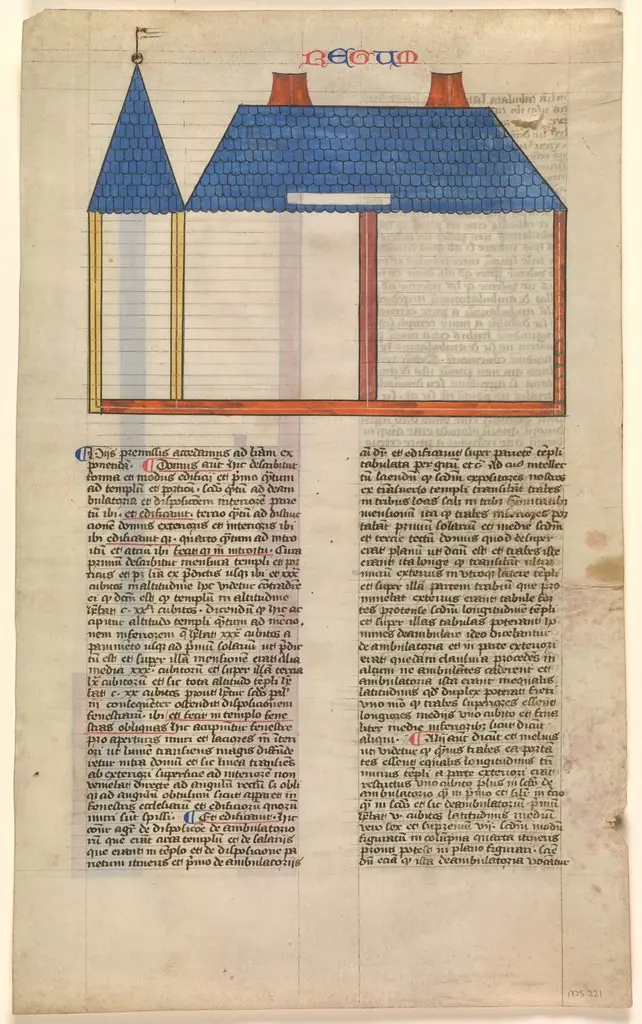 Elevation of Solomon's Temple, one of six illustrated leaves from the Postilla Litteralis (Literal Commentary) of Nicholas of Lyra
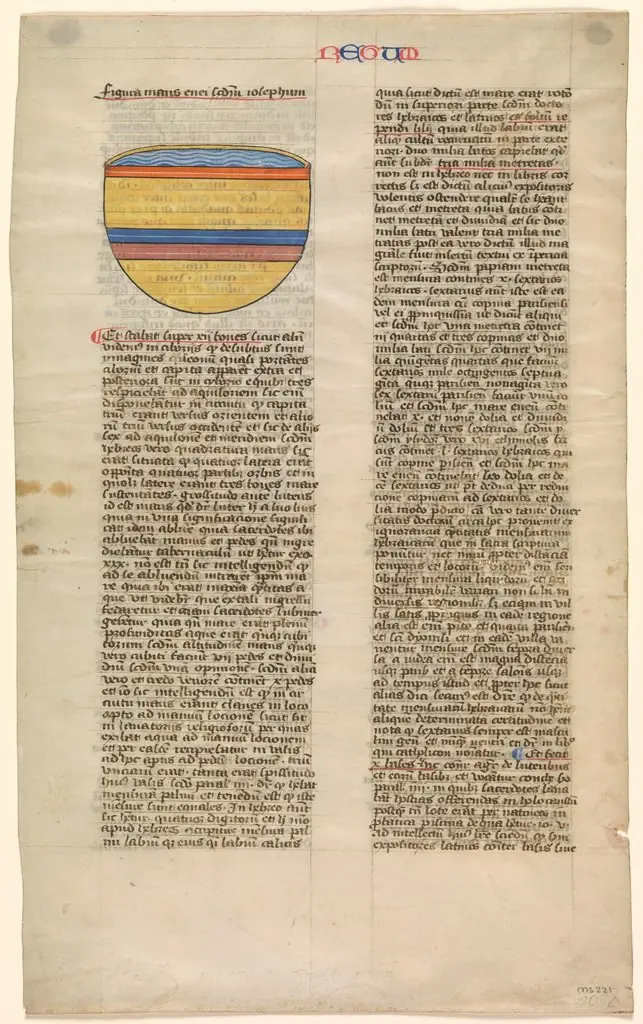 Brazen Sea, one of six illustrated leaves from the Postilla Litteralis (Literal Commentary) of Nicholas of Lyra
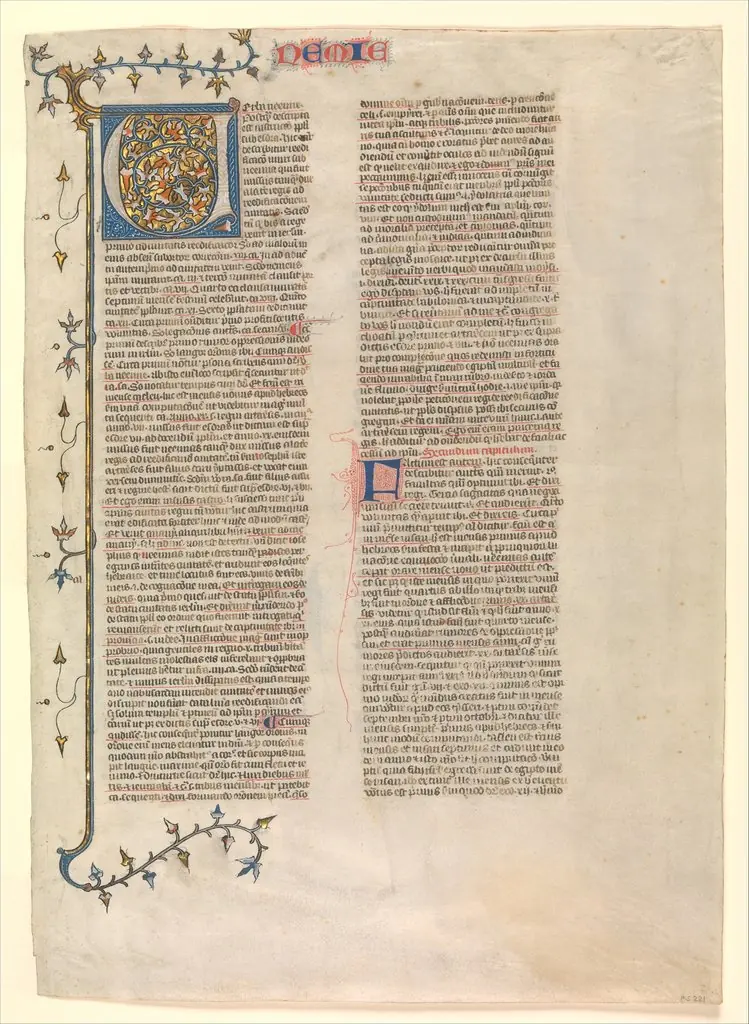 Initial "V" from the commentary of Nehemiah, one of six illustrated leaves from the Postilla Litteralis (Literal Commentary) of Nicholas of Lyra
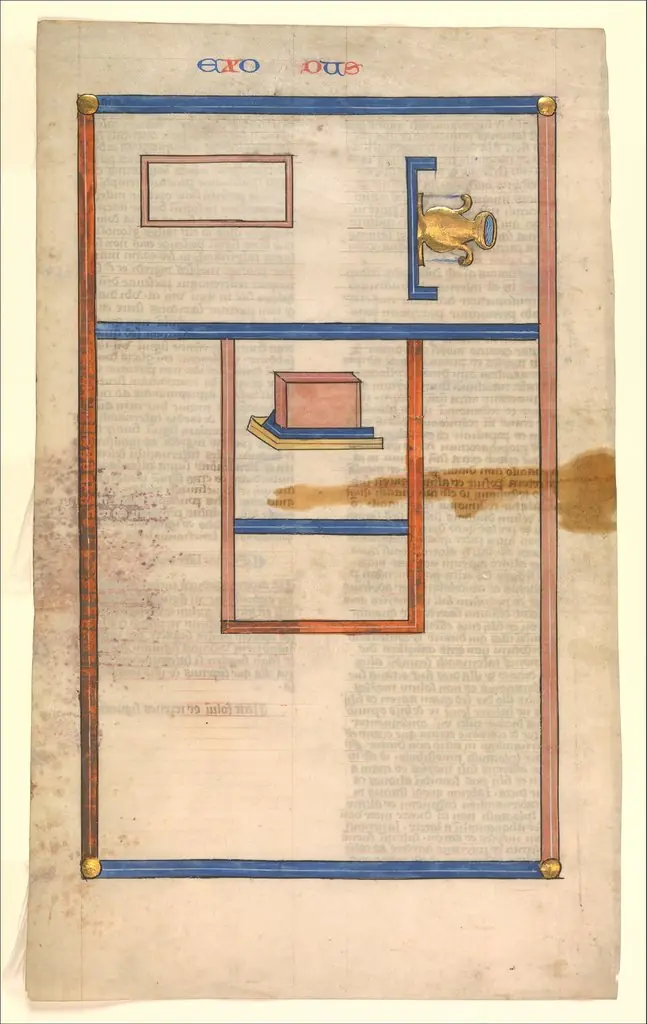 Floor Plan of the Tabernacle, one of six illustrated leaves from the Postilla Litteralis (Literal Commentary) of Nicholas of Lyra
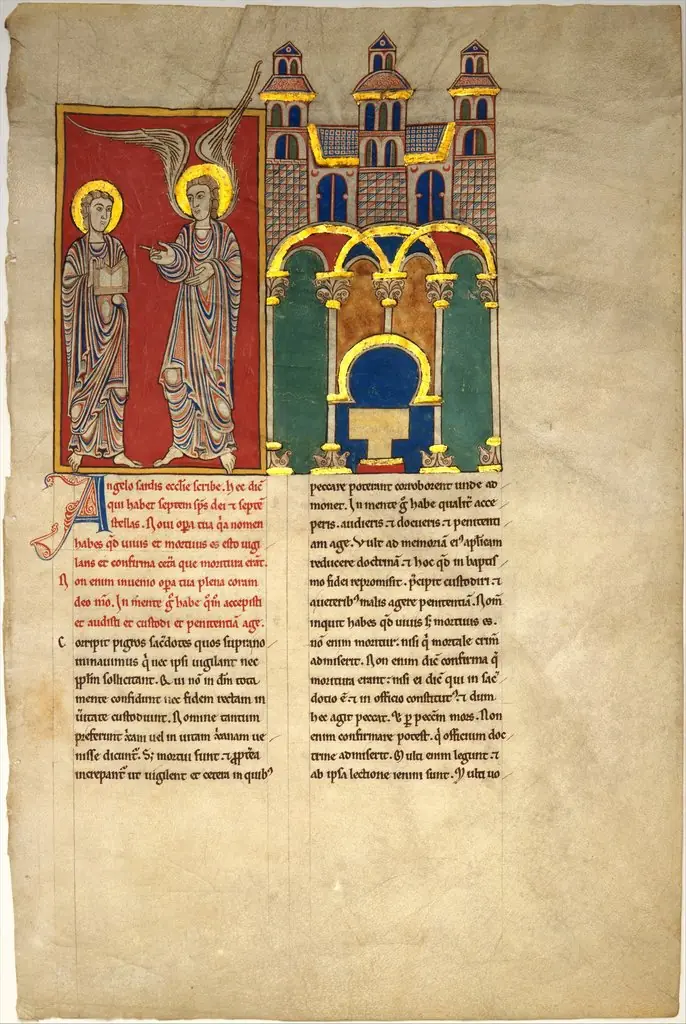 Leaf from a Beatus Manuscript: the Angel of the Church of Sardis with Saint John