Artwork
Peisaj rustic
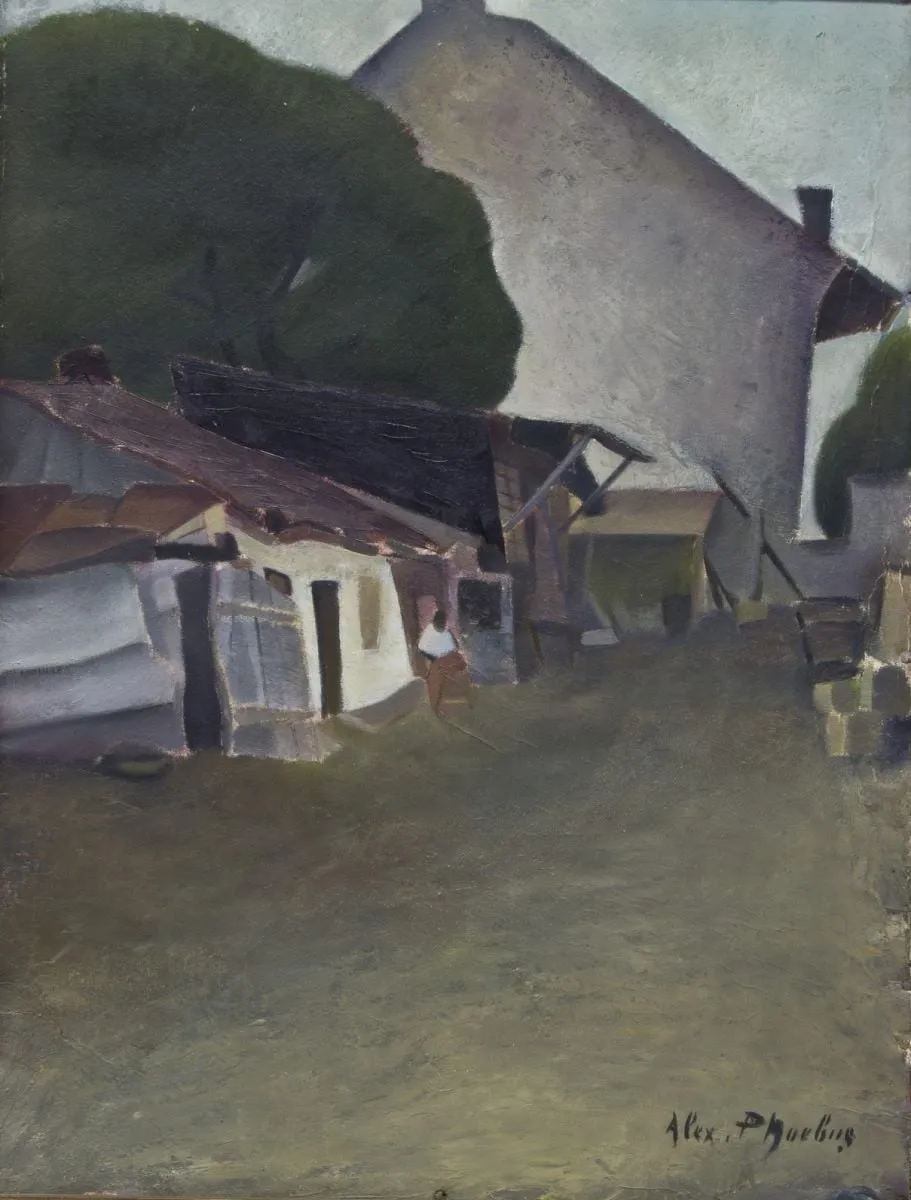
Peisaj rustic is a print by Alexandru Phoebus. It dates from 1938 and is held in the collection of the National Museum of Art of Romania.
About this work
Overview
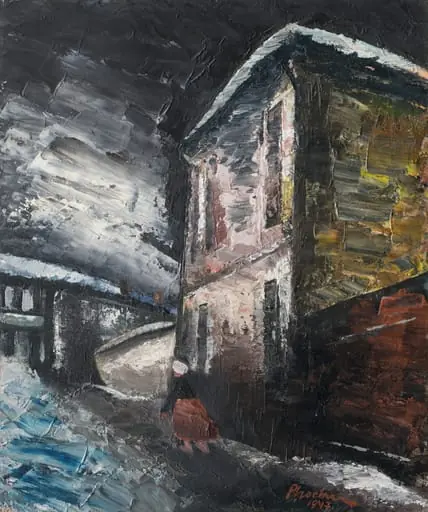
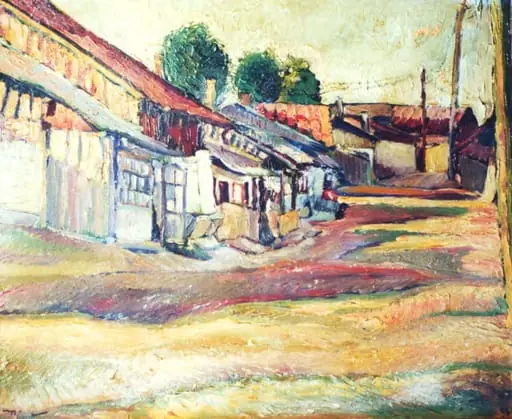
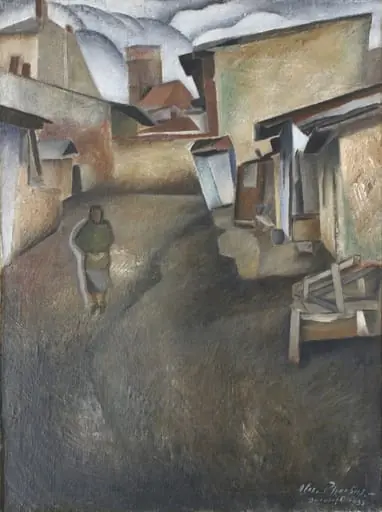
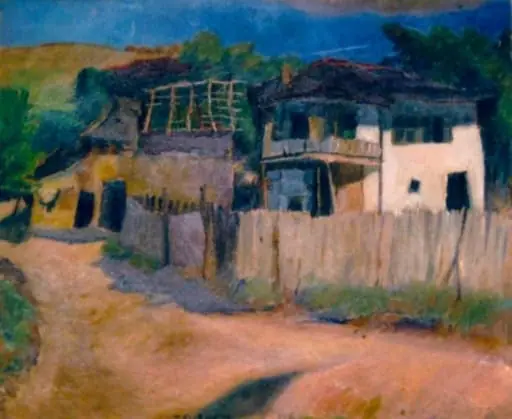
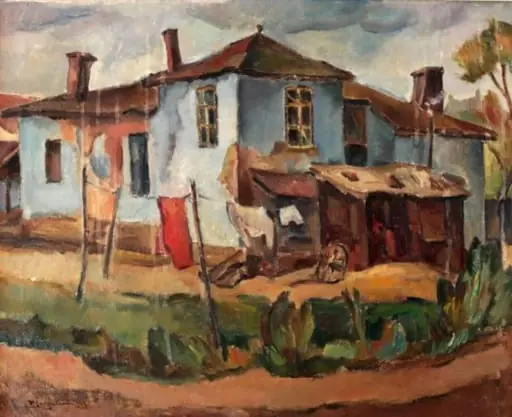
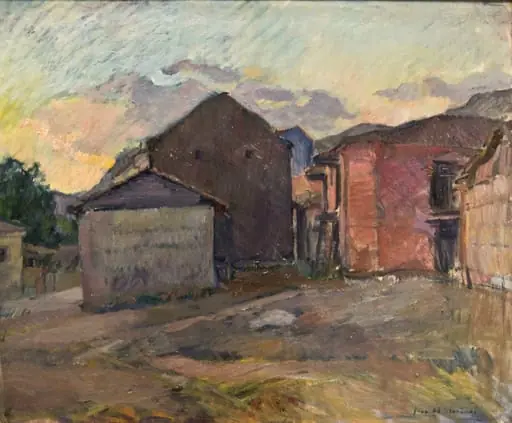
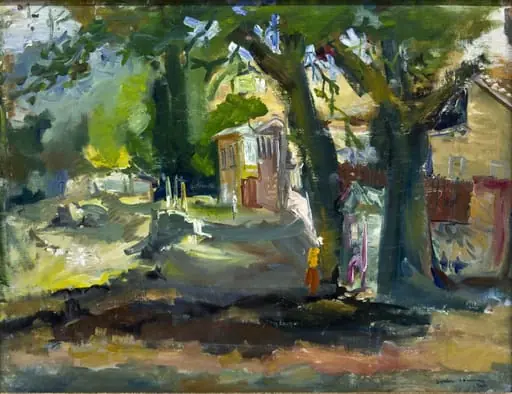
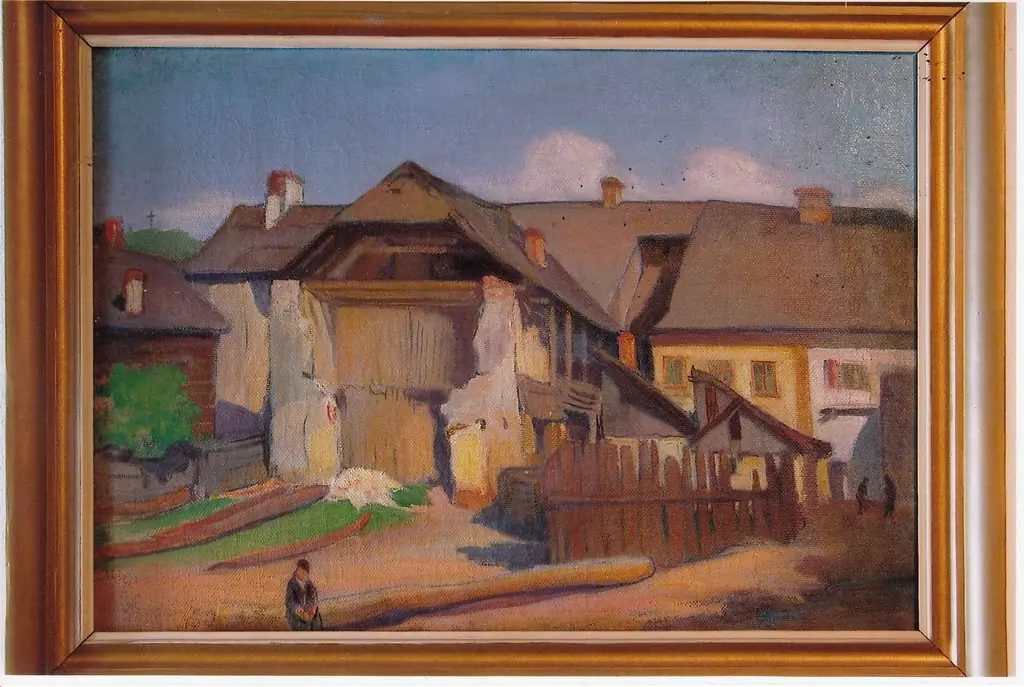
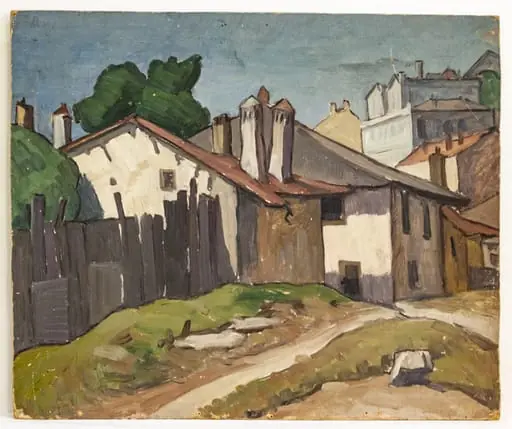
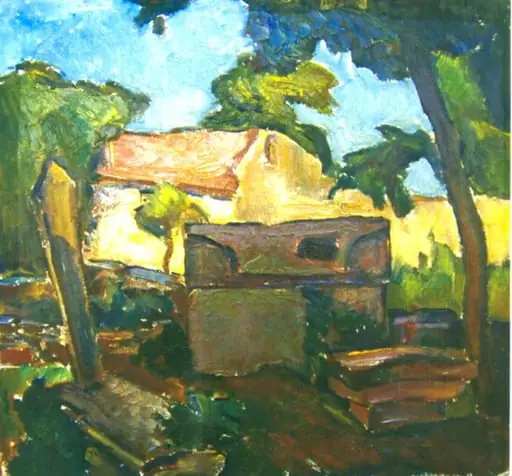
Alexandru Phoebus’s 1938 work *Peisaj rustic* depicts a modest rural settlement rendered in a muted palette. The composition centers on a cluster of weathered structures with rust‑colored metal roofs and plain stone or concrete walls, set against a muddy ground and a dark‑green tree that leans over the scene.
Subject & Meaning
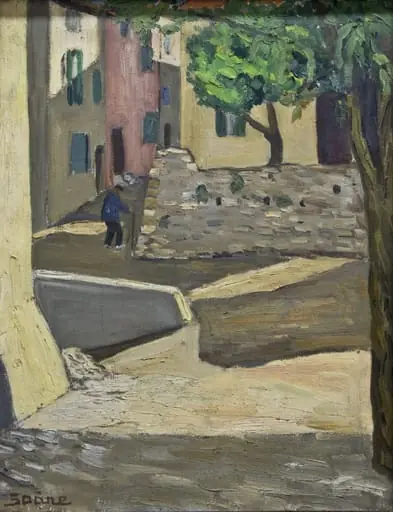
The painting captures a moment of quiet solitude in a village, highlighted by a solitary figure standing in a doorway. Dressed in a light shirt and dark trousers, the figure underscores the everyday life of the inhabitants, while the dilapidated architecture suggests endurance amid decay.
Technique & Style
Phoebus employs a pronounced impasto technique, applying paint in thick, textured strokes that give the walls a tactile, uneven surface. This heavy handling of pigment creates a sense of physical depth, allowing the viewer to almost feel the roughness of the building materials and the mud‑laden ground.
History & Provenance
Created in 1938, *Peisaj rustic* belongs to the later period of Phoebus’s career, a time when he turned increasingly toward rural subjects. The work’s ownership record is limited, but it remains associated with collections that focus on Romanian interwar art, reflecting the artist’s regional focus during that era.
Artist & collection