Artwork
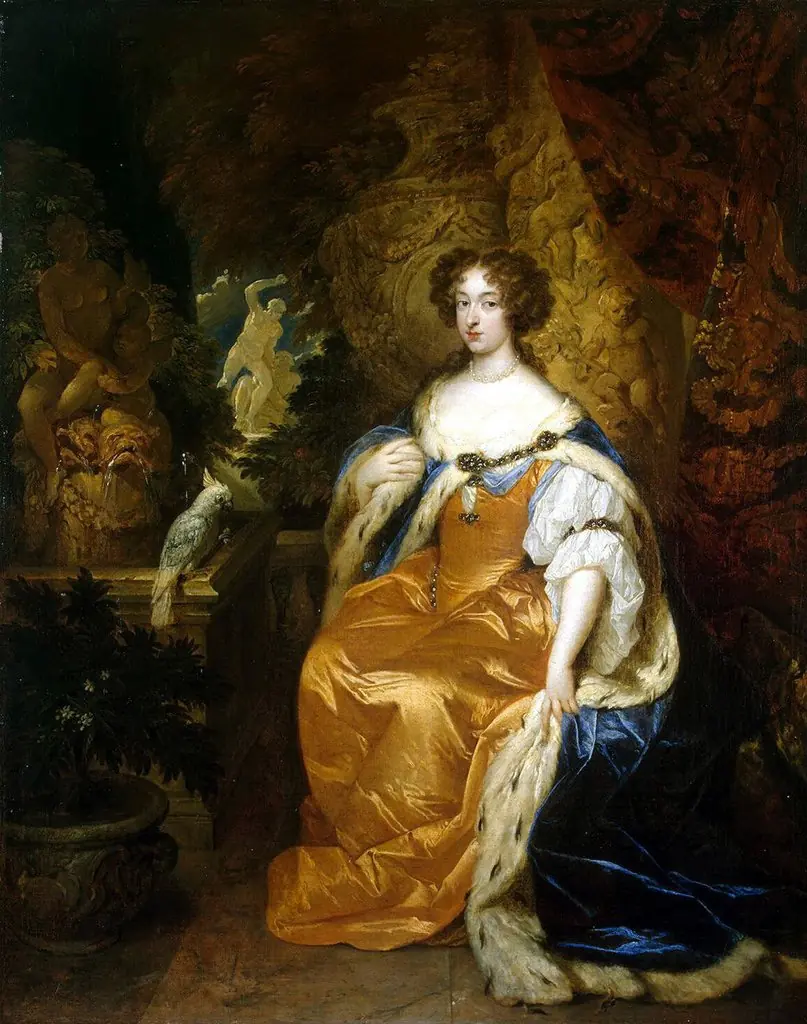
Portrait of an Unknown Woman as Iris, formerly identified as Madame de Montespan
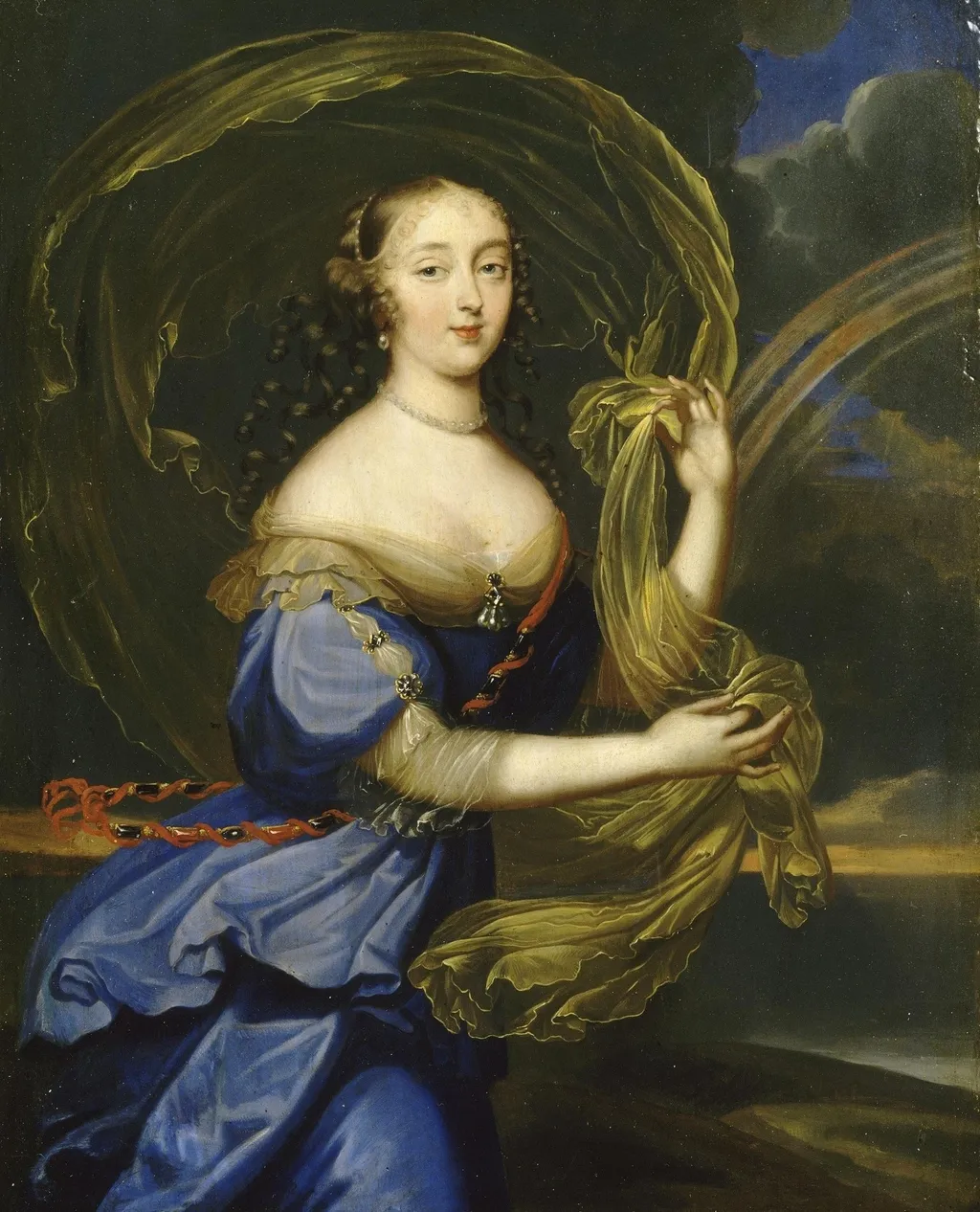
Portrait of an Unknown Woman as Iris, formerly identified as Madame de Montespan is an oil painting by the French Classical Baroque artist Unknown. It dates from 1675 and is held in the collection of the Palace of Versailles. The work is an oil painting that portrays a seated woman in a blue dress trimmed with a gold sash.
About this work
Overview
The work is an oil painting that portrays a seated woman in a blue dress trimmed with a gold sash. She holds a swath of yellow fabric in her right hand, while her left hand rests upon it. Her hair is arranged in an updo, and she wears gold jewelry. A dark backdrop is punctuated by a subtle rainbow, and the palette is restrained, dominated by blues, golds and yellows.
Subject & Meaning
The figure is an unidentified woman, previously thought to represent Madame de Montespan, a 17th‑century French court figure. The composition emphasizes poise and elegance, with the fabric and jewelry suggesting status, while the muted colors and quiet background convey a sense of introspection rather than overt narrative.
Technique & Style
Executed in oil on canvas, the artist employs a soft modeling of flesh and fabric, allowing light to glide across the gold sash and jewelry. The background is rendered in deep tones, creating a contrast that isolates the sitter. A faint rainbow appears behind her, adding a delicate atmospheric effect that softens the overall tonal scheme.
History & Provenance
The painting was once catalogued as a portrait of Madame de Montespan, but later scholarship could not confirm the identification, leading to its current title, Portrait of an Unknown Woman as Iris. Its ownership record traces through private collections before entering a public institution, though specific dates and dealers remain undocumented.
Context
The work reflects the conventions of aristocratic portraiture in the late Baroque period, where refined attire, luxurious accessories, and controlled lighting were used to convey rank and virtue. The inclusion of a rainbow motif is atypical, hinting at symbolic associations with hope or divine favor within the otherwise restrained composition.
Legacy
Although the sitter’s identity remains uncertain, the painting continues to be cited in discussions of portraiture that balances elegance with psychological depth. Its muted palette and subtle background have influenced later artists who sought to foreground the subject’s presence without elaborate settings.
Artist & collection

 Domestic Scene
 Giacomo and Cardinal Marco, investing Andrea, Abbot of San Zeno, with his Benefice
 The Nymph of Fontainebleau
 Portrait of a Woman
 Madonna and Child with Saints in the Enclosed Garden
 Venus and Minerva
 Family Group of Four on Sofa
 Wall painting from Room H of the Villa of P. Fannius Synistor at Boscoreale
 Anne-Genneviève de Bourbon-Condé, Duchess of Longueville
 Portrait of a Lady (said to be Jeanne de Marigny)
 Louise de la Vallière, mistress of Louis XIV
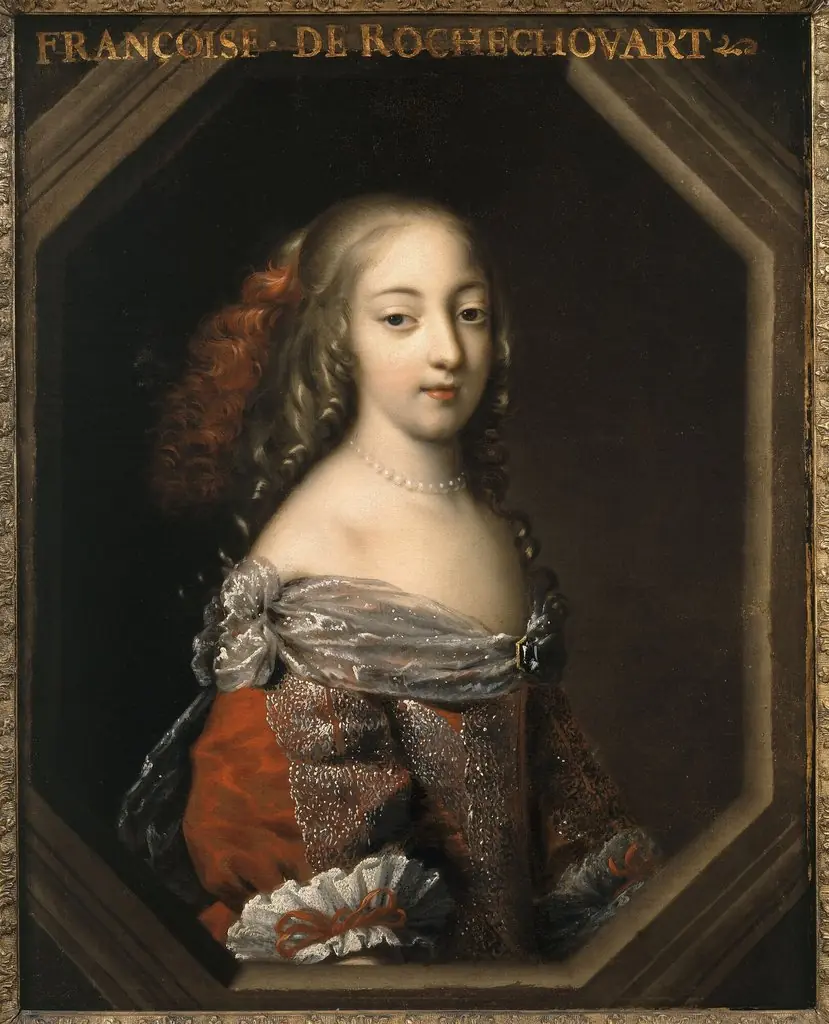 Françoise de Rochechouart
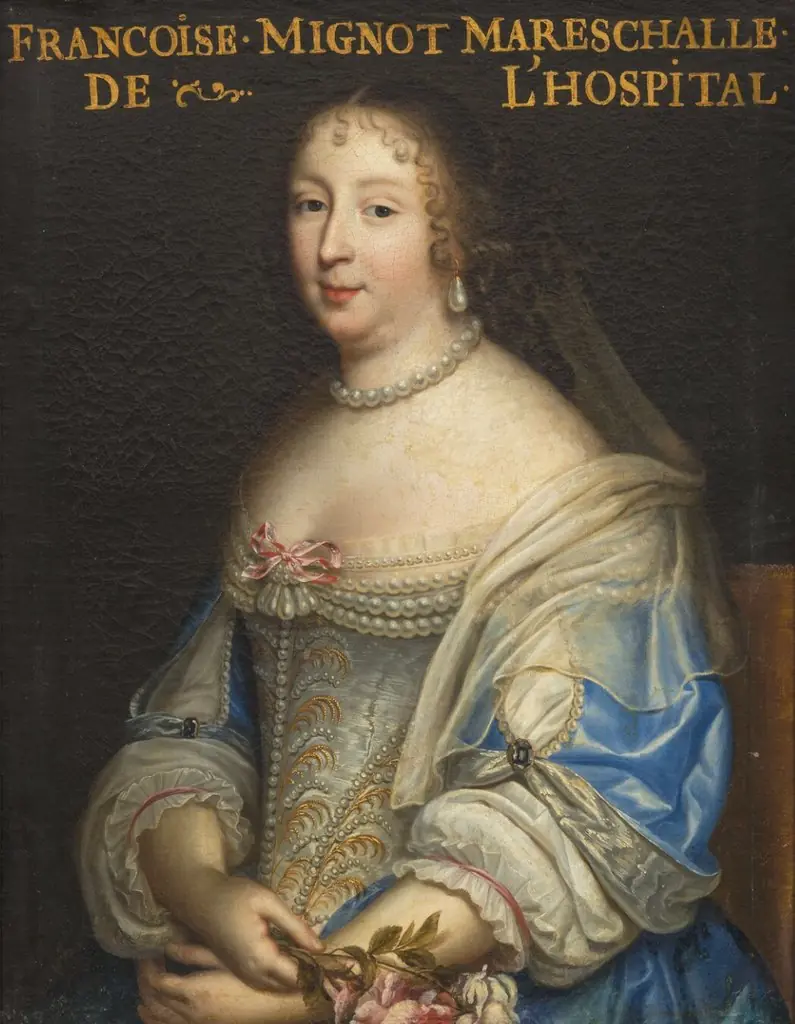 Françoise-Marie Mignot, maréchale de l'Hôpital (1624-1711)
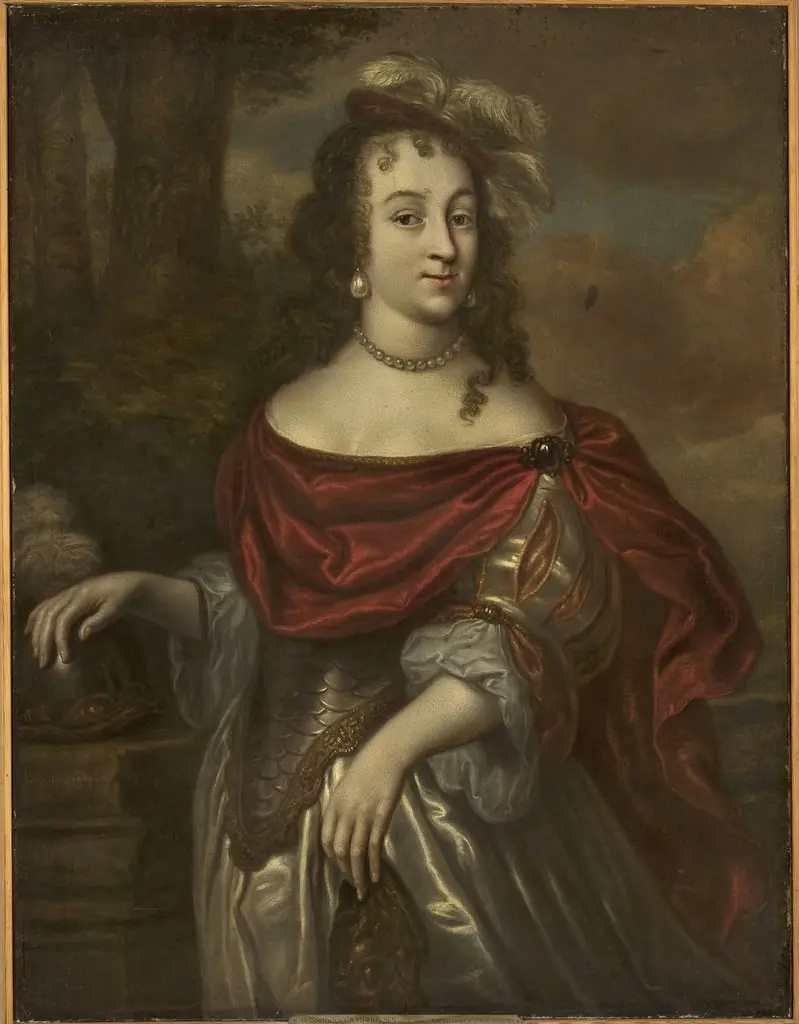 Portrait of a woman in Minerva’s costume
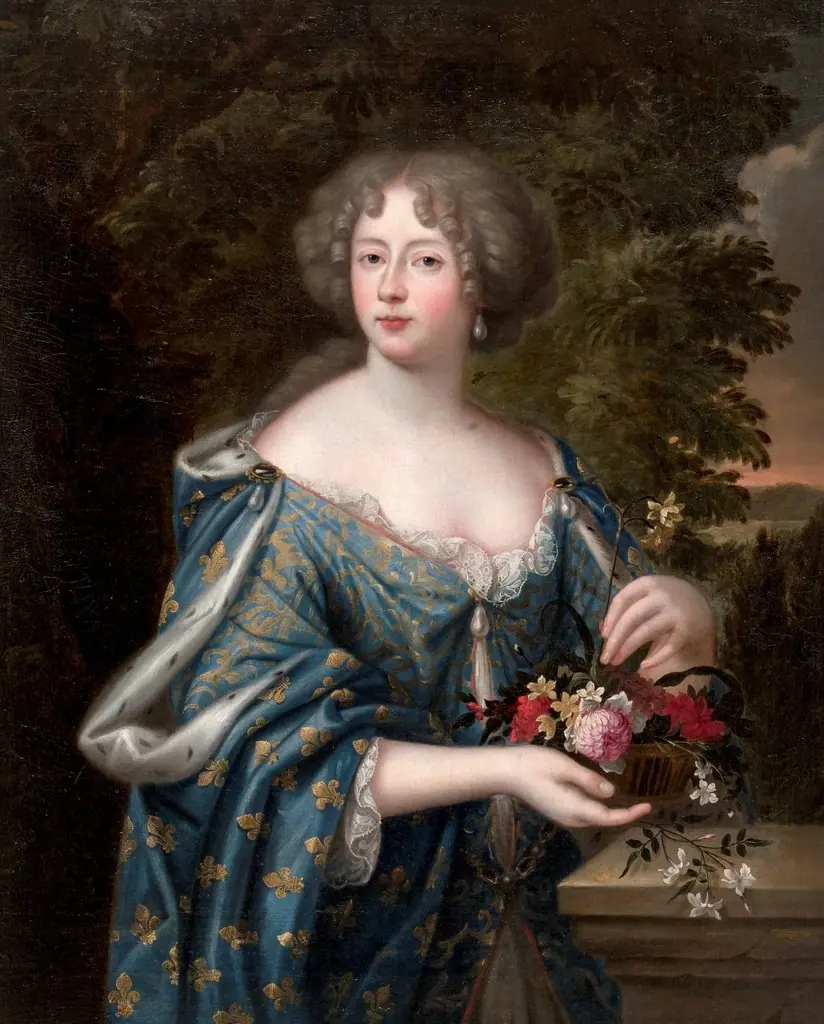 Elizabeth Charlotte of the Palatinate, Duchess of Orléans
 Kuningatar Ulrika Eleonora vanh.
 Louise Boyer, Duchess of Noailles (1632-1697)
 Anne Marie d'Orléans
 Anne de Bavière, princesse de Condé
 Portrait of Mary Stuart II