Artwork
Icoa cee
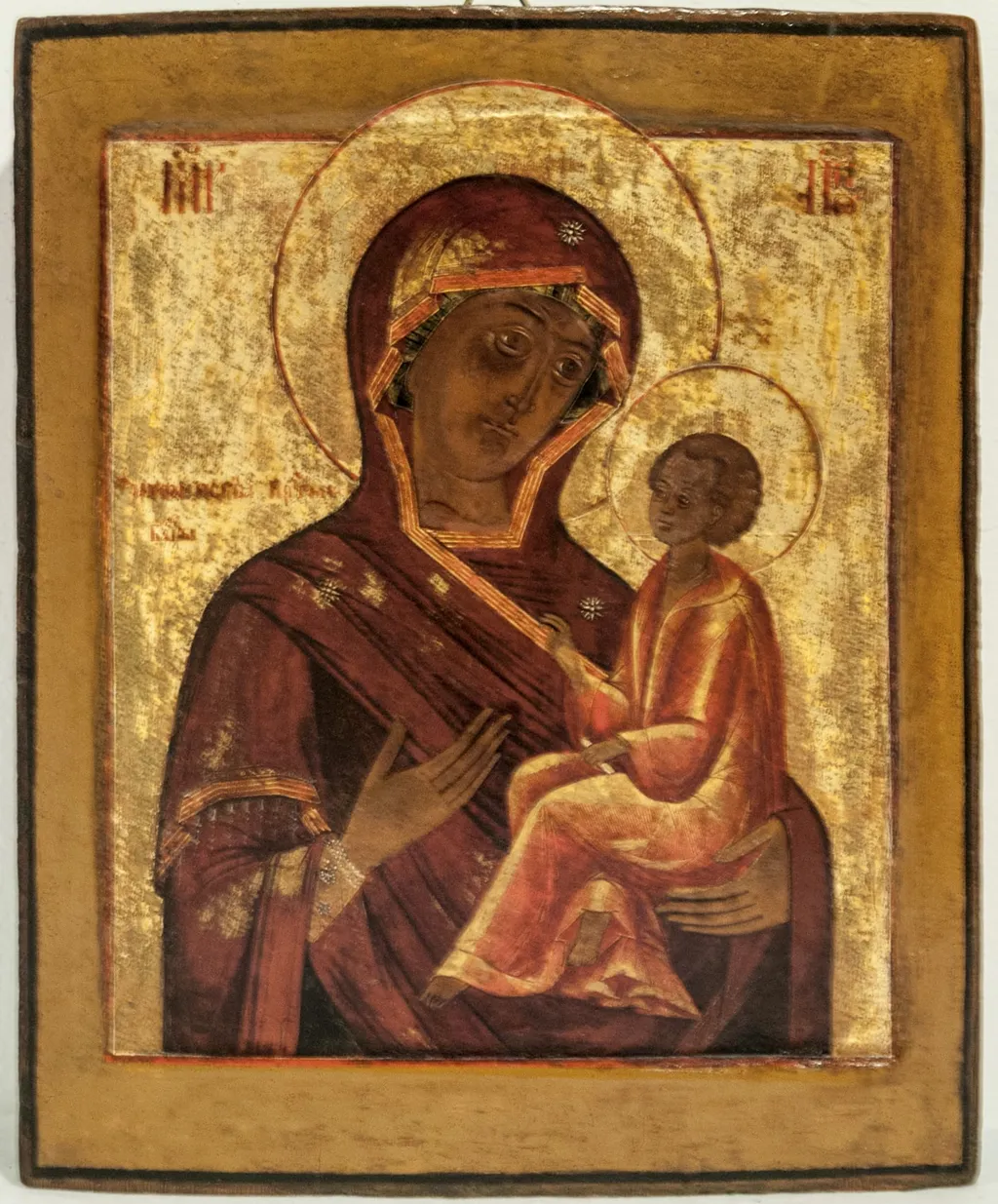
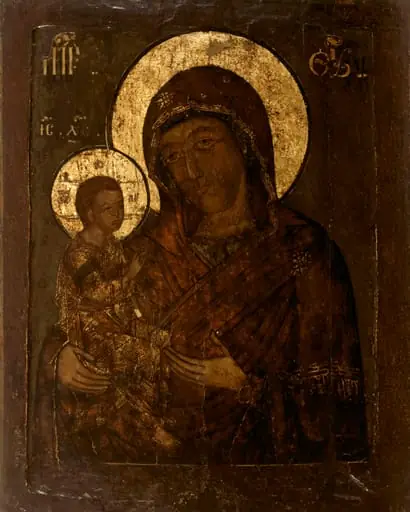
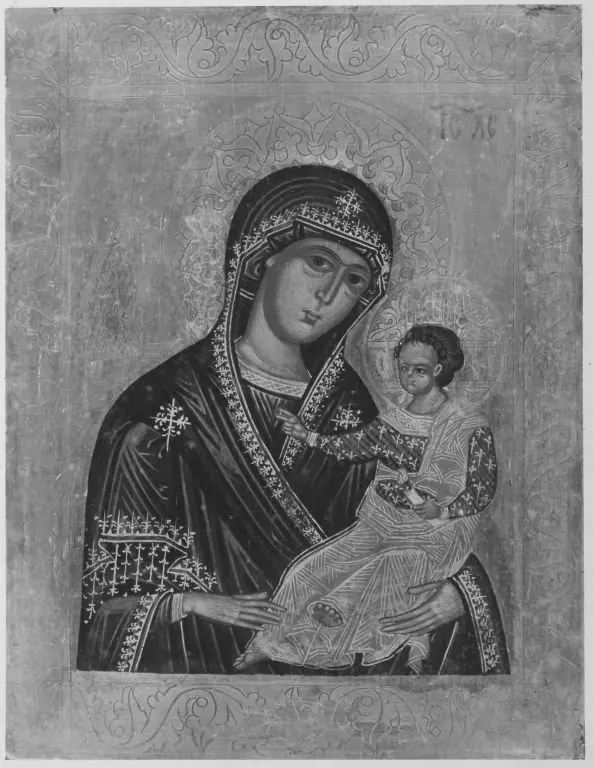
Icoa cee is a drawing by Unknown. It dates from 1850 and is held in the collection of the "Dimitrie Gusti" National Village Museum. This image depicts a maternal figure cradling a young child, both marked by golden halos indicating sacred status.
About this work
Overview
This image depicts a maternal figure cradling a young child, both marked by golden halos indicating sacred status. The composition is flat and symbolic, with no attempt at naturalistic space. The figures are rendered in simplified forms, set against a uniform gold background, a hallmark of devotional imagery from medieval traditions.
Subject & Meaning
The woman and child represent a holy pair, likely the Virgin Mary and Jesus, identified through their halos and solemn demeanor. The calm expression of the mother conveys quiet devotion, while the child’s passive posture suggests divine stillness. The imagery serves a liturgical purpose, inviting contemplation rather than narrative engagement.
Technique & Style
Shading is achieved through fine cross-hatching, a method of parallel and intersecting lines to suggest volume without perspective. The robes are outlined and accented with gold, emphasizing texture and sacredness. The background, entirely gilded, eliminates earthly context, focusing attention on the spiritual presence of the figures.
History & Provenance
The work belongs to a tradition of religious panel paintings or icons produced in the late medieval period, likely in a monastic or workshop setting. The use of gold leaf and stylized forms aligns with Byzantine and early Italian devotional practices. Its origin remains undocumented, but its form suggests it was made for private or chapel veneration.
Context
Gold backgrounds were standard in sacred art before the Renaissance, symbolizing divine light and the heavenly realm. Textual elements, though faded, may have once included prayers or inscriptions common in liturgical objects. This image reflects a pre-humanist aesthetic, prioritizing spiritual symbolism over physical realism.
Legacy
The image exemplifies a visual language that persisted across centuries in Eastern and Western Christian art. Its formal choices influenced later iconography, even as naturalism emerged. Today, it stands as a quiet testament to the enduring role of symbolic representation in religious expression.
Artist & collection
Museum
"Dimitrie Gusti" National Village Museum
Continue through works from the same source collection.
 Domestic Scene
 Giacomo and Cardinal Marco, investing Andrea, Abbot of San Zeno, with his Benefice
 The Nymph of Fontainebleau
 Portrait of a Woman
 Madonna and Child with Saints in the Enclosed Garden
 Venus and Minerva
 Family Group of Four on Sofa
 Wall painting from Room H of the Villa of P. Fannius Synistor at Boscoreale
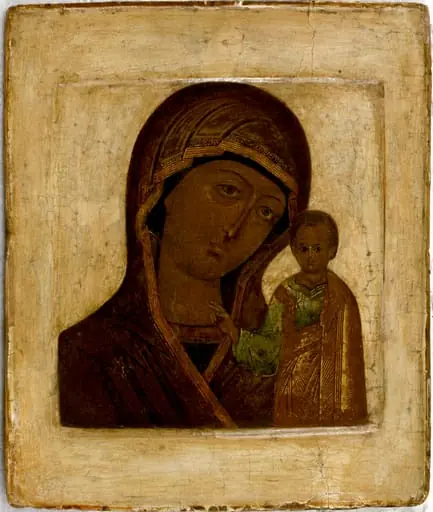 Kazanin Jumalanäiti, venäläinen ikoni
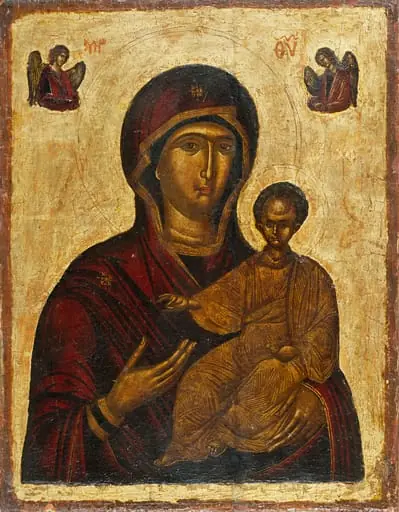 Jumalanäiti, Hodigitria - Tiennäyttäjä, bysanttilainen ikoni
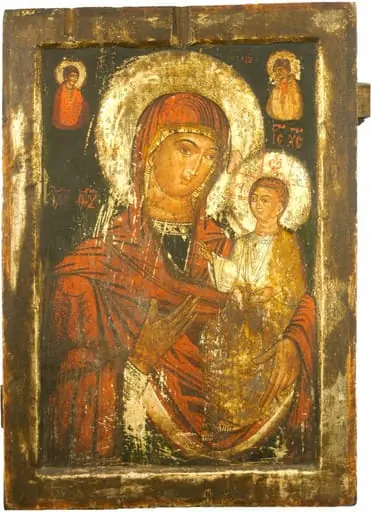 Maica Domnului cu Pruncul
 Jerusalemin Jumalanäiti, (Hodigitria), venäläinen ikoni
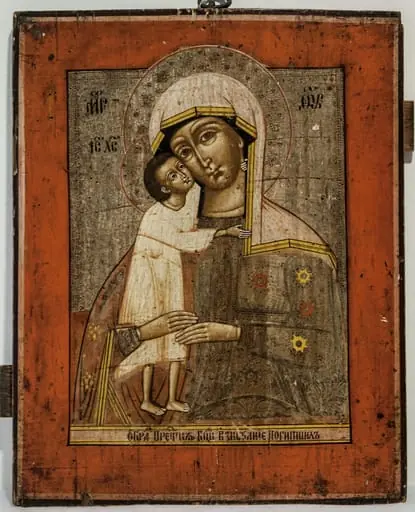 Maica Domnului, tipul Eleusa(dulcea sărutare, Mângâietoarea) îl ține strâns în brațe pe Iisus prunc, în picioare, cu obrazul lipit de cel al Maicii și o mână petrecută pe după gâtul ei. Iisus are nimbul cruciger, marcat cu motive florale punctate, Este înveșmântat într-o tunică 3/4 alb-gălbuie, care lasă să i se vadă picioarele. Maica poartă un maforion alb, bordat cu galben, partea din stânga a veșmântului din foiță metalică, decorată cu motive florale pictate cu roșu și galben, motive fitomorfe și geometrice incizate. În partea dreaptă veșmântul este roșu, decorat cu motive florale de culoare galbenă, foița fiind prezentă doar la mânecă. Nimbul decorat cu motive florale punctate în stratul de foiță metalică, Figurile modelate din culoare (alb, ocru) cu accente grafice fine, albe, sunt specifice icoanei rusești. Cromatica: alb, galben, roșu, auriu, brun, negru, foiță metalică, chenar roșu deschis, mărginit de două linii în nuanțe de roșu deschis și brun.Chenarul interior dublat de două șiruri de cercuri ștanțate în foiță. Inscripția dispusă pe o bandă dreptunghiulară în partea de jops a icoanei : Icoana Preacuratei Fecioare Prevăzând Jertfa (lui Iisus).
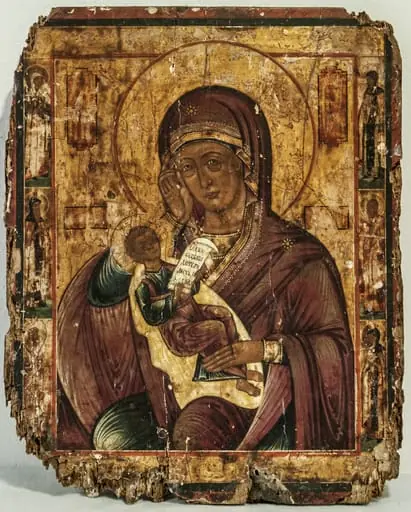 Icoana „Potolește întristările noastre” o înfățișează pe Maica Domnului ținând mâna stângă sub cap, care este ușor înclinat. Aceasta sugerează că Născătoarea de Dumnezeu ascultă lacrimile și rugăciunile tuturor credincioșilor care apelează la ea, în nevoile, necazurile și întristările lor. Cu mâna dreaptă, Fecioara Maria ține Pruncul Iisus. Mântuitorul ține în mâinile Sale un sul desfăcut, pe care sunt înscrise următoarele cuvinte: „Judecați cu dreptate, arătând milă unii față de alții, nu jigniți văduvele și orfanii și nu țineți răutate în inima voastră față de fratele vostru”.Maica este pictată pe fondul foiței aurite, cu o expresie blândă. Înveșmântată cu maforion grena, cu borduri aurite , dublate de o dantelărie fină, albă, pe umeri și frunte stelele întreitei feciorii. Stola verde cu galon lat aurit, la gât și mâneci. Pruncul , culcat în brațele Maicii pe o pânză albă, are o expresie tristă. Picioarele desculțe. Nimb cruciger, cu însemnele consacrate. Nimbul Fecioarei, trasat cu roșu, depășește bordura lată, aurită. Lateral, pe chenar, câte trei sfinți, în picioare. Se poate descifra doar inscripția de pe aureola sfântului Zosim și a sfintei Xenia(stânga). Inscripțiile referitoare la Iisus și Maica Domnului sunt casetate pe fondul aurit. Linia desenului foarte fină, drapajul veșmintelor bogat, cu unele accente de repictare(tușele de alb). Icoana prezintă degradări ale stratului pictural(eroziuni, clacuri, desprinderi, lacune, vernis îmbătrânit) și ale suportului(atac xilofag mai vechi care a fragilizat lemnul)
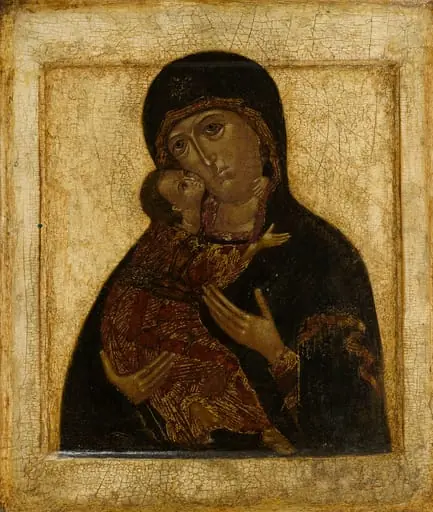 Vladimirin Jumalanäiti, venäläinen ikoni
 Mary with Christ-child (epitaphe of Oswald von Straubing)
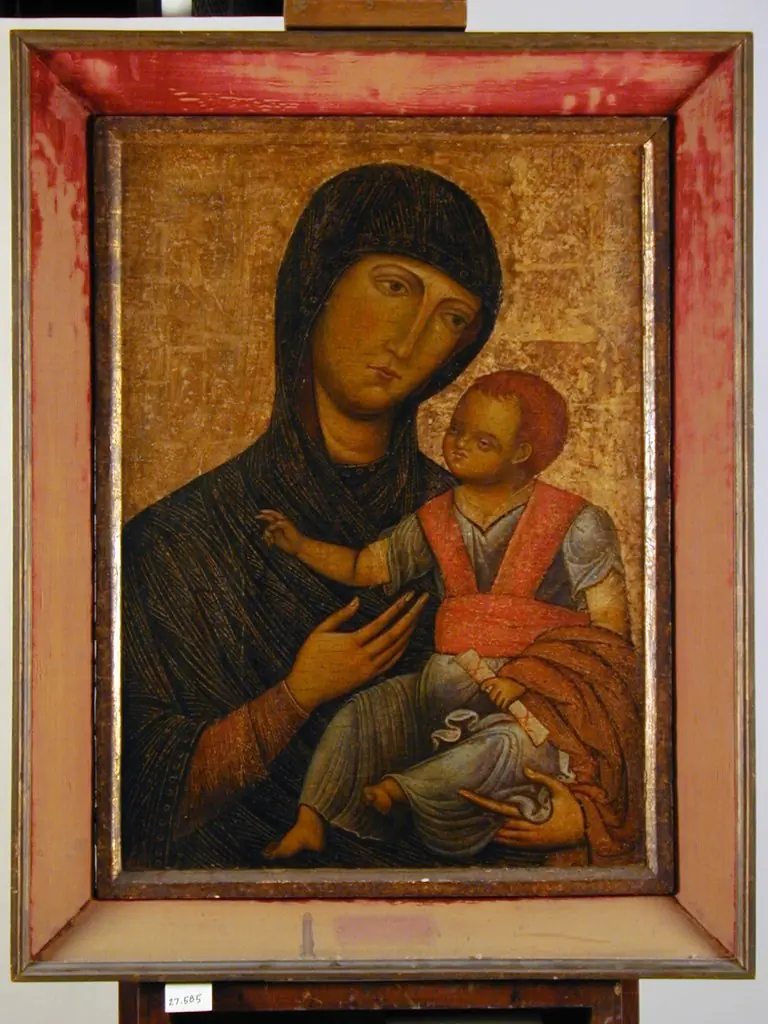 Madonna and Child