Artwork
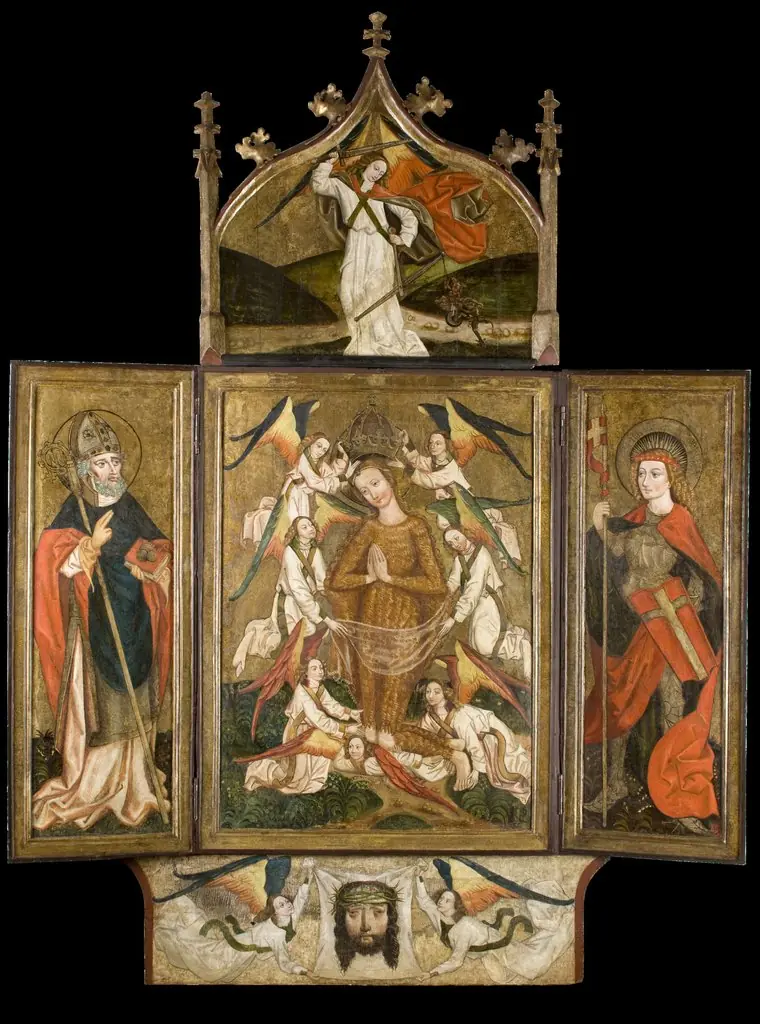
Veil of St. Veronica held by two angels. Altar retable from the church in Moszczenica Niżna – predella.
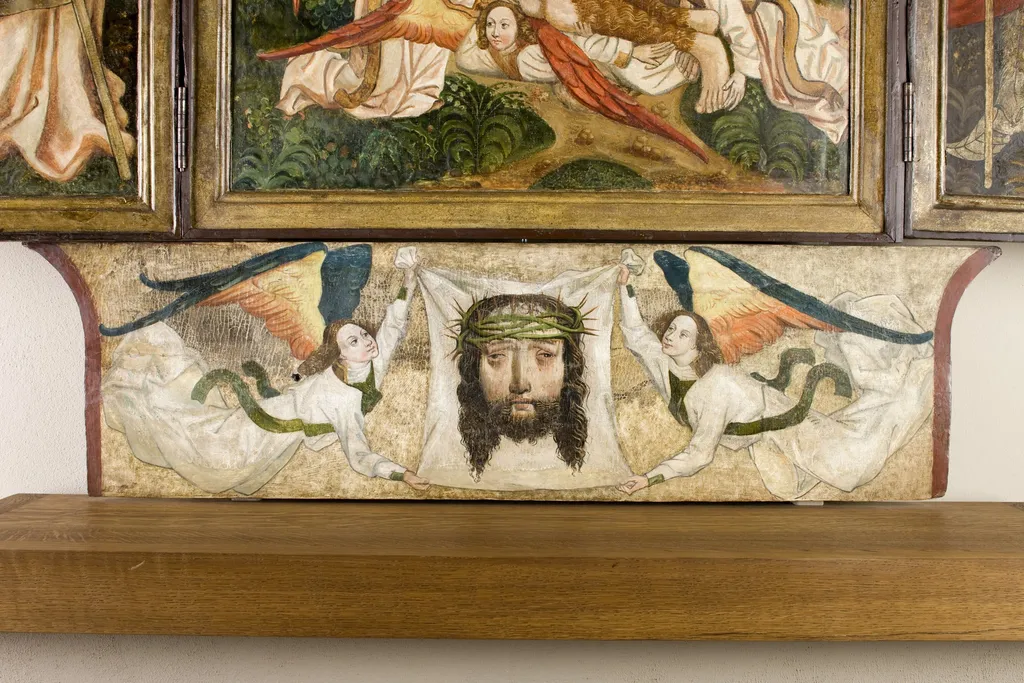
Veil of St. Veronica held by two angels. Altar retable from the church in Moszczenica Niżna – predella. is an unspecified painting by Unknown. It dates from 1490 and is held in the collection of the National Museum in Kraków. The work forms part of a predella for an altar retable originally installed in the church of Moszczenica Niżna.
About this work
Overview
The work forms part of a predella for an altar retable originally installed in the church of Moszczenica Niżna. It portrays two angels supporting a white veil that bears the likeness of Christ’s face, crowned with thorns. The background is rendered in a muted light‑brown tone, giving the scene a calm, reverent atmosphere.
Subject & Meaning
The veil, known as the Veil of St. Veronica, is traditionally believed to have received the imprint of Jesus’ visage during his Passion. By placing the veil in the hands of celestial beings, the composition emphasizes its sacred transmission and the intercession of angels in preserving holy relics.
Technique & Style
Executed in a realistic manner, the painter attends closely to the angels’ facial expressions and the drapery of their white garments, accented with green sashes. The wings are rendered in contrasting hues—one blue, the other orange—while chiaroscuro creates depth through stark light‑dark contrasts, and the overall palette remains restrained, dominated by earth tones.
History & Provenance
The panel formed the lower register of a larger altar retable commissioned for the parish church at Moszczenica Niżna. Although the date of execution is not specified, its style aligns with Central European devotional painting traditions that flourished in the post‑Baroque period.
Context
Such predella scenes were commonly used to complement a central altarpiece, providing narrative or symbolic support. The inclusion of the Veil of St. Veronica reflects the widespread veneration of the relic in Catholic liturgy, particularly in regions where pilgrimage and relic devotion were integral to parish life.
Artist & collection

 Domestic Scene
 Giacomo and Cardinal Marco, investing Andrea, Abbot of San Zeno, with his Benefice
 The Nymph of Fontainebleau
 Portrait of a Woman
 Madonna and Child with Saints in the Enclosed Garden
 Venus and Minerva
 Family Group of Four on Sofa
 Wall painting from Room H of the Villa of P. Fannius Synistor at Boscoreale
 Crucifixion
 Învierea Domnului
 Resurrection of Christ
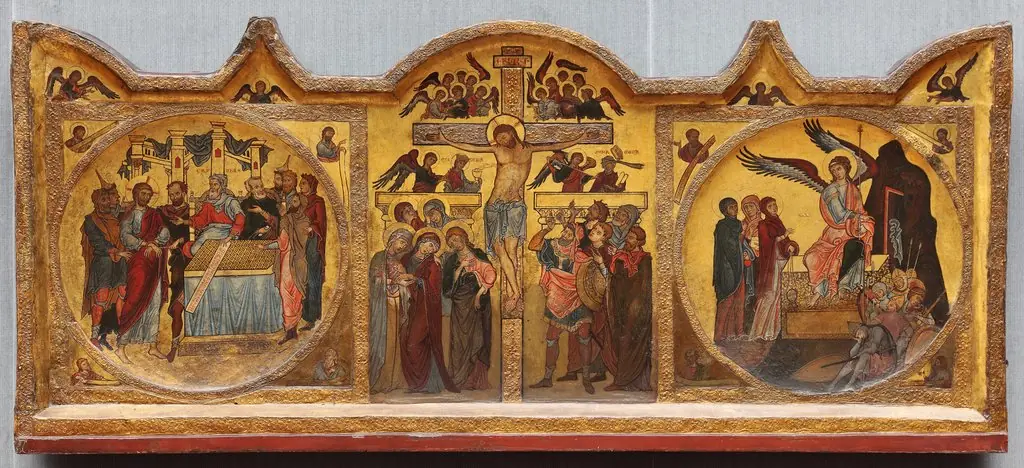 Crucifixion retable from Soest
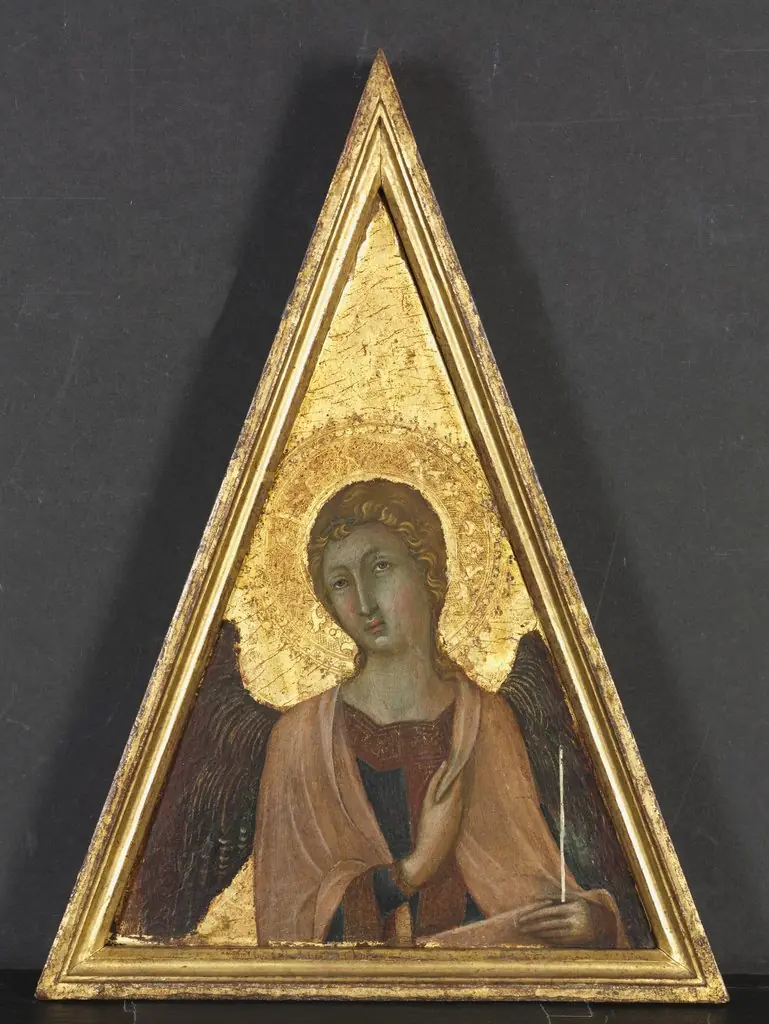 Pinnacle with Angel
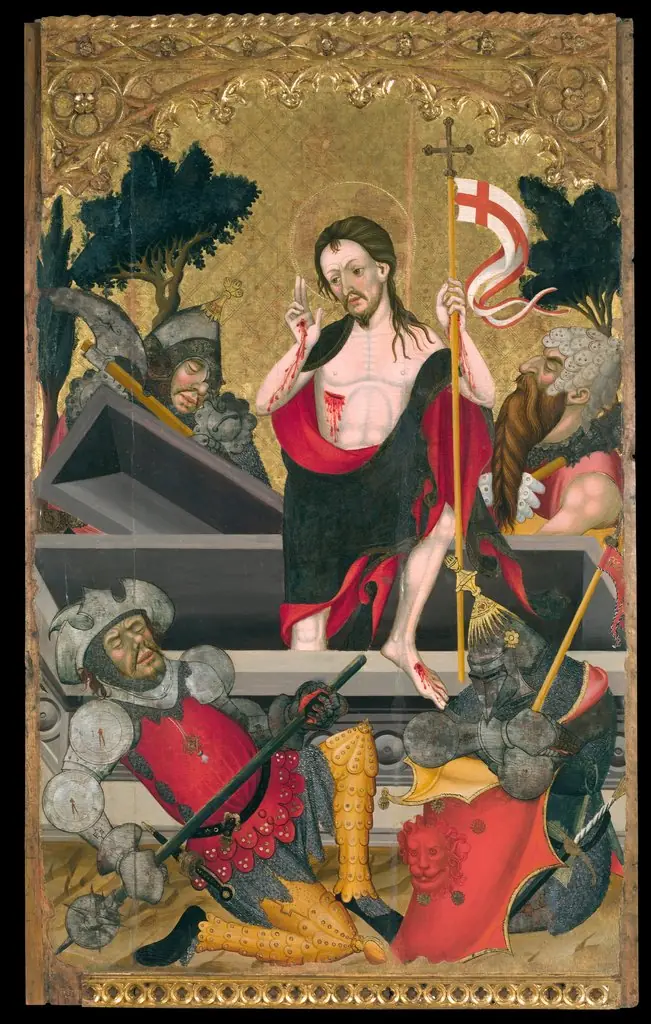 Resurrection of Christ
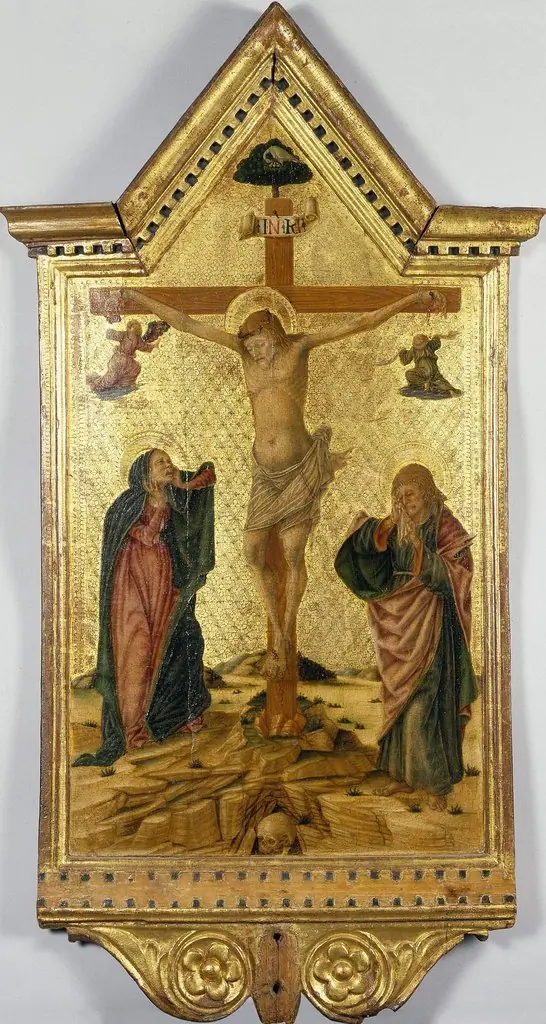 Crucifixion with the Virgin and St John
 Retabulum ołtarzowe z kościoła w Moszczenicy Niżnej koło Starego Sącza.
 Crucifixion (Wing of a Triptych)
 Sfânții Mihail și Gavriil
 Învierea lui Iisus
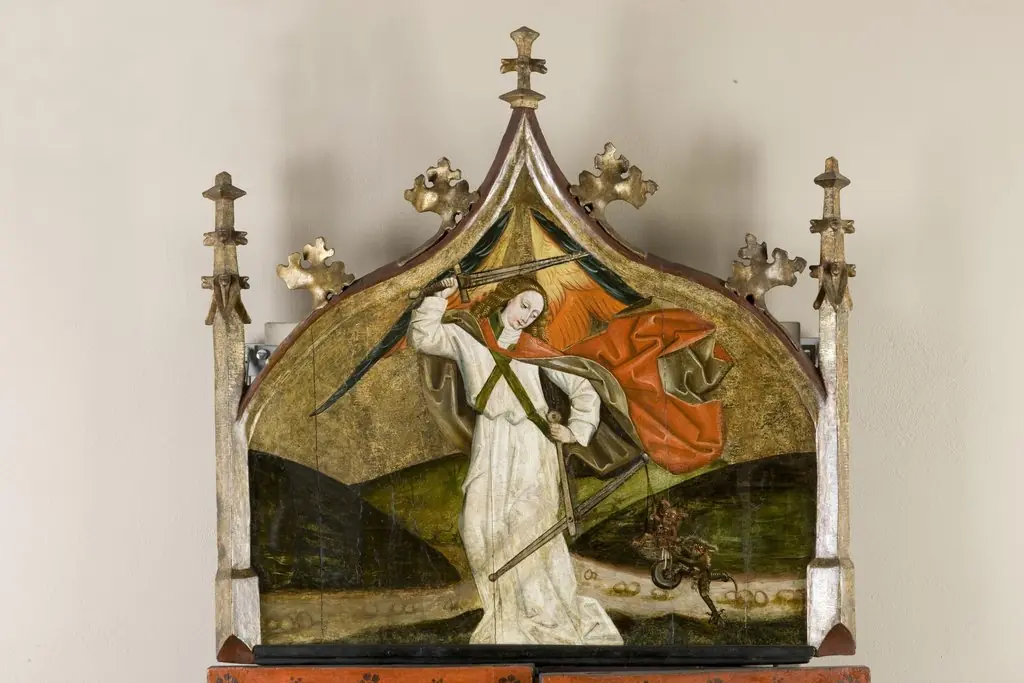 Saint Michael the Archangel. Altar retable from the church in Moszczenica Niżna – finial.